
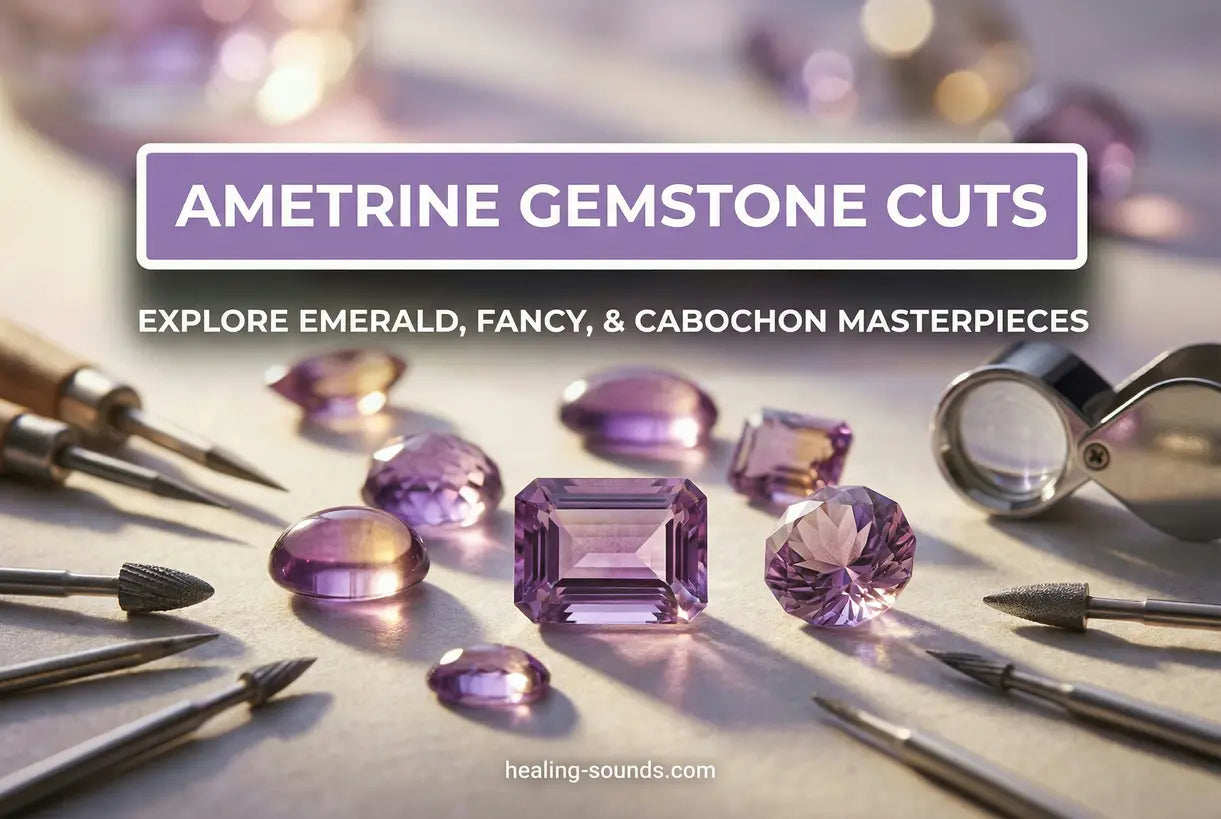
For gemstone enthusiasts and collectors, few stones offer the captivating visual drama of ametrine. A natural quartz variety that blends the regal purple of amethyst with the sunny golden hues of citrine, this bi-color gem is a marvel of nature. However, the way a lapidary shapes this rough material defines its final beauty. Among the most prestigious styles, emerald cut ametrine stands out for its ability to showcase the gem's distinct color zoning with elegance and clarity.
Whether you are designing a custom piece of jewelry or expanding your mineral collection, understanding the nuances of different cuts is essential. While the geometric precision of the emerald cut is a favorite, other styles like the smooth ametrine cabochon or intricate fantasy cut ametrine offer unique aesthetics. In this guide, we explore how these specific cuts influence the stone's value, appearance, and suitability for your personal collection.
The Sophistication of Emerald Cut Ametrine
The emerald cut is a step-cut style characterized by its rectangular shape, cropped corners, and linear facets. Originally developed for emeralds to prevent chipping, this cut has become a preferred choice for high-quality ametrine. Why? Because an emerald cut ametrine possesses a large, open table (the flat top surface) that acts like a window into the stone.
This "window" is crucial for bi-color gems. It allows light to enter unobstructed, highlighting the sharp or soft transition between the purple and yellow sectors. Unlike brilliant cuts that maximize sparkle, the emerald cut emphasizes the stone's clarity and rich color saturation. For a collector seeking a piece that displays the pure, natural division of colors, this cut is often considered the gold standard.

When evaluating an emerald cut stone, look for symmetry in the parallel facets. The long lines should draw the eye deep into the gem, creating a "hall of mirrors" effect. This geometric rigor provides a sophisticated, modern look that pairs exceptionally well with Art Deco-inspired jewelry settings.

Beyond the Rectangle: Faceted, Fancy, and Cabochon Styles
While the emerald cut is celebrated for its classic appeal, the world of lapidary arts offers diverse ways to interpret this Bolivian treasure. Depending on the rough stone's inclusions and color distribution, a cutter might opt for a faceted ametrine in a brilliant style, a smooth cabochon, or an artistic fantasy cut.
Faceted and Fancy Cut Ametrine
For those who desire brilliance and sparkle, standard faceted cuts like ovals, rounds, and cushions are excellent. However, modern lapidaries often push the boundaries with fancy cut ametrine. These "fantasy" cuts involve carving grooves, optic dishes, or concave facets into the back of the stone. This technique scatters light in unusual ways, creating a dazzling internal landscape that blends the purple and gold hues dynamically.
A fantasy cut ametrine is often a one-of-a-kind piece of art, tailored to the specific shape of the rough crystal. These cuts are highly prized by collectors who view gemstones as wearable sculpture.
Ametrine Cabochon: Smooth and Natural
Not every stone is destined for facets. An ametrine cabochon is a gem that has been shaped and polished into a smooth, rounded dome with a flat base. This style is one of the oldest forms of gem cutting. Without facets to reflect light, a polished ametrine cabochon relies entirely on the depth and saturation of its body color for appeal.
Cabochons are often cut from material that may be slightly less transparent or has interesting inclusions that would be distracting in a faceted stone but look intriguing in a solid form. The smooth surface of a cabochon feels wonderful to the touch, making it a favorite for "worry stones" or tactile jewelry pieces. It offers a softer, more organic aesthetic compared to the architectural lines of an emerald cut.

Value Factors: Clarity, Color, and Cut Precision
Understanding the value of ametrine requires looking closely at the quality of the cut. Whether you are buying a natural emerald cut ametrine or a custom fantasy piece, the precision of the lapidary work significantly impacts the price. A well-executed cut not only maximizes brilliance but also ensures the correct orientation of the bi-color zoning.
In the gemstone market, distinct separation of colors—often a 50/50 split—is highly desirable, especially in rectangular cuts. For information on grading and quality, authoritative resources like the Gemological Institute of America (GIA) provide excellent standards. Generally, stones with intense purple and orange-yellow hues command higher prices than those with pale or washed-out tones.
Discover Unique Ametrine Specimens
Choosing the Right Ametrine for Your Collection
When selecting a stone, consider how you intend to use it. Emerald cut ametrine is a spectacular choice for ring center stones, where the geometry can be appreciated daily. Its flat surface is less prone to snagging than a high-point brilliant cut, though the corners must be protected by the setting.
For those interested in healing crystals or meditation, a smooth ametrine cabochon might be preferable for its tactile nature and durability. Meanwhile, jewelry designers looking to create a statement necklace often lean towards large, custom faceted ametrine pieces that serve as conversation starters. Whichever style you choose, ensure the stone comes from a reputable source, as synthetic ametrine is common in the market.

Conclusion
From the structured elegance of emerald cut ametrine to the artistic flair of fantasy cuts and the organic feel of cabochons, this gemstone offers versatility for every taste. The cut is more than just a shape; it is the lens through which the stone's unique bi-color soul is revealed. As you explore adding this gem to your collection, pay close attention to the craftsmanship. A well-cut ametrine not only holds better financial value but also provides a lifetime of visual enjoyment.
Ready to find the perfect gem for your next project? Explore our curated selection of high-quality ametrine stones, featuring precise cuts and vibrant natural colors.
Frequently Asked Questions about Ametrine Cuts and Value
Ametrine is relatively rare because it is commercially mined from only one major source in the world: the Anahi Mine in Bolivia. High-quality specimens with distinct color zoning, high clarity, and precise cutting (like a fine emerald cut) command higher prices due to this scarcity and the craftsmanship involved.
Yes, ametrine has significant value, particularly for stones over 5 carats with intense colors and excellent clarity. While it is more affordable than precious gems like diamonds or sapphires, fine natural ametrine is prized by collectors and jewelers. Its value increases with the sharpness of the color split and the artistry of the cut.
Real ametrine typically shows a somewhat soft or gradual transition between colors, or irregular color zoning, whereas synthetic stones often have an unnaturally sharp, straight line separating the purple and yellow. Additionally, natural ametrine is rarely found in extremely dark or neon hues. Gemological testing is the only way to be 100% certain.
Ametrine is excellent for anyone seeking balance. Metaphysically, it combines the calming intuition of amethyst with the energizing creativity of citrine. It is often recommended for those wishing to balance their masculine and feminine energies, or for creative professionals looking to turn inspiration into action.
The emerald cut ametrine is unique because its large, open table and long step facets minimize sparkle in favor of showcasing the gem's pure color. This cut is specifically chosen to highlight the bi-color zoning, allowing the viewer to clearly see the distinct separation and interplay between the purple and golden sections of the stone.