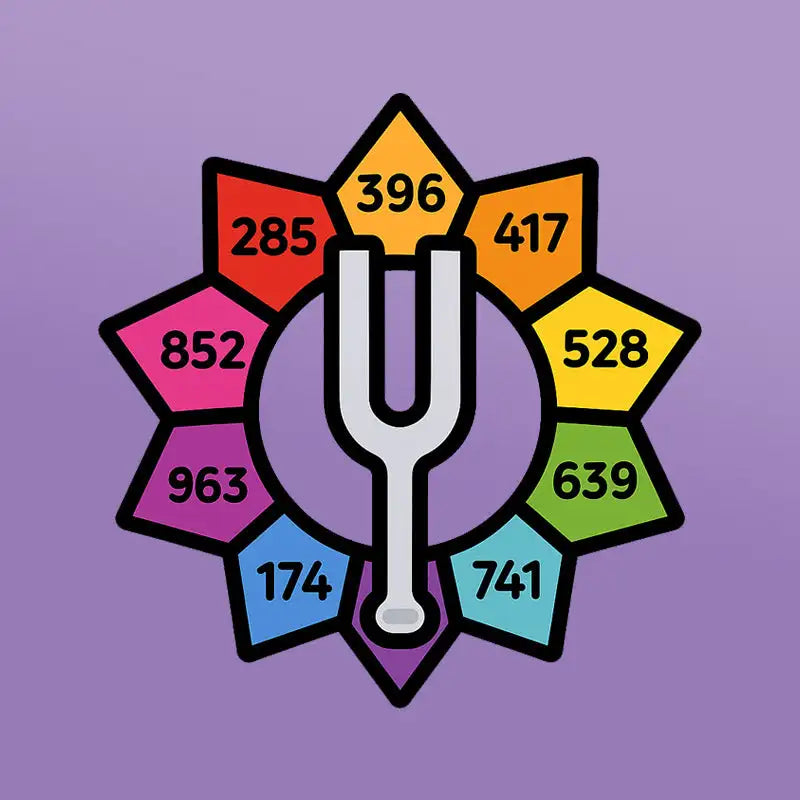
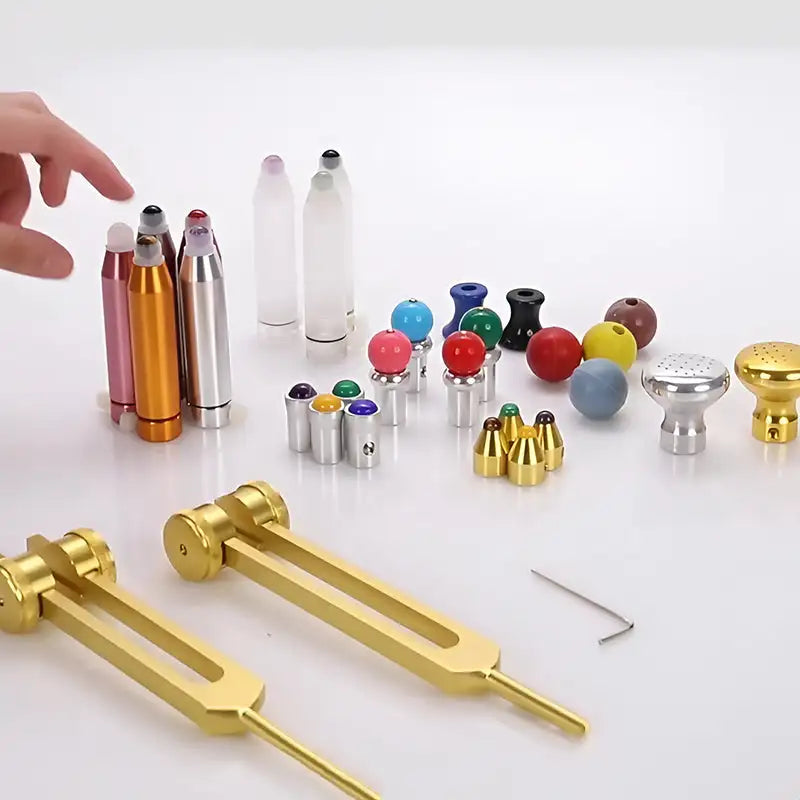
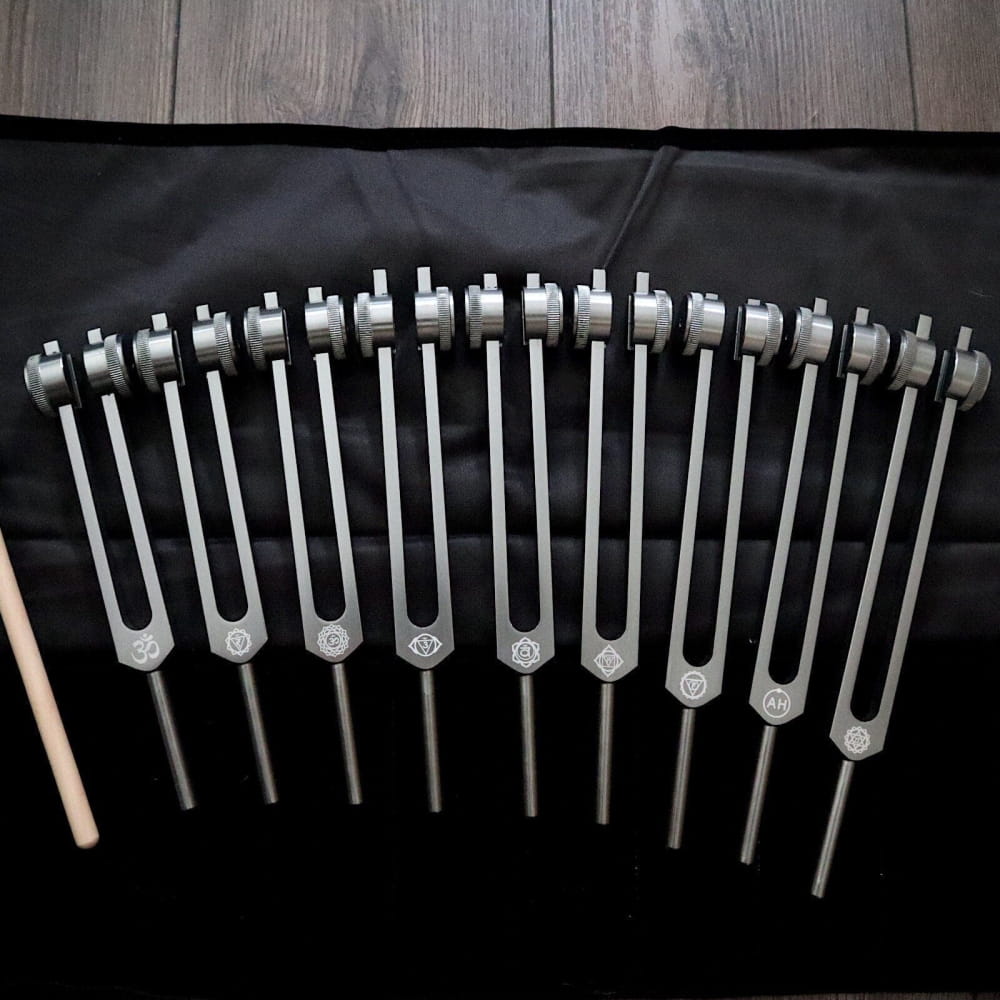
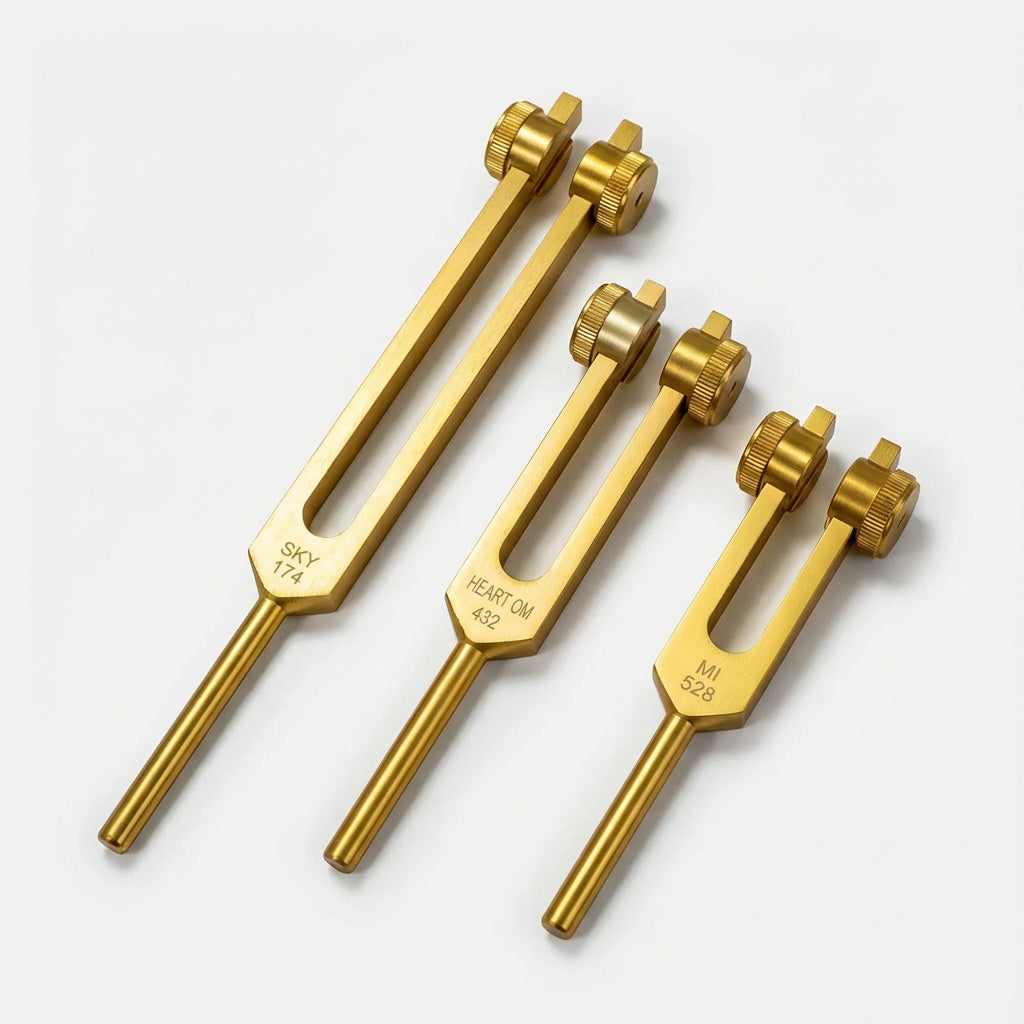
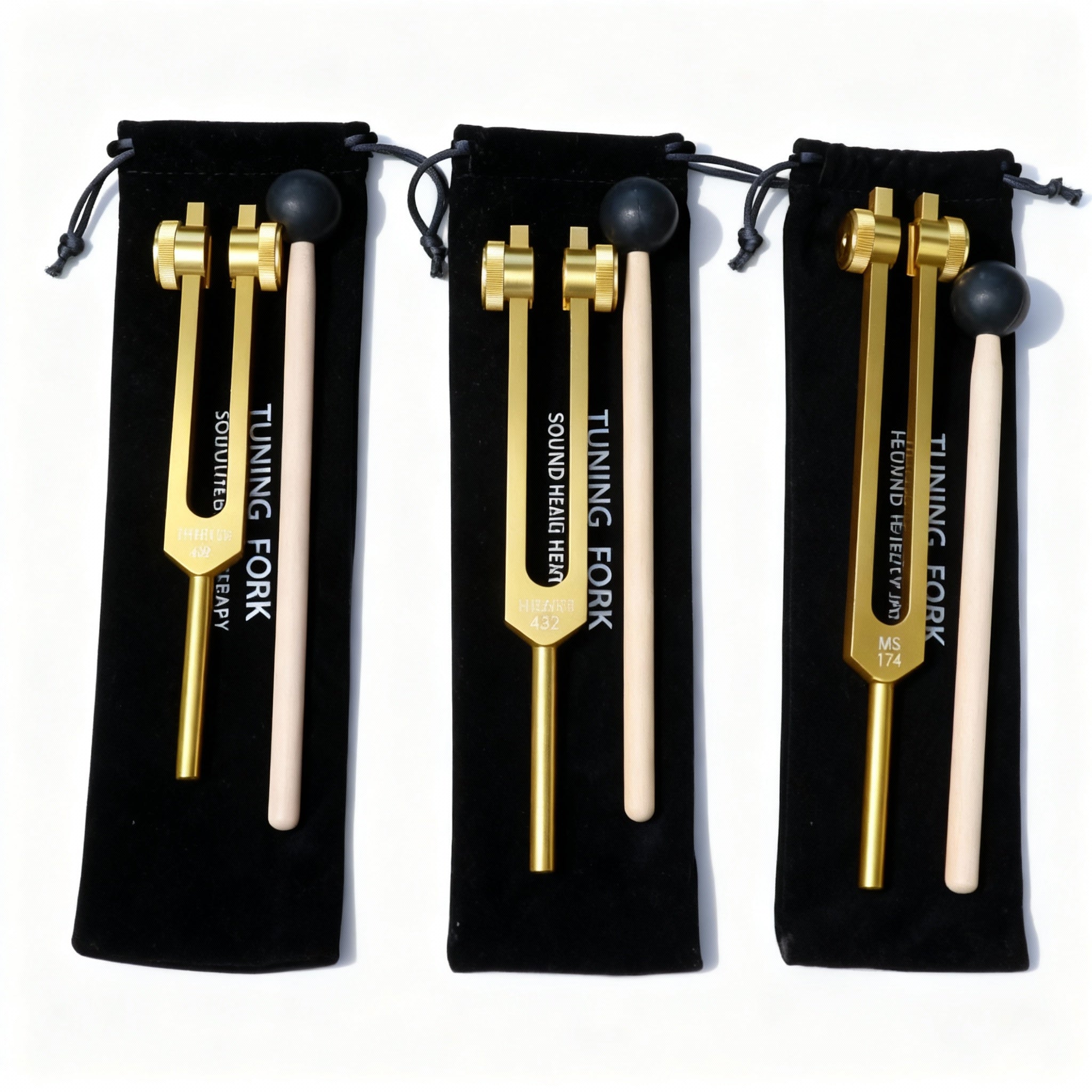
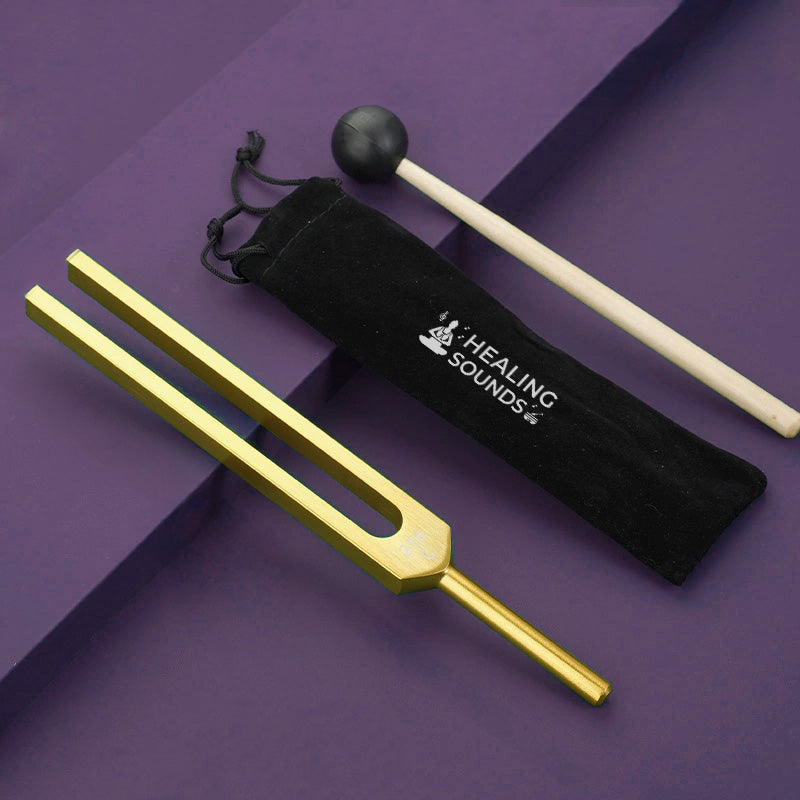
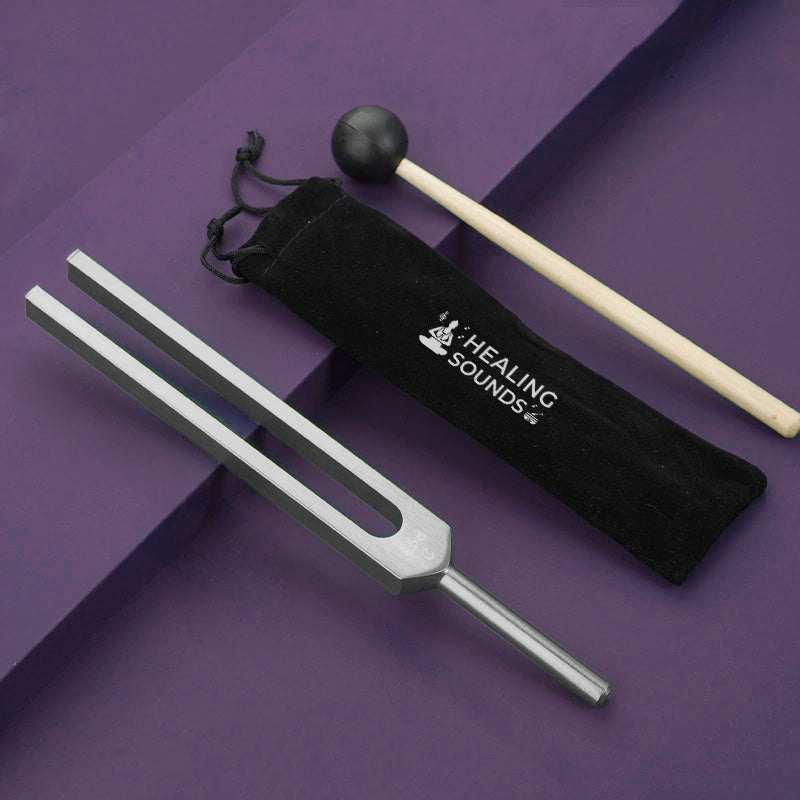
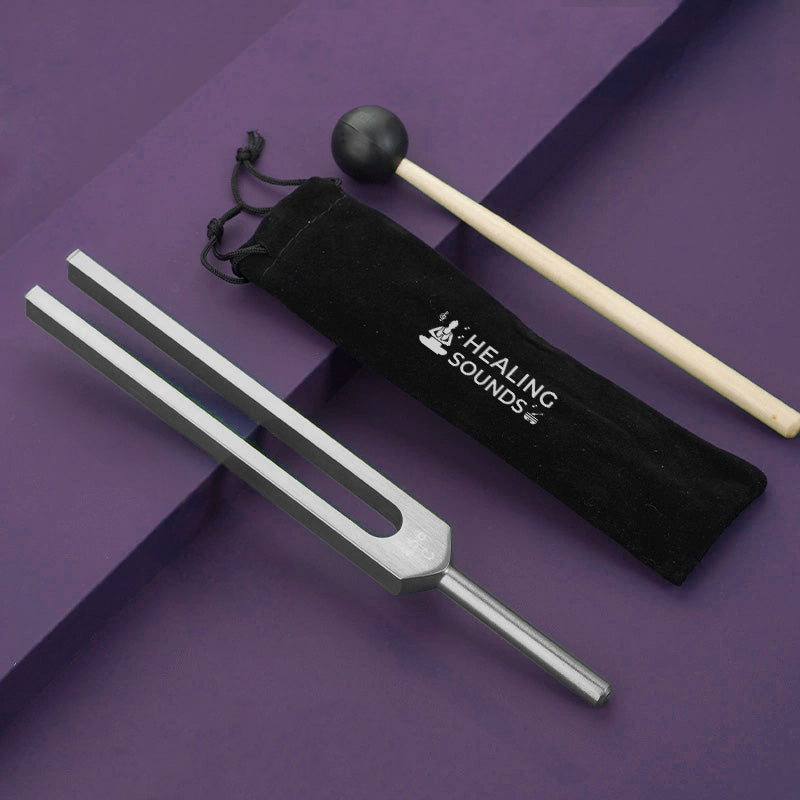
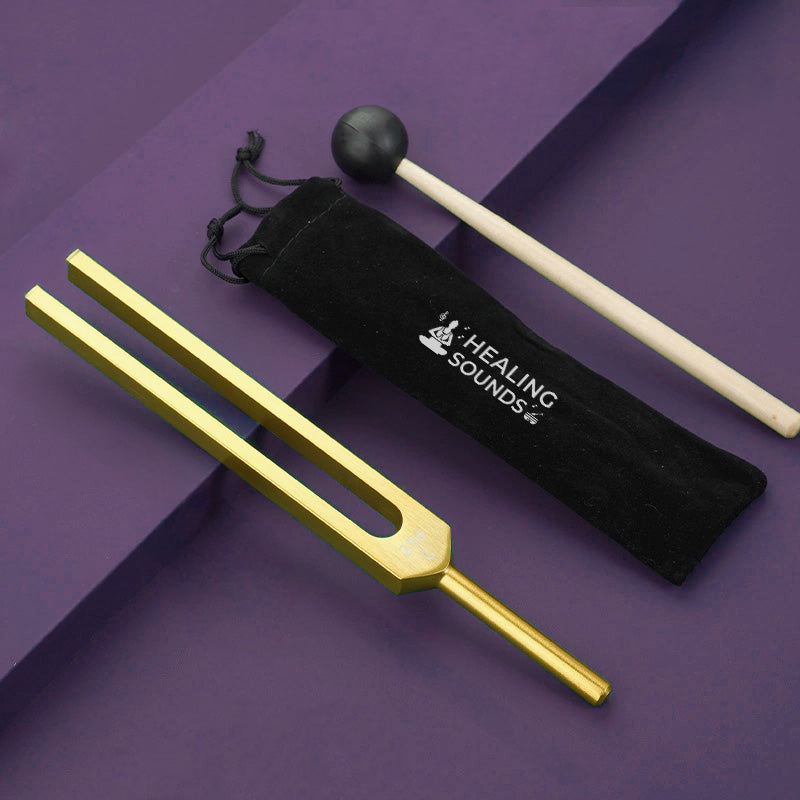
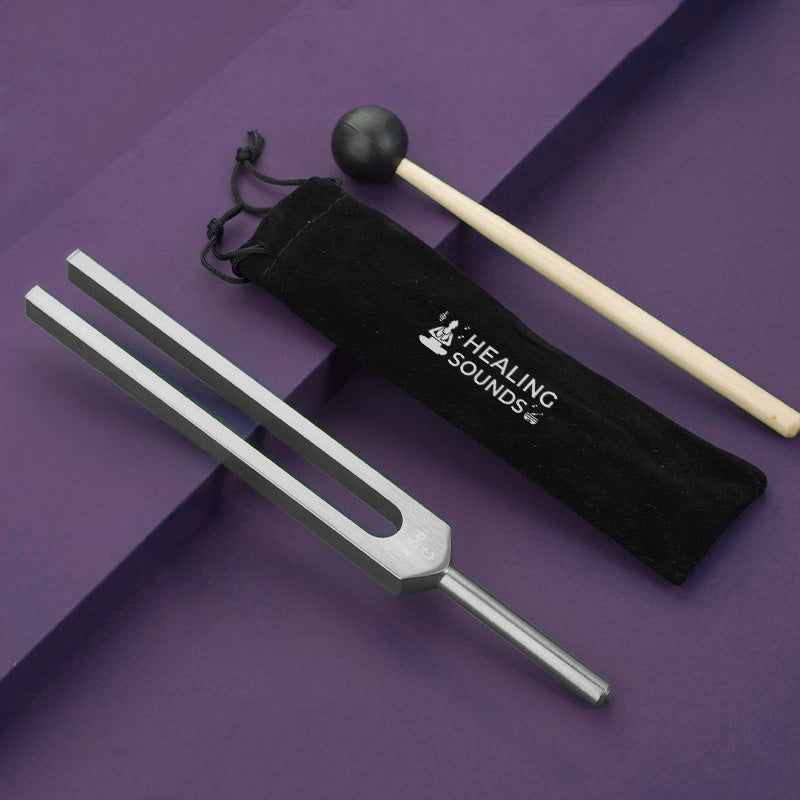
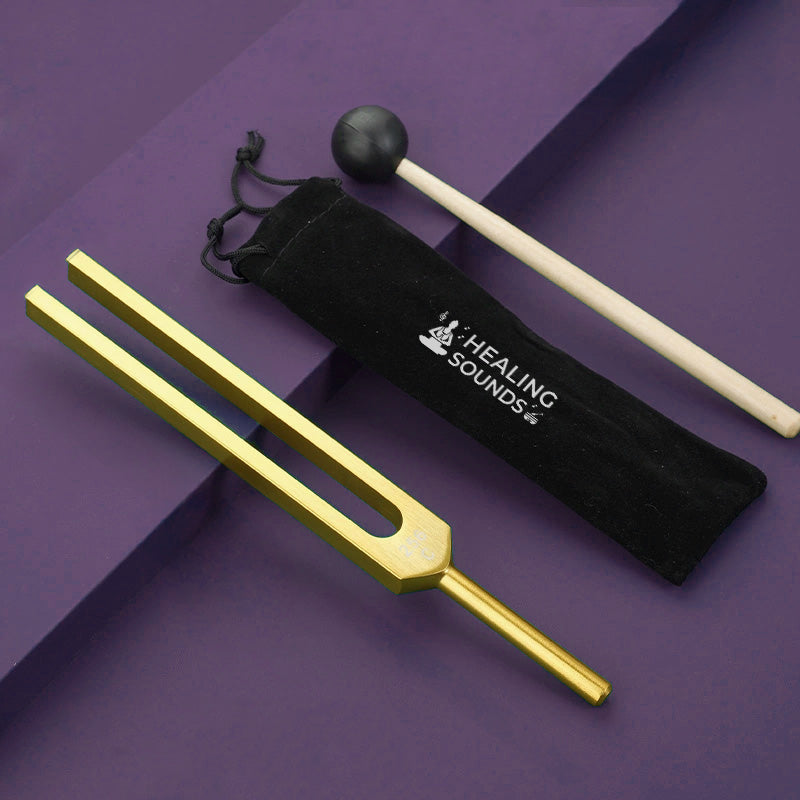
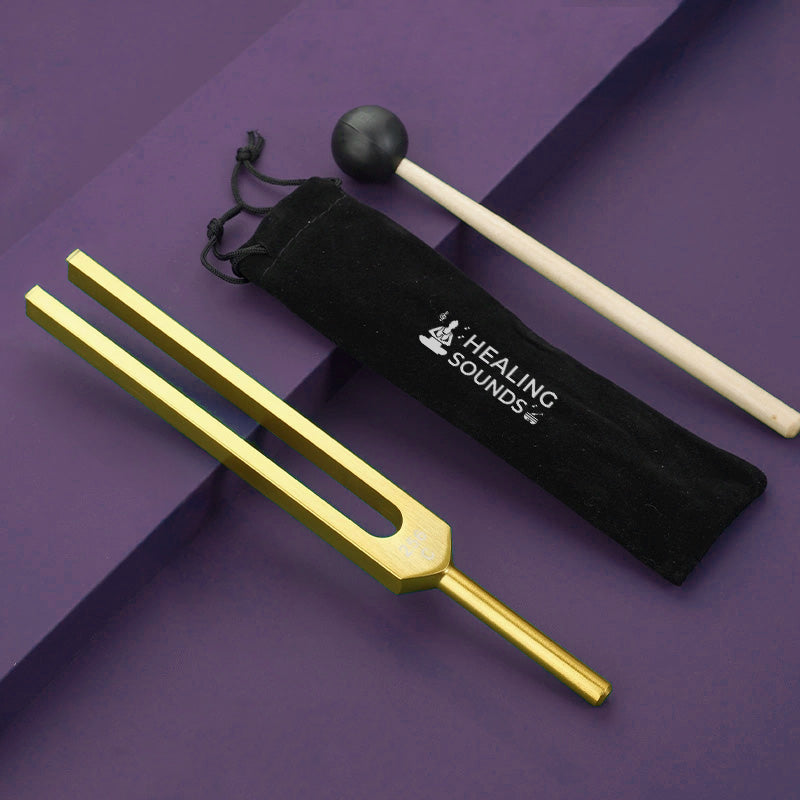
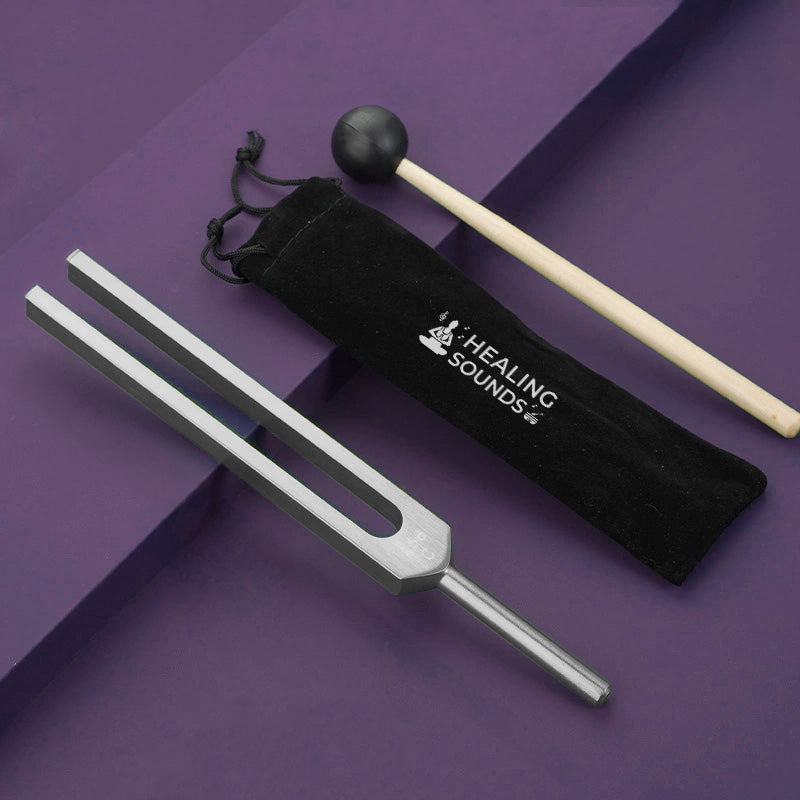
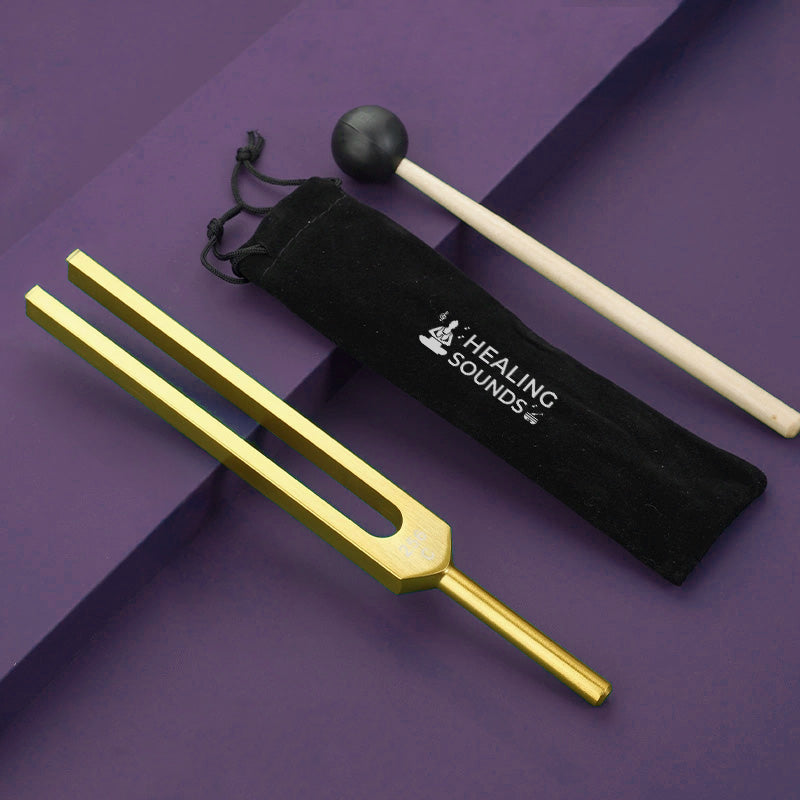
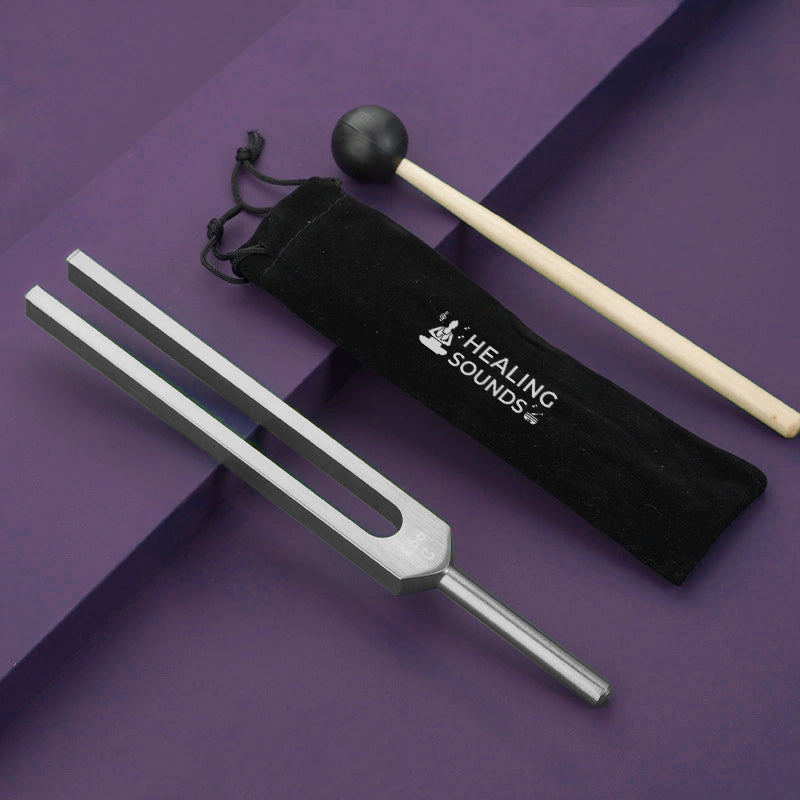
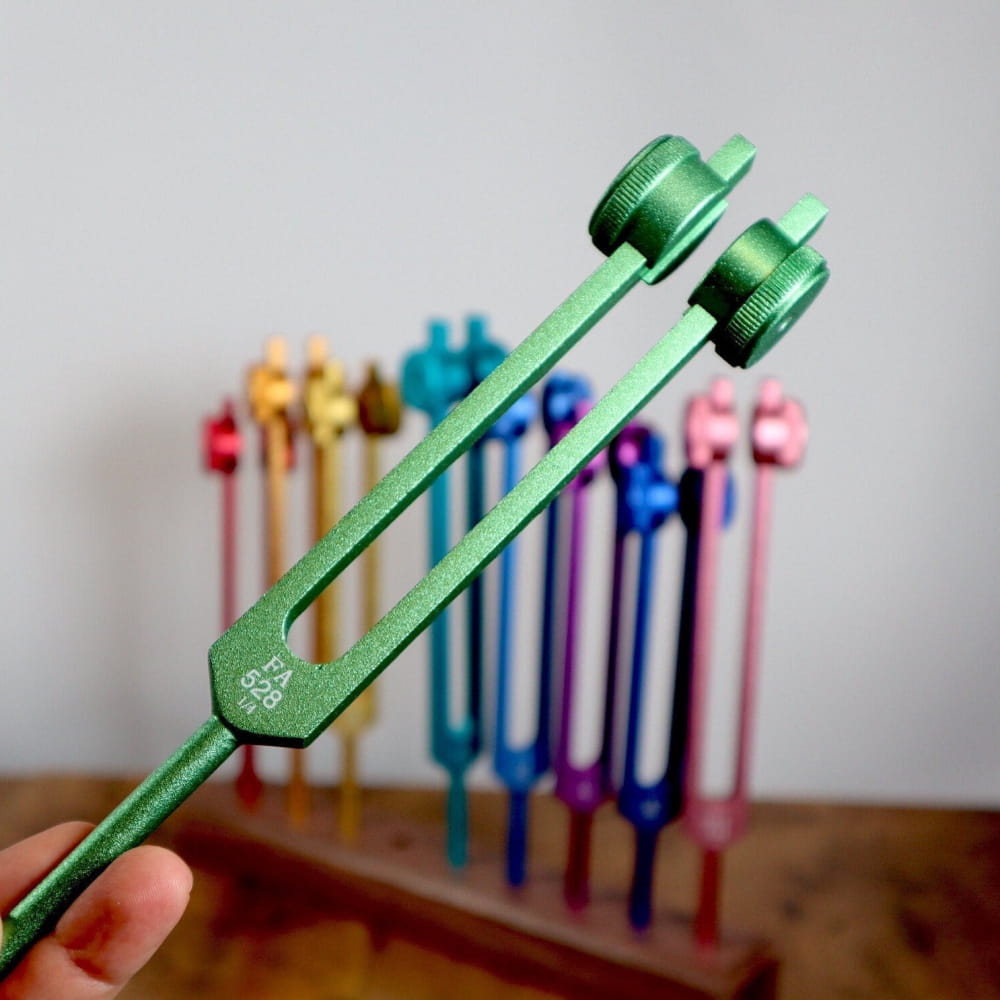
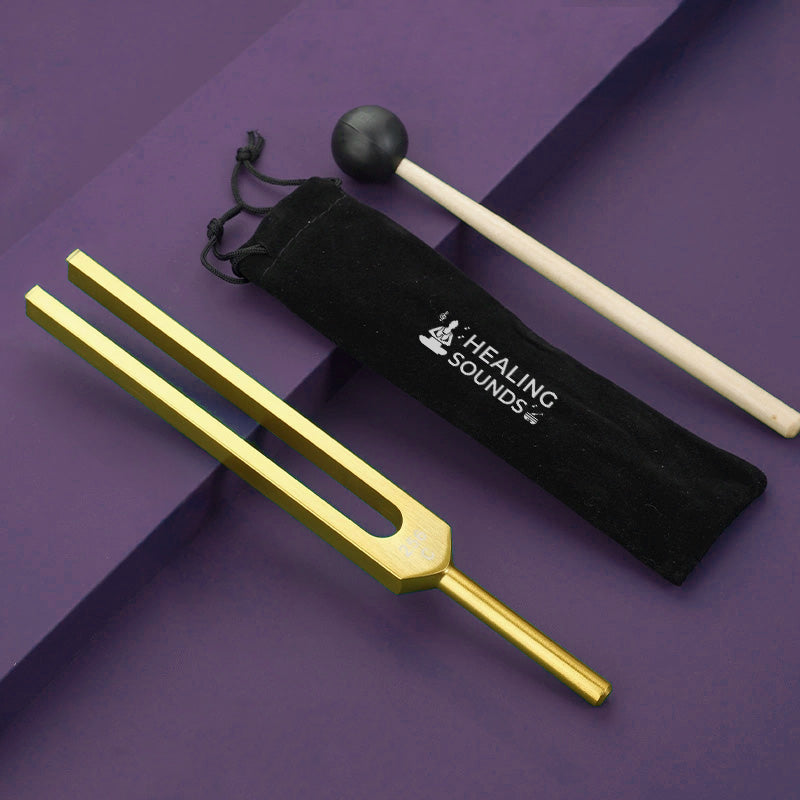
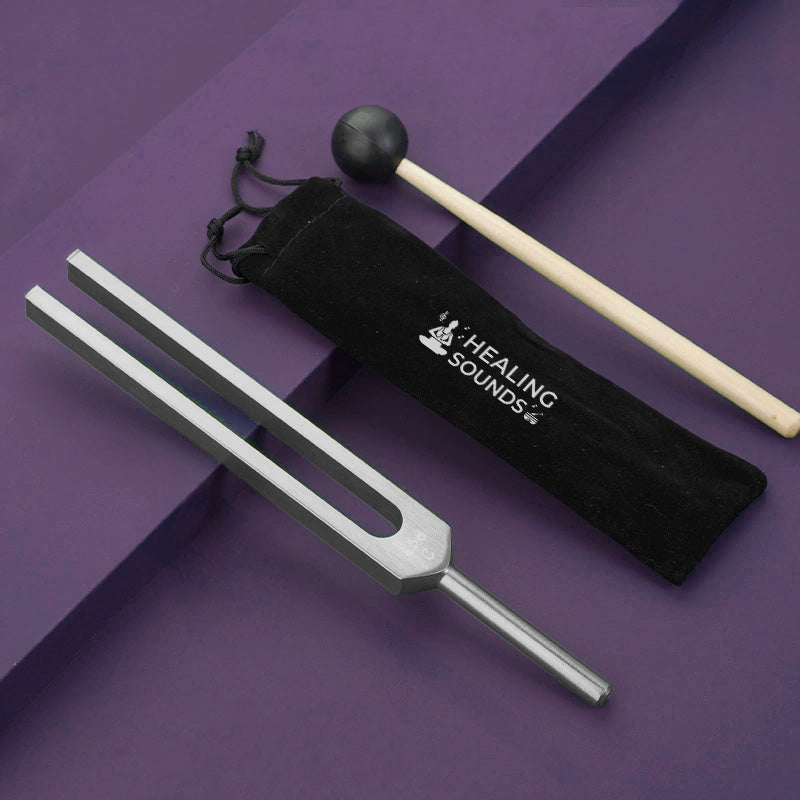
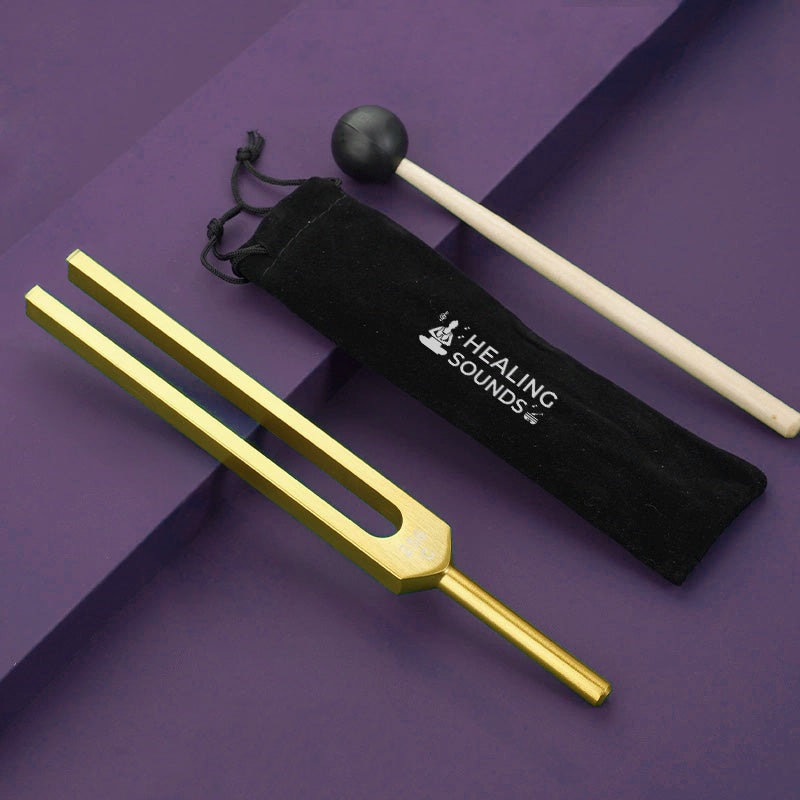
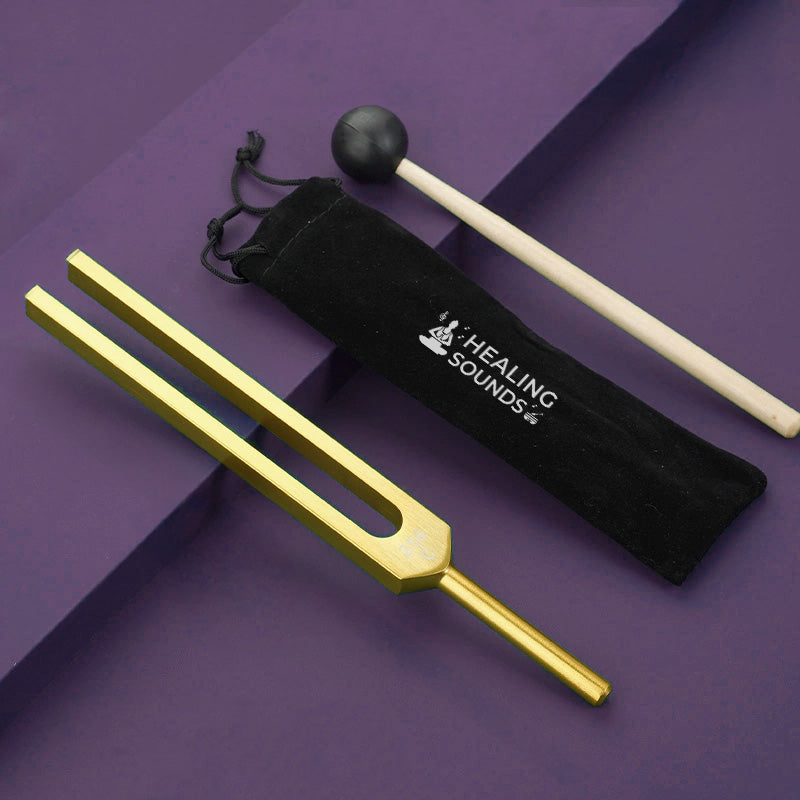
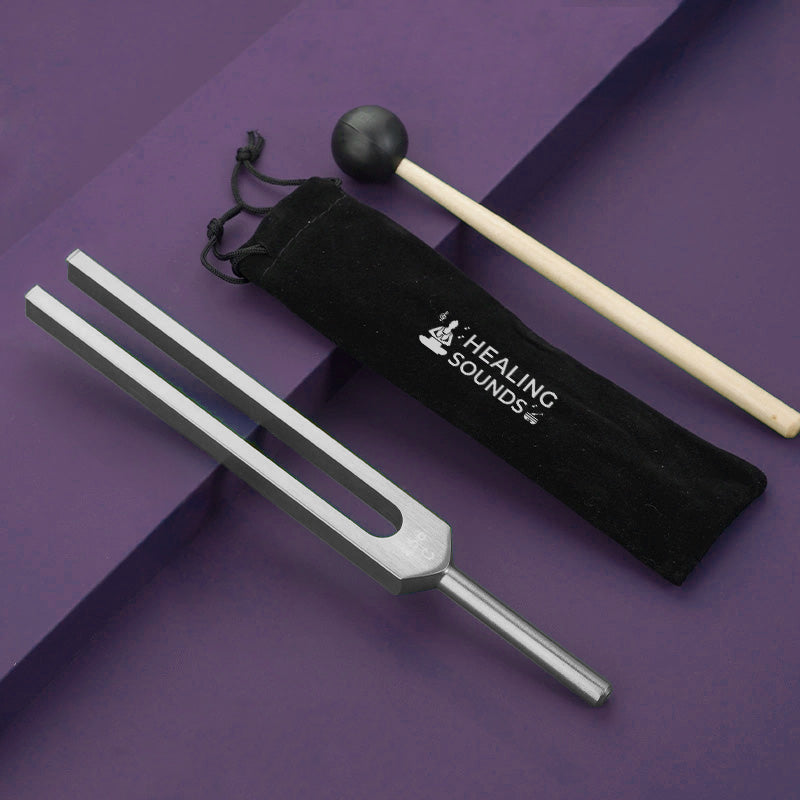
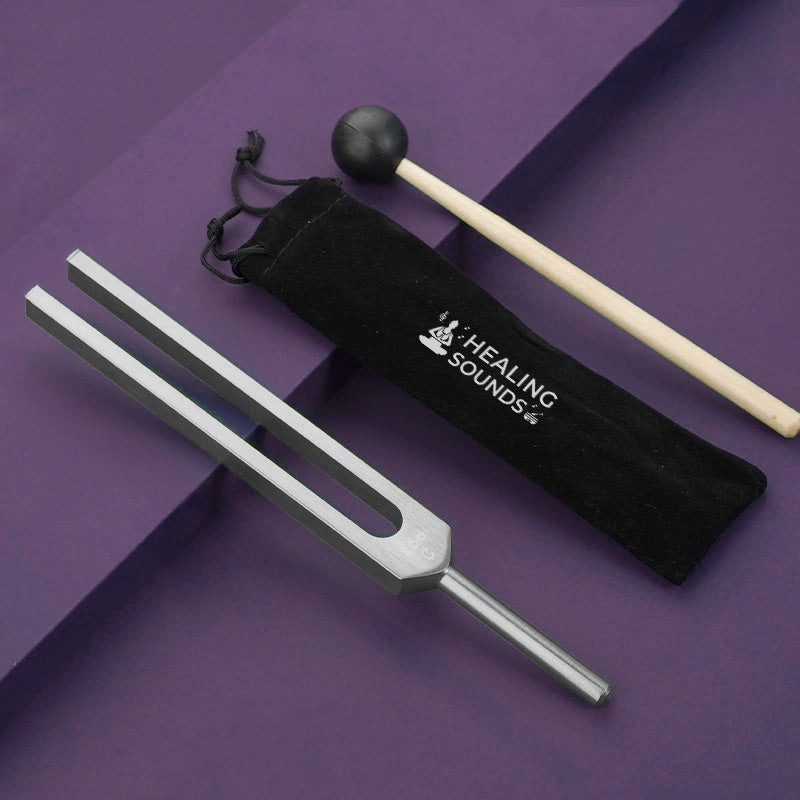
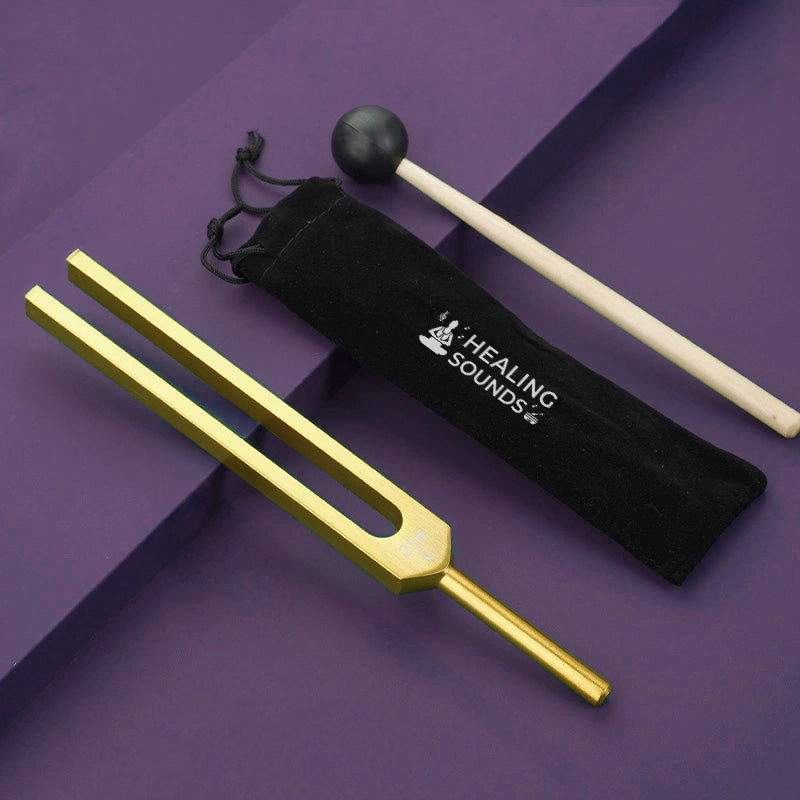
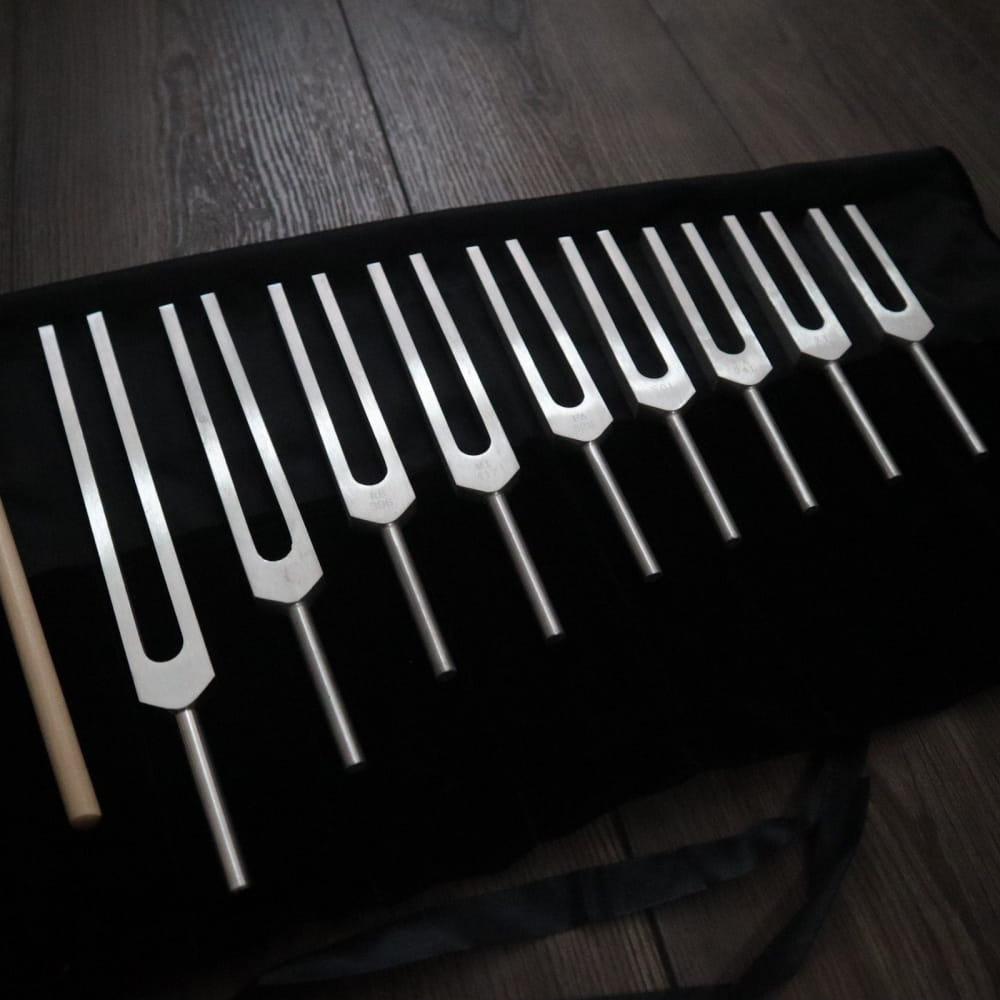
Solfeggio tuning forks are precision instruments calibrated to the nine ancient solfeggio frequencies -- 174, 285, 396, 417, 528, 639, 741, 852 and 963 Hz. These sacred frequencies have roots in early Western musical traditions and are now widely used in sound healing, meditation and tuning fork therapy. Each frequency in the solfeggio scale is associated with a specific healing intention, from grounding and emotional release to intuition and spiritual connection. Every solfeggio tuning fork in our collection is CNC-machined from a single block of premium aluminum alloy, computer-verified to +/-0.25 Hz accuracy and laser-engraved with its frequency.
Whether you want to start with a single fork like the popular 528 Hz tuning fork or invest in a complete solfeggio tuning fork set covering all nine frequencies, this collection offers both individual forks and sets in weighted and unweighted versions. Solfeggio tuning forks for healing are among the most versatile sound therapy instruments available, suitable for personal meditation, client sessions, yoga classes and group sound baths. They are an excellent entry point for anyone exploring tuning forks for healing.
The Nine Solfeggio Frequencies: A Complete Breakdown
Each of the 9 sacred frequencies in the solfeggio scale carries a distinct vibrational quality. Here is a detailed overview of every frequency, its traditional association and practical application in sound therapy.
Frequency
Traditional Association
Common Application
174 Hz
Foundation, security
Grounding sessions, promoting a sense of safety
285 Hz
Cellular healing
Recovery support, tissue repair intention
396 Hz
Liberation from fear and guilt
Emotional release work, root chakra alignment
417 Hz
Facilitating change
Breaking patterns, clearing negativity, sacral work
528 Hz
Transformation, "Love frequency"
Heart-centered healing, DNA repair intention, meditation
639 Hz
Connecting relationships
Communication enhancement, heart chakra support
741 Hz
Expression, solutions
Throat chakra work, creative blocks, intuition
852 Hz
Returning to spiritual order
Third eye activation, inner awareness, clarity
963 Hz
Divine consciousness
Crown chakra, spiritual connection, transcendence
The frequencies form a mathematically coherent set based on repeating digit-sum patterns. Each frequency reduces to either 3, 6 or 9 when its digits are added together -- a pattern that has fascinated mathematicians and sound healers alike.
The 528 Hz Fork: Why It Is the Most Popular Solfeggio Frequency
The 528 Hz tuning fork holds a special place in solfeggio sound therapy. Often called the "Love frequency" or "Miracle tone," 528 Hz is the most requested individual solfeggio fork. It sits at the mathematical center of the nine-frequency scale and is the frequency most commonly associated with heart-centered healing. Many practitioners who buy only one solfeggio tuning fork choose 528 Hz as their starting point. Its moderate pitch produces a clear, pleasant tone that sustains well on unweighted forks and delivers strong vibration on weighted solfeggio tuning forks.
Solfeggio vs Chakra Tuning Forks: Understanding the Difference
New practitioners often wonder whether to start with a solfeggio tuning fork set or a chakra tuning fork set. Both are powerful healing tools, but they operate on different frequency systems and philosophies.
Solfeggio tuning forks use 9 frequencies (174-963 Hz) derived from ancient Western musical scales. The frequencies are selected for their mathematical relationships and their associations with specific healing intentions. Solfeggio forks are typically unweighted and played in the air, creating a rich sound field for meditation, sound healing sessions and emotional processing.
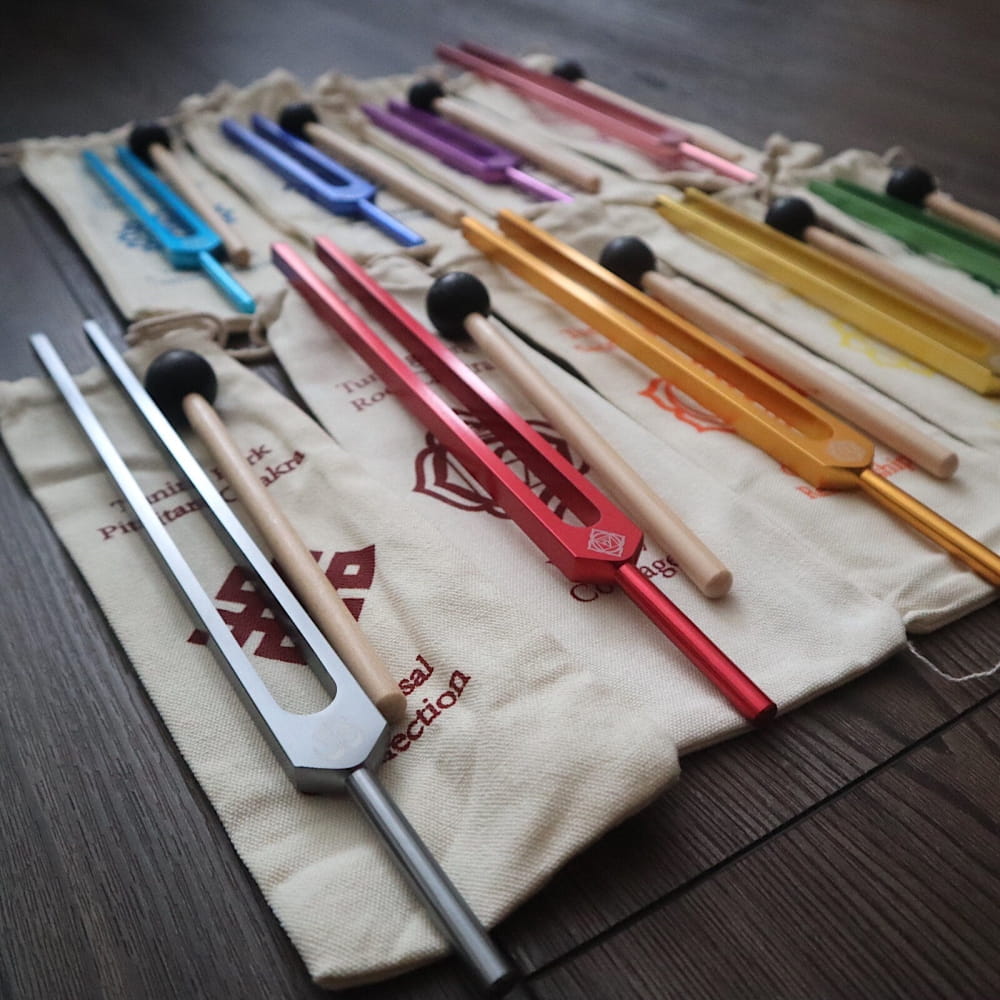
Chakra tuning forks use 7 planetary frequencies (126.22-221.23 Hz) calculated from the orbital periods of celestial bodies using Hans Cousto's "Cosmic Octave" formula. Each frequency corresponds to a specific energy center (chakra) in the body. Chakra forks are available in both weighted and unweighted versions and are used for energy balancing and chakra alignment.
Feature
Solfeggio Set (9 forks)
Chakra Set (7 forks)
Frequency range
174-963 Hz
126.22-221.23 Hz
Number of forks
9
7
Frequency source
Ancient musical scale
Planetary orbits (Cosmic Octave)
Primary use
Sound therapy, meditation, emotional healing
Chakra balancing, energy work
Typical type
Unweighted (weighted available)
Both weighted and unweighted
Best for beginners
Broadest healing range with one set
Best for energy-focused practices
Many experienced practitioners own both sets. The solfeggio set provides the widest frequency range and most versatile healing toolkit, while the chakra set offers targeted energy balancing. If you can only buy one, a solfeggio tuning fork set covers more ground for general sound healing work.
How Sound Therapists Use Solfeggio Tuning Forks in Sessions
Professional sound healers integrate solfeggio tuning forks into their practice using several established techniques. Here are the most common approaches.
Sequential Frequency Sweep
The practitioner works through all nine frequencies in ascending order (174 to 963 Hz), holding each vibrating fork near the client for 15 to 30 seconds. This creates a progressive journey from grounding (lower frequencies) to expanded awareness (higher frequencies). A full nine-fork sweep takes 10 to 15 minutes and serves as a complete mini-session or as the opening segment of a longer treatment. Each fork is activated by striking it against a rubber activator and held 2 to 6 inches from the body.
Targeted Single-Frequency Work
When a client has a specific concern, the practitioner selects the most relevant solfeggio frequency and works with that single fork for an extended period. For example, 396 Hz for clients processing fear or guilt, 528 Hz for heart-centered healing or 741 Hz for creative blocks and self-expression. The fork is struck repeatedly and moved slowly around the body, creating a sustained sound environment focused on one healing intention.
Interval Pairing for Harmonic Depth
Striking two solfeggio forks simultaneously creates a harmonic interval that adds complexity and depth to the sound. Popular pairings include 396 Hz + 528 Hz and 528 Hz + 639 Hz. The resulting beat frequencies and overtones produce a richer sonic landscape than any single fork alone.
The Mathematical Origins Behind Solfeggio Frequencies
The solfeggio frequencies derive from a set of six core tones (396, 417, 528, 639, 741, 852 Hz) that share a distinctive mathematical property. Adding the individual digits of each frequency produces a repeating pattern of 3, 6 and 9. For example: 396 becomes 3+9+6=18, then 1+8=9. The pattern holds for all six original tones. Three additional frequencies (174, 285 and 963 Hz) were later identified following the same digit-sum pattern, completing the modern set of nine.
This mathematical structure connects the solfeggio scale to ancient number theory and the significance of 3, 6 and 9 in various spiritual and scientific traditions. The Fibonacci sequence, by contrast, follows a completely different mathematical logic (each number is the sum of the two preceding numbers: 1, 1, 2, 3, 5, 8, 13...). While both systems appear in nature and music, they produce different frequency sets with different applications. Fibonacci-based tuning uses ratios rather than fixed frequencies, while solfeggio tuning forks are calibrated to specific Hz values.
The practical takeaway: solfeggio frequencies form a coherent mathematical set that many practitioners experience as harmonically balanced and therapeutically consistent when used together.
Browse More Sound Healing Collections
Expand your solfeggio tuning fork practice with these complementary collections:
Frequently Asked Questions About Solfeggio Tuning Forks
Solfeggio tuning forks are used for sound healing, meditation, emotional release, energy balancing and creating therapeutic sound environments. Each of the nine frequencies (174-963 Hz) is associated with a specific healing intention, from grounding and security at 174 Hz to spiritual connection at 963 Hz. Practitioners use them in individual sessions, group sound baths, yoga classes and personal meditation. The forks are activated and held near the body or ears, creating a sustained tone that promotes relaxation and focused awareness.
The 9 sacred solfeggio frequencies are: 174 Hz (foundation), 285 Hz (cellular healing), 396 Hz (liberating fear and guilt), 417 Hz (facilitating change), 528 Hz (transformation and love), 639 Hz (connecting relationships), 741 Hz (expression and solutions), 852 Hz (spiritual order) and 963 Hz (divine consciousness). These nine frequencies share a mathematical property where the sum of each frequency's digits reduces to 3, 6 or 9. The original six core tones (396-852 Hz) were later expanded to include 174, 285 and 963 Hz.
Fibonacci and solfeggio are two different mathematical systems applied to sound. The Fibonacci sequence (1, 1, 2, 3, 5, 8, 13...) uses ratios between consecutive numbers to generate frequency relationships. Fibonacci-based tuning forks use these ratios rather than fixed frequencies. Solfeggio frequencies are nine specific Hz values (174-963 Hz) selected for their digit-sum pattern (each reduces to 3, 6 or 9). The practical difference is that solfeggio forks are calibrated to exact frequencies, while Fibonacci forks express mathematical ratios. Both systems are used in sound therapy with different philosophical foundations.
When you listen to solfeggio frequencies, the auditory system processes the tones and the brain may respond with corresponding changes in brainwave patterns. Low solfeggio frequencies (174-396 Hz) are commonly associated with relaxation and may encourage alpha and theta brainwave states. Higher frequencies (741-963 Hz) are often described as promoting alertness and clarity. When two solfeggio forks are played simultaneously, the slight difference in frequency can create binaural-like beat effects that further influence brainwave entrainment. Many practitioners and clients report shifts in mood, focus and relaxation during solfeggio sessions.
The term "God's frequency" most commonly refers to 963 Hz, the highest solfeggio frequency, associated with divine consciousness, spiritual awakening and connection to higher states of awareness. Some traditions also apply this label to 528 Hz, which is called the "Love frequency" or "Miracle tone" and is associated with transformation and heart-centered healing. Both frequencies hold significant places in the solfeggio system. The 963 Hz fork is typically used for crown chakra work and meditation, while 528 Hz is the most popular individual solfeggio fork for general healing.
The 528 Hz tuning fork is used for heart-centered sound healing, meditation, emotional balancing and creating a calming therapeutic environment. Known as the "Love frequency," it sits at the center of the solfeggio scale and is the most popular individual solfeggio fork. Practitioners hold the activated fork near the heart center, ears or sweep it through the biofield. It is commonly used in yoga classes during savasana, in meditation circles for focused awareness, in individual sound healing sessions for emotional processing and as a personal wellness tool for daily stress management.
Filters (0)
High-Quality Tuning Forks Collection
Discover premium tuning forks for perfect sound calibration.
Enhance Your Sound Experience
Achieve precise tonal quality with our tuning forks.
Recently viewed
Treat yourself to a relaxing moment
With our best instruments. Handcrafted from the finest materials.
Created by healing enthousiasts
We know your needs because we use our products too. We are the first users.
Money-back guarantee
You have 60 days to return your order if it doesn't fit (you'll love it anyway).
100% secured payments
So you can remain in deep peace until you receive your order.