Tuning fork accessories make the difference between a basic setup and a fully equipped sound healing practice. From activators that produce a clean strike every time to feet attachments that extend the therapeutic reach of your forks, the right accessories improve consistency, protect your instruments and open up new application techniques. Whether you are a professional practitioner outfitting a treatment room or a home user looking to get more from your tuning forks, this collection has the essential tools you need. All accessories are designed to work with our CNC-machined, +/-0.25 Hz accuracy tuning forks.
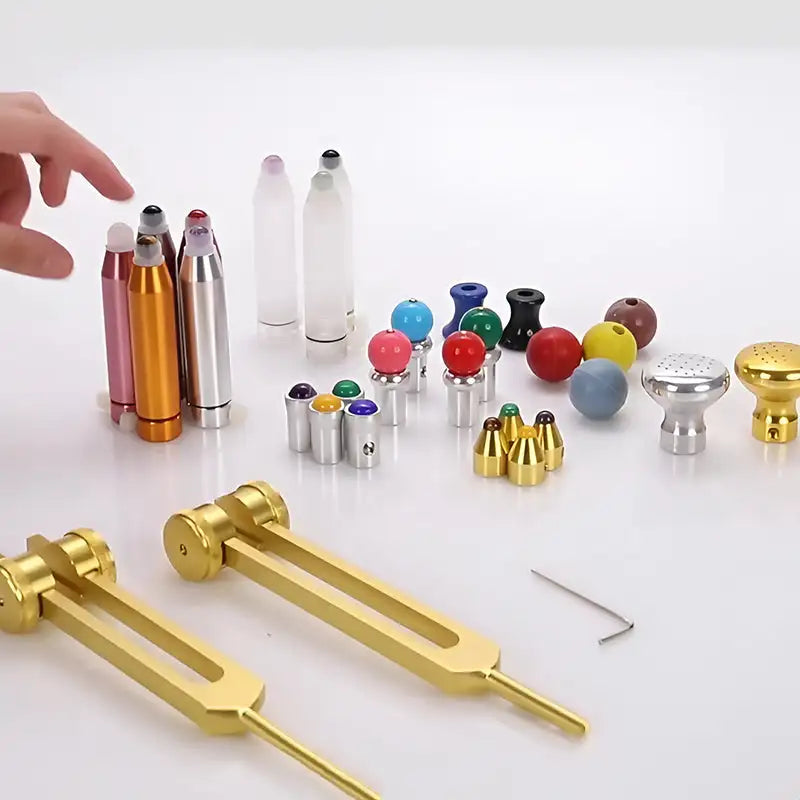
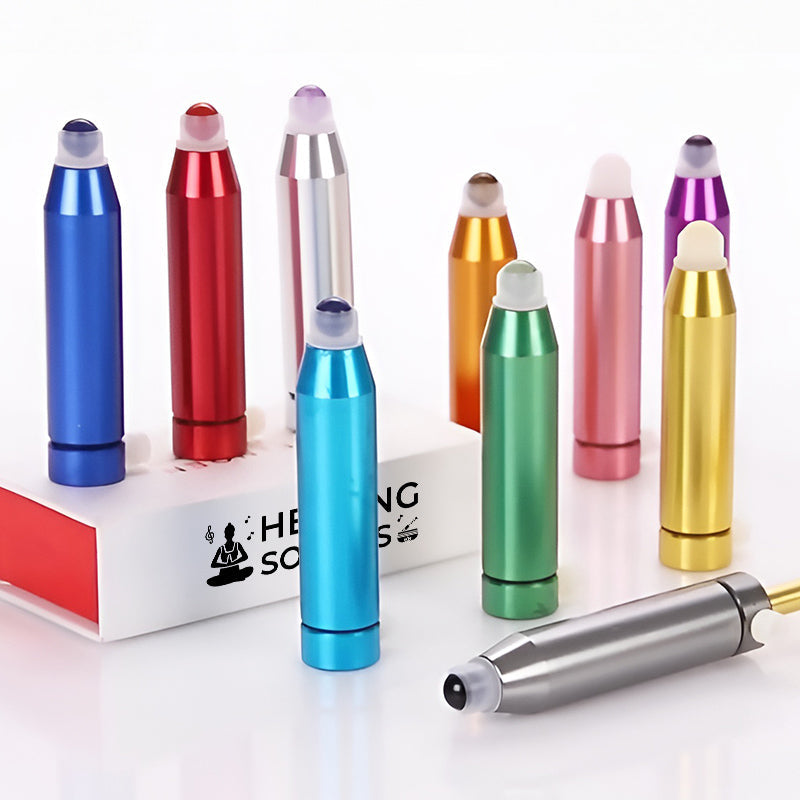
Our accessory range includes rubber tuning fork activators, silicone gem feet, crystal point attachments, rubber mallets, padded carrying cases and replacement parts. Each accessory serves a specific purpose in the tuning fork therapy workflow -- from how you activate the fork to how you apply it to the body to how you store and transport your collection safely.
Understanding Tuning Fork Activators: Your Most Important Accessory
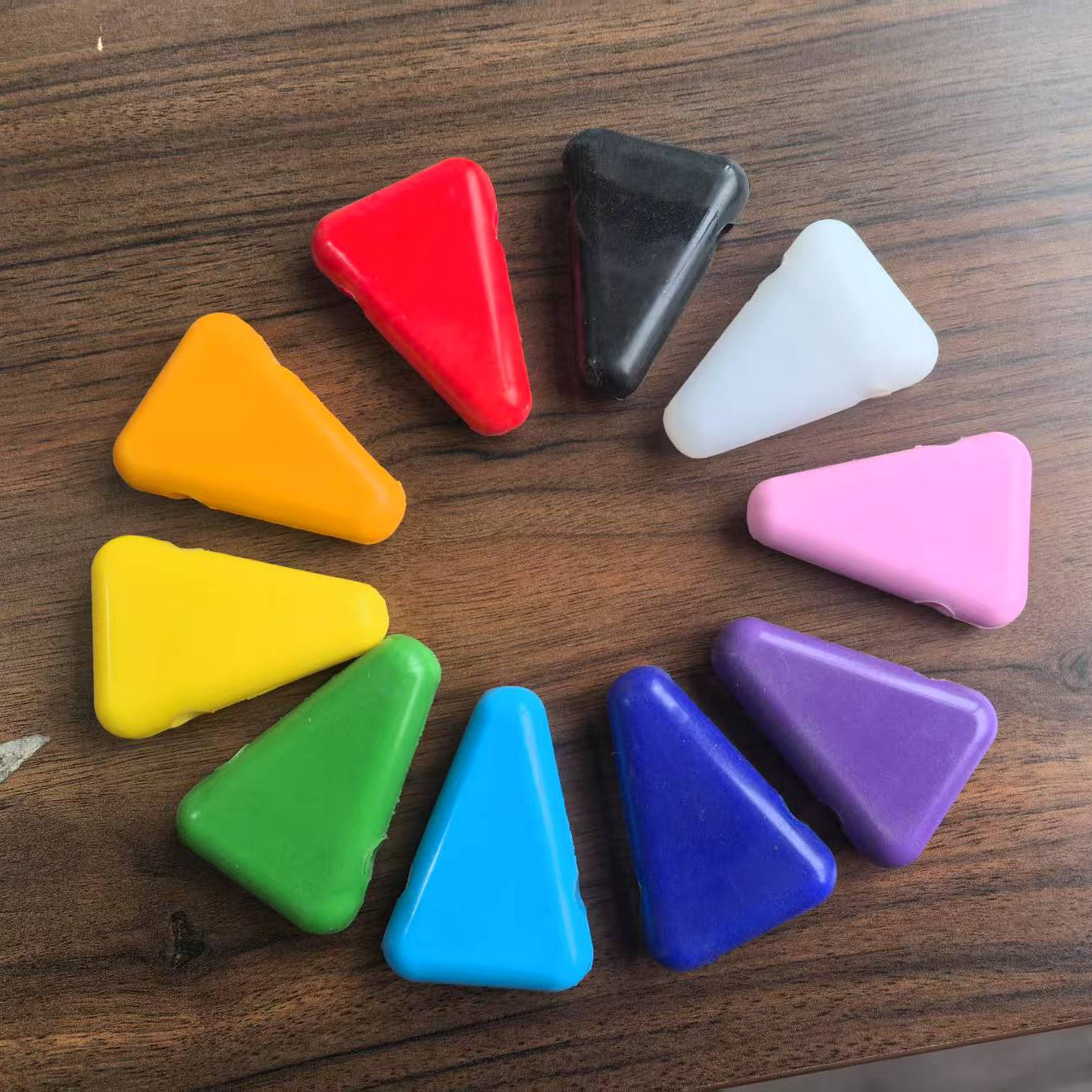
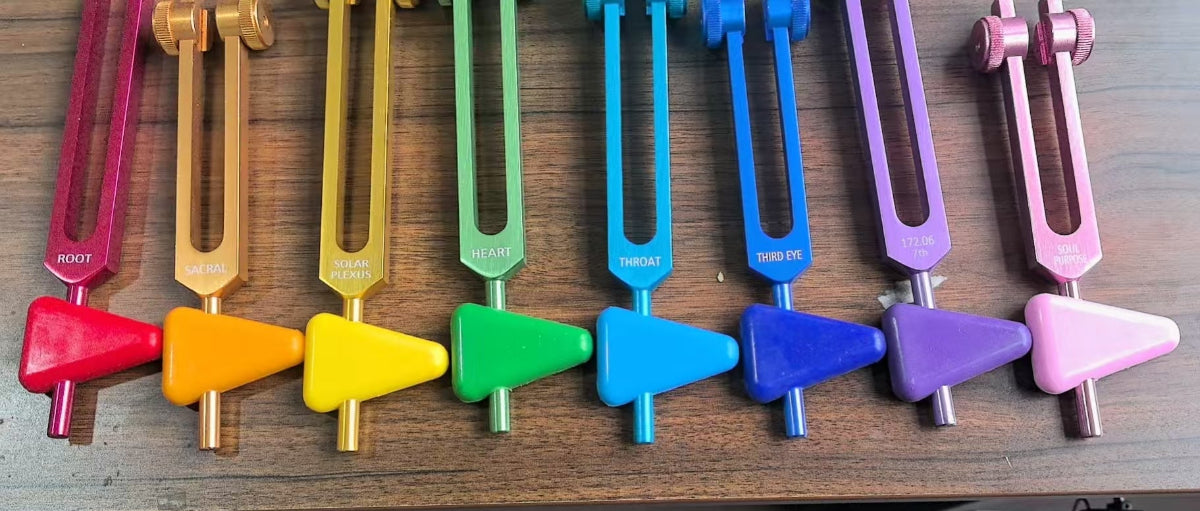
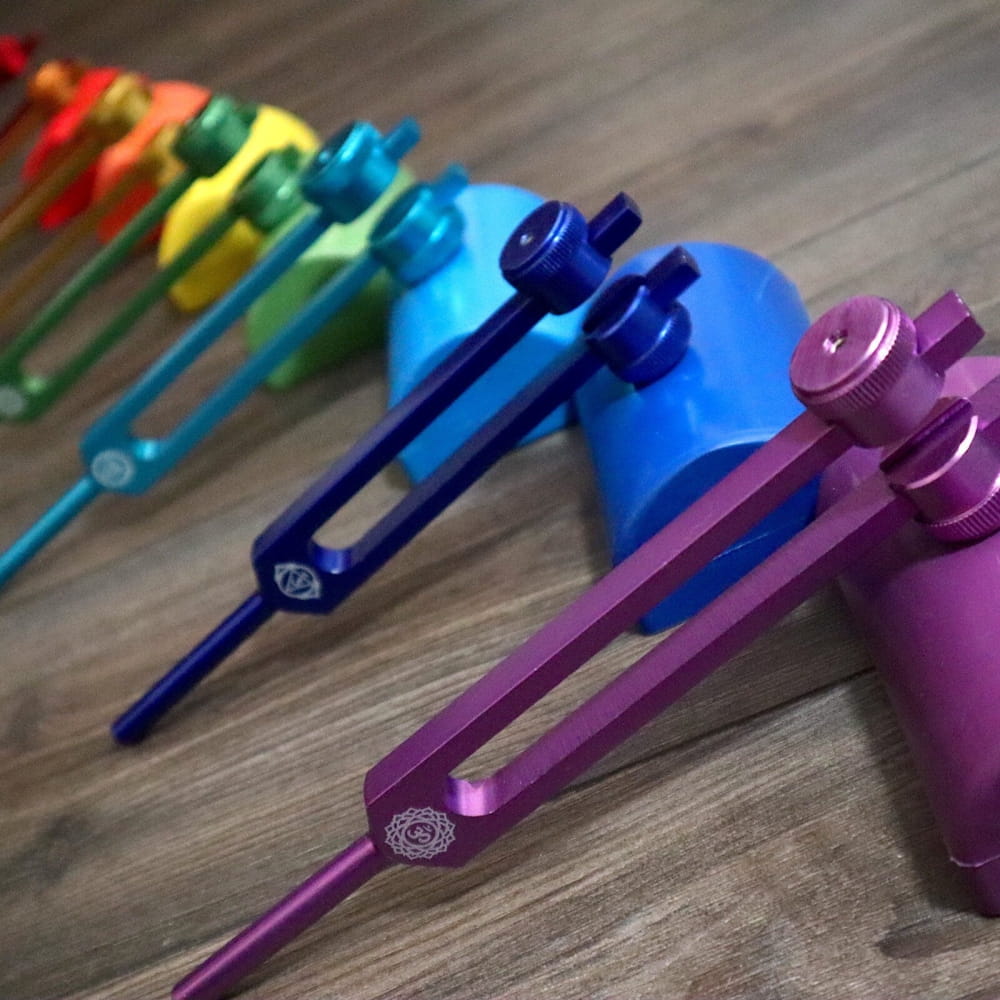
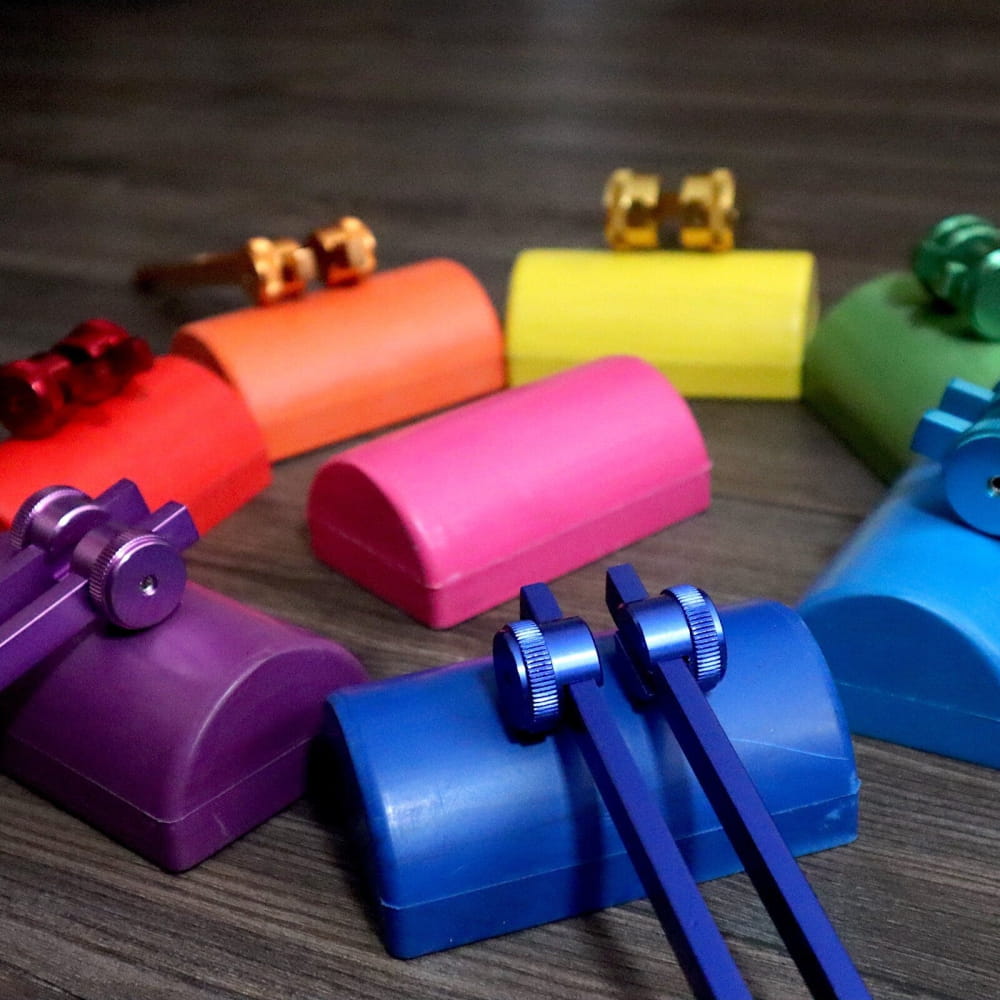
A tuning fork activator is a small tool -- typically a rubber puck or hockey-puck-shaped disc -- used to strike and activate a tuning fork cleanly. While you can activate a fork by tapping it on your knee, palm or a hard surface, using a dedicated activator produces a purer tone with less overtone noise and protects both the fork and your body from the impact of repeated strikes.
Why a Rubber Activator Produces a Cleaner Tone
When a tuning fork is struck against a hard surface (like a table edge or even a shoe sole), the impact generates high-frequency overtones that muddy the fundamental tone. A rubber activator for tuning fork use absorbs excess vibration at the strike point, allowing the fork's designed frequency to ring clearly. This is especially important for sound healing work, where tonal purity matters for both the practitioner's assessment and the client's experience.
Professional-grade activators are made from dense, medium-hardness rubber. Too soft, and you will not get enough energy into the fork; too hard, and you reintroduce the overtone problem. The activators in our collection are calibrated to work with both weighted and unweighted tuning forks, providing a firm strike surface that is gentle on the tines.
How to Activate a Tuning Fork Properly
Hold the tuning fork by the stem (the single prong at the base) between your thumb and forefinger. The two tines should face away from you. Bring the flat face of one tine down firmly onto the activator, striking at approximately the midpoint of the tine -- not the tip, not the base. The fork should ring immediately with a clear, sustained tone. For weighted tuning forks, strike with slightly more force because the added mass requires more energy to set in motion. For unweighted forks, a moderate tap is sufficient.
Avoid striking both tines simultaneously against the activator -- this can create a "clashing" interference pattern. Only one tine should make contact with the activator surface. With practice, this single-tine strike becomes second nature and produces the cleanest possible tone every time.
Feet Attachments: Extending How You Apply Tuning Forks
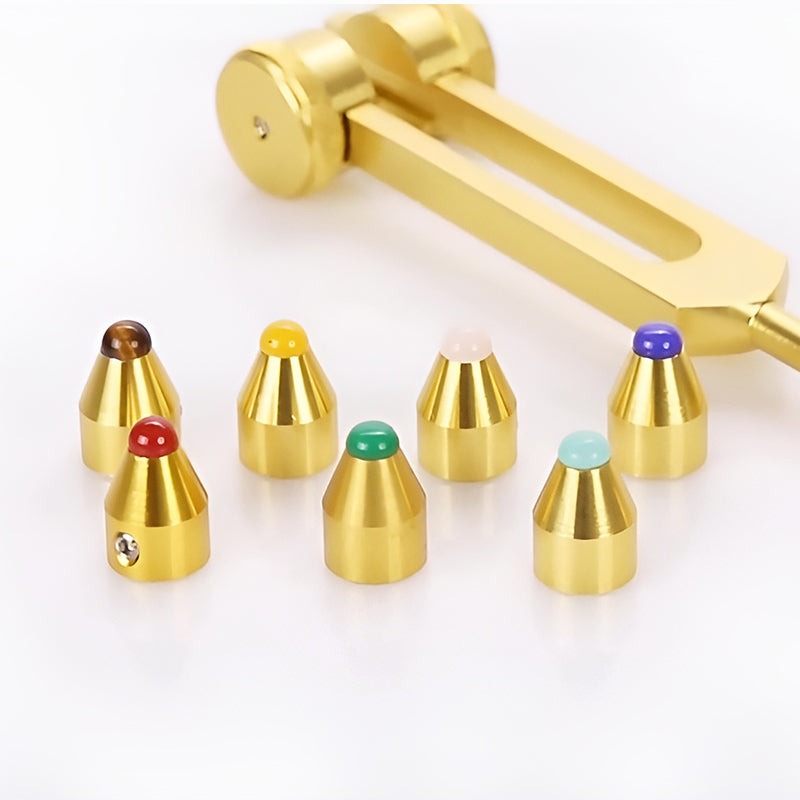
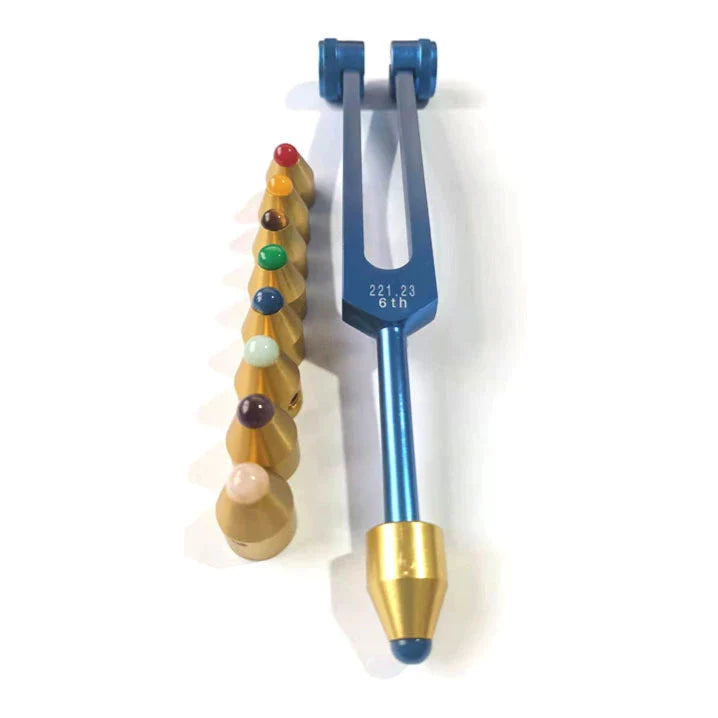
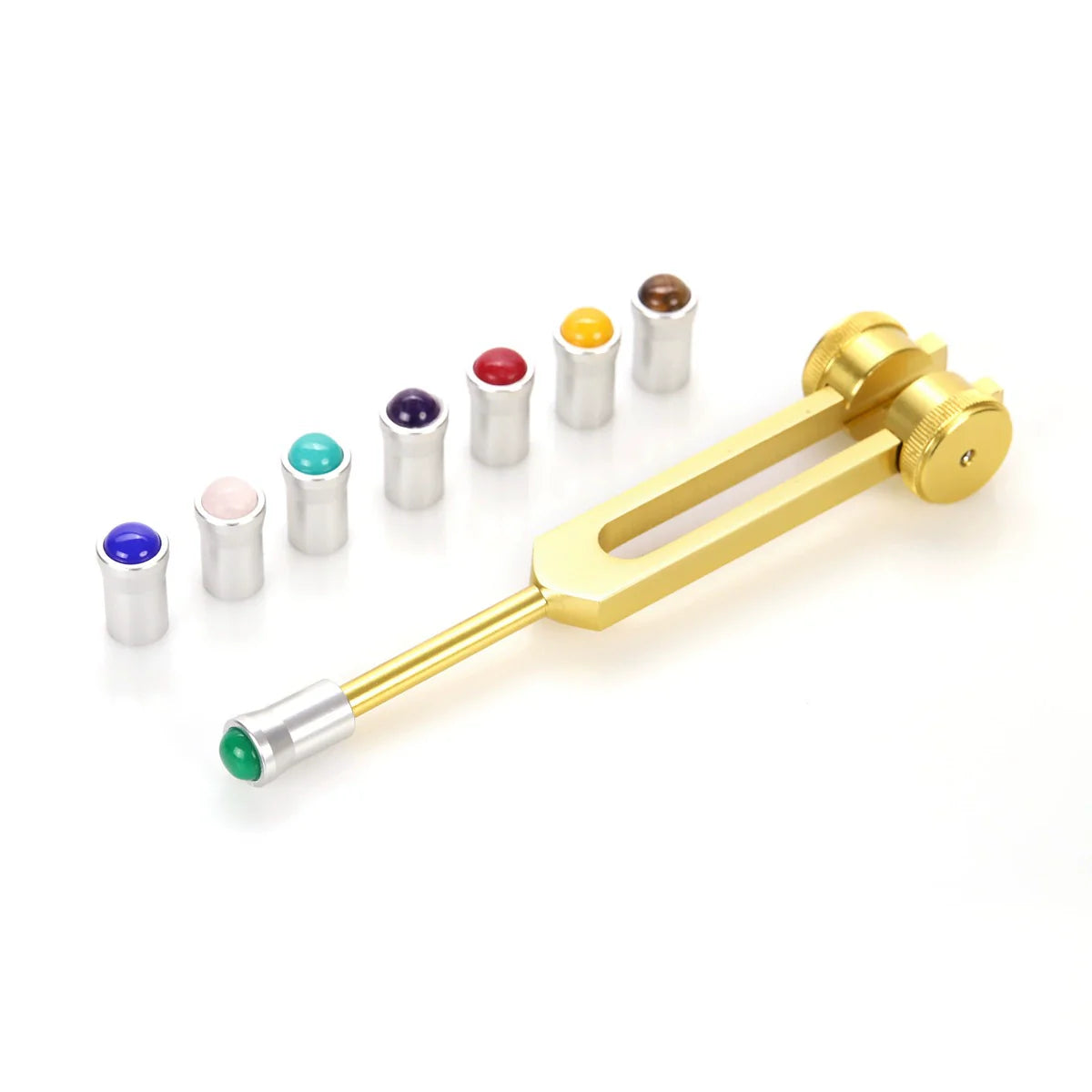
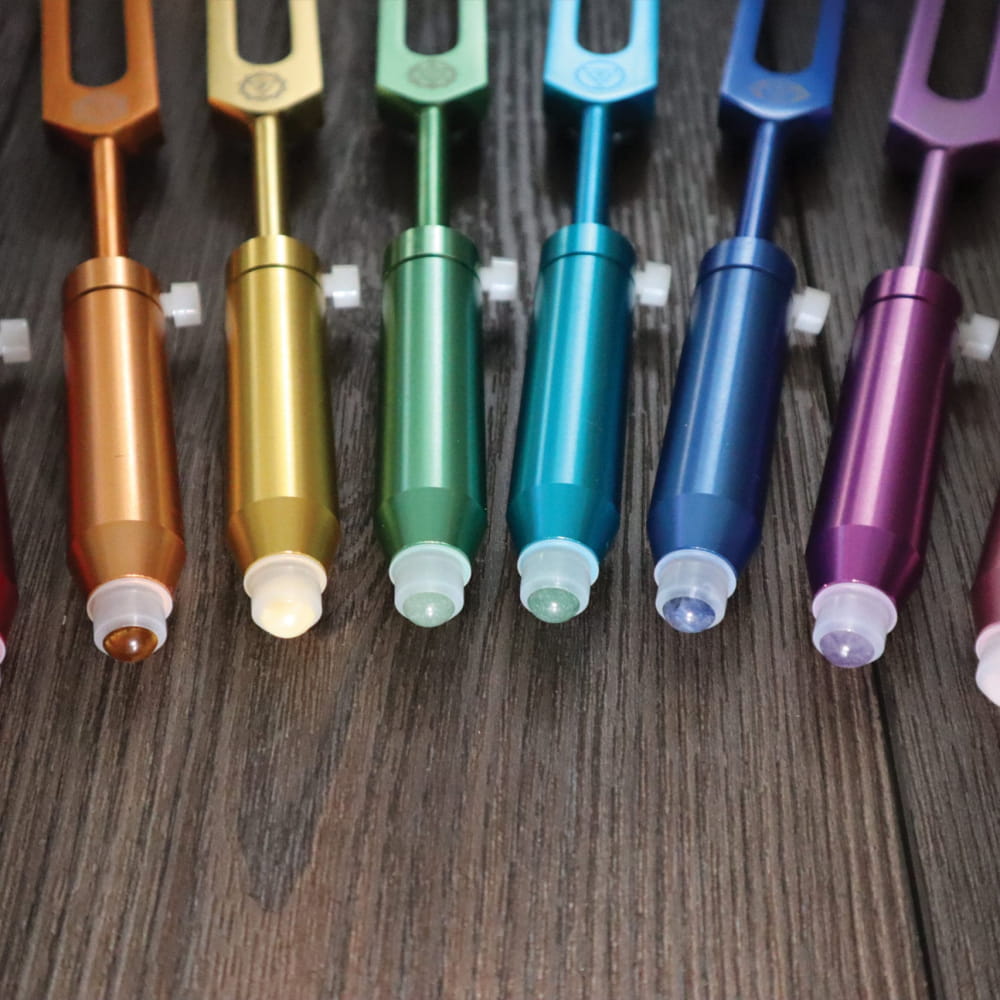
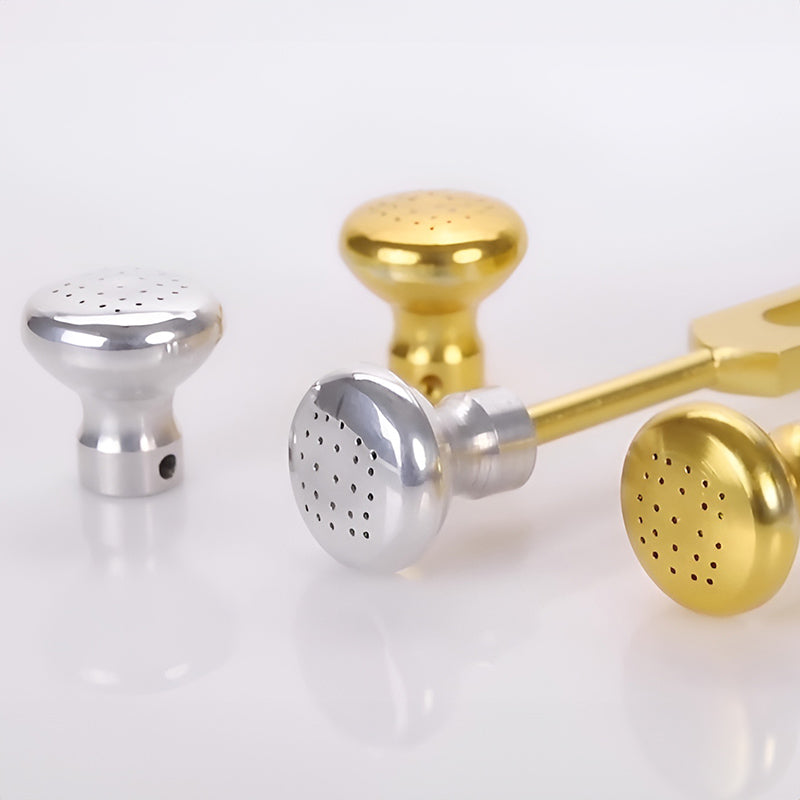
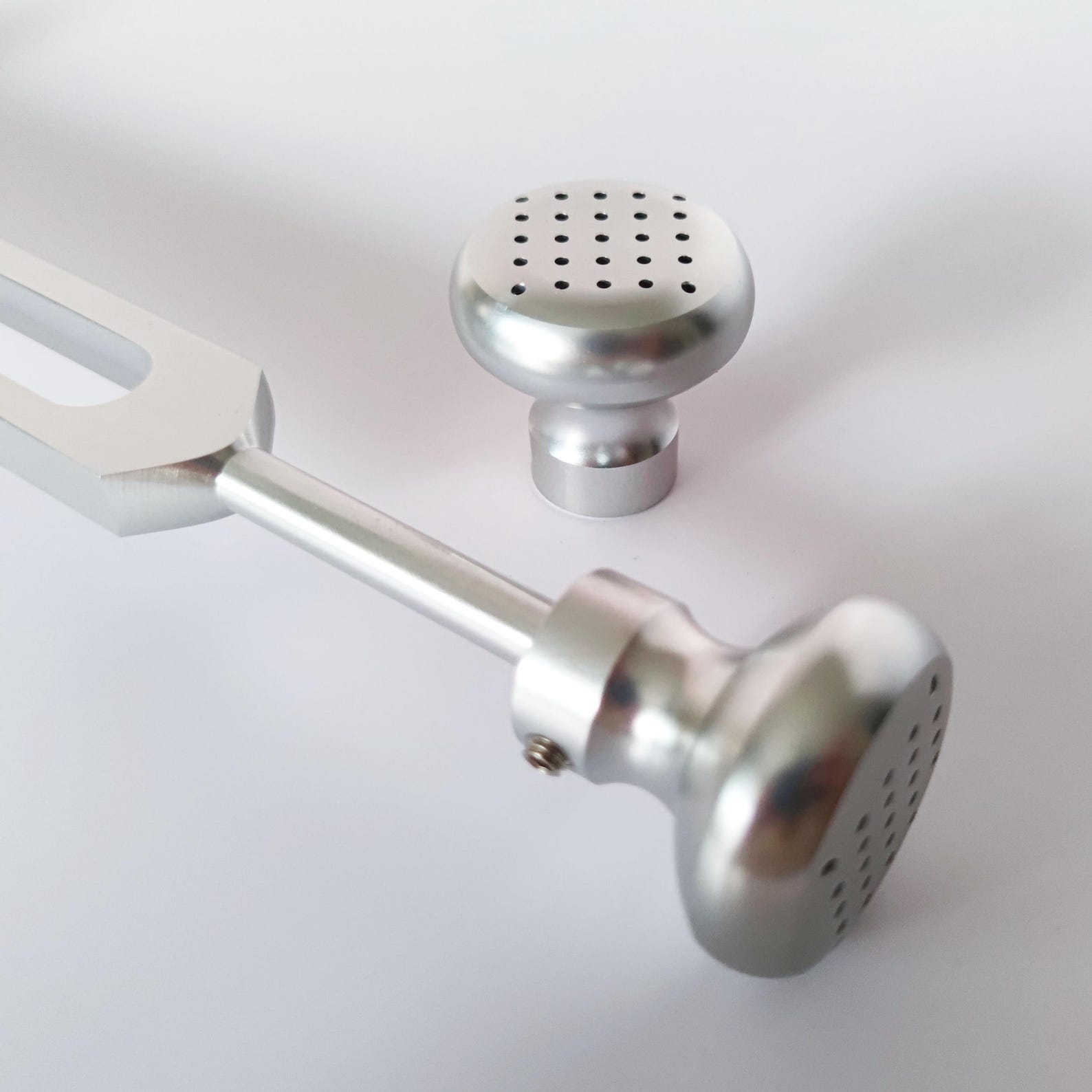
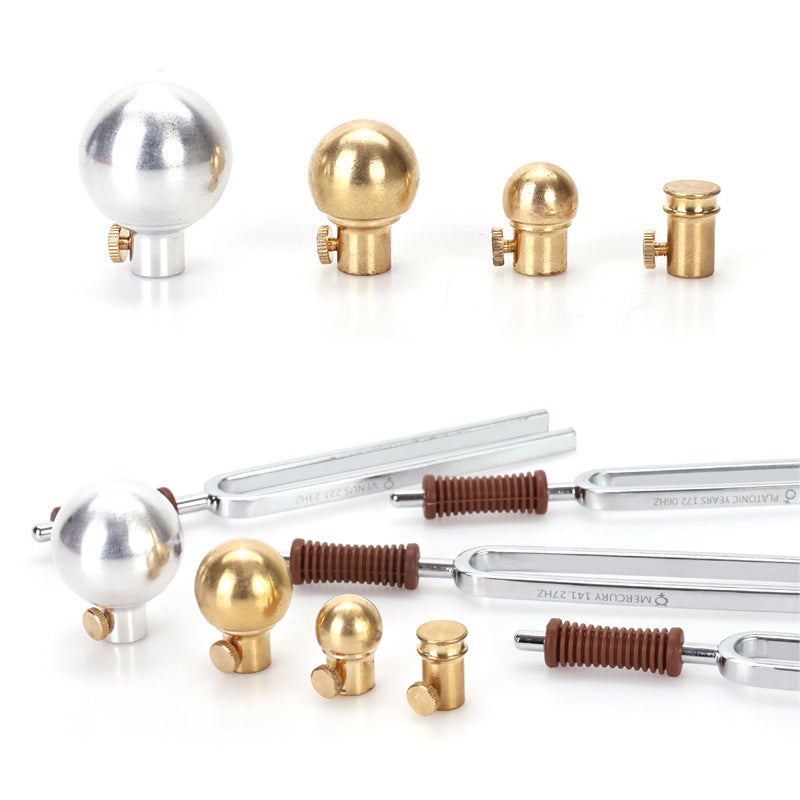
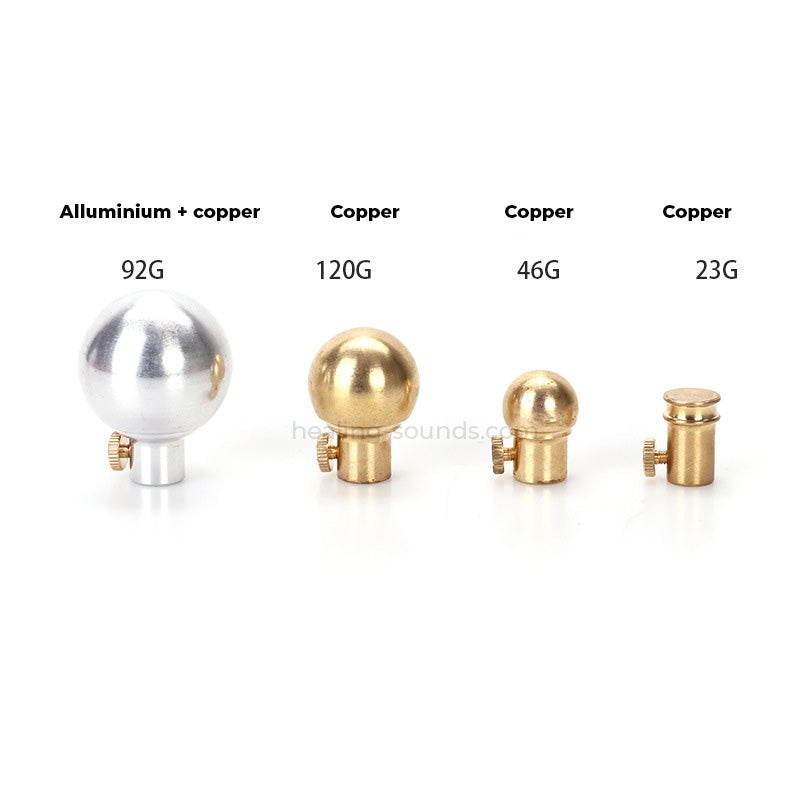
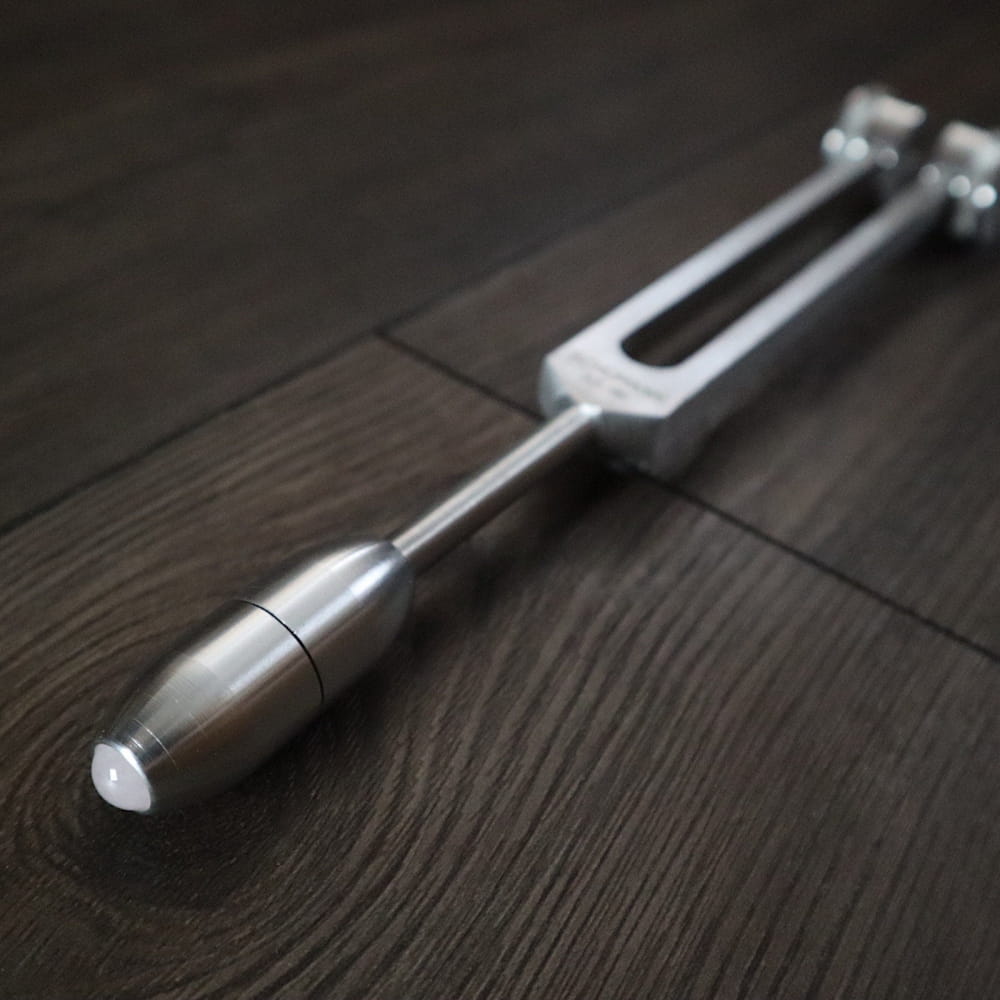
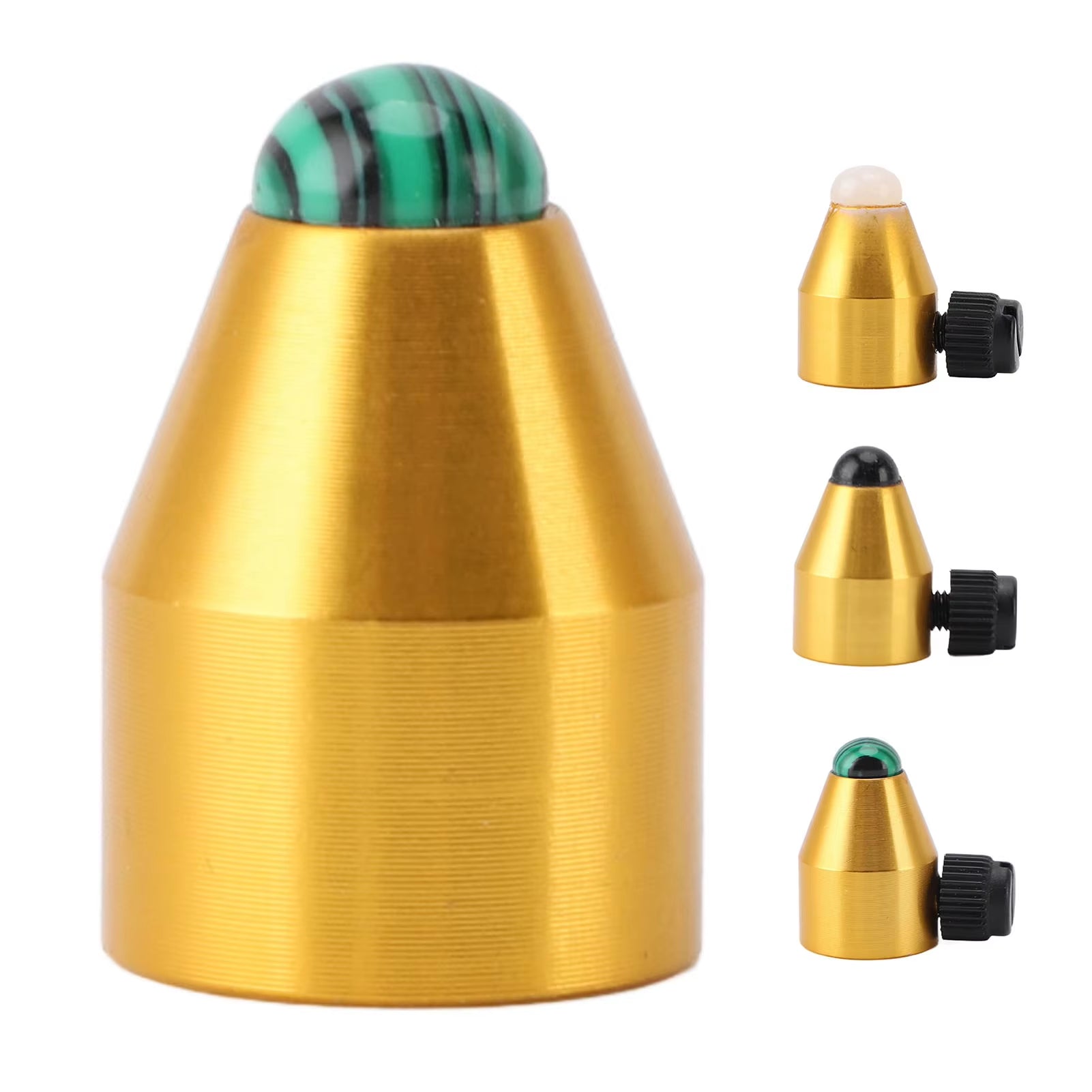
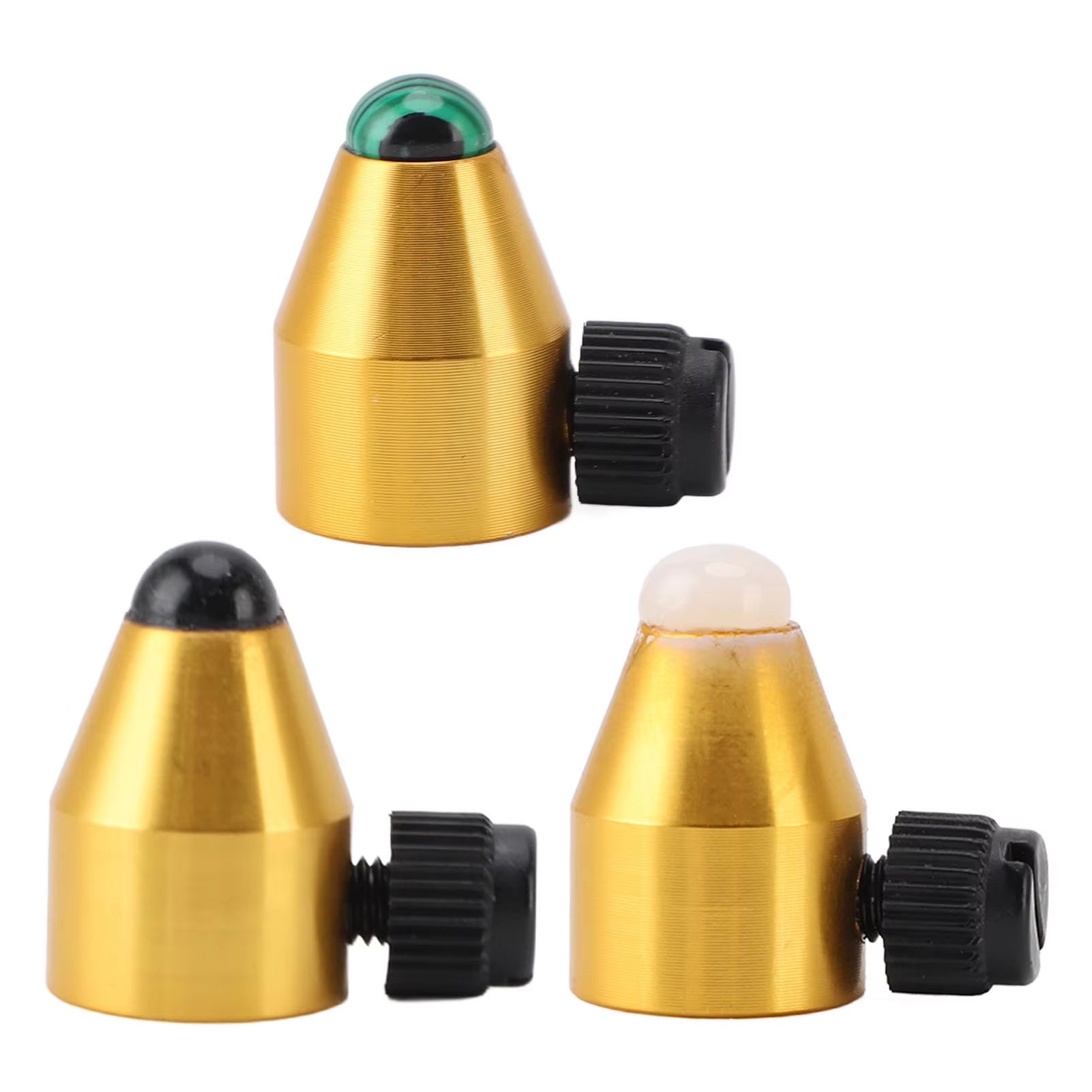
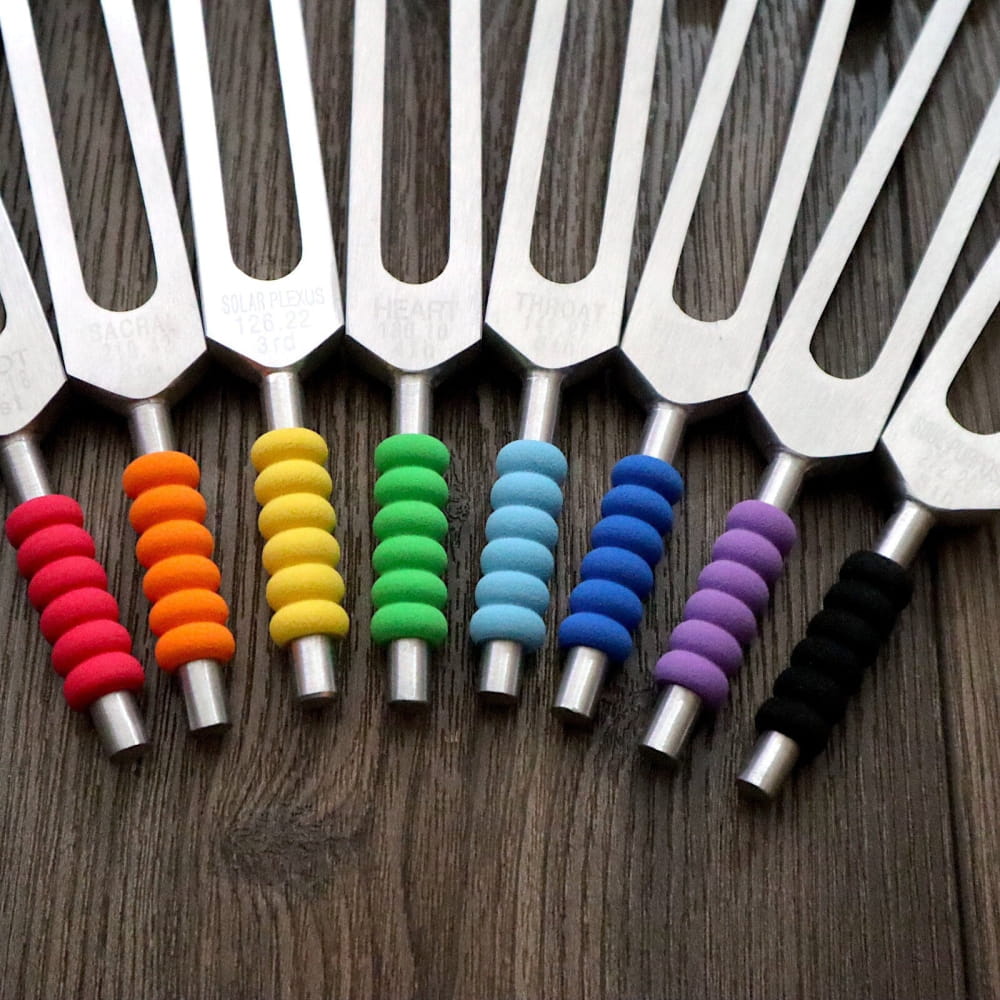
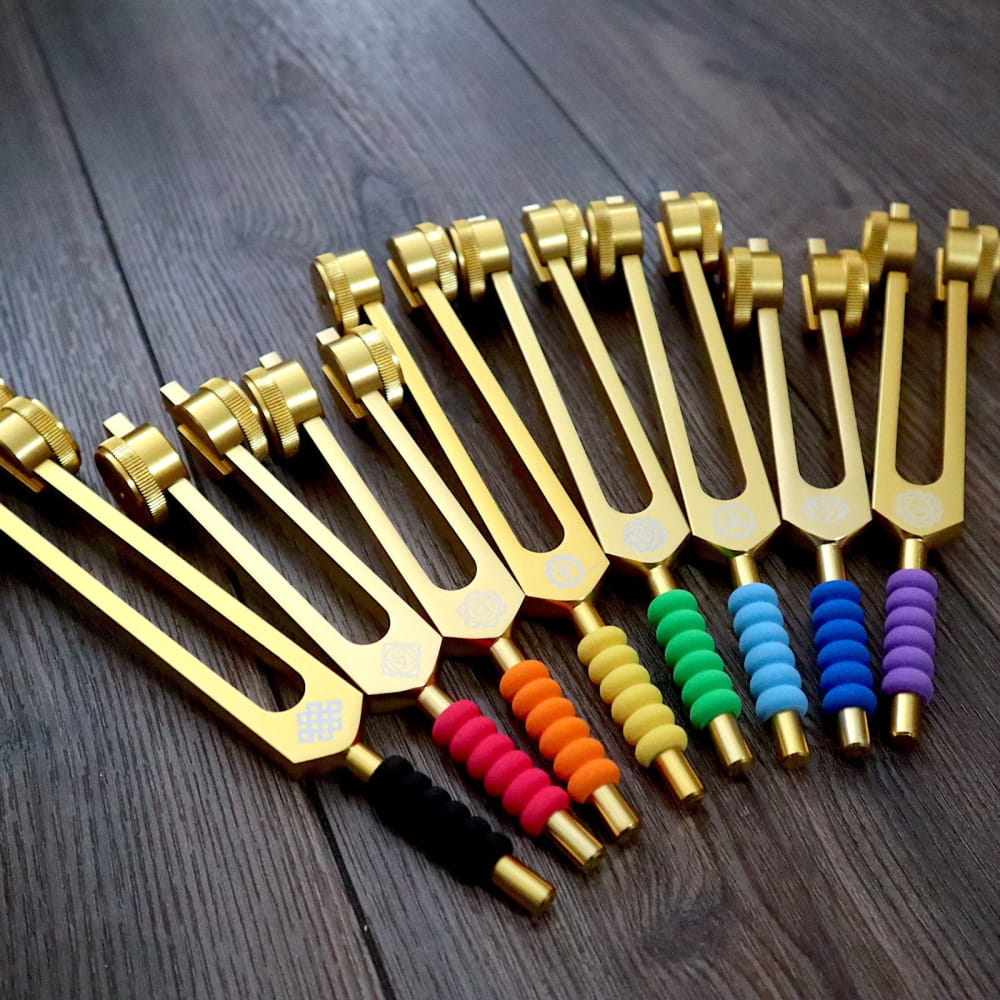
Feet attachments for tuning forks are small accessories that press onto the stem end of a weighted tuning fork, changing how vibration is delivered to the body. Standard weighted forks end in a flat, rounded stem tip. While effective for direct contact, feet attachments offer variations in contact surface area, material and shape that expand your therapeutic options.
Crystal Gem Feet for Energy Work
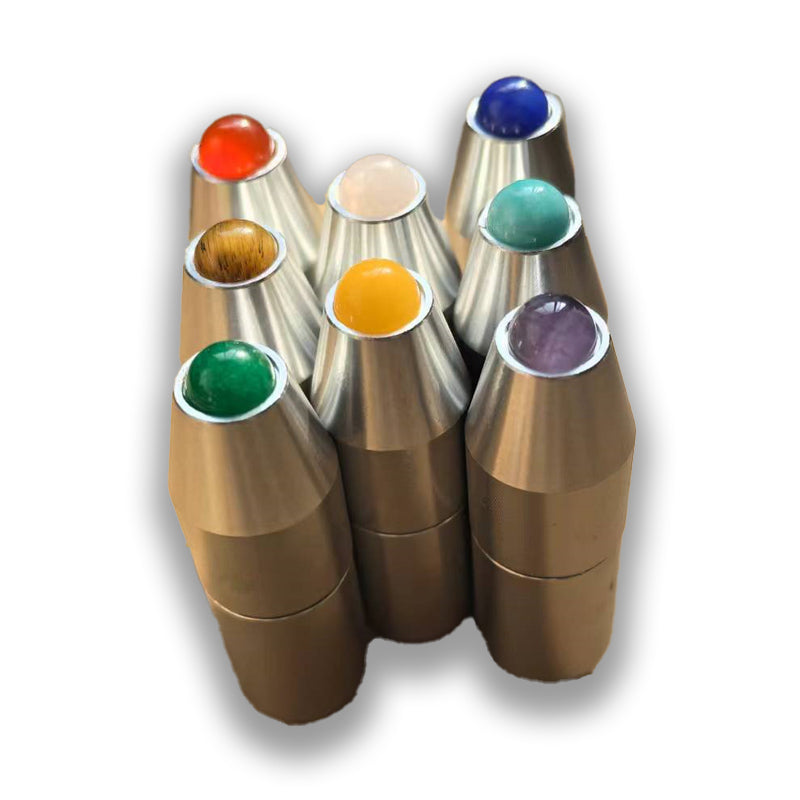
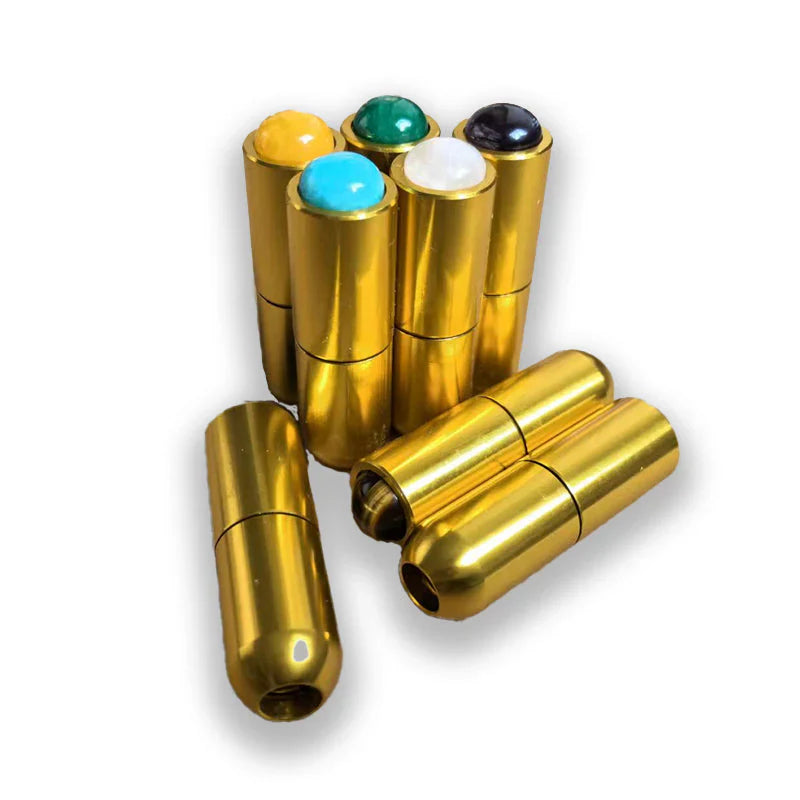
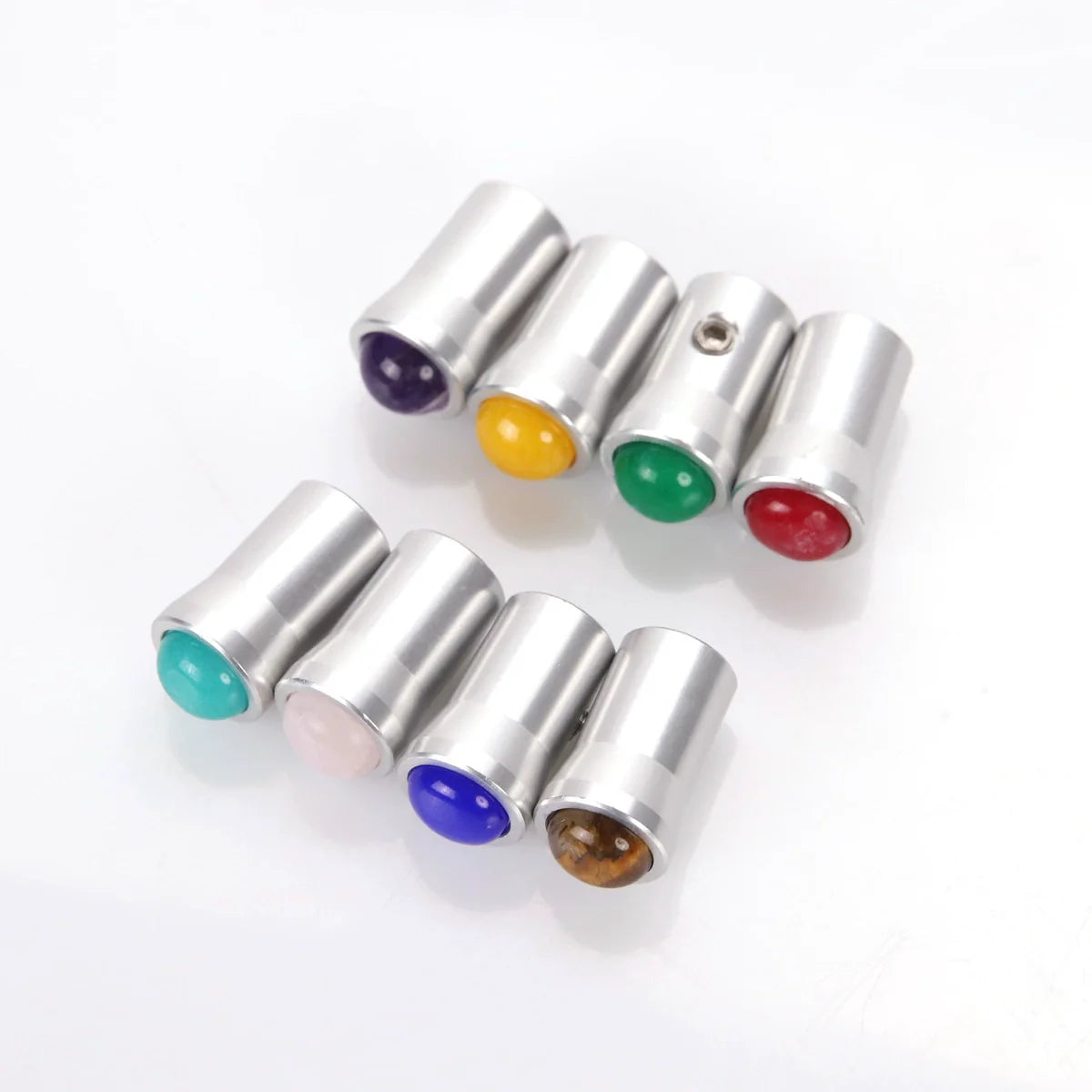
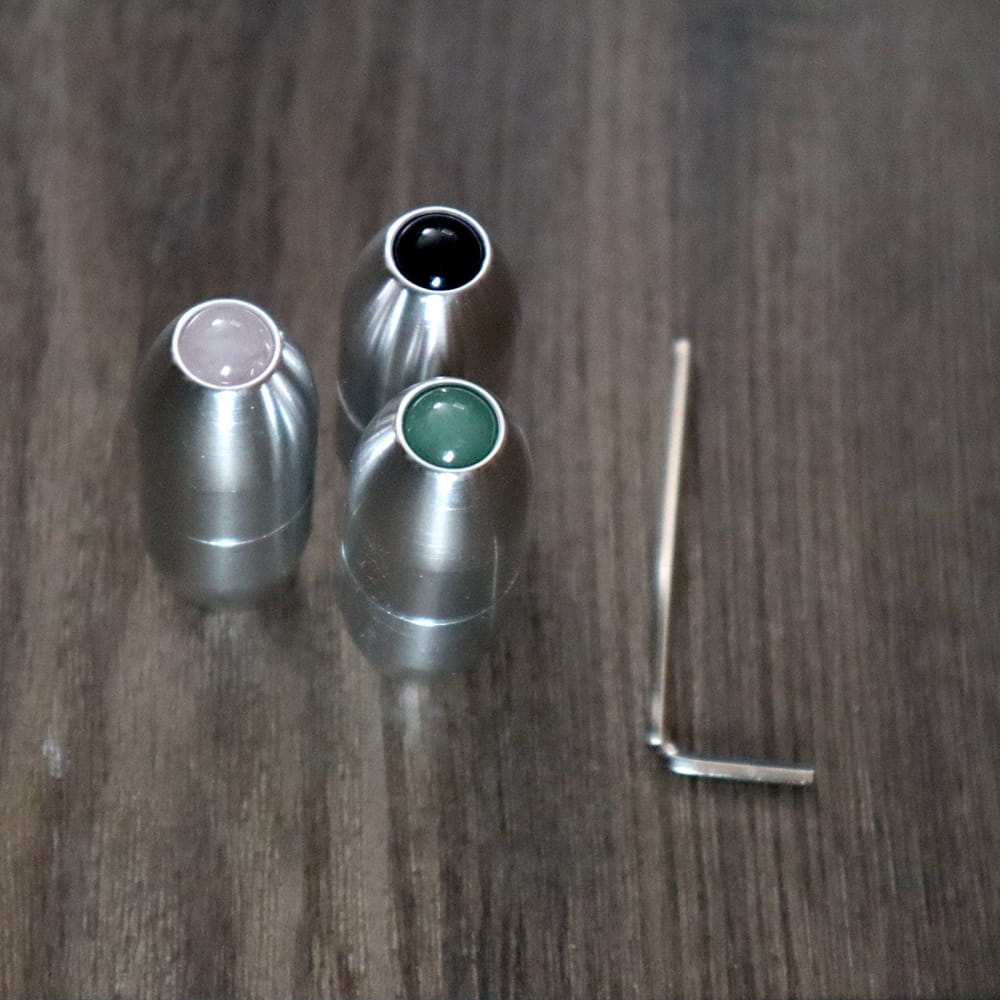
Crystal gem feet for tuning forks are polished gemstone tips -- typically clear quartz, amethyst or rose quartz -- that attach to the stem of a weighted fork. When the fork is activated and placed stem-down on the body, the crystal foot sits between the fork and the skin, combining the physical vibration of the tuning fork with the properties traditionally associated with the gemstone. Clear quartz feet are the most popular, as quartz is believed to amplify and clarify energy. These are especially valued by practitioners who integrate crystal healing with sound therapy.
Silicone and Rubber Feet for Comfort
For clients with sensitivity to direct metal contact, silicone or rubber feet attachments provide a softer interface. These are particularly useful when working on bony areas -- the forehead, the spine, the sternum -- where the hard metal stem of a fork can feel uncomfortable. The feet slightly diffuse the vibration across a larger contact area without significantly dampening the fork's resonance.
Carrying Cases, Mallets and Storage Solutions
Protecting your tuning forks is essential for maintaining their accuracy and longevity. A fork that is dropped, scratched or stored loosely with other metal instruments can develop micro-damage that alters its frequency over time. Proper storage also keeps your instruments organized and professional-looking for client sessions.
Padded Carrying Cases
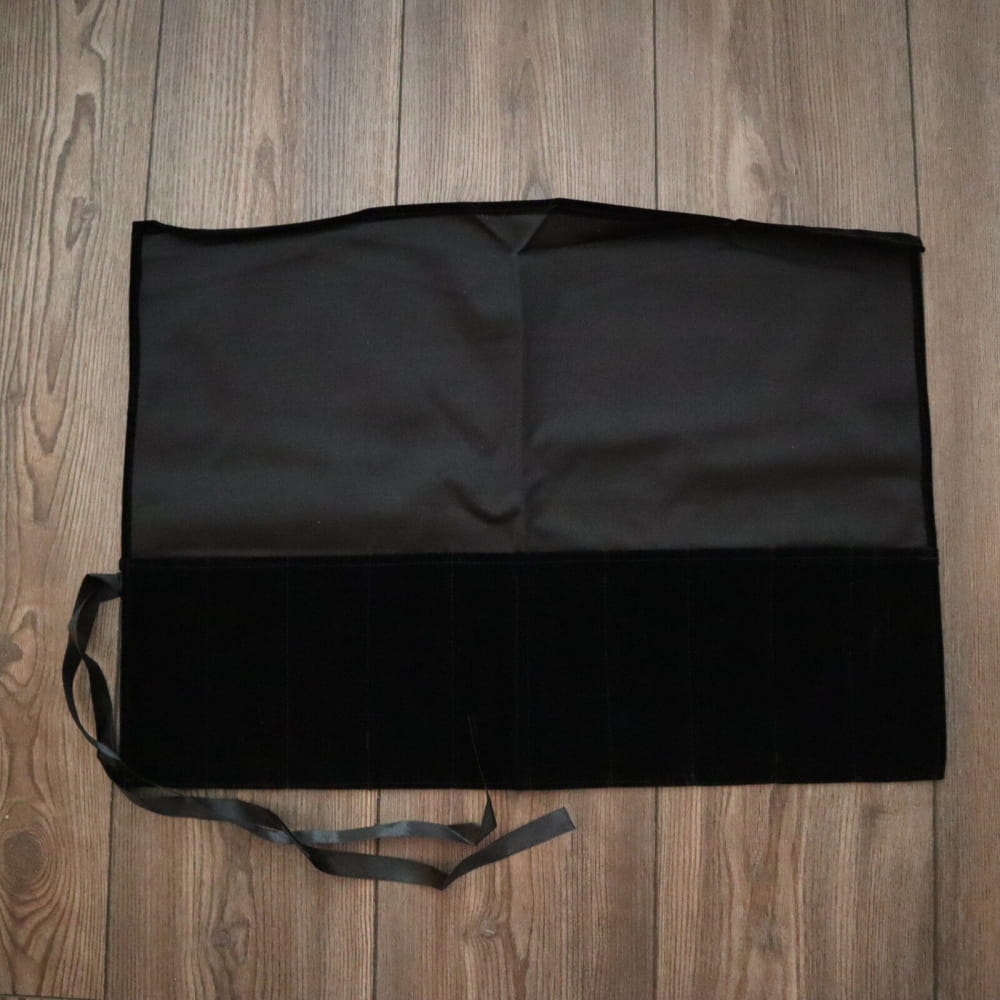
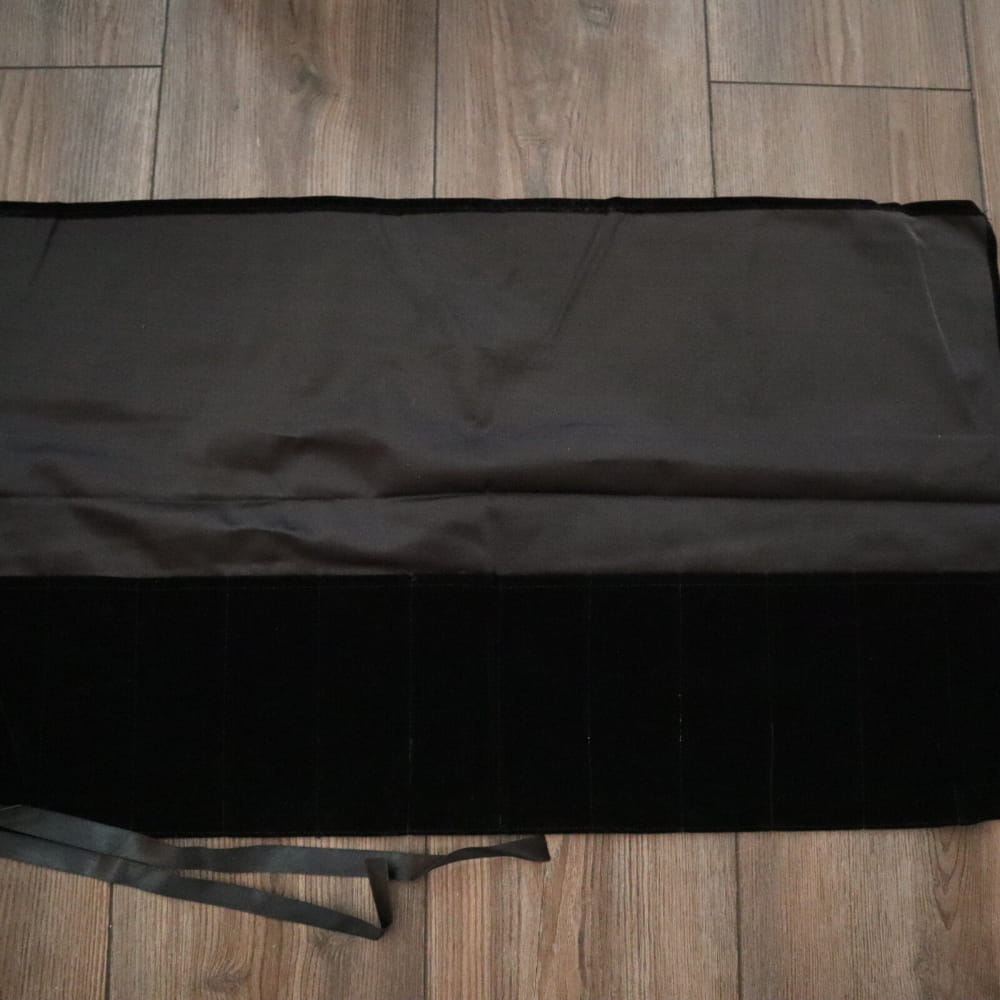
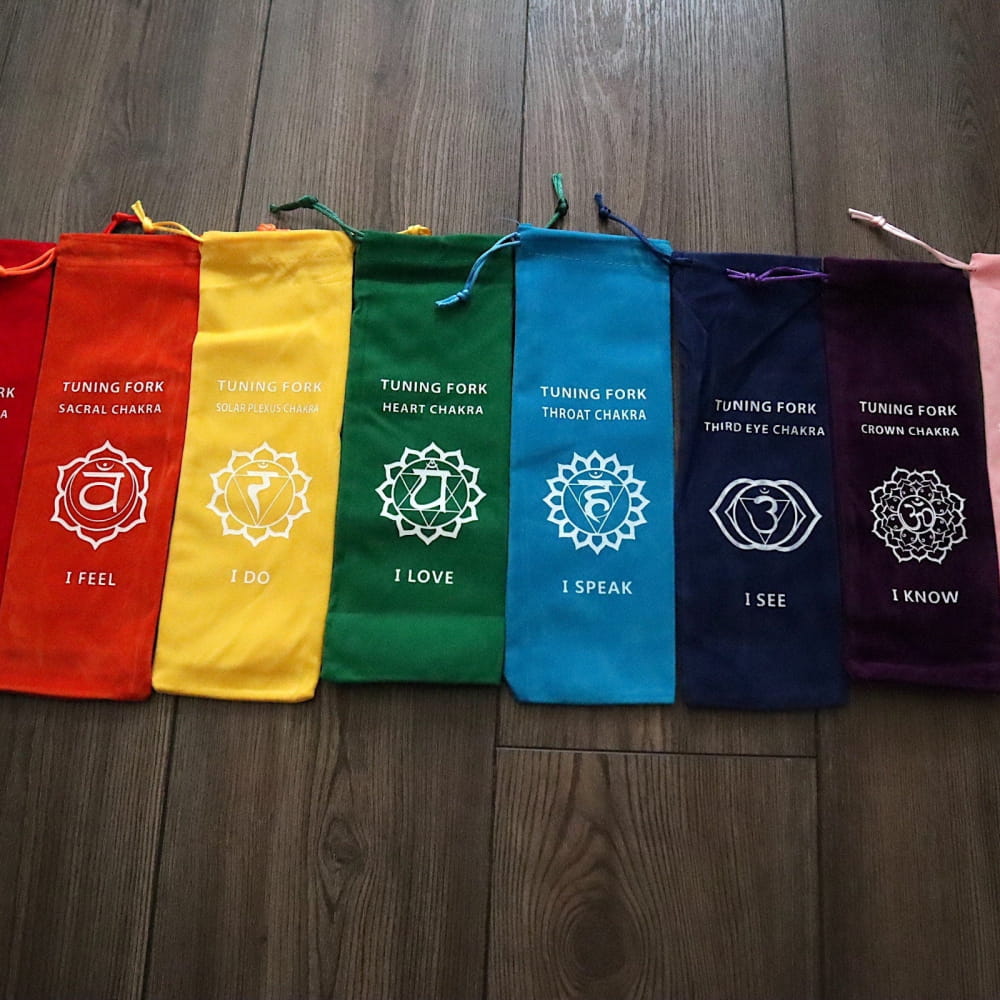
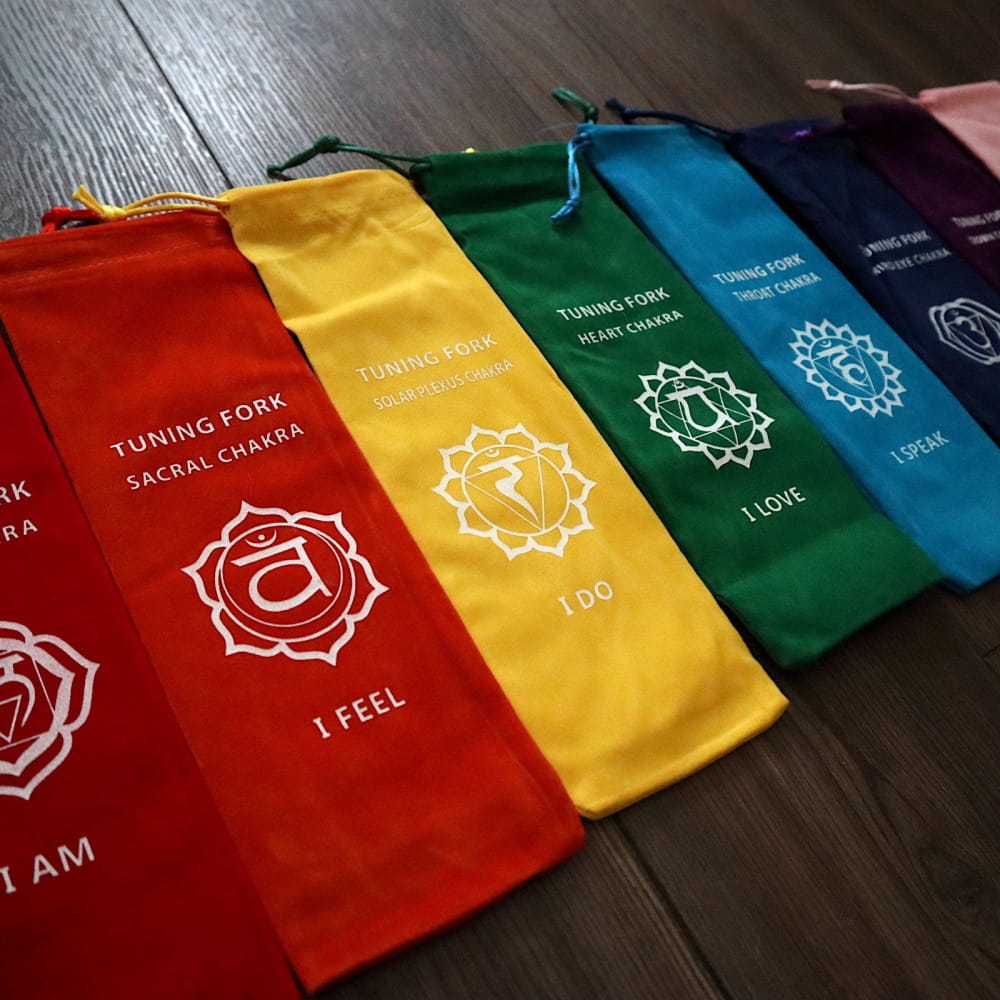
Our padded cases feature individual compartments for each fork, preventing the tines from contacting each other during transport. Cases are available in sizes ranging from single-fork pouches to multi-fork rolls that hold a complete tuning fork set. For mobile practitioners who travel between client locations, a quality carrying case is a non-negotiable investment in protecting instruments that are precision-calibrated to +/-0.25 Hz.
Rubber Mallets for Weighted Forks
Rubber mallets serve as an alternative activation method for heavy weighted forks, particularly the larger Otto tuners (32 Hz, 48 Hz, 64 Hz) and giant tuning forks. These forks have substantial mass, and a mallet provides more activation energy than a standard puck activator. The mallet is struck against the flat side of one tine with a quick, firm tap. Like activators, mallets are made from medium-density rubber to minimize overtones.
Building Your Complete Accessory Kit
The accessories you need depend on how you use your tuning forks. Here is a practical breakdown by practitioner type.
Home users and beginners: Start with a rubber activator and a basic carrying case. These two items cover the essentials -- clean activation and safe storage. As you explore more techniques, add crystal feet or a mallet.
Professional sound healers: Invest in a full-size carrying case, two activators (one for backup), a set of crystal gem feet (quartz, amethyst, rose quartz), and a rubber mallet for weighted forks. Having duplicates of frequently used accessories prevents session interruptions.
Clinical practitioners (massage therapists, physical therapists): Focus on silicone feet for client comfort, a durable carrying case for transport, and multiple activators positioned at different workstations. Mallets are useful if you work with 32-64 Hz Otto tuners for deep tissue vibration work.
Browse Additional Tuning Fork Collections
All Tuning Forks -- Browse our complete range of tuning forks for sound healing
Resonance Boxes -- Amplify your tuning fork sound with wooden resonance boxes
A tuning fork activator is a rubber puck or disc used to strike and activate a tuning fork. It produces a cleaner, purer tone than striking the fork against your knee, palm or a hard surface. The rubber absorbs excess high-frequency overtones at the point of impact, allowing the fork's fundamental frequency to ring clearly. Activators are made from medium-density rubber calibrated to work with both weighted and unweighted tuning forks.
Hold the tuning fork by its stem between your thumb and forefinger, with the two tines pointing away from you. Strike the flat face of one tine firmly against a rubber activator at the midpoint of the tine -- not the tip or the base. Only one tine should contact the activator to avoid interference patterns. The fork should ring immediately with a clear, sustained tone. For weighted forks, use slightly more force; for unweighted forks, a moderate tap is sufficient.
At minimum, you need a rubber activator for clean tone production and a padded carrying case for safe storage and transport. Beyond the basics, useful additions include crystal gem feet for combining crystal healing with sound therapy, silicone feet for comfortable body contact on bony areas, and a rubber mallet for activating heavy weighted forks like Otto tuners. Professional practitioners should also keep backup activators to prevent session interruptions.
Feet attachments are small accessories that press onto the stem end of a weighted tuning fork, changing how vibration is delivered to the body. Crystal gem feet (clear quartz, amethyst, rose quartz) combine tuning fork vibration with crystal healing properties. Silicone and rubber feet provide a softer contact point for clients sensitive to direct metal contact, particularly useful on bony areas like the forehead, spine and sternum.
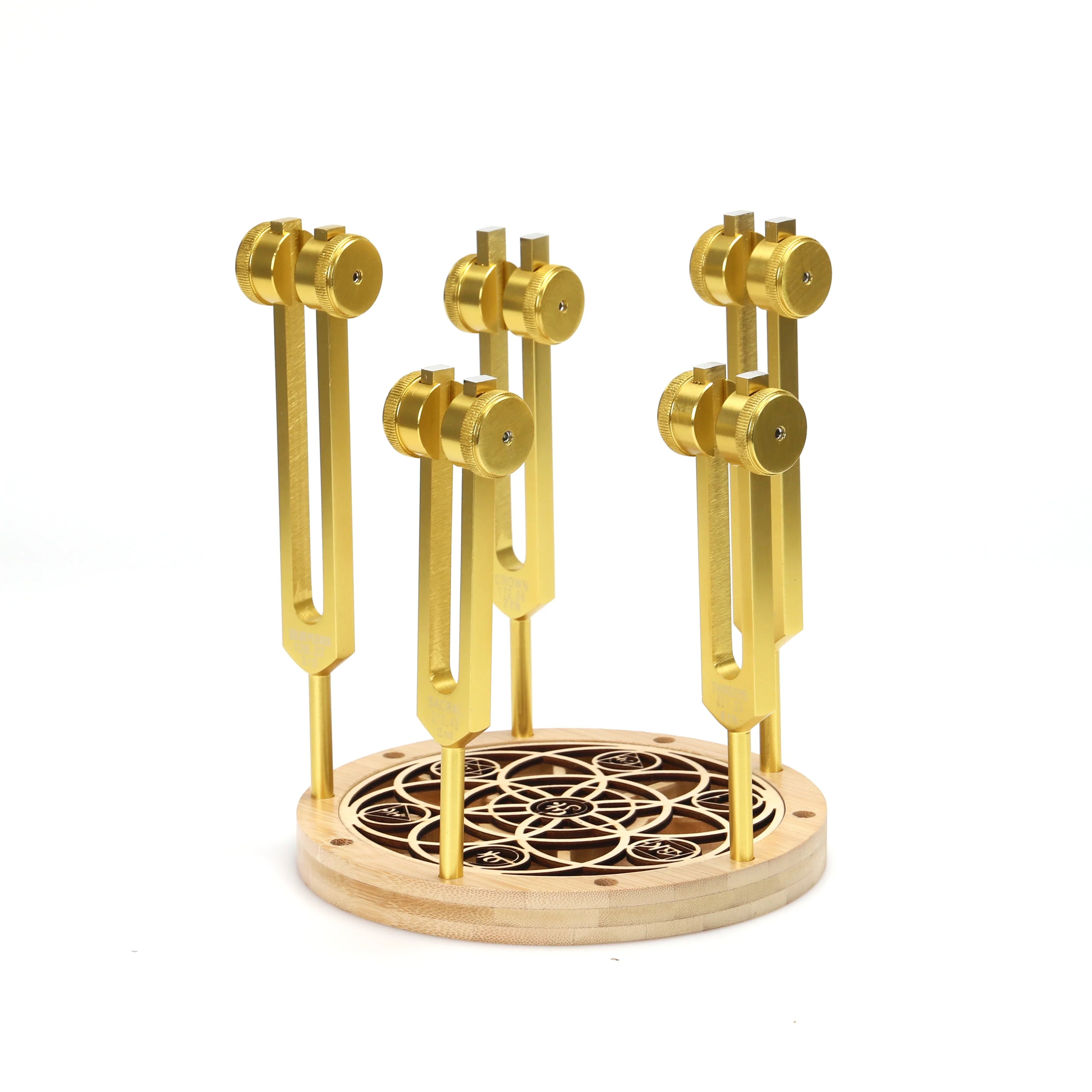
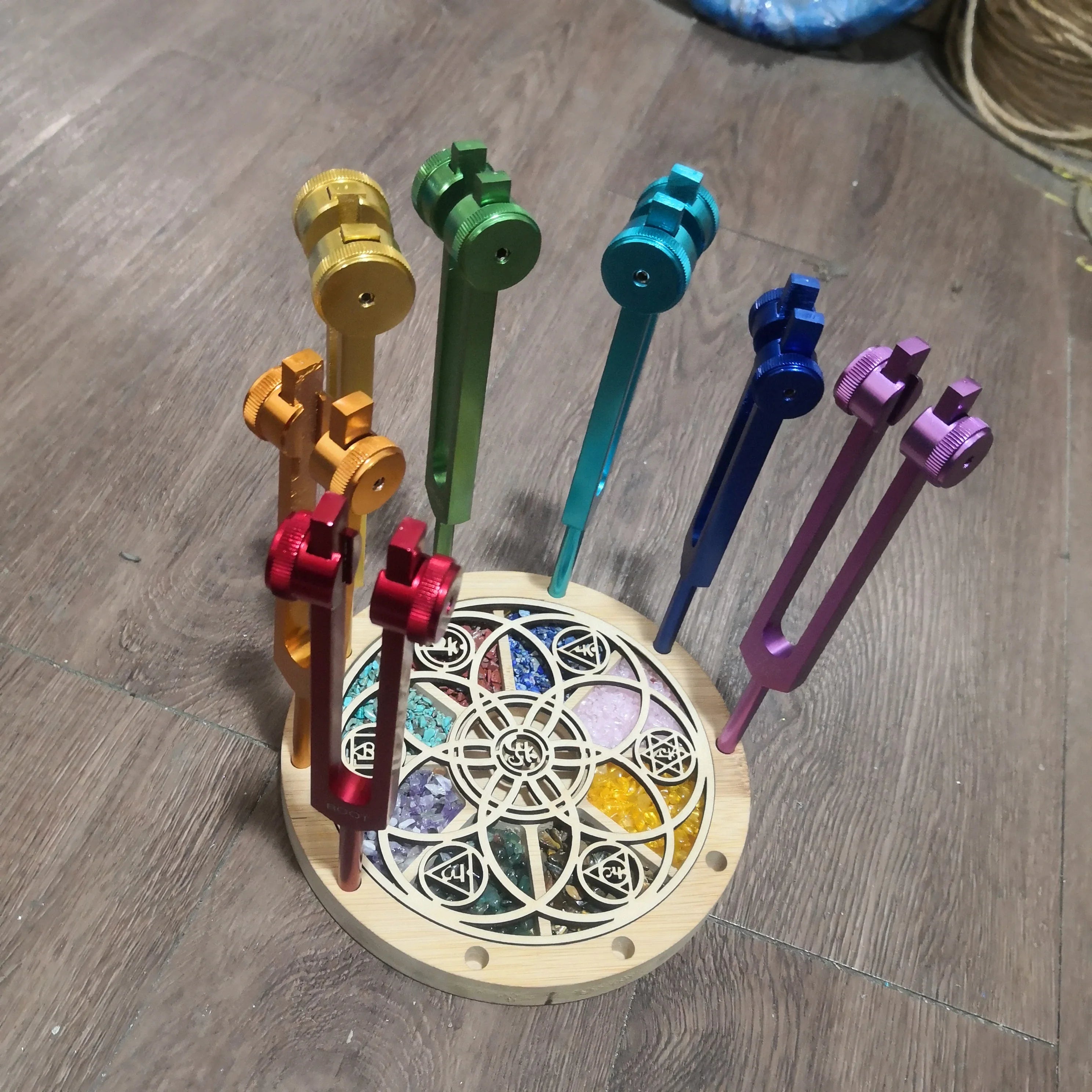
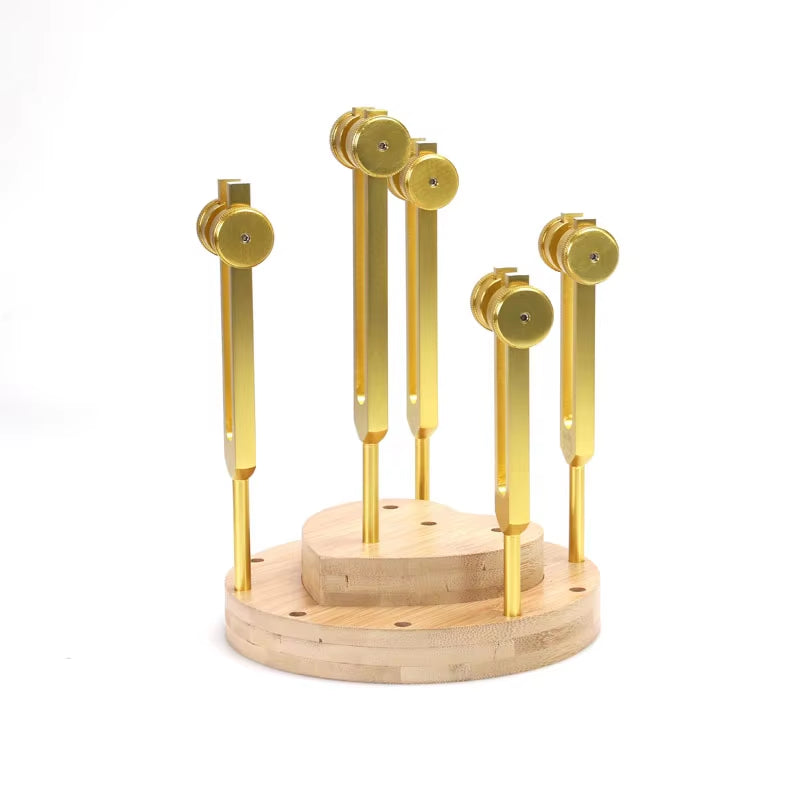
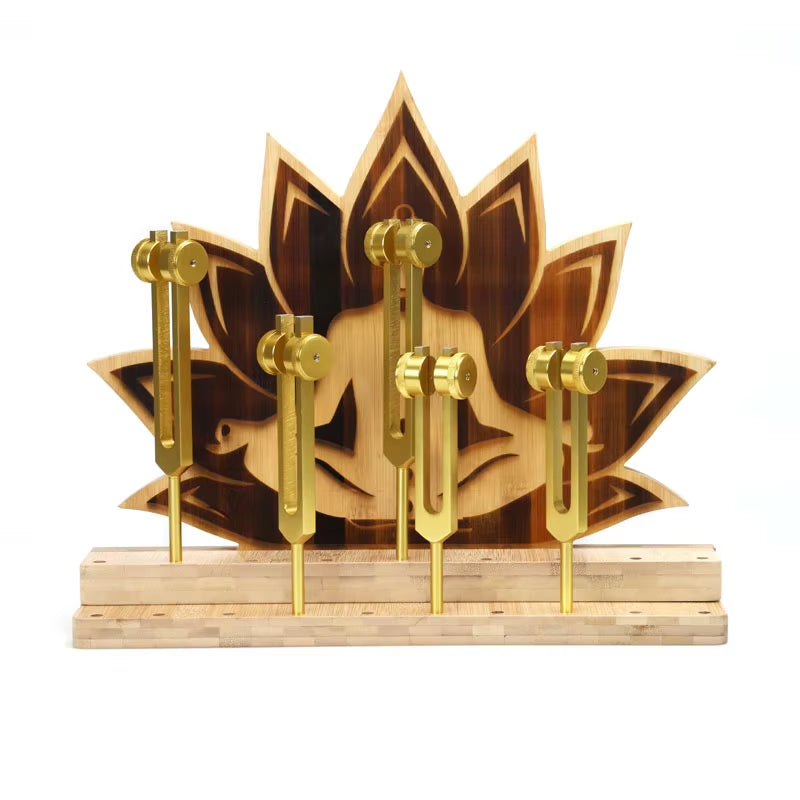
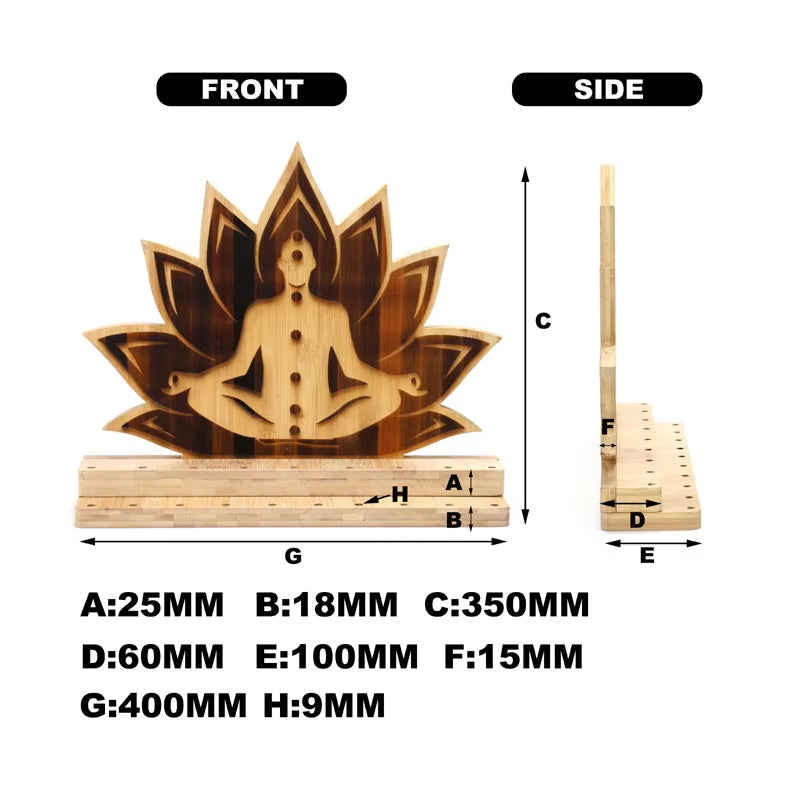
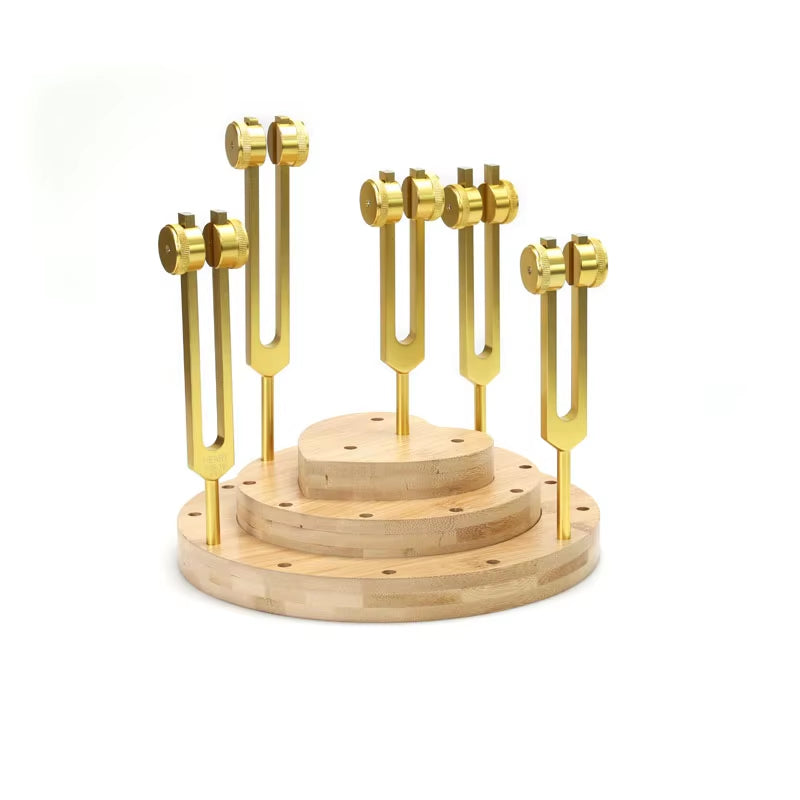
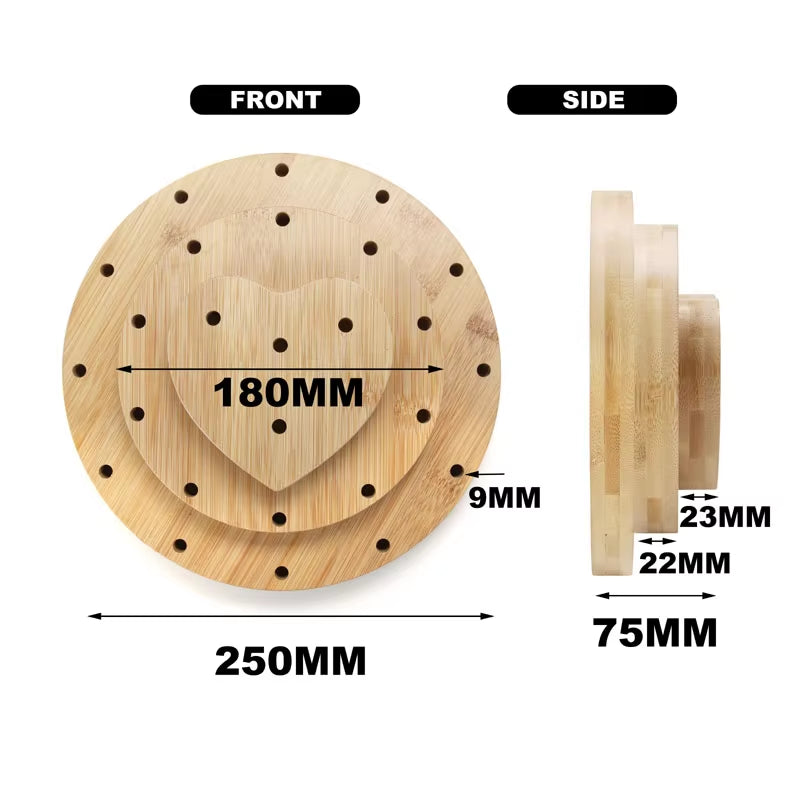
Store tuning forks in a padded carrying case with individual compartments to prevent the tines from contacting each other. Avoid storing forks loosely in drawers or bags where they can collide with other metal objects -- even minor impacts can create micro-damage that alters the calibrated frequency over time. Keep forks dry, clean them with a soft cloth after use, and avoid exposing them to extreme temperatures. For display purposes, consider a dedicated tuning fork holder that keeps forks upright and separated.
Filters (0)
High-Quality Tuning Forks Collection
Discover premium tuning forks for perfect sound calibration.
Enhance Your Sound Experience
Achieve precise tonal quality with our tuning forks.
Recently viewed
Treat yourself to a relaxing moment
With our best instruments. Handcrafted from the finest materials.
Created by healing enthousiasts
We know your needs because we use our products too. We are the first users.
Money-back guarantee
You have 60 days to return your order if it doesn't fit (you'll love it anyway).
100% secured payments
So you can remain in deep peace until you receive your order.