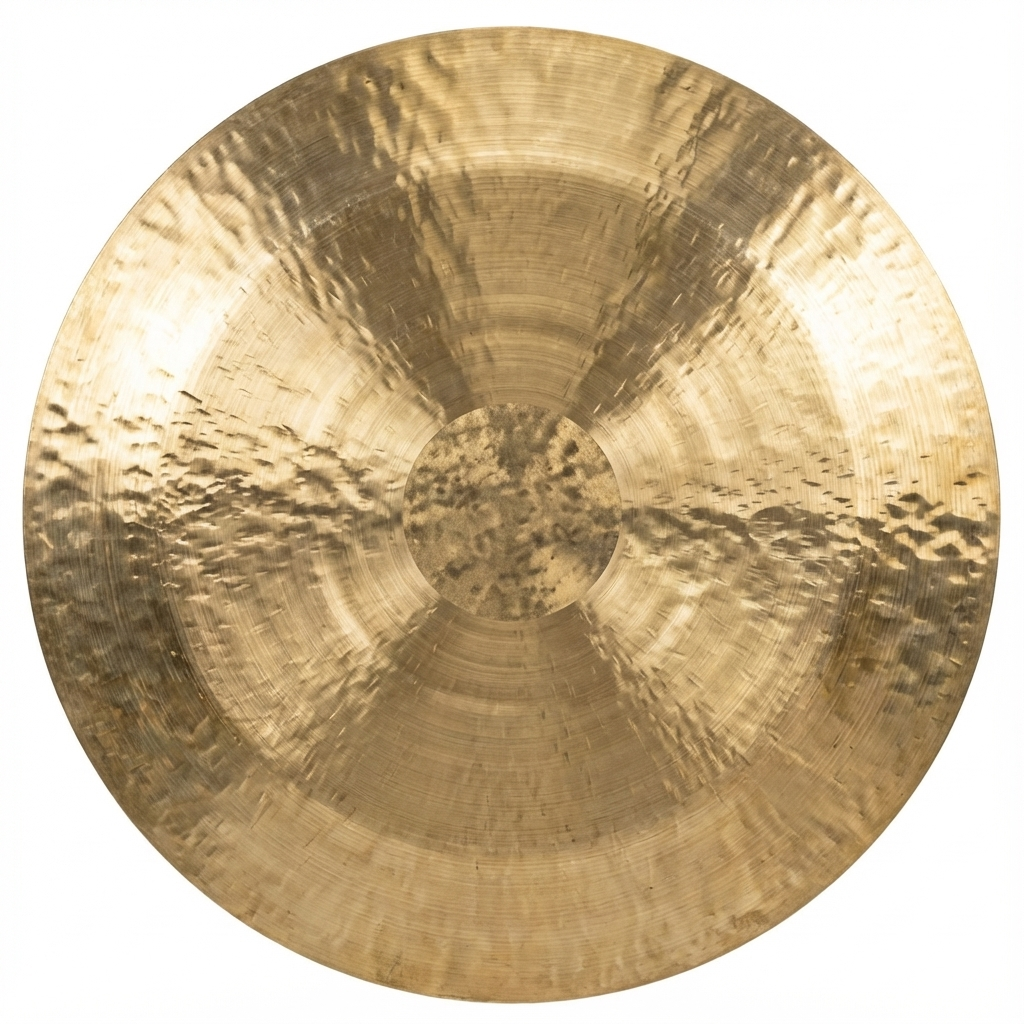
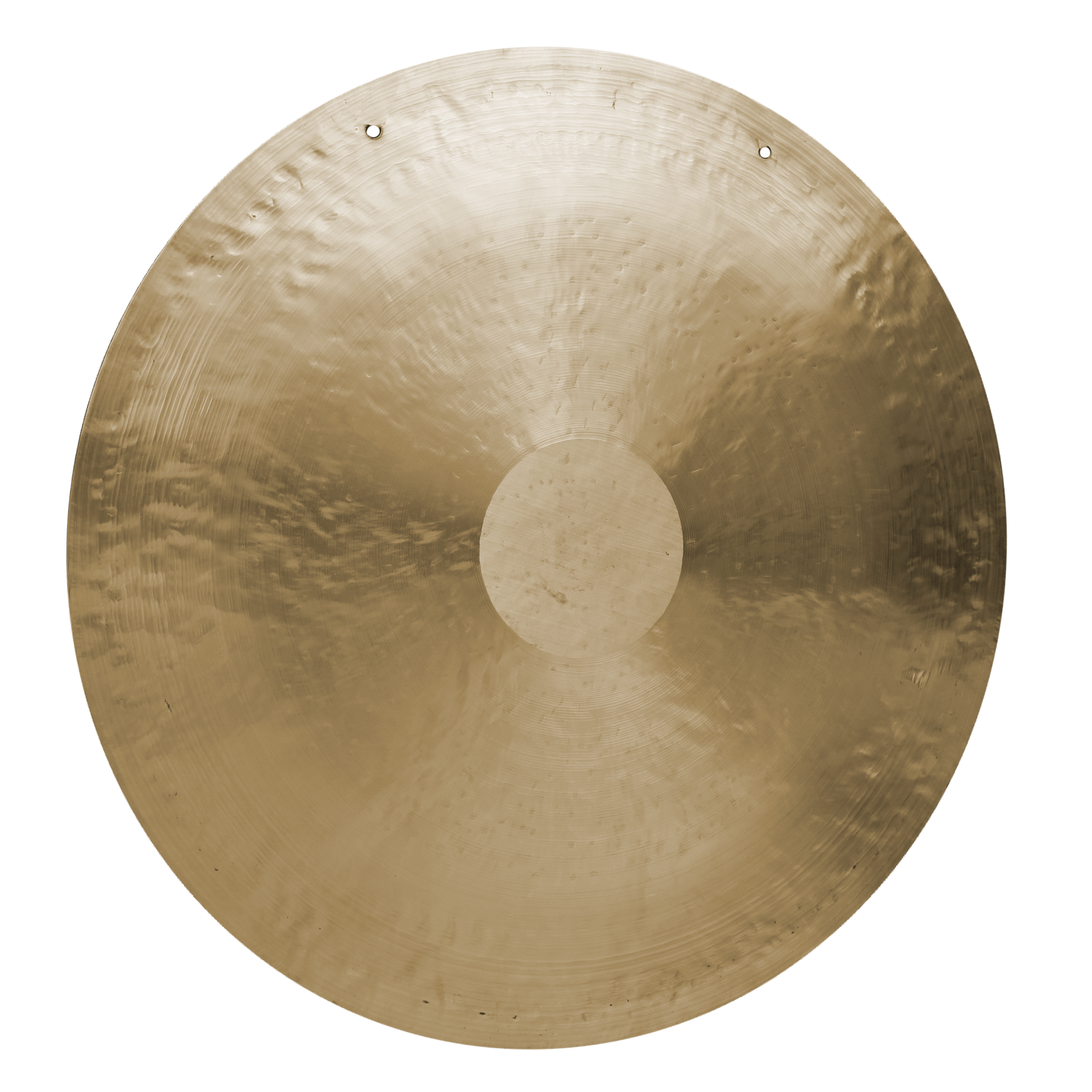
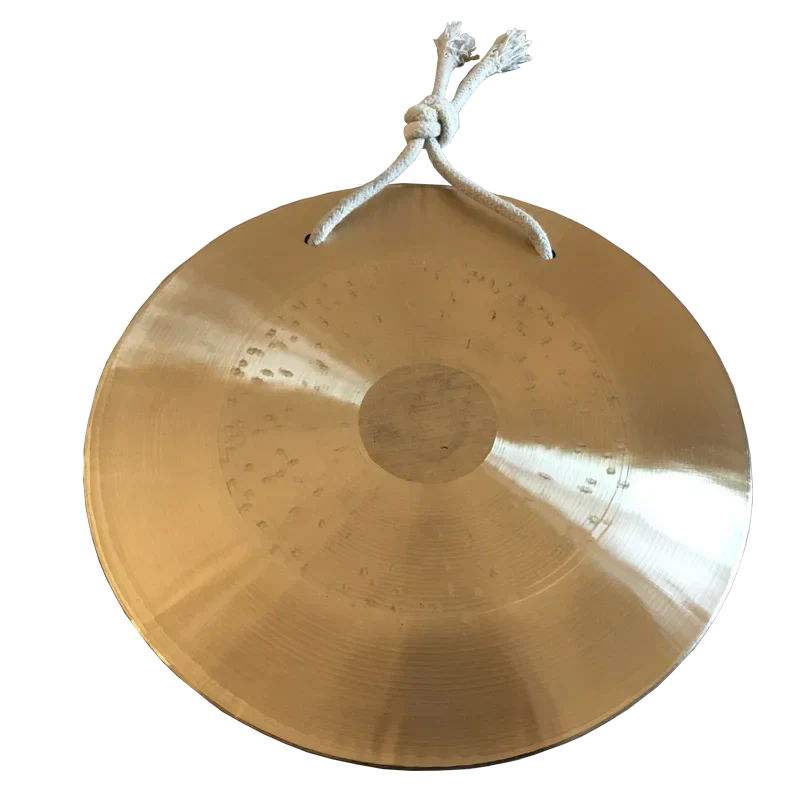
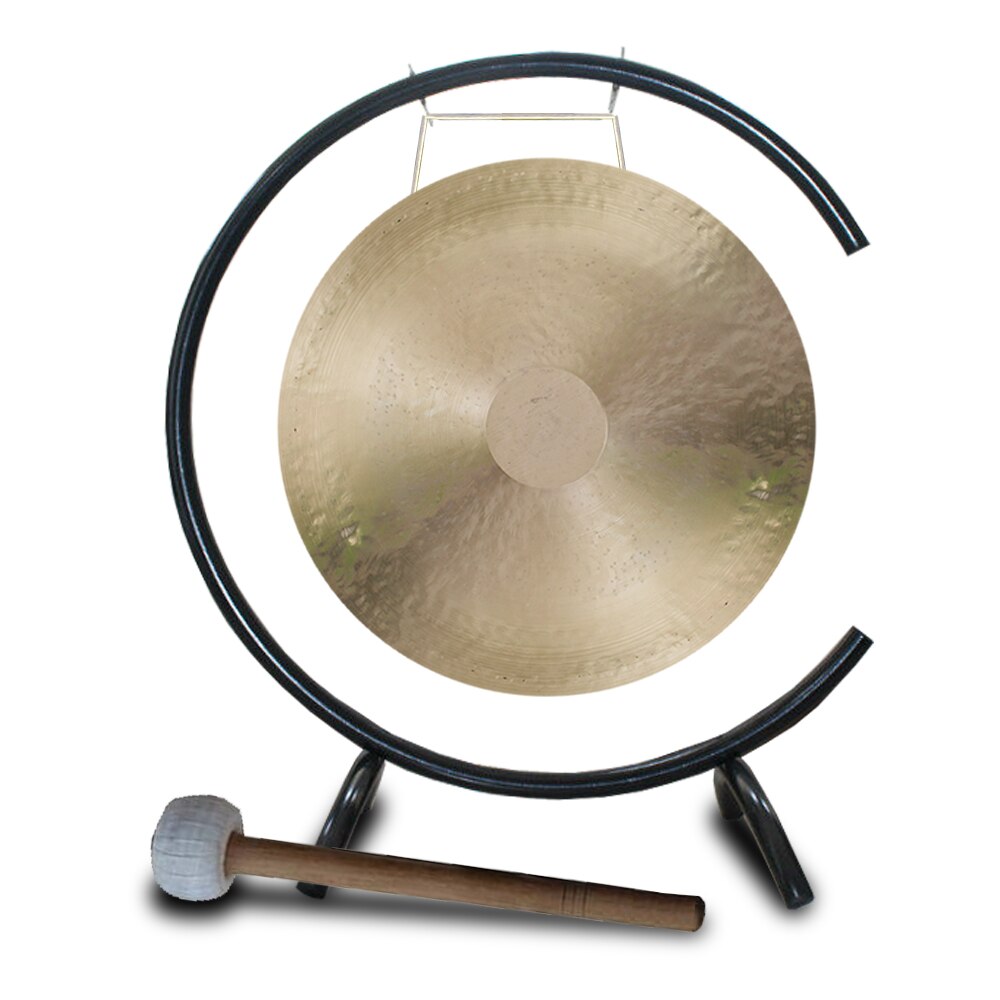
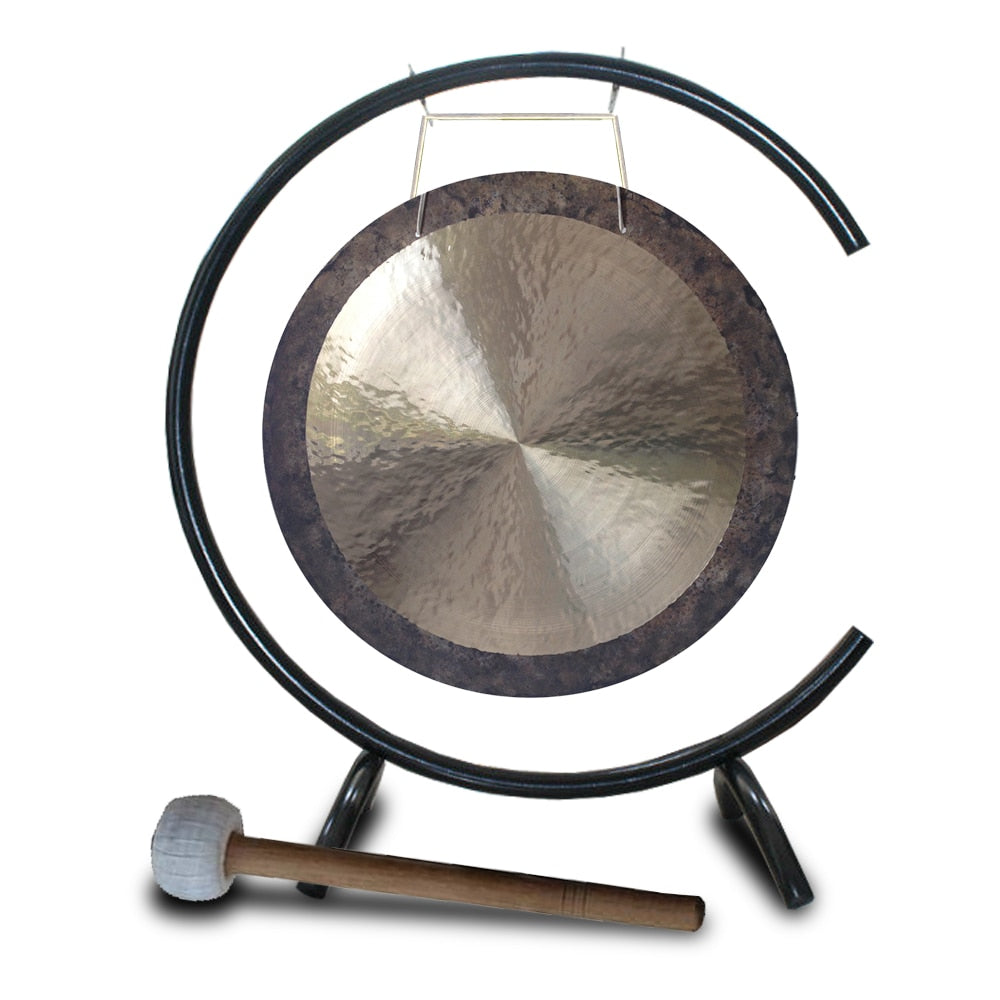
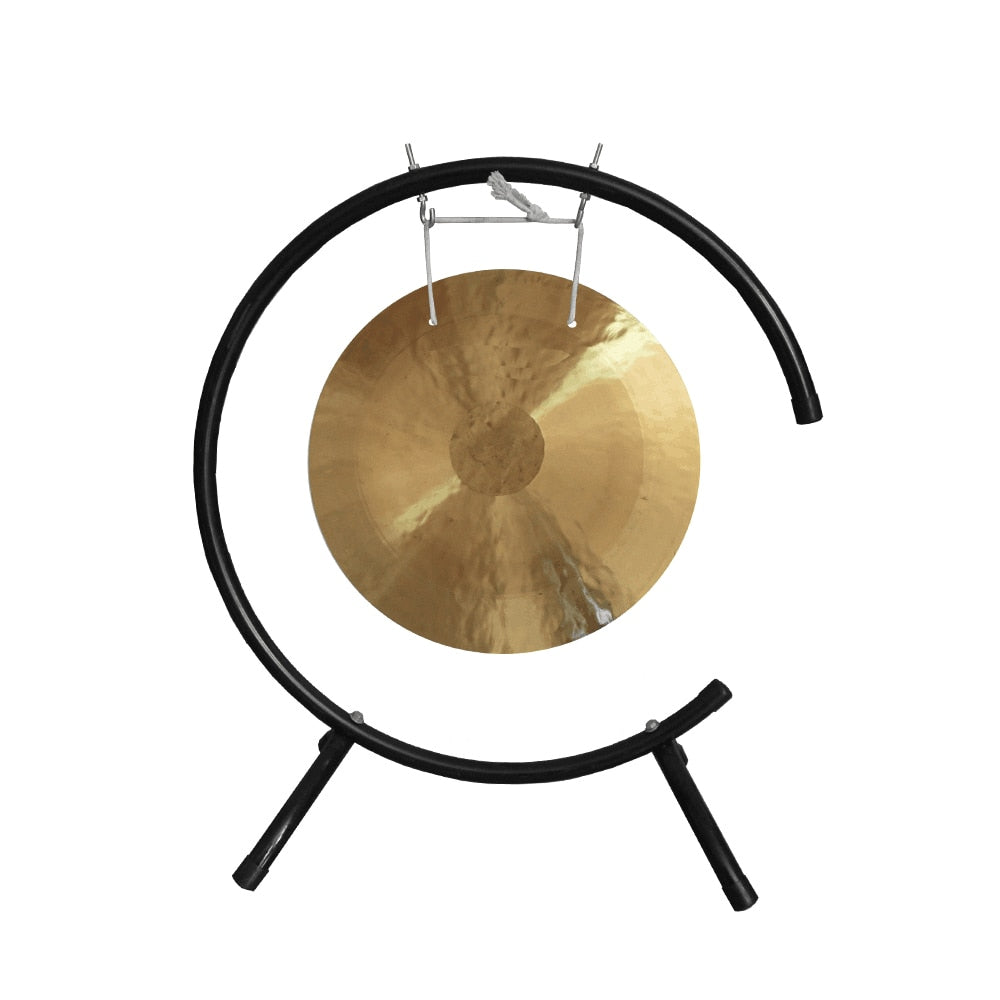
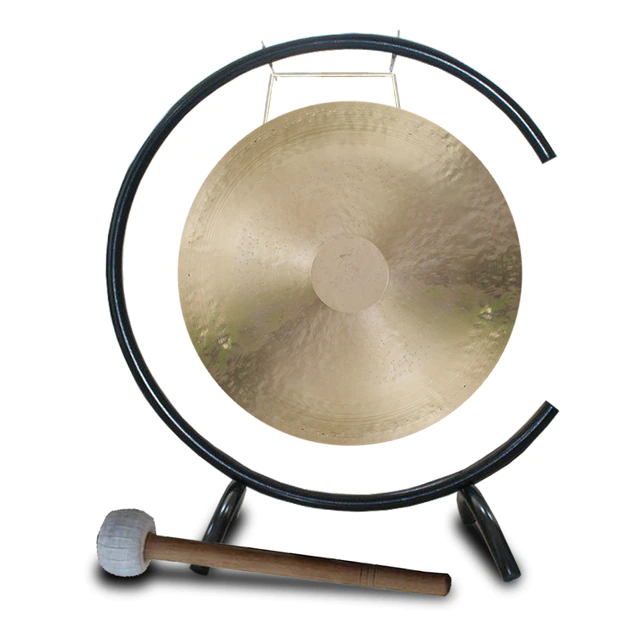
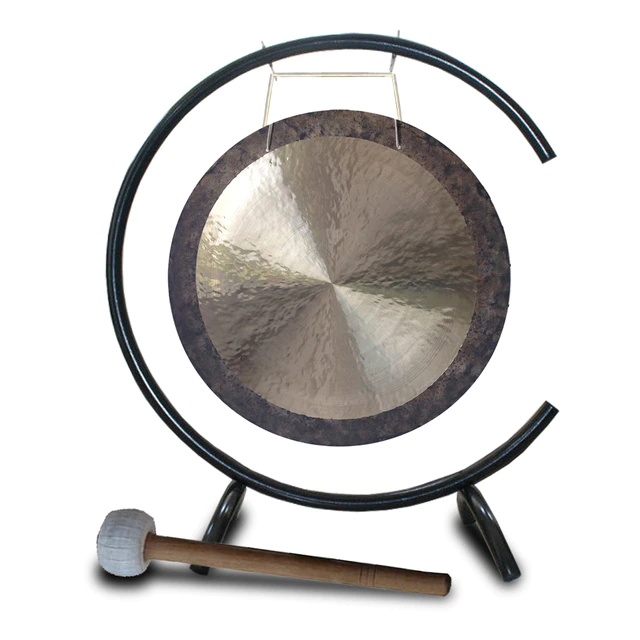
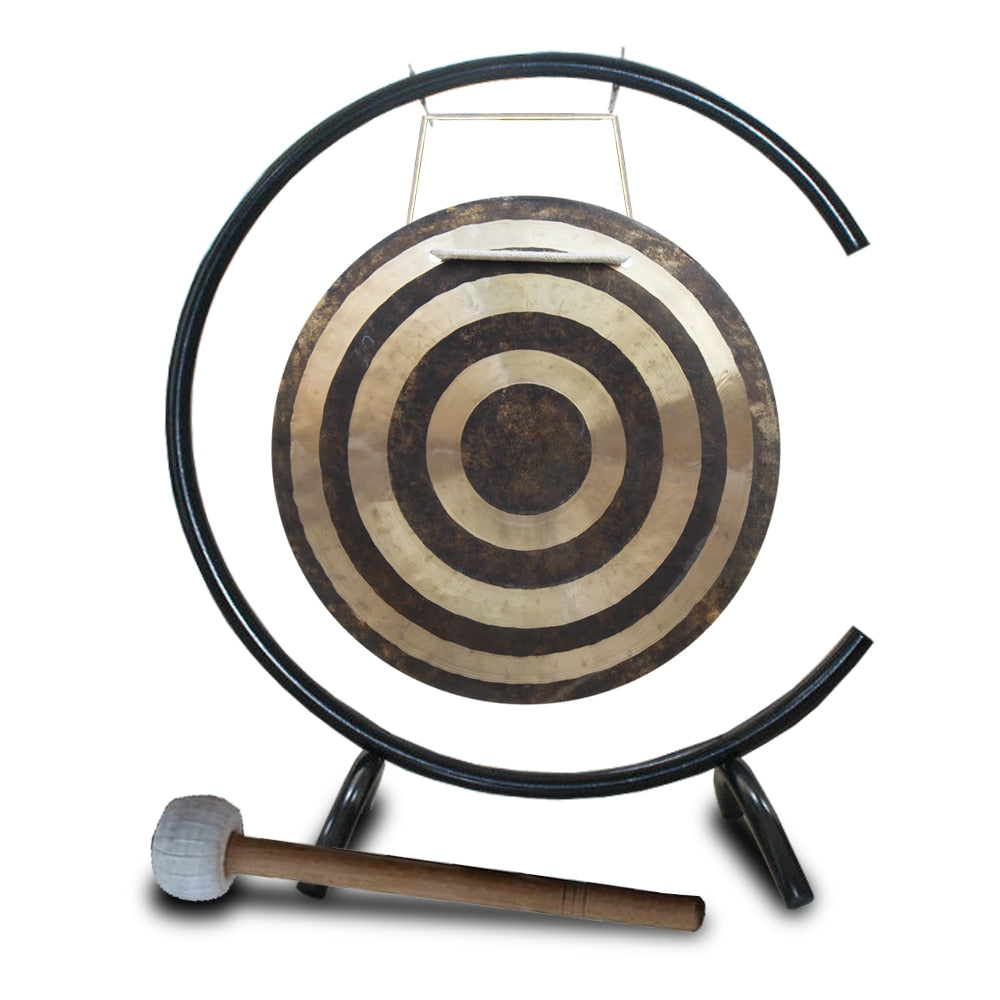
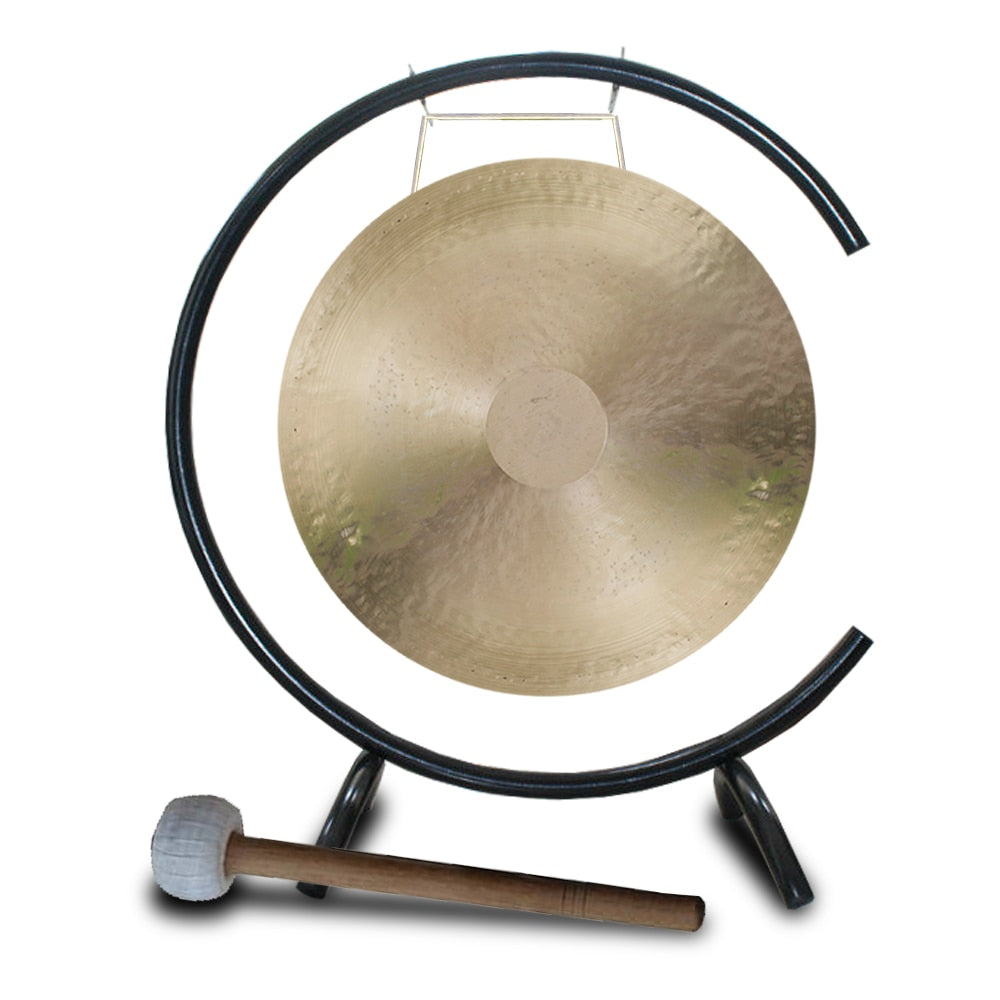
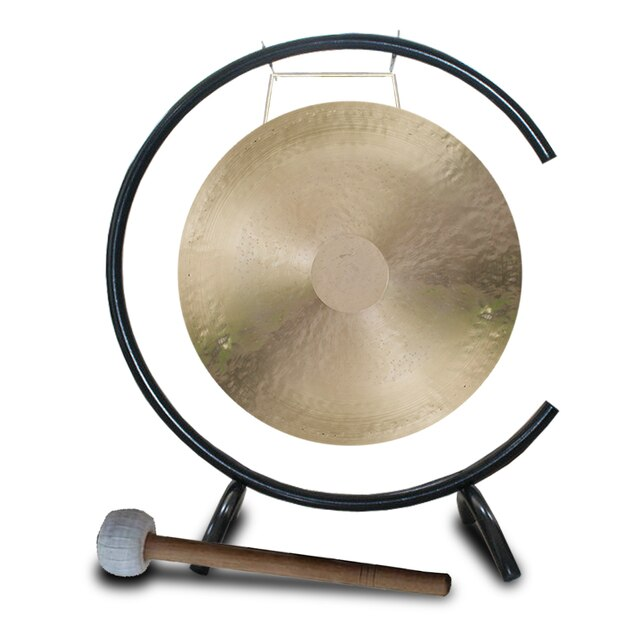
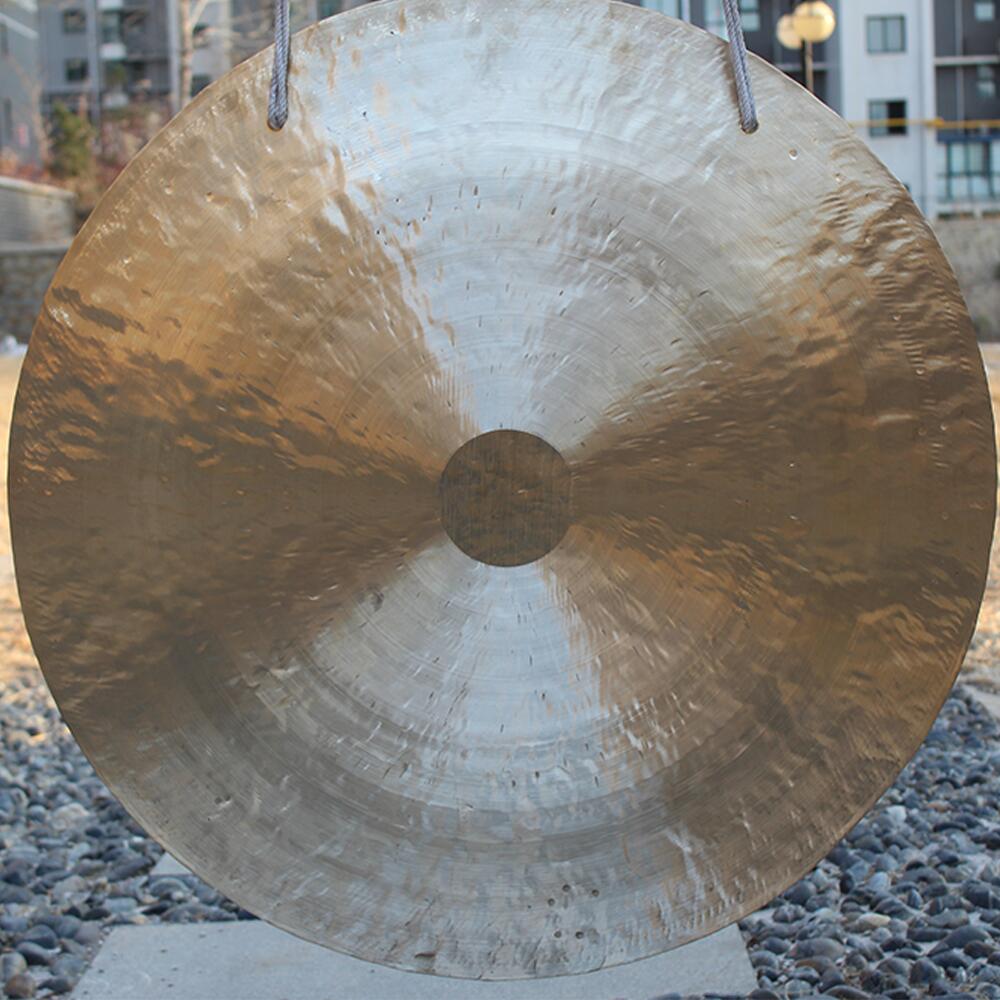
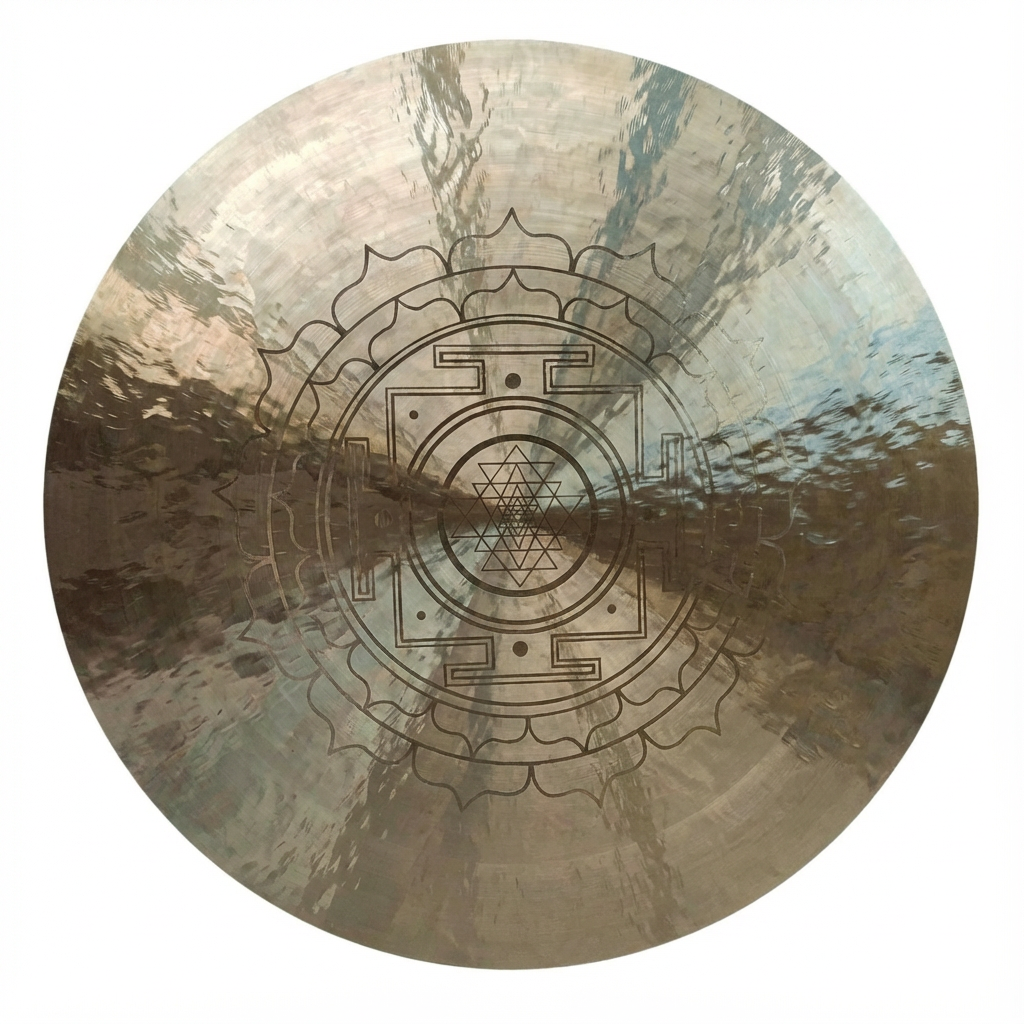
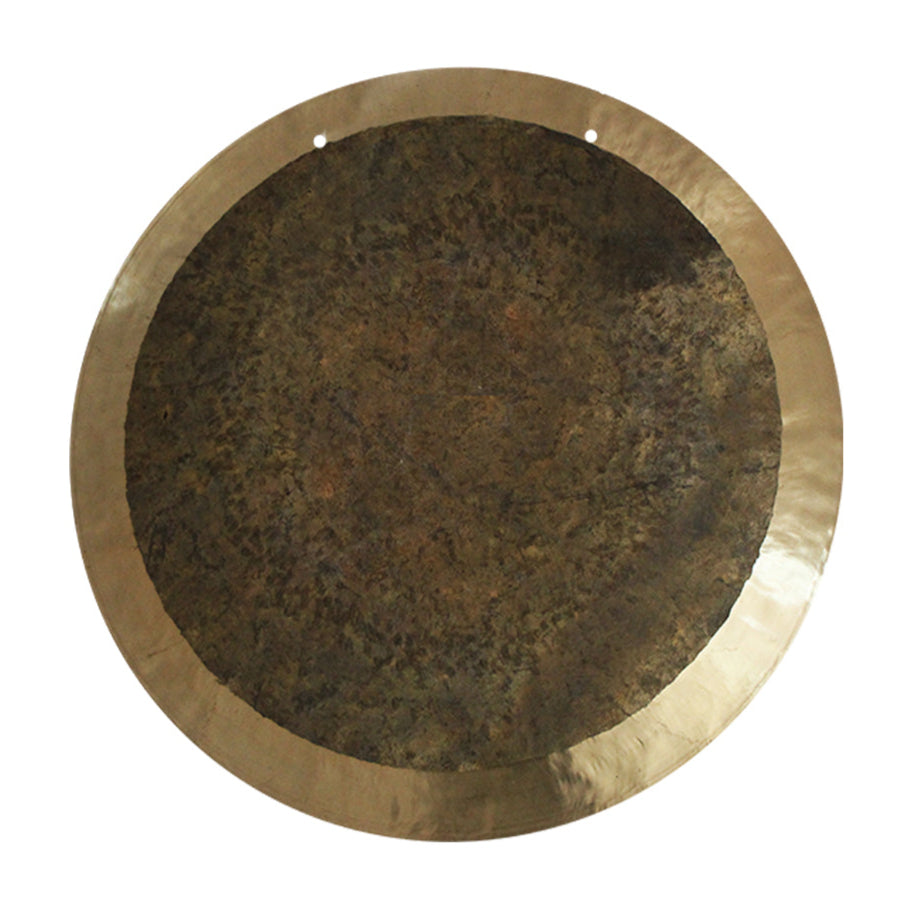
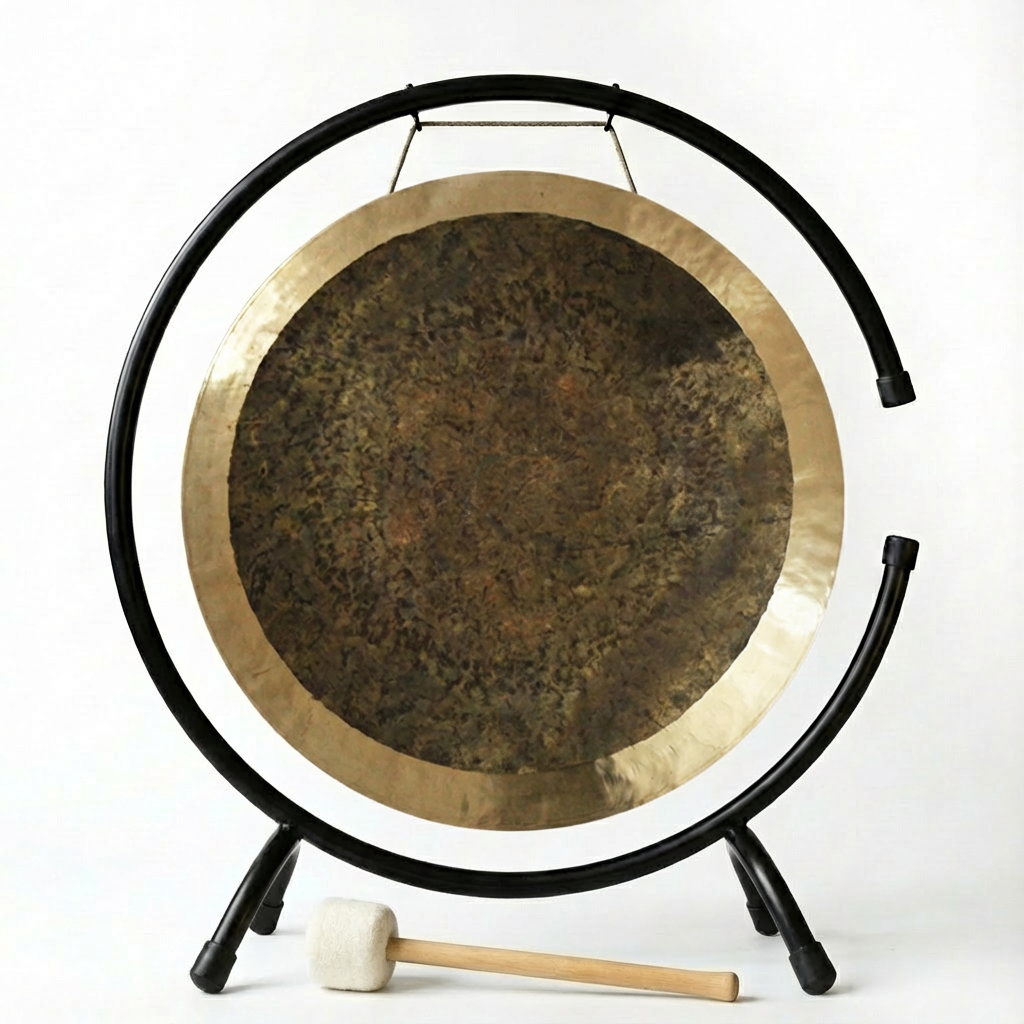
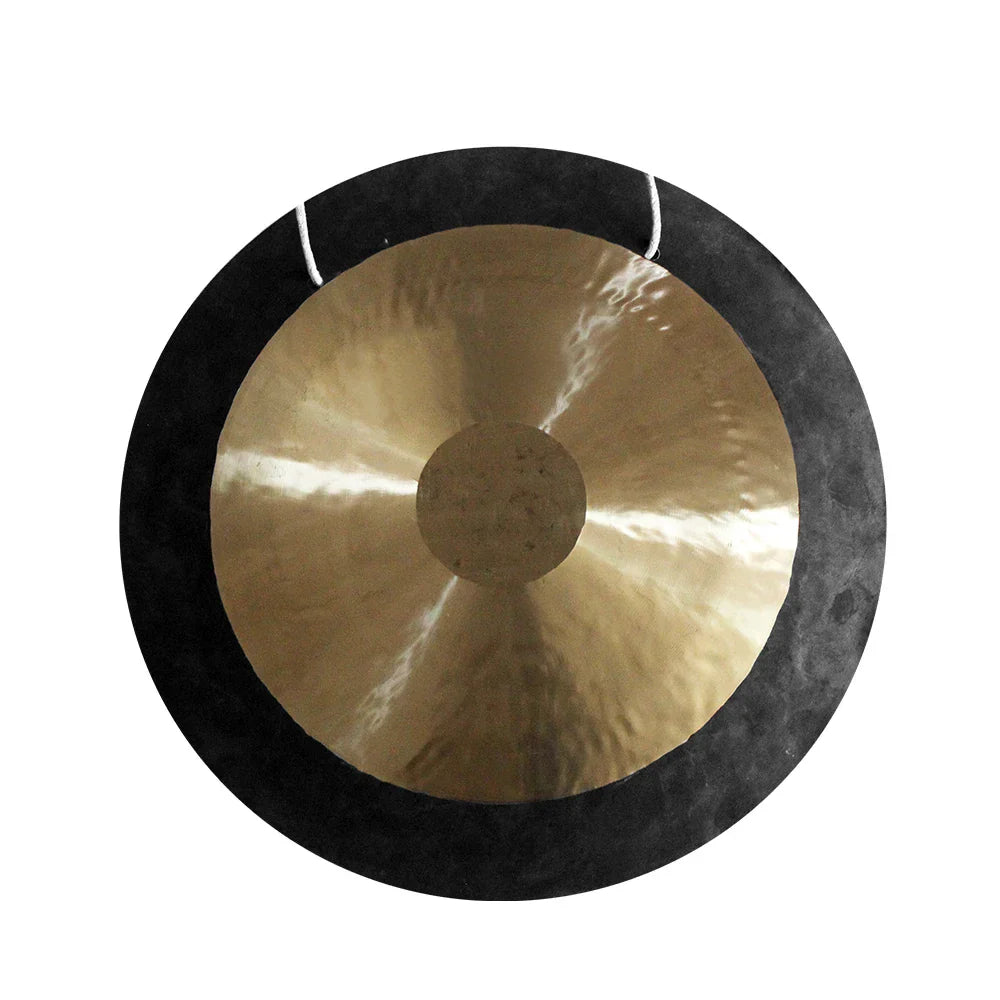
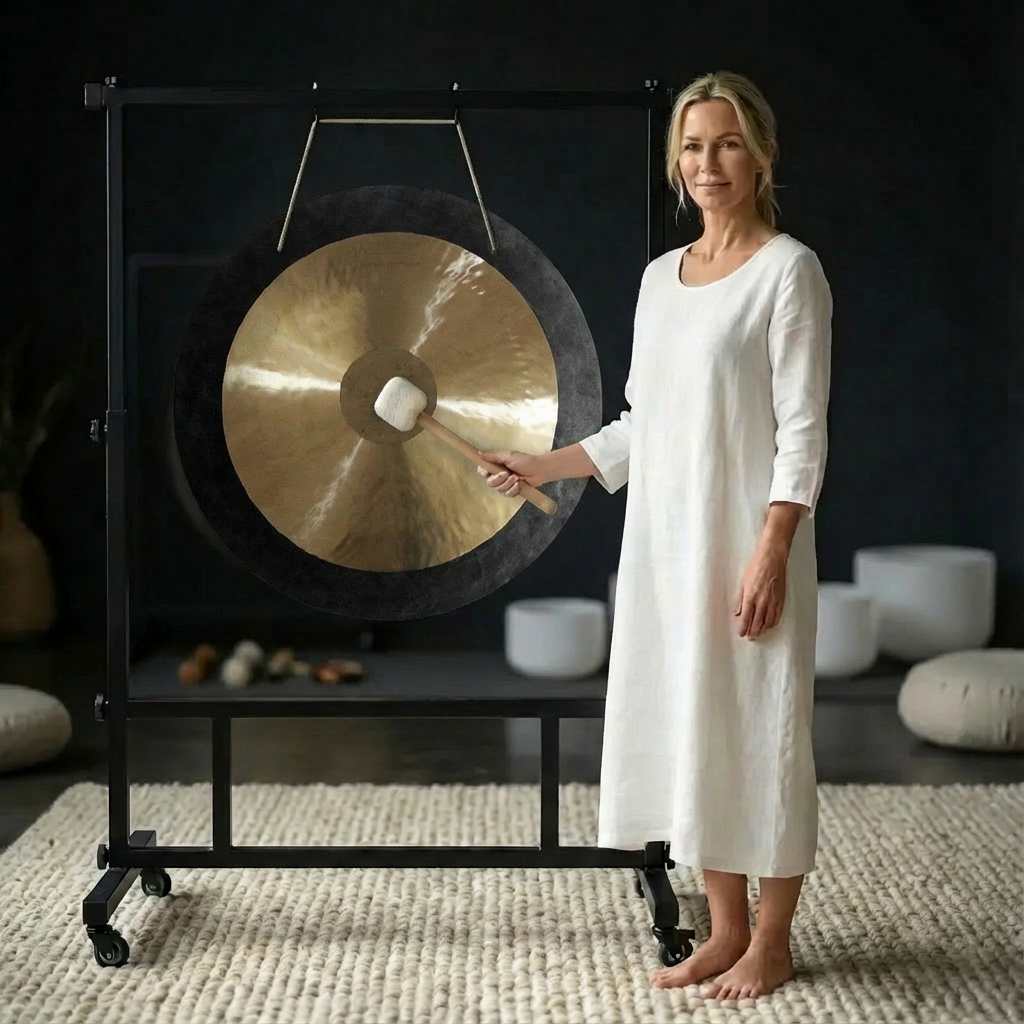
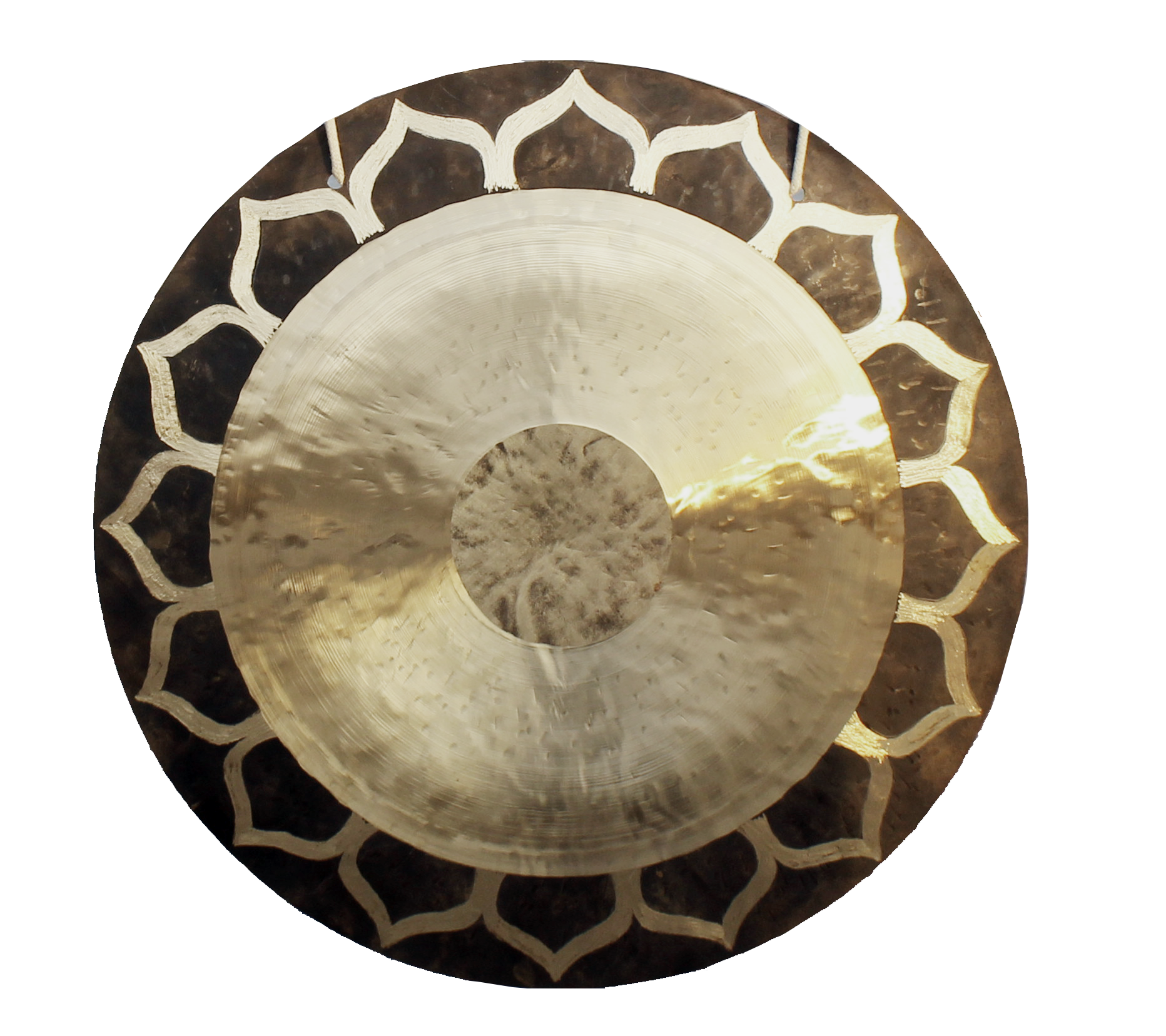
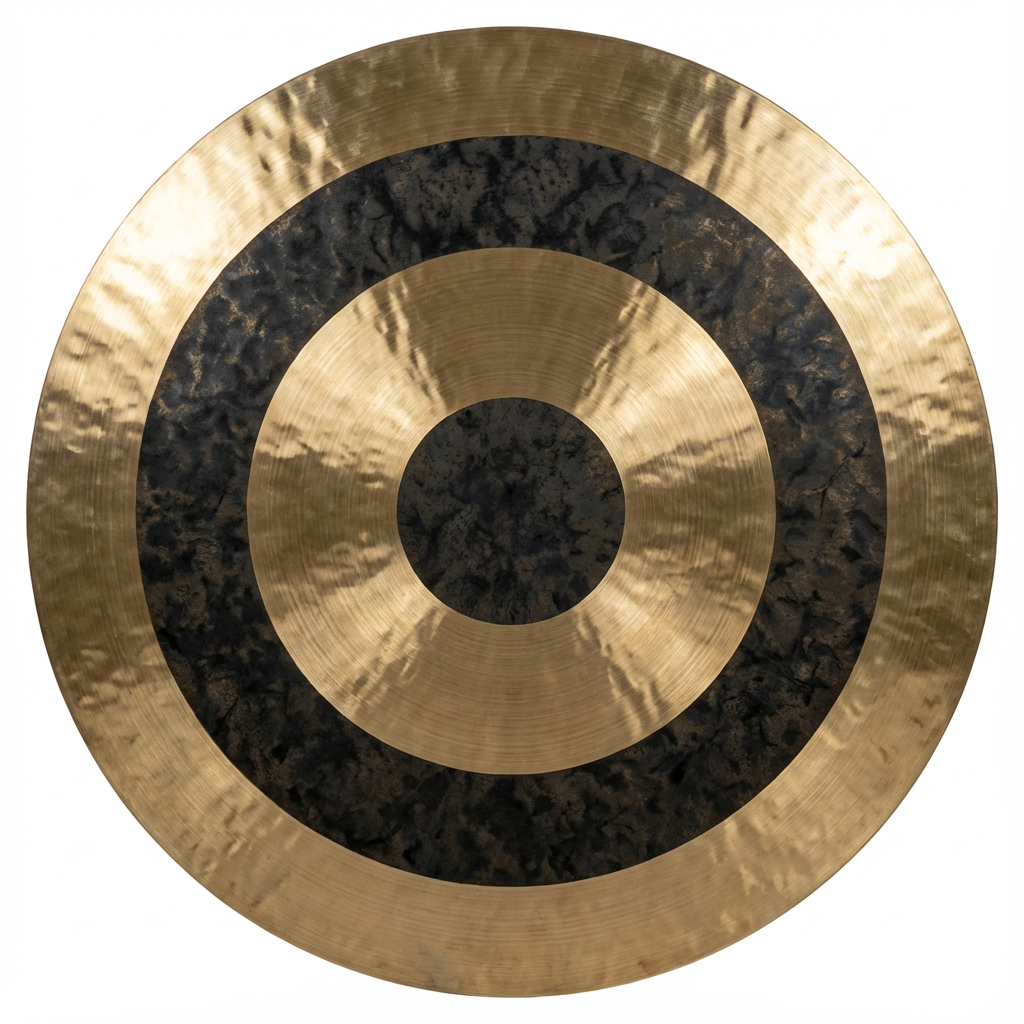
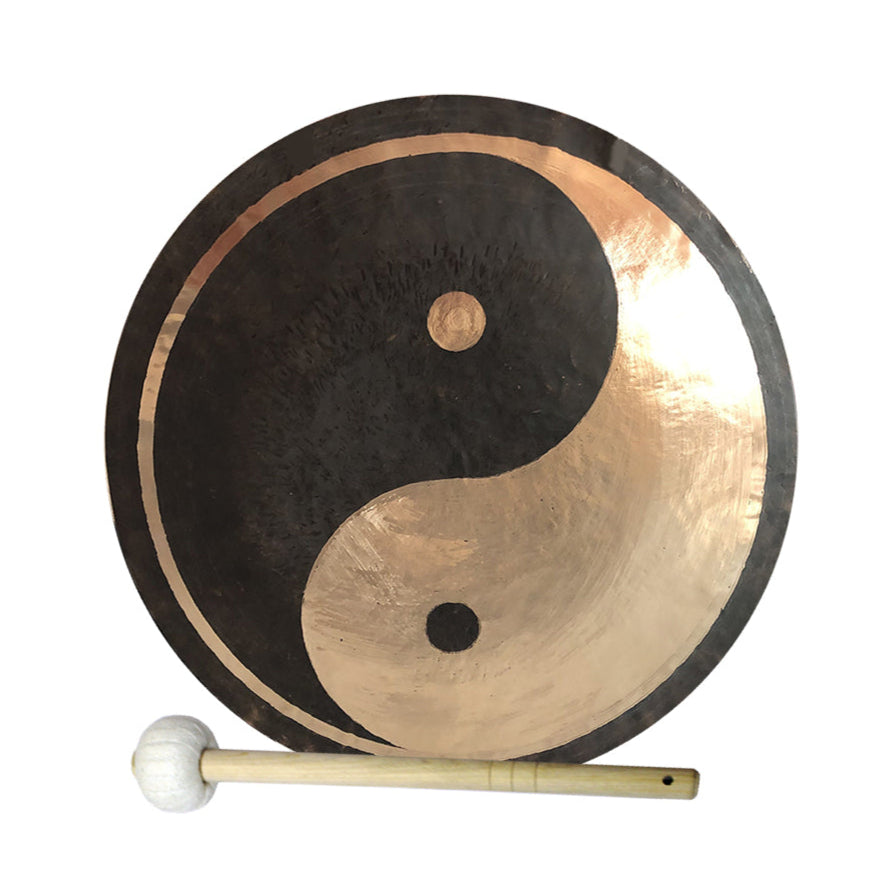
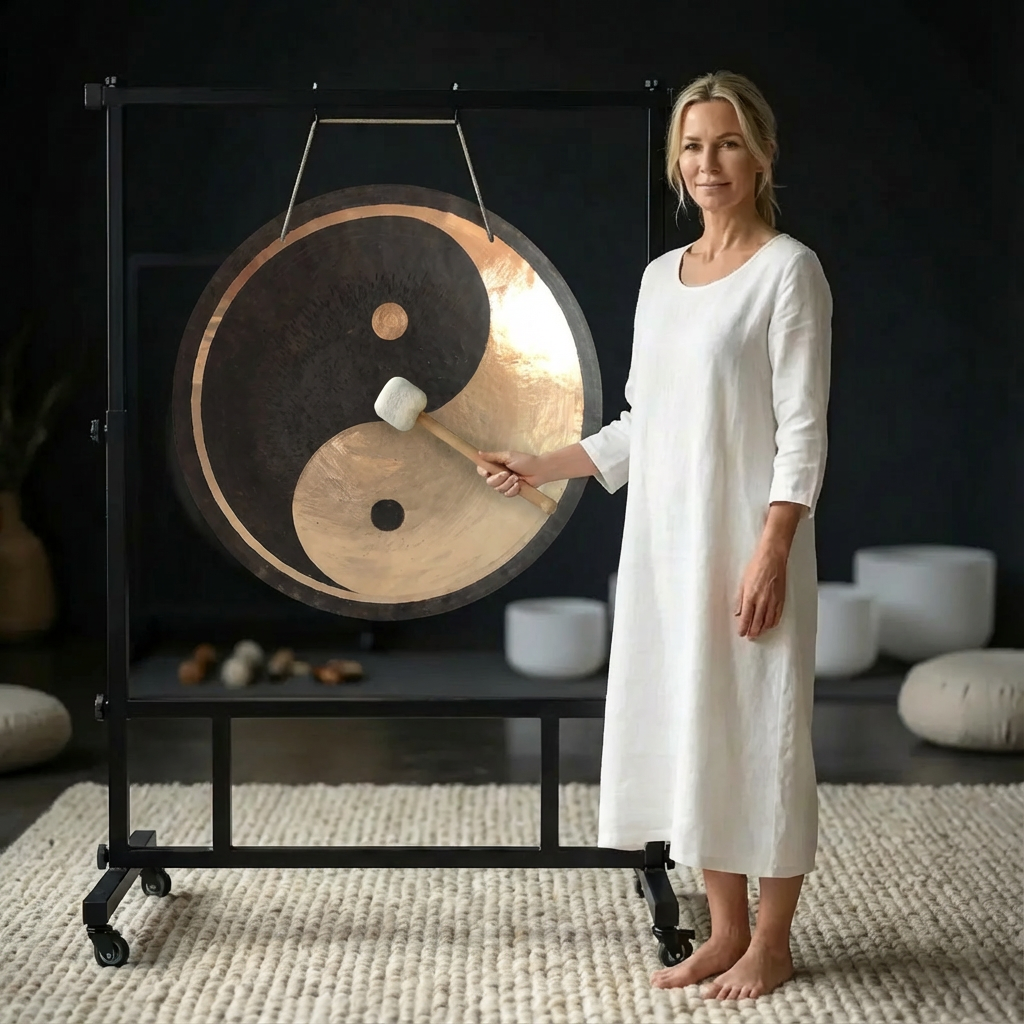
A wind gong, also known as a feng gong, is one of the most striking instruments in the gong family. Completely flat with no turned rim or center boss, wind gongs produce bright, shimmering overtones that crash and shimmer like a wave breaking on a shore. Their explosive attack and fast decay make them a favorite for energy clearing, dramatic sound effects, and dynamic sound bath sessions where contrast and movement are essential to the therapeutic experience.
Our wind gongs are hand-hammered from B20 bronze (80% copper, 20% tin), giving each instrument its own sonic fingerprint. The unlathed, flat surface is what defines the wind gong's unique voice — when struck, the vibrations radiate freely across the entire surface without the containment of a rim, producing a bright wash of sound that spreads rapidly through a space. Available in sizes from 6 inches to 44 inches, each wind gong delivers its own balance of shimmer, crash, and sustain. Every wind gong ships with a felt mallet, a 528 Hz tuning fork, an authentic Tibetan bracelet, and our comprehensive Gong Mastery Guide.
Understanding the Wind Gong
The wind gong gets its name from the Chinese word feng (风), meaning wind. In Chinese, the full name is feng luo (风锣) — literally "wind gong." Unlike the deep, building tones of a Chau gong, a wind gong's sound is immediate and expansive. The flat, rimless design allows vibrations to dissipate more quickly, which gives the instrument its characteristic bright, splashy tone with shorter sustain.
This does not mean wind gongs lack depth. Larger wind gongs (30 inches and above) produce surprisingly deep undertones beneath their bright surface shimmer. The key difference is in the attack: where a Chau gong builds slowly over several seconds, a wind gong speaks instantly, making it ideal for moments that require sudden sonic impact or energetic shift.
The unlathed surface of a wind gong is another distinguishing feature. While Chau gongs display visible concentric rings from the lathing process, wind gongs retain a raw, untreated finish. This surface texture contributes to the bright, diffuse overtone character — vibrations scatter across the uneven surface rather than following the ordered concentric pattern of a lathed gong.
Wind Gong vs. Chau Gong: Key Differences
Feature
Wind Gong (Feng Gong)
Chau Gong (Tam-Tam)
Rim
Flat, no rim
Turned/flanged rim
Surface
Unlathed, raw finish
Lathed with visible concentric rings
Attack
Fast, explosive
Gradual, building
Sustain
Shorter, quick decay
Long, sustained wash
Tone
Bright, shimmering, splashy
Deep, warm, enveloping
Material
B20 bronze
B20 bronze or nickel silver
Best For
Energy clearing, accents, dynamics
Deep meditation, sustained sound baths
Many sound healing practitioners use both types together. The Chau gong provides the foundation of deep, sustained sound, while the wind gong adds bright accents, dynamic shifts, and energetic punctuation to the session. This combination creates the contrast and movement that keeps participants engaged and deepens the therapeutic effect.
Choosing the Right Wind Gong Size
The size of your wind gong determines both its tonal range and its practical applications. Our wind gongs are available across the full range of sizes to match every practice setting:
Size Range
Sound Character
Ideal Use
Price Range
6" – 12"
High-pitched, sharp, cymbal-like, bright splash
Accent sounds, personal meditation, travel, desk use
Miniature range
14" – 22"
Bright with emerging body and warmth
Yoga classes, small group work, energy clearing, home practice
Small range
24" – 28"
Full range with deep undertones beneath shimmer
Professional sound baths, workshops, healing centers
Medium range
30" – 36"
Thunderous crash with surprising depth and resonance
Large venues, concerts, immersive group experiences
Large range
38" – 44"
Massive sonic impact, deep bass beneath bright wash
Concert halls, festivals, professional multi-gong setups
Giant range
For a versatile first wind gong, a 22-inch or 26-inch model offers enough body to be musically interesting while remaining easy to transport and mount. Professional practitioners often add a larger 32-inch or 36-inch wind gong to their collection for its dramatic, room-filling impact. If you want an accent instrument for quick energy clearing, a compact 14-inch or 16-inch wind gong is responsive and portable.
Pairing Wind Gongs with Stands
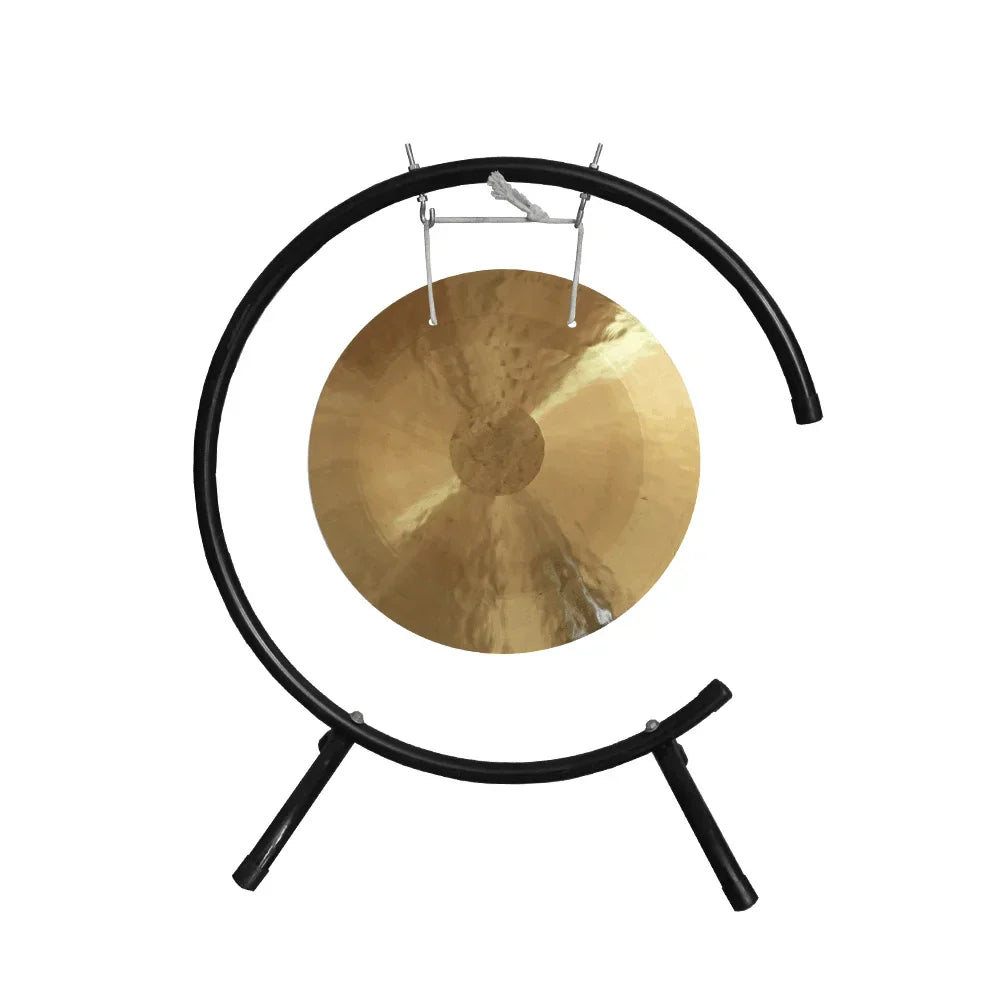
Wind gongs perform best when suspended freely on a proper gong stand. Because wind gongs are completely flat with no turned rim, they are more sensitive to how they are hung — any contact with the stand frame dampens the vibrations significantly. Ensure at least 2 inches of clearance between the gong edge and the frame. For a complete, ready-to-play setup, explore our gong with stand sets that include matched stands.
How to Play a Wind Gong
Wind gongs respond differently than rimmed gongs, and understanding their unique playing characteristics helps you unlock their full potential.
Striking Technique
Strike with a large, soft felt mallet at or near the center for the fullest, most balanced tone. Moving the strike point toward the edge produces brighter, thinner sounds with more shimmer. Because the wind gong has no rim to contain vibrations, your striking force translates directly into volume — start soft and increase gradually to control the dynamic range. Let the mallet bounce naturally off the surface for the cleanest attack.
Muting and Damping
One of the wind gong's unique properties is how responsive it is to muting. Pressing your hand against the surface immediately after striking creates a dramatic choked effect that can punctuate a session with sudden silence. Partially muting by lightly touching the edge while playing produces unusual, voice-like tones that add organic texture. Advanced players use muting as an expressive tool, alternating between open and dampened strikes to create rhythmic patterns.
Friction Playing
While wind gongs are less commonly played with friction mallets than Chau gongs, a well-applied friction technique on a large wind gong (28 inches and above) produces eerie, singing tones that build slowly. Press the mallet firmly against the surface and move in slow, steady circles with consistent pressure. This technique works best on larger wind gongs where the surface area provides enough contact for sustained friction. The resulting sound is haunting and otherworldly — a powerful tool for deep meditation work.
Playing Dynamics and Expression
The wind gong excels at dynamic contrast. Its fast attack means you can create sharp, dramatic accents followed by quick silence. Try alternating between powerful center strikes (full crash) and delicate edge taps (gentle shimmer) to create an evolving sonic landscape. In a multi-gong setup, the wind gong's brightness cuts through the deeper tones of Chau gongs, providing clarity and definition to the overall soundscape.
Wind Gongs in Sound Therapy
In sound healing and gong therapy, the wind gong serves several specific and valuable roles that complement other instruments in a practitioner's toolkit:
Energy clearing — The bright, explosive sound is believed to break up stagnant energy patterns in the body and the environment. Many practitioners begin or end a session with wind gong strikes to clear the space and set a fresh energetic foundation.
Emotional release — The sudden, dramatic quality of the wind gong's sound can trigger emotional breakthroughs during therapeutic sessions. The unexpected crash can shake loose emotional patterns that gentler sounds cannot reach.
Dynamic contrast — In longer sound baths, alternating between the deep sustained tones of a Chau gong and the bright splashes of a wind gong creates a more engaging, multi-layered experience. This contrast between deep and bright, sustained and percussive, keeps participants' attention and deepens the therapeutic journey.
Upper chakra activation — The brighter frequency content of wind gongs resonates particularly well with the throat, third eye, and crown chakras. Practitioners working on communication, intuition, or spiritual connection often reach for a wind gong.
Space cleansing — The penetrating brightness of a wind gong is used by many therapists to energetically cleanse a room between clients, resetting the space for the next session.
Using Wind Gongs in Multi-Gong Setups
Professional sound healers often incorporate wind gongs alongside other gong types for a richer therapeutic palette. A common setup pairs a 28-32 inch Chau gong (foundation tones) with a 22-26 inch wind gong (accents and clearing) and optionally a nipple gong (focused pitch) or planetary gong (specific frequencies). The wind gong's role in these setups is to provide contrast, energy, and movement within the broader sonic landscape.
Caring for Your Wind Gong
Wind gongs require the same basic care as other B20 bronze instruments, with a few specific considerations due to their flat design:
Wipe with a soft, dry cloth after each use to remove oils from handling. The flat surface shows fingerprints easily.
Store on a proper gong stand or in a padded bag — never lean a wind gong against a wall where it can slide and fall.
The flat design makes wind gongs more susceptible to warping if stored improperly, so always support them evenly. Do not stack objects on top of a stored wind gong.
Allow the natural patina to develop over time — it does not affect sound quality and many musicians prefer the aged, organic appearance.
Avoid chemical cleaners. If cleaning is needed, use a soft cloth lightly dampened with warm water, then dry immediately and thoroughly.
Keep the hanging cord in good condition. Replace it if it shows signs of fraying to prevent any risk of the gong falling.
Explore Related Collections
Wind gongs are part of our broader gong instruments collection. Compare them with our Chau gongs for deep, sustained tones, or explore nipple gongs for focused, bell-like clarity. For a comprehensive overview of Chinese-made gong styles, visit our Chinese gong collection. Need a mallet for your wind gong? Browse our felt gong mallets for options in every size.
Why Choose Healing Sounds
Every wind gong we offer is individually selected for its tonal clarity, consistency, and craftsmanship. Hand-hammered by experienced artisans from genuine B20 bronze, our instruments deliver the bright, responsive sound that professionals demand. Each wind gong ships with a felt mallet, 528 Hz tuning fork, Tibetan bracelet, and our Gong Mastery Guide. We back every purchase with our 60-Day "Love Your Gong" Guarantee, and flexible payment options through Afterpay, Klarna, and ZIP make it easy to add this dynamic instrument to your collection.
Frequently Asked Questions About Wind Gongs
A wind gong is a flat, rimless gong with an unlathed surface, also known as a feng gong. It produces bright, shimmering tones with a fast attack and shorter sustain compared to rimmed gongs like the Chau gong. Wind gongs are popular in sound therapy for energy clearing and creating dynamic, dramatic soundscapes during gong baths and meditation sessions.
The main difference is the rim: a Chau gong has a turned (flanged) edge that contains vibrations and creates deep, sustained tones that build gradually. A wind gong is completely flat with no rim, producing brighter, more explosive sounds with quicker decay. Chau gongs evolve slowly over several seconds, while wind gongs speak immediately upon contact with the mallet.
A feng gong is simply another name for a wind gong. The word "feng" (风) means "wind" in Chinese. The two terms are used interchangeably in both Western and Chinese musical traditions. Feng gongs are characterized by their flat, rimless design and bright, shimmering tonal quality that makes them ideal for energy clearing and sound therapy.
The main types of gongs include Chau gongs (tam-tam gongs with a turned rim for deep, building tones), wind gongs (flat, rimless feng gongs for bright, explosive sound), nipple gongs (bao gongs with a raised center boss for focused, pitched tones), planetary gongs (tuned to specific celestial frequencies), mirror gongs (polished nickel silver alloy with bright clarity), and chakra gongs (tuned to the body's energy centers). Each type has a distinct sound character and therapeutic purpose.
Quality gongs are expensive because they are made from B20 bronze (a premium copper-tin alloy) and are hand-hammered by skilled artisans — a process that can take hours for a single instrument. The raw material cost of B20 bronze, the labor-intensive craftsmanship, and the quality control required to produce a musically excellent instrument all contribute to the price. Larger gongs require exponentially more material and labor, which is why prices increase significantly with diameter.
The best gong for sound healing depends on your therapeutic goals. Chau gongs are the most versatile all-around choice, offering deep tones and complex overtones for immersive sound baths. Wind gongs are excellent for energy clearing, emotional release, and dynamic accents. Planetary gongs are preferred by practitioners who work with specific frequencies and chakra alignment. Many professional sound healers use a combination of gong types to create varied, multi-layered therapeutic soundscapes.
Unique Gong Collection
Discover stunning gongs for powerful sound therapy.
Elevate Your Sound Experience
Achieve deep resonance with our expertly crafted gongs.
Treat yourself to a relaxing moment
With our best instruments. Handcrafted from the finest materials.
Created by healing enthousiasts
We know your needs because we use our products too. We are the first users.
Money-back guarantee
You have 60 days to return your order if it doesn't fit (you'll love it anyway).
100% secured payments
So you can remain in deep peace until you receive your order.