


Nipple gongs
3 products
Showing 1 - 3 of 3 products
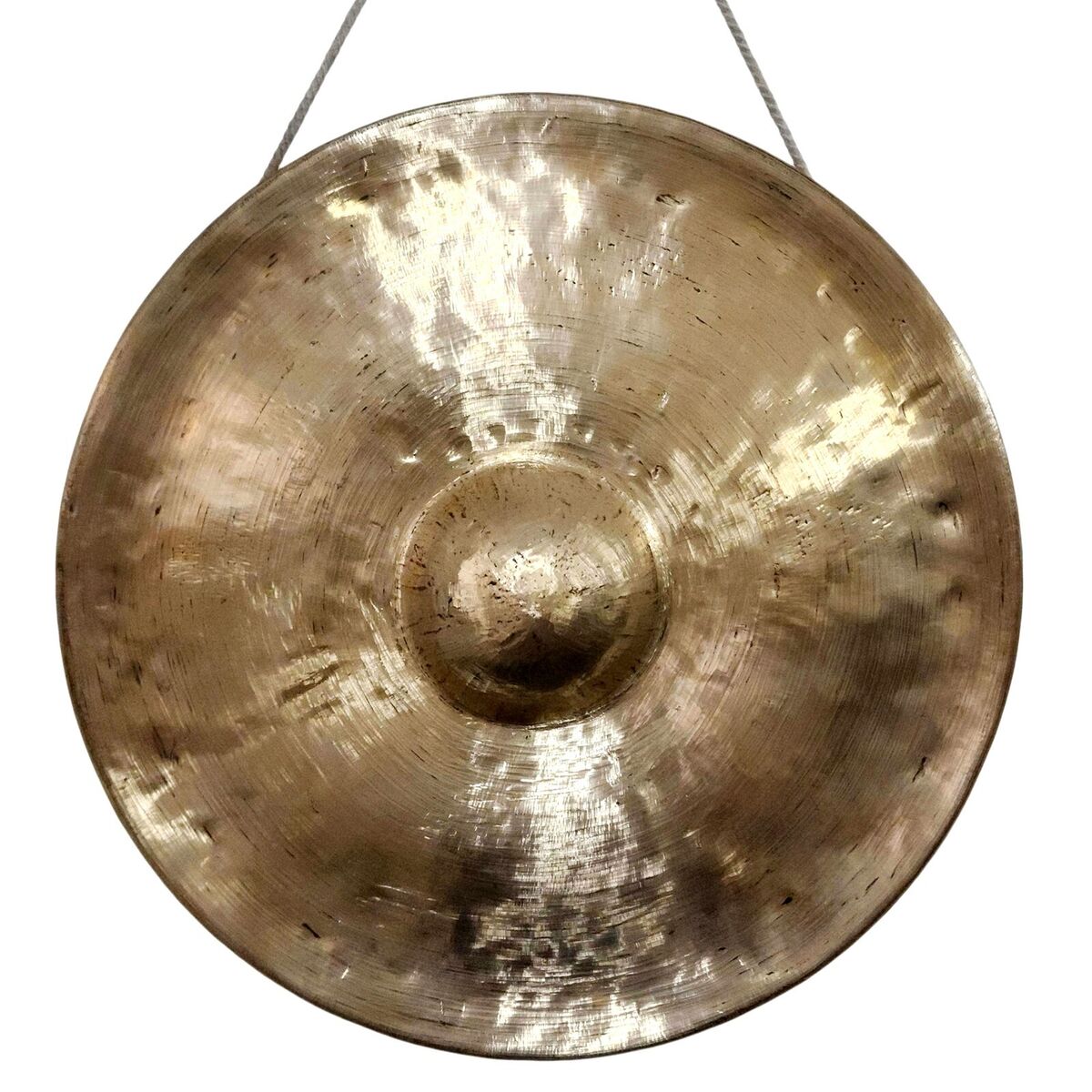
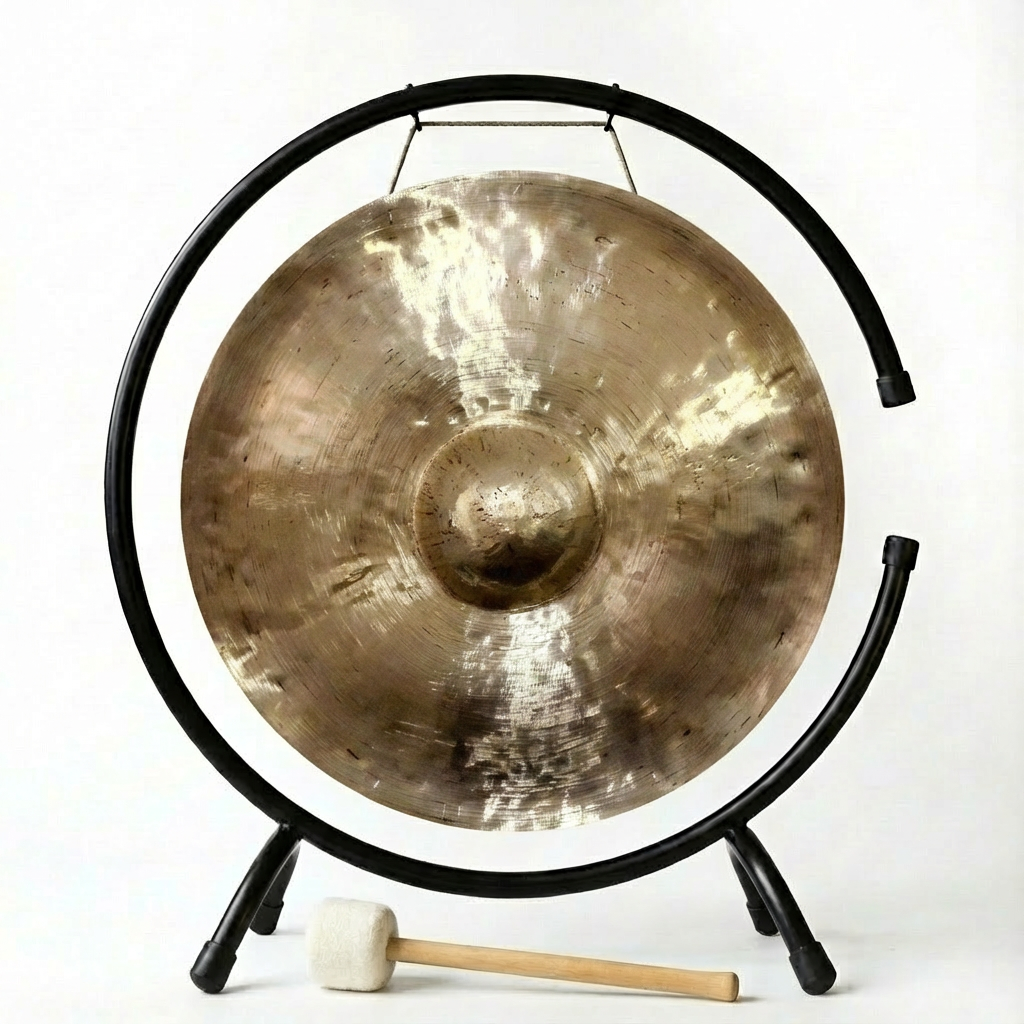
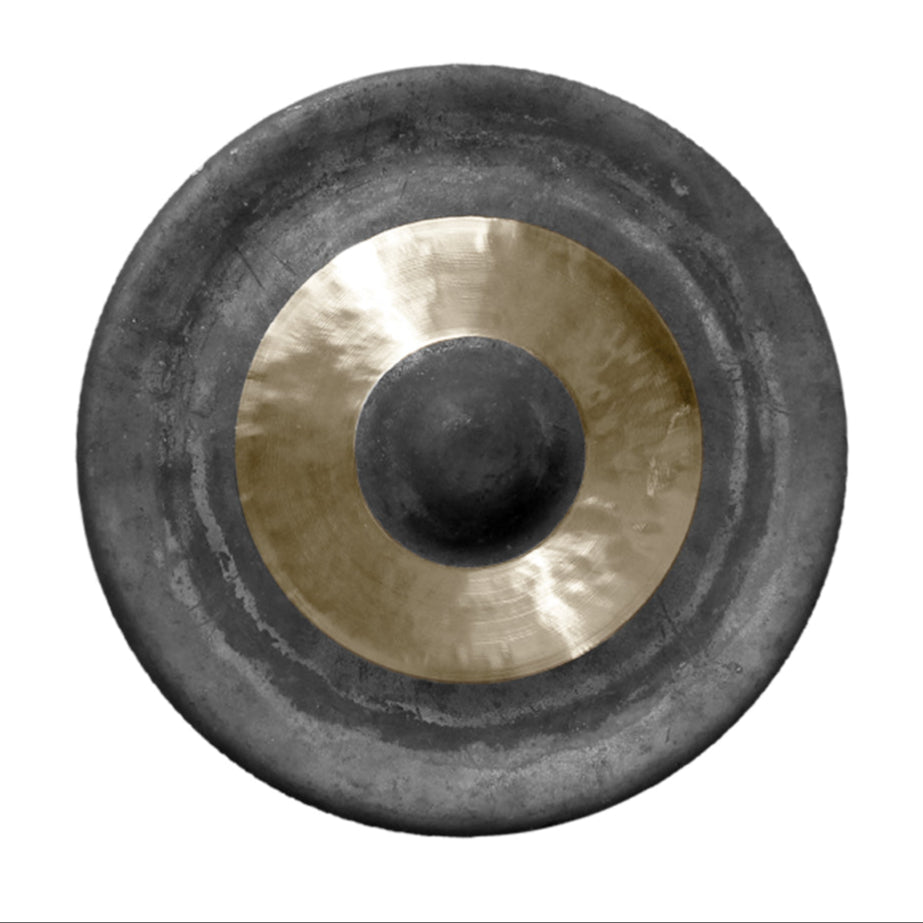
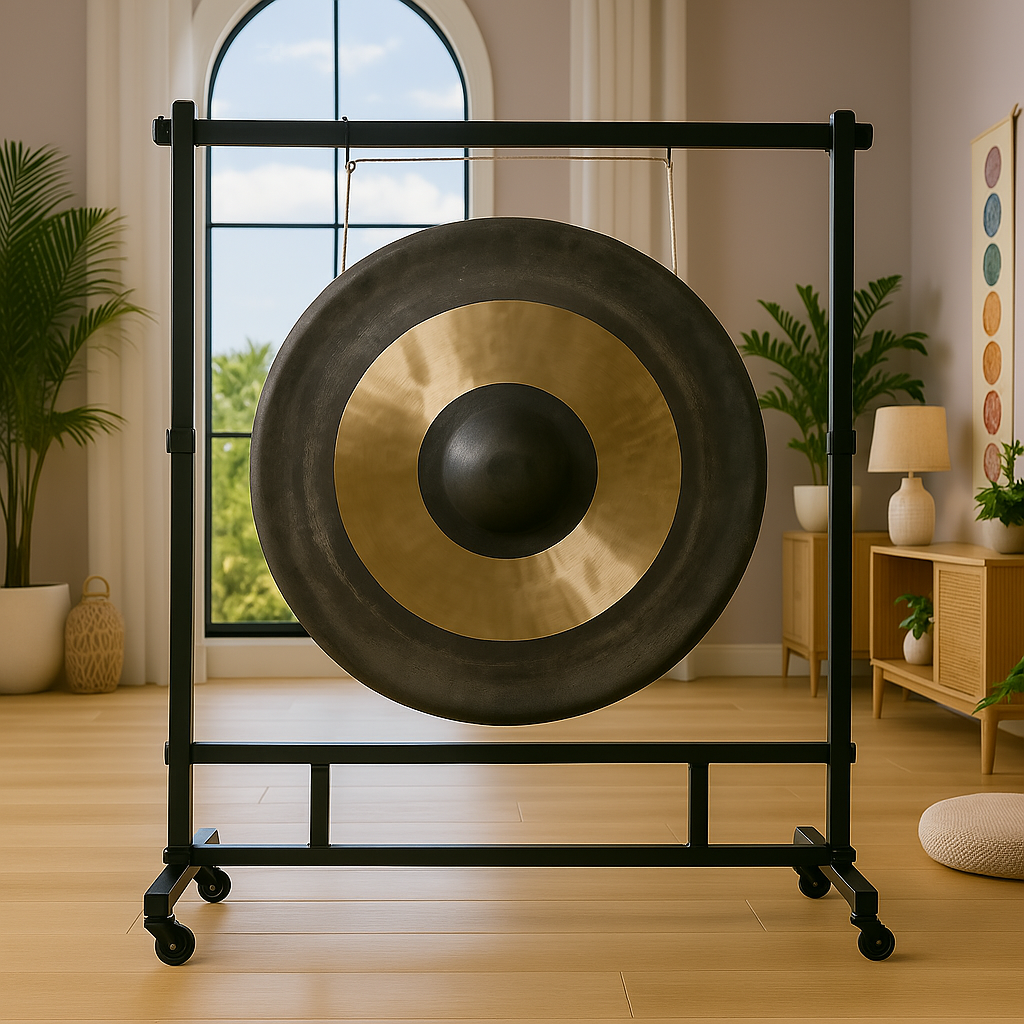
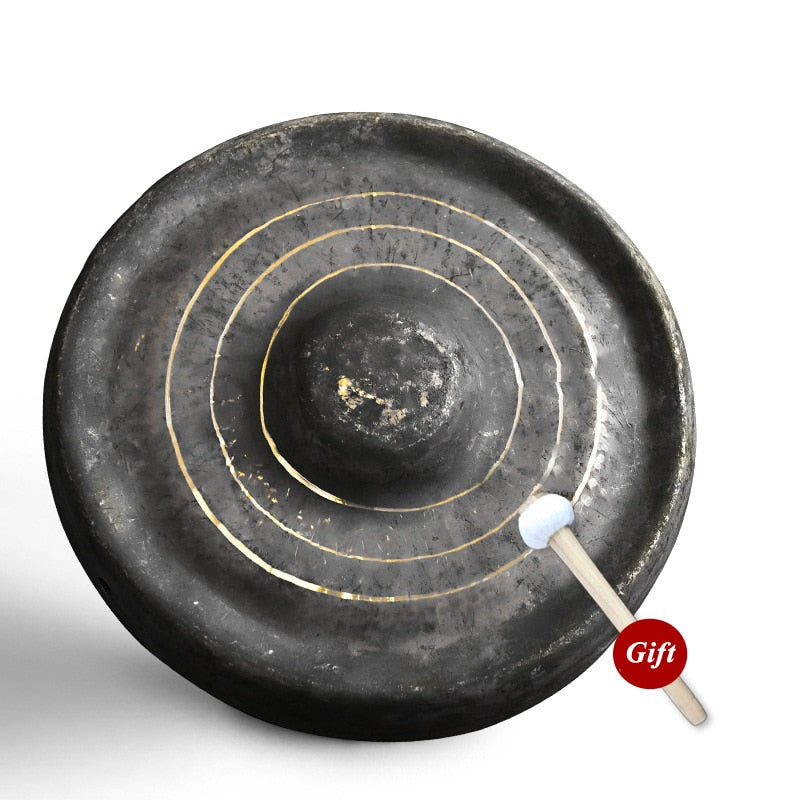
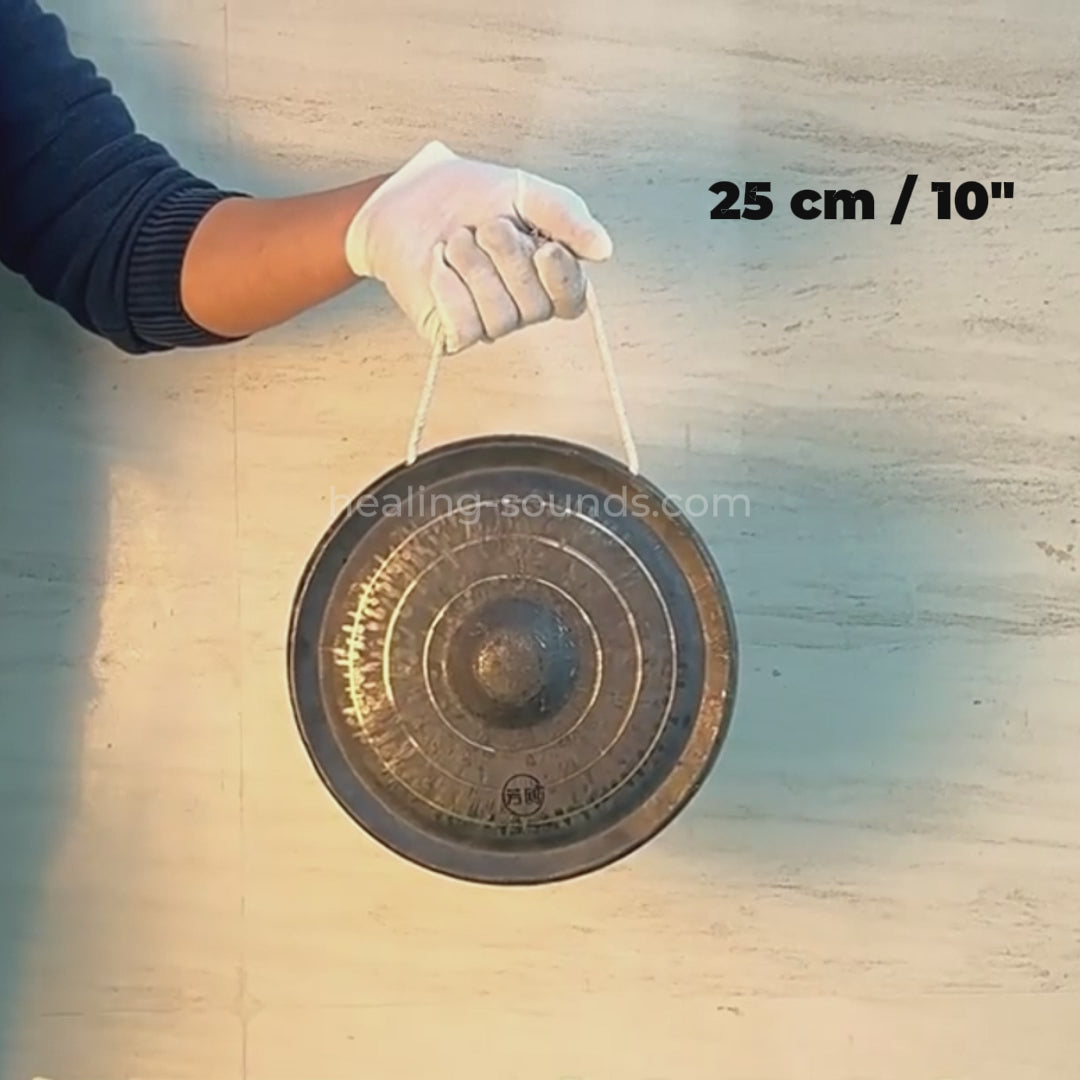
The nipple gong, also called a bao gong, boss gong, or Java gong, is a distinctive instrument defined by the raised knob (boss) at its center. This unique feature gives the nipple gong a focused, bell-like tone with a clear fundamental pitch — quite different from the complex wash of a Chau or wind gong. If you are looking for a gong with a defined, singing quality that excels in meditation and chakra alignment, a nipple gong is an exceptional choice.
Our nipple gongs are hand-hammered from B20 bronze (80% copper, 20% tin), with the center boss carefully shaped to produce a precise fundamental note. The combination of the boss and the flat surrounding surface creates a dual-toned instrument: strike the boss for a pure, ringing tone, or strike the flat area for a more diffused, shimmering sound. This versatility makes nipple gongs valuable for both solo meditation and layered sound bath work. Every nipple gong ships with a felt mallet, 528 Hz tuning fork, authentic Tibetan bracelet, and our comprehensive Gong Mastery Guide.
What Defines a Nipple Gong
The nipple gong belongs to a family of bossed gongs found across Southeast Asia, from China to Indonesia to the Philippines. The defining feature is the raised center boss (the "nipple"), which acts as the primary resonating point. When this boss is struck, it produces a clear, sustained note with a strong fundamental — much more pitched and focused than the complex overtone wash of a flat gong. This pitched quality makes the nipple gong closer in character to a bell or singing bowl, but with greater volume and projection.
The boss also functions as a physical tone-shaping element. Its mass and shape concentrate vibrations at the center of the gong, preventing them from spreading evenly across the surface as they would in a flat Chau or wind gong. This concentration is what produces the nipple gong's signature clarity and definition. The size, height, and curvature of the boss vary between instruments and contribute to each gong's unique pitch and tonal color.
Alternative Names and Origins
This gong style goes by several names depending on the cultural tradition and region:
- Bao gong — The Chinese name, widely used in the context of Chinese opera and traditional ensembles. "Bao" refers to the precious or treasure-like quality of the instrument's tone.
- Boss gong — An English-language term referring to the raised center knob (boss) that defines this gong type. Common in orchestral and percussion contexts.
- Java gong — Reflects the prominence of bossed gongs in Javanese and Balinese gamelan music, where they are essential melodic instruments in traditional ensembles.
- Nipple gong — The most common English-language term in sound healing circles, descriptive of the center protrusion's shape.
Despite the variety of names, all refer to the same instrument category: a gong with a raised center that produces a focused, pitched tone distinctly different from flat gongs.
Sound Characteristics
Nipple gongs offer a sound profile distinct from other gong types, making them uniquely valuable in a practitioner's collection:
- Clear fundamental pitch — The boss acts as a focal point for vibration, producing a defined note rather than a wash of sound. This pitch clarity is the nipple gong's greatest distinction.
- Bell-like sustain — The tone rings clearly and sustains evenly, similar to a singing bowl but with greater projection and reach. The sustain can last 15-30 seconds on larger instruments.
- Dual playing zones — The boss and the flat rim produce contrasting tones, offering two distinct voices from a single instrument. This duality gives practitioners versatility without needing multiple gongs.
- Lower overtone complexity — Compared to Chau gongs, nipple gongs produce fewer chaotic overtones, resulting in a cleaner, more meditative sound that is easier for the mind to focus on.
- Excellent for tuned sets — Because nipple gongs have a clear pitch, they can be assembled in tuned sets that create melodic sequences, a practice rooted in the gamelan tradition.
Nipple Gong vs. Other Gong Types
| Feature | Nipple Gong (Bao Gong) | Chau Gong (Tam-Tam) | Wind Gong (Feng Gong) |
|---|---|---|---|
| Center | Raised boss | Flat or slightly raised | Completely flat |
| Rim | Flat or slightly turned | Turned/flanged | No rim |
| Tone | Focused, bell-like, pitched | Deep, complex, building | Bright, shimmering, splashy |
| Sustain | Clear, even ring | Long, layered wash | Short, quick decay |
| Overtones | Minimal, clean | Dense, complex | Bright, scattered |
| Best For | Meditation, chakra work, gamelan | Sound baths, orchestral | Energy clearing, accents |
Choosing the Right Nipple Gong
When selecting a nipple gong, several factors determine which instrument best suits your practice.
Size and Pitch
Size directly correlates with pitch in nipple gongs — a relationship more predictable than in flat gongs because the boss provides a strong fundamental:
- 6" - 12" - Higher-pitched tones suited for upper chakra work (throat, third eye, crown), accent sounds, and personal desk meditation. Light and easy to transport.
- 14" - 22" - A balanced, versatile range offering clear tone with enough body for general meditation, therapy sessions, and small group work. The most popular size range for individual practitioners.
- 24" - 28" - Full, rich fundamental notes with impressive projection and sustain. Ideal for professional sound therapy, workshops, and the most popular size for serious practitioners.
- 30" - 36" - Deep, powerful tones with commanding projection. Excellent for professional sound baths, large group sessions, and studio installations.
- 38" - 44" - Concert-grade instruments with earth-shaking depth. For large sound baths, concert halls, and professional multi-gong setups.
For your first nipple gong, a 14-22 inch model provides the best balance of playability, tonal richness, and versatility. Pair it with a proper gong stand for the best resonance, or explore a complete gong with stand set.
Playing Technique
The boss is the primary strike point for the focused fundamental tone. Use a medium-weight felt mallet and let the mallet bounce naturally off the boss for the clearest ring. A common mistake is pressing the mallet into the boss after contact — this dampens the vibration and kills the sustain. Instead, treat the strike like ringing a bell: make contact and immediately withdraw.
Striking the flat area around the boss produces a secondary tone with more overtone content — useful for adding texture to a session or transitioning between the focused pitch and a broader sonic wash. Alternating between boss strikes and rim strikes during a session creates an evolving, dynamic soundscape from a single instrument.
Sets and Ensembles
Nipple gongs are commonly played in sets of multiple sizes, tuned to different notes. This tradition comes from gamelan music, where sets of bossed gongs provide the melodic foundation for complex ensemble compositions. In modern sound therapy, a set of 3-5 nipple gongs in ascending sizes creates a melodic palette that allows for more structured, intentional healing work than a single gong alone.
A basic therapeutic set might include:
- 10-inch nipple gong (high tone) for upper chakras
- 14-inch nipple gong (mid-high tone) for heart/throat chakras
- 18-inch nipple gong (mid tone) for solar plexus
- 22-inch nipple gong (low-mid tone) for sacral chakra
- 26-inch nipple gong (low tone) for root chakra
Playing these in sequence from low to high (or high to low) creates a sonic journey through the chakra system that is deeply meditative and therapeutically powerful.
Nipple Gongs in Sound Healing
The focused, pitched quality of nipple gongs makes them particularly effective for specific therapeutic applications that benefit from tonal clarity:
- Chakra alignment — The clear fundamental pitch can be matched to specific chakra frequencies, allowing targeted energy work on individual energy centers with precision that broader-sounding gongs cannot achieve.
- Meditation anchoring — The clean, bell-like tone serves as an excellent focal point for mindfulness meditation. The clear, sustained ring gives the mind something specific to follow, making it easier to maintain focus during practice.
- Gong bath layering — When combined with Chau or wind gongs, nipple gongs add clarity and melodic definition to the broader soundscape.
- Sound massage — Smaller nipple gongs (6-12 inches) can be held near the body during individual sessions, directing focused vibrations to specific areas for localized therapeutic effect.
- Toning and vocal work — The clear pitch of a nipple gong provides an excellent reference tone for vocal toning and chanting practices.
Caring for Your Nipple Gong
- Clean with a soft, dry cloth after handling. The boss area collects fingerprints easily and should be wiped gently after each session.
- Store on a padded surface or a gong stand designed for bossed gongs.
- Never rest a nipple gong face-down on the boss — this can dent or damage the critical resonating point that defines the instrument's tone.
- Allow natural patina to develop. Polishing is optional and purely aesthetic — it does not affect the sound quality.
- For sets of multiple gongs, store each instrument separately to prevent scratching or chipping from contact between instruments.
- Avoid exposing the gong to extreme temperature changes, which can stress the metal and affect tuning.
Explore Related Collections
Nipple gongs are part of our full gong instruments collection. For deeper, more complex tones, explore our Chau gongs. For bright, shimmering accents, see our wind gongs. Browse our complete Chinese gong selection to compare all styles, or find a complete setup with our gongs with stand bundles. For frequency-specific healing work, explore our planetary gongs and chakra gongs.
Why Choose Healing Sounds
Our nipple gongs are hand-hammered with careful attention to the boss formation, which is the most critical element of the instrument's sound. Each gong is tested for pitch accuracy and sustain quality before being offered. Every nipple gong ships with a felt mallet, 528 Hz tuning fork, Tibetan bracelet, and Gong Mastery Guide. Whether you need a single meditation gong or a tuned set for professional practice, our collection delivers authentic, resonant instruments backed by our 60-Day "Love Your Gong" Guarantee.
Frequently Asked Questions About Nipple Gongs
A nipple gong is a type of gong featuring a raised knob (boss) at its center. Also called a bao gong, boss gong, or Java gong, it produces a focused, bell-like tone with a clear fundamental pitch when the boss is struck. Nipple gongs are widely used in sound healing, meditation, gamelan music, and Chinese opera, valued for their clarity and defined pitch.
Gong vibrations interact with the body on multiple levels. The sound waves can reduce heart rate and blood pressure, release tension held in muscles, and shift brainwave activity toward the alpha and theta states associated with deep relaxation and meditation. Many people report feeling a tingling sensation, warmth, or emotional release during a gong bath. Nipple gongs, with their focused pitch, can direct these vibrations to specific body areas and energy centers.
Gong prices depend on size, material, and craftsmanship. Small gongs (6-12 inches) typically range from $8 to $50. Medium gongs (14-22 inches) cost $48 to $140. Larger instruments (24-28 inches) range from $140 to $280, and professional-grade large gongs (30-36 inches) can range from $280 to $700. Giant concert gongs (38 inches and above) can exceed $1,200. Hand-hammered B20 bronze gongs deliver superior sound quality compared to machine-made alternatives.
A tam-tam is actually a specific type of gong — it refers to the flat Chau gong with a turned rim, commonly used in orchestras and sound baths. In general usage, "gong" is the broader category that includes Chau gongs (tam-tams), wind gongs, nipple gongs, planetary gongs, and more. All tam-tams are gongs, but not all gongs are tam-tams. Nipple gongs, for example, are distinctly different from tam-tams in both construction and sound.
Gongs serve multiple purposes across cultures and practices. In sound therapy, they promote relaxation, stress relief, and energetic balancing. In spiritual practices, they are used for meditation, ceremony, and chakra work. In music, they provide dramatic tonal color in orchestral, gamelan, and contemporary compositions. The gong's ability to produce a wide range of frequencies makes it one of the most versatile therapeutic and musical instruments in existence.
During a gong bath, participants lie down comfortably while a practitioner plays one or more gongs. The sound waves wash over the body in waves of varying intensity, promoting deep relaxation. Many participants experience shifts in consciousness, vivid imagery, emotional release, or a floating sensation. Sessions typically last 45 to 90 minutes and require no active participation — you simply receive the sound and allow the vibrations to guide your experience.
Wear comfortable, loose-fitting clothing that does not restrict movement or breathing. Layers are recommended, as body temperature can drop during deep relaxation. Avoid jewelry or accessories that might make noise during the session and break the meditative atmosphere. Most people also bring a yoga mat, blanket, and pillow for comfort while lying down. Socks are helpful as feet tend to get cold during longer sessions.
The gong produces vibrations across a broad frequency spectrum that the body absorbs through both hearing and physical resonance. These vibrations can slow brainwave activity, stimulate the parasympathetic nervous system, release muscle tension, and promote a deeply meditative state. In energetic terms, practitioners believe gong vibrations help clear blockages and restore balance to the body's chakra system, supporting both physical relaxation and emotional processing.

Unique Gong Collection
Discover stunning gongs for powerful sound therapy.

Elevate Your Sound Experience
Achieve deep resonance with our expertly crafted gongs.