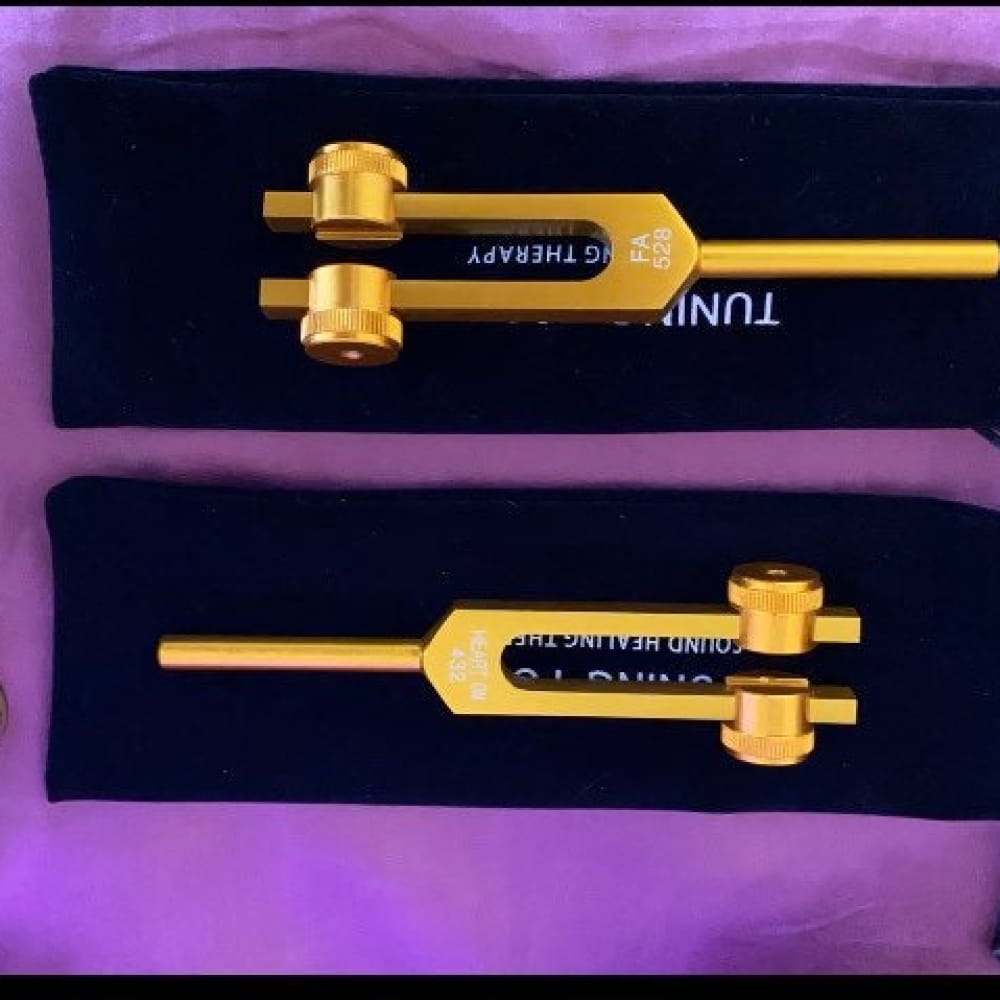
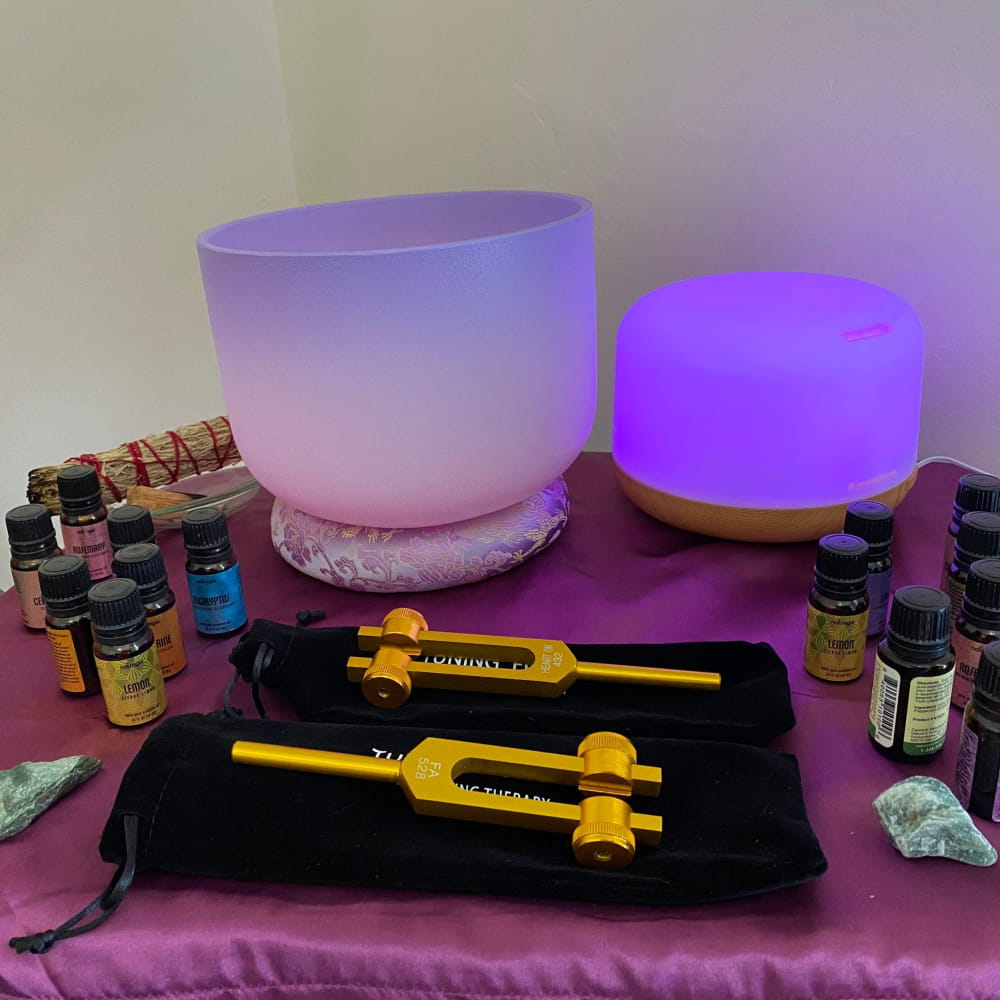
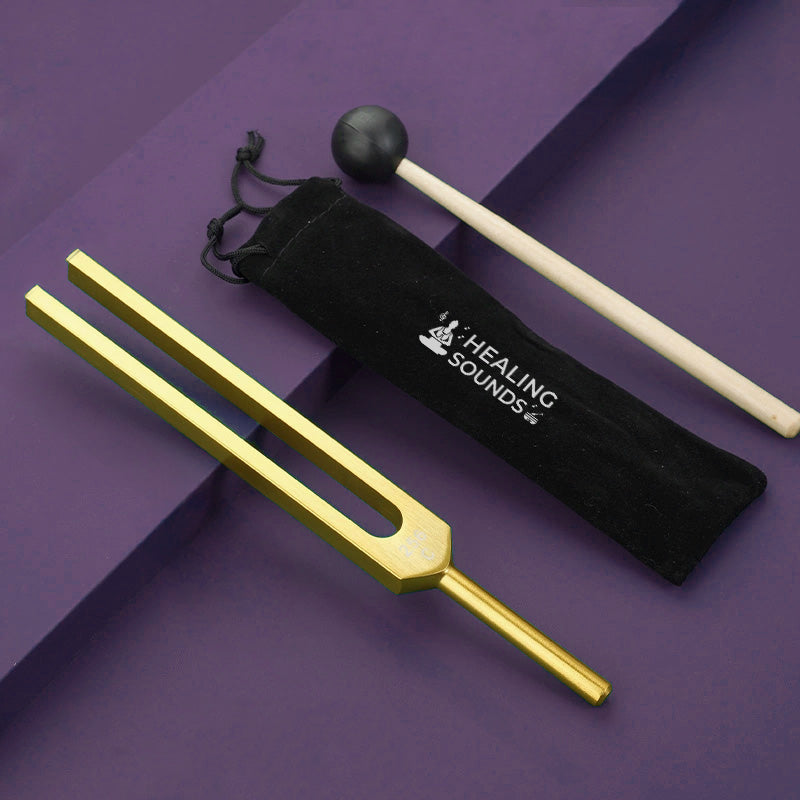
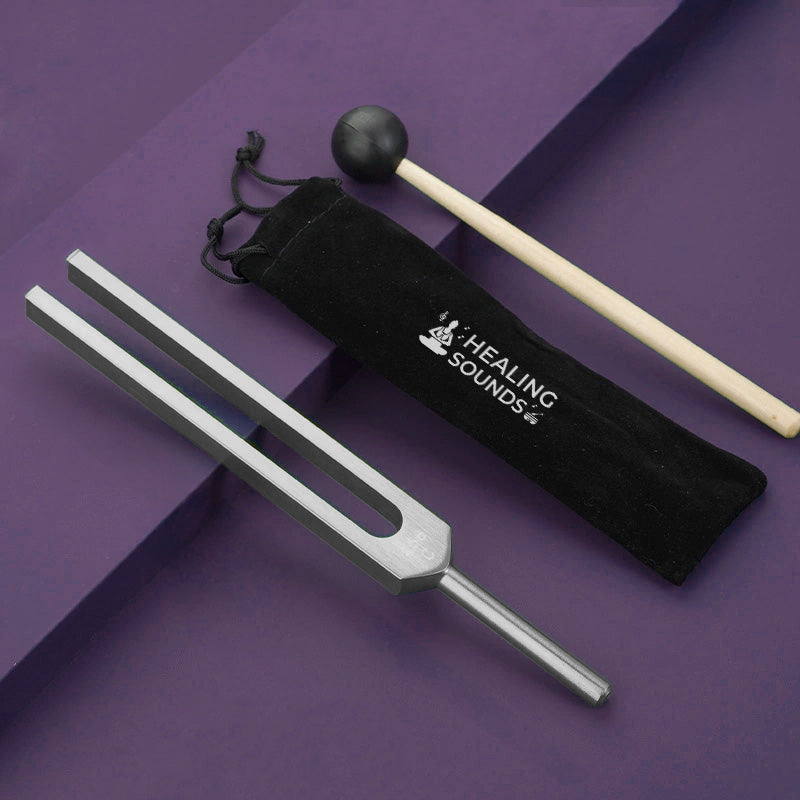
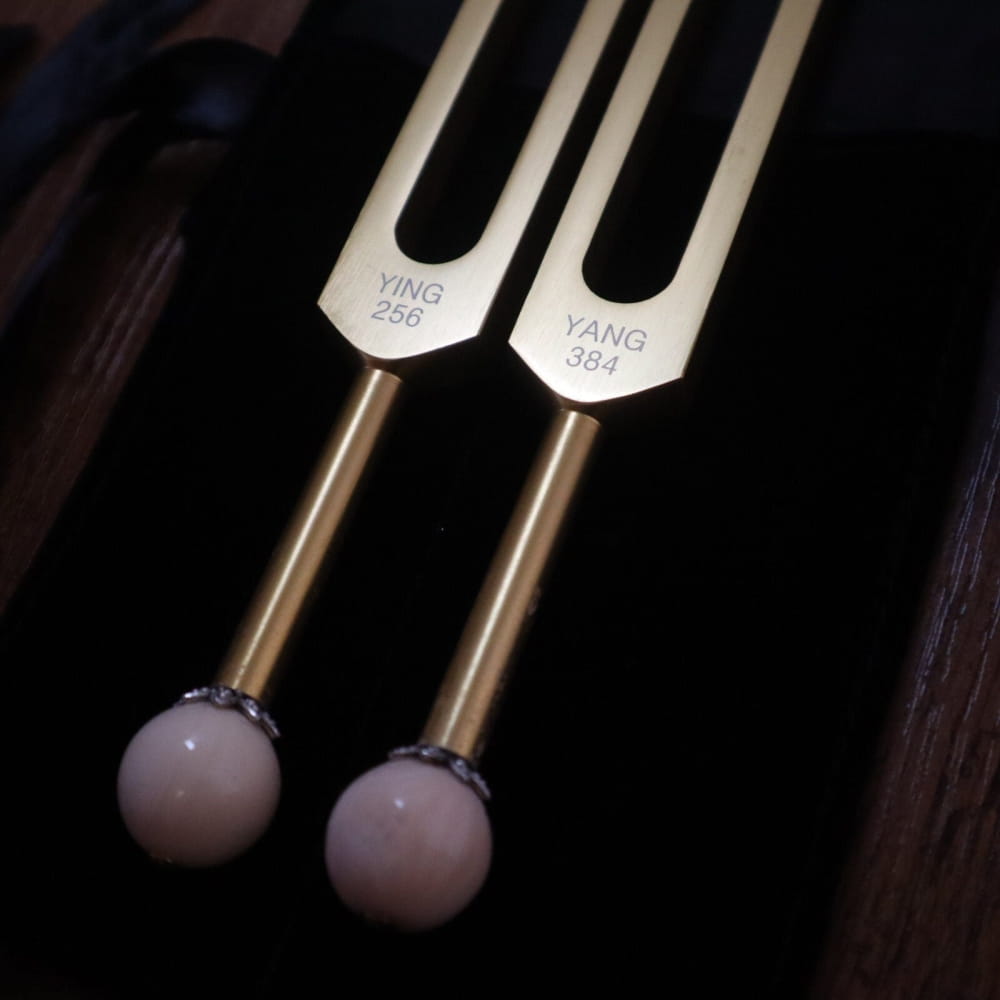
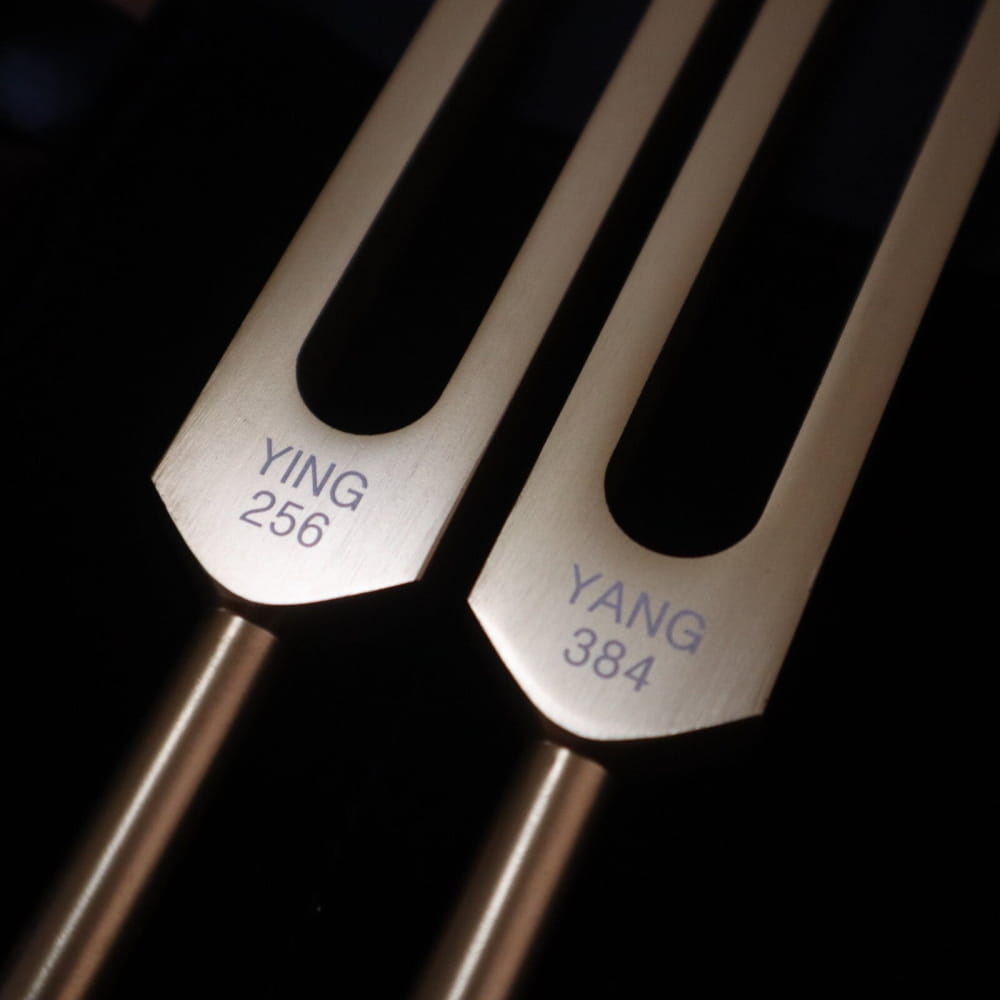
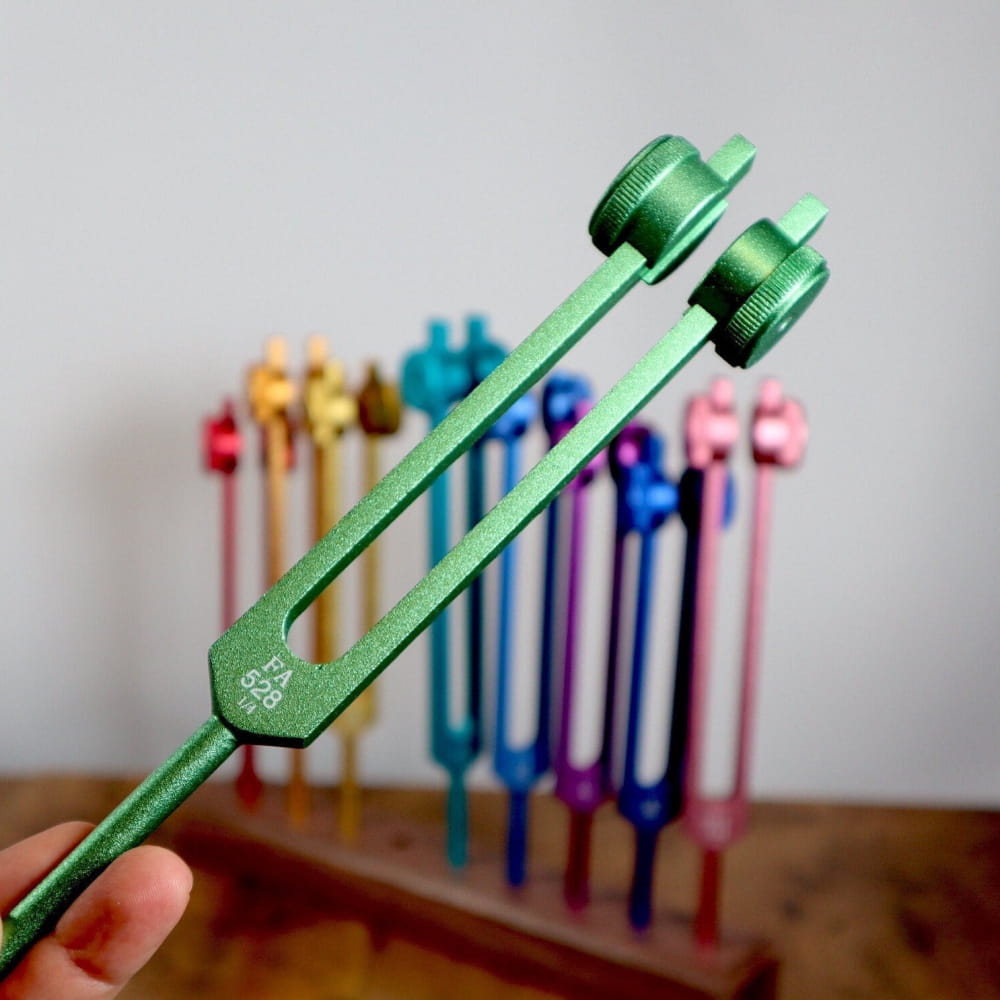
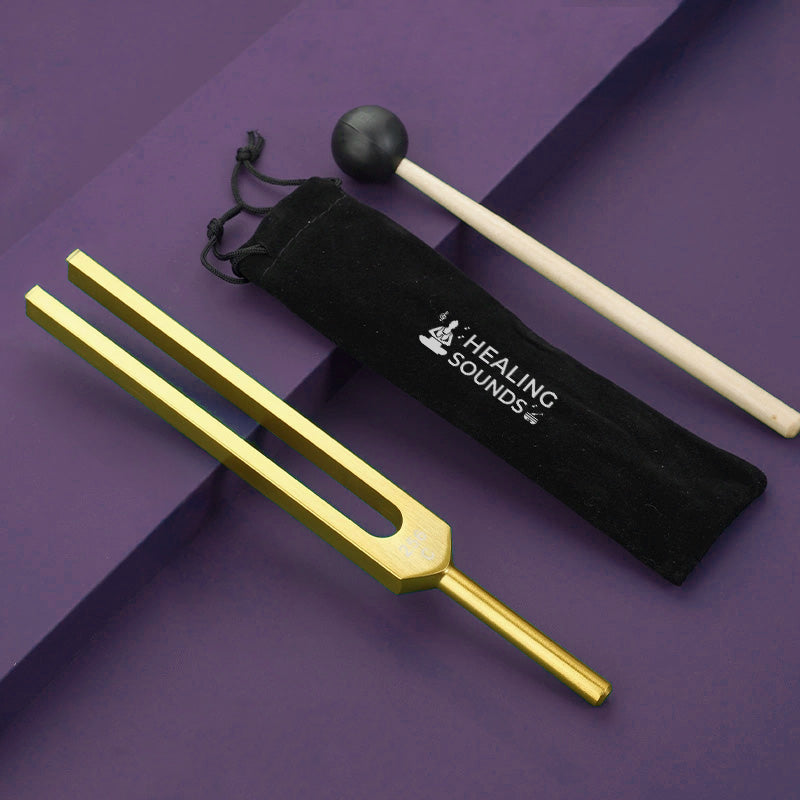
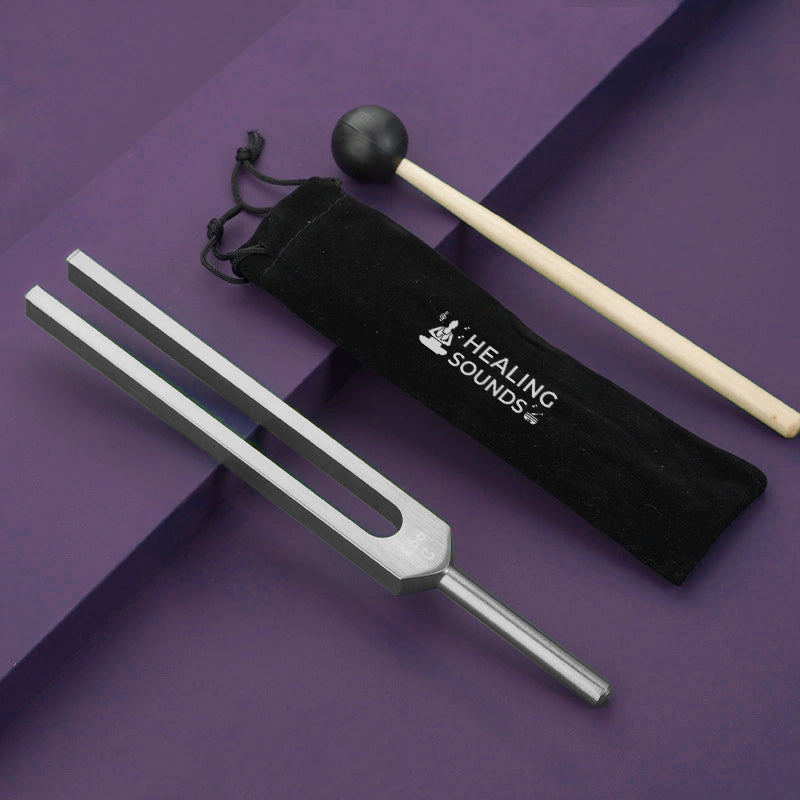
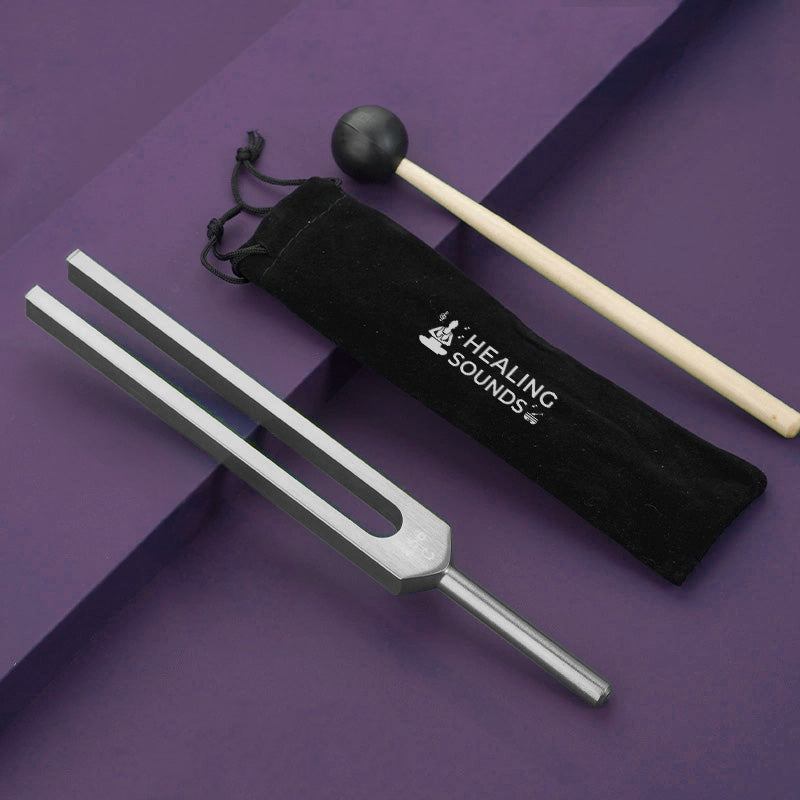
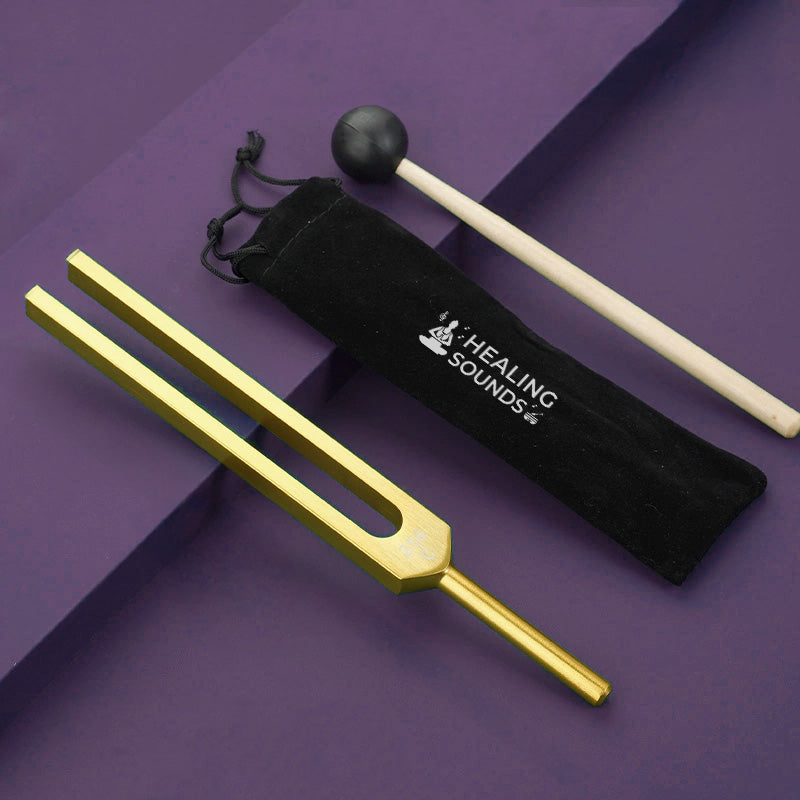
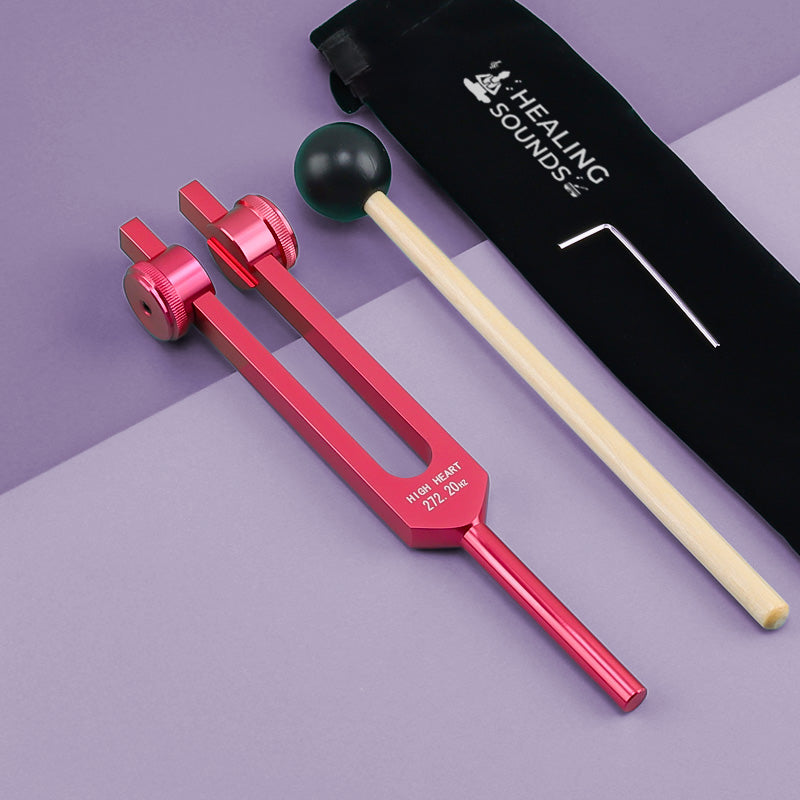
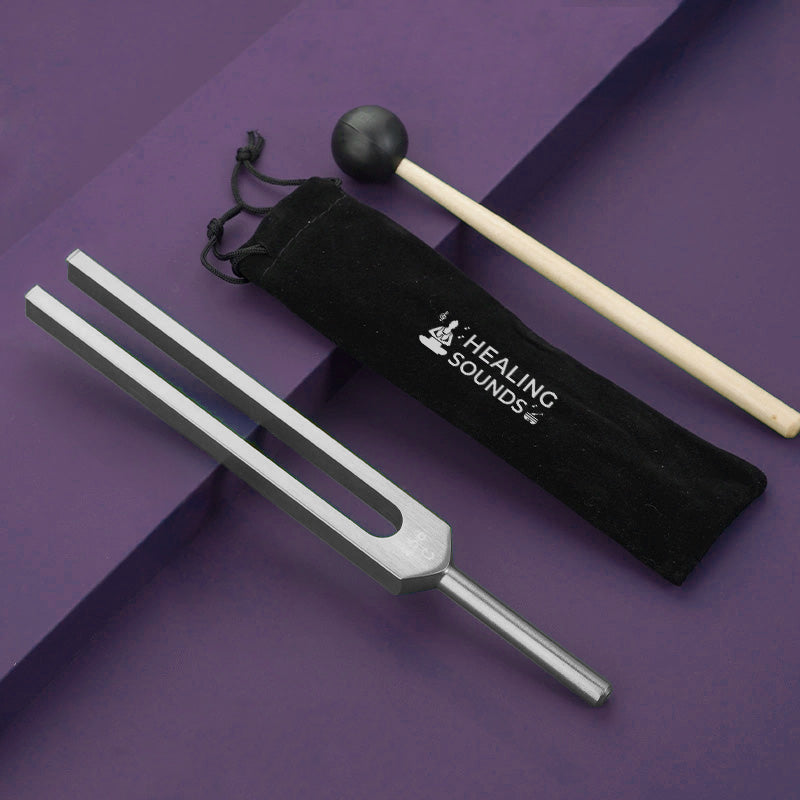
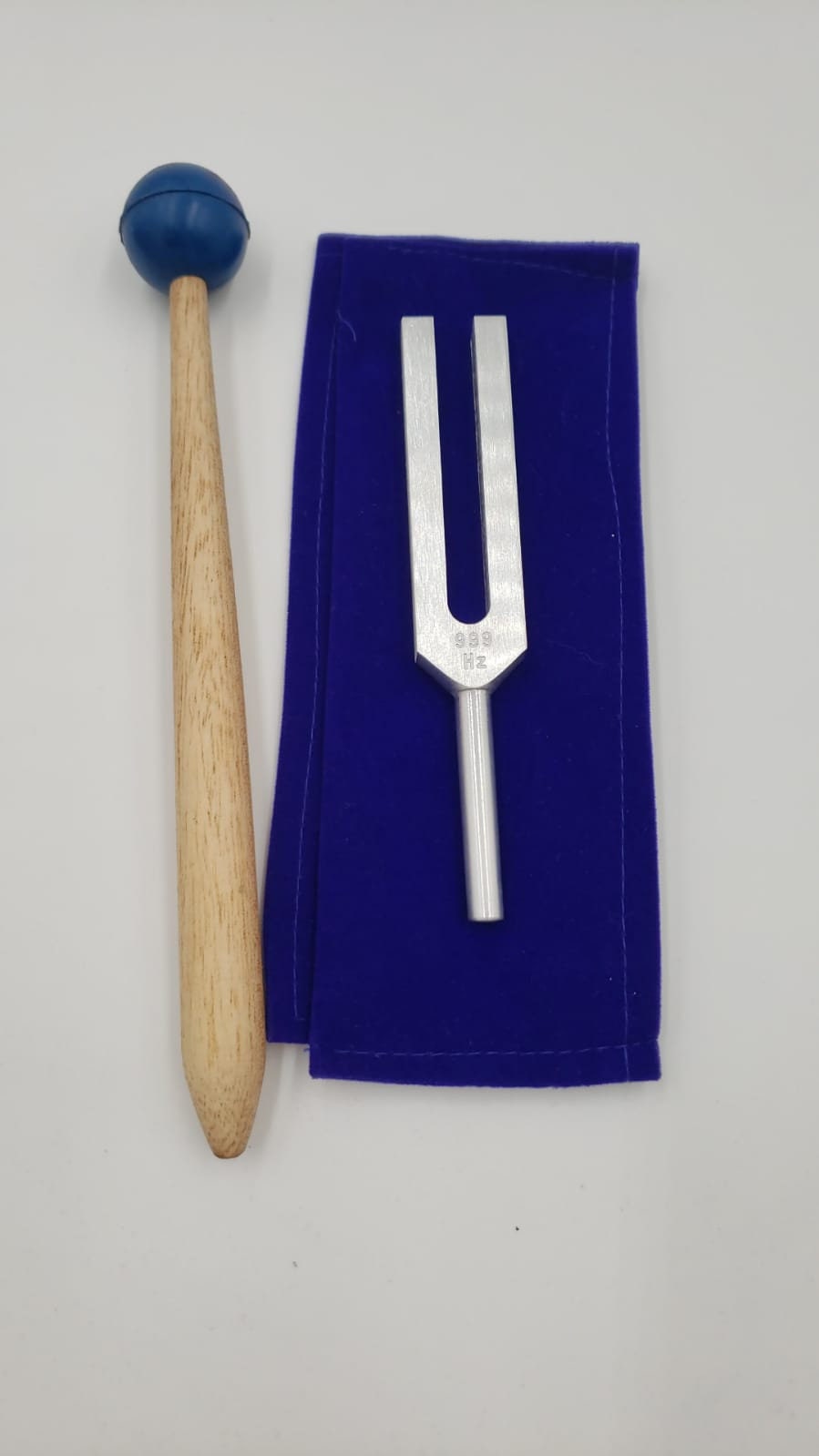
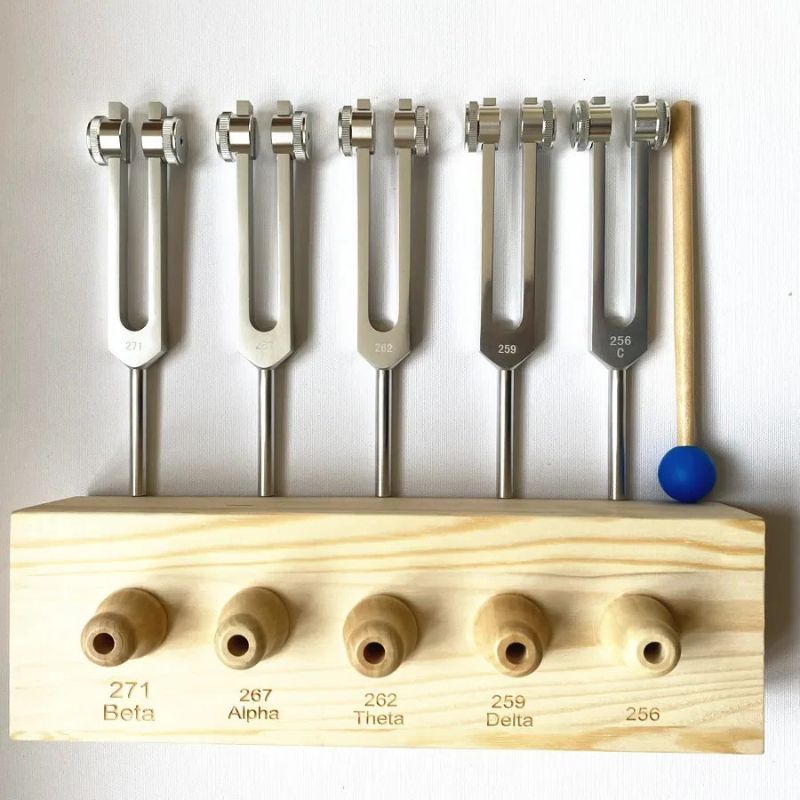
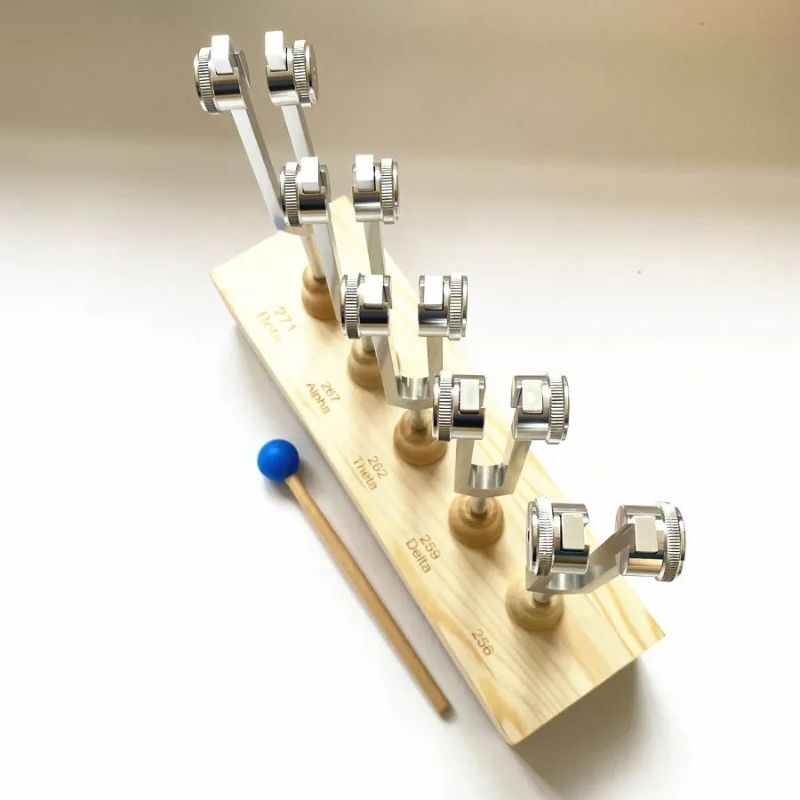
Tuning forks for harmonization are used to restore coherence and balance across the body's energy field, bringing scattered or stagnant frequencies back into alignment. Whether you are a practitioner working with clients or someone seeking a personal tool for daily energetic maintenance, these forks provide a direct, tangible way to introduce sound healing frequencies into areas where the body's natural rhythm has become disrupted. Every fork in this collection is CNC-machined from premium aluminum alloy, computer-verified to +/-0.25 Hz accuracy and laser-engraved with its frequency -- the precision required for consistent energetic results session after session.
The concept of harmonization draws from the physics principle that vibrating systems tend to synchronize when brought into proximity. A tuning fork producing a stable, coherent frequency acts as an external reference point, encouraging the body's own oscillations -- from cellular vibration to brainwave patterns to the subtle electromagnetic rhythms of the biofield -- to entrain toward greater order. This is not about imposing a frequency on the body but about offering a coherent signal that the body's innate intelligence can use as a template for self-correction.
The scientific principle underlying tuning fork harmonization is entrainment, first documented by Dutch physicist Christiaan Huygens in 1665 when he observed that pendulum clocks mounted on the same wall would gradually synchronize their swings. The same principle applies to biological systems: when a strong, stable vibration is introduced near a weaker or more chaotic oscillation, the weaker system will tend to shift its rhythm to match the stronger one.
In the context of sound healing, a tuning fork provides the strong, stable reference vibration. The body provides the biological oscillation. When the fork is activated and brought near or placed on the body, the two vibrational systems interact. The fork's frequency is fixed and unwavering -- it cannot be pulled off pitch by the body. The body's oscillations, however, are flexible and responsive. Over the duration of the fork's ring (typically 20-40 seconds for a weighted fork, longer for unweighted), the body's local vibrations begin to synchronize with the fork's frequency, creating a state of greater energetic coherence.
This principle of entrainment operates at multiple scales simultaneously. At the gross physical level, the fork's vibration can influence muscle tension, fascia hydration and blood flow in the area of application. At the neurological level, the auditory input of a pure tone can influence brainwave patterns, encouraging a shift from beta (active thinking) toward alpha (relaxed awareness) or theta (deep meditative) states. At the level of the biofield, practitioners report that the fork's vibration smooths areas of energetic turbulence and restores flow to areas of stagnation.
Selecting Frequencies for Whole-Body Harmonization
Effective harmonization work requires matching the right frequency to the right area and intention. Different frequency ranges interact with the body in distinct ways, and understanding these ranges allows practitioners to create sessions that address the full spectrum of physical, emotional and energetic balance.
Low Frequencies for Physical Grounding and Stability
Weighted tuning forks in the range of 32 Hz to 128 Hz produce deep, penetrating vibrations that are felt more than heard. These frequencies are ideal for grounding work -- establishing a sense of physical stability and connection to the body. The Otto tuners (32 Hz, 64 Hz and 128 Hz) are the most commonly used low-frequency forks for harmonization. The 128 Hz fork is the most versatile of the group: its vibration is strong enough to feel through bone and muscle yet gentle enough for sensitive areas. Placed on the lower back, feet or sacrum, it anchors the body's energy downward, countering the upward pull of mental overactivity and emotional agitation.
For practitioners working with the chakra system, low-frequency weighted forks correspond to the lower energy centers: Root (194.18 Hz), Sacral (210.42 Hz) and Solar Plexus (126.22 Hz). These frequencies address themes of safety, creativity, personal power and physical vitality -- the foundation upon which upper-chakra work depends.
Mid-Range Frequencies for Heart and Emotional Alignment
The mid-frequency range (approximately 136 Hz to 528 Hz) bridges the physical and emotional dimensions of harmonization. The 136.1 Hz OM fork is the premier instrument in this range -- calculated from the Earth's orbital period by Hans Cousto, it is associated with the Heart chakra and produces a warm, centering vibration that practitioners describe as simultaneously calming and opening.
The 528 Hz solfeggio fork is another essential mid-range frequency for harmonization work. Known in solfeggio tradition as the "transformation and miracles" frequency, it carries strong associations with emotional healing and restoration. The Throat (141.27 Hz), Heart (136.10 Hz) and Third Eye (221.23 Hz) chakra forks also fall within this range, addressing communication, compassion and intuitive perception respectively.
High Frequencies for Mental Clarity and Upper Energy Centers
Unweighted tuning forks from approximately 741 Hz to 4225 Hz work primarily through auditory stimulation rather than body-contact vibration. These frequencies are used for clearing mental fog, sharpening cognitive focus and opening the upper energy centers. The 741 Hz solfeggio fork is valued for awakening intuition and mental clarity. The 852 Hz and 963 Hz forks from the solfeggio set address the Third Eye and Crown chakra respectively, supporting the subtlest dimensions of harmonization work.
The angel tuners (4096 Hz, 4160 Hz and 4225 Hz) sit at the uppermost reach of this range. Their crystalline, shimmering tones are used for spatial clearing, creating an energetically clean environment before and after harmonization sessions. Many practitioners begin and end sessions with these high-frequency forks to mark the transition between ordinary awareness and therapeutic space.
Harmonization Techniques for Practitioners and Self-Care
Whether you are harmonizing your own energy field or working with clients, technique matters as much as frequency selection. The goal of harmonization is not simply to apply vibration to the body but to engage in a dialogue between the fork's coherent frequency and the body's current state, allowing the body's innate intelligence to use the vibrational information for self-regulation.
The Sweep Method for Full-Body Energy Alignment
The sweep method is one of the most accessible and effective harmonization techniques. Begin by activating an unweighted tuning fork (many practitioners start with the OM fork or a solfeggio fork) and hold it approximately 6 inches from the body at the crown of the head. Slowly move the vibrating fork downward along the midline of the body -- passing the forehead, throat, heart, solar plexus, navel, sacrum and root -- pausing for several seconds at each major energy center.
As you sweep, listen carefully to the fork's tone and pay attention to any changes in the vibration's quality. Areas where the tone seems to dampen, waver or shift in character may indicate energetic congestion. Pause at these points and allow the fork's vibration to interact with the area until the tone stabilizes, then continue the sweep downward. After completing the downward sweep, some practitioners reverse direction (sweeping from root to crown) to integrate the session.
This technique can be performed on yourself (holding the fork in front of your body) or on a client (who lies face-up while you move the fork from head to feet). It takes approximately 5-10 minutes for a complete sweep and serves as both a standalone harmonization practice and an assessment tool that reveals where deeper work may be needed.
For a deeper body-contact approach, switch to a weighted tuning fork after the sweep. Activate the weighted fork and place its stem directly on each area that showed turbulence during the unweighted sweep. The weighted fork's vibration penetrates into the tissue, providing a more physical dimension of harmonization that complements the auditory and energetic work of the unweighted fork. The 128 Hz Otto tuner is excellent for this follow-up application.
The concept of entrainment is central to understanding why tuning forks are effective tools for harmonization. Beyond the physics principle described earlier, entrainment in sound healing practice encompasses several related phenomena that work together to create the harmonizing effect.
Rhythmic entrainment refers to the tendency of biological rhythms -- heartbeat, respiration, brainwaves -- to synchronize with external rhythmic stimuli. Research in music therapy has demonstrated that rhythmic auditory stimulation can influence gait patterns, heart rate variability and brainwave coherence. A tuning fork, while producing a sustained tone rather than a rhythmic pattern, creates a similar effect: the body's oscillatory systems encounter the fork's stable frequency and gradually shift toward synchronization with it.
Resonance adds another dimension. Every physical structure has natural resonant frequencies at which it vibrates most efficiently. When a tuning fork's frequency matches or harmonically relates to a body structure's resonant frequency, the transfer of vibrational energy is maximized. This is why specific frequencies seem to "work better" on specific areas of the body -- the 128 Hz fork resonates powerfully with bone tissue, while higher frequencies interact more effectively with softer tissues and the auditory system.
Together, entrainment and resonance create the conditions for harmonization: the body encounters a coherent vibrational signal, recognizes it through resonance, and gradually reorganizes its own oscillations toward greater order. The tuning fork does not "fix" anything -- it provides a reference point that the body's self-regulating systems use to recalibrate.
Tuning forks balance the biofield through the principle of entrainment. When a fork producing a stable, coherent frequency is activated and moved through or placed near the body's electromagnetic field, areas of energetic dissonance -- often perceived by practitioners as changes in the fork's tone quality, volume or overtone character -- gradually synchronize with the fork's frequency. The coherent vibration acts as a template that the biofield's own oscillations can reorganize around. Practitioners typically use unweighted forks for off-body field work, sweeping slowly from the outer edge of the biofield toward the body, and weighted forks for on-body contact to ground the energetic shifts at a physical level.
Tuning forks are widely used by sound healing practitioners for energetic clearing of both personal energy fields and physical spaces. The fork's pure, coherent tone introduces a stable vibrational reference into areas of chaotic or stagnant energy, encouraging reorganization and flow. High-frequency unweighted forks like the 4096 Hz angel tuner are popular for clearing rooms, treatment spaces and the aura before and after sessions. Weighted forks placed on the body can help release localized areas of energetic congestion. While the mechanism is understood differently across various healing traditions, practitioners consistently report that clearing sessions leave both practitioners and clients feeling lighter, more centered and more energetically balanced.
Energy harmonization with tuning forks is the practice of using specific frequencies to bring the body's energy systems into greater coherence and balance. Rather than targeting a specific symptom or condition, harmonization addresses the overall state of the energy field, encouraging all of its components -- from physical tissue vibration to the electromagnetic biofield -- to operate in greater synchrony. A typical harmonization session involves sweeping unweighted forks through the energy field to detect and smooth areas of turbulence, then using weighted forks on the body to ground and integrate the energetic shifts. The process draws on the physics principle of entrainment, where a stable vibration encourages less organized oscillations to synchronize with it.
Weighted tuning forks have small weights attached to the ends of their prongs, which increases their vibration amplitude while decreasing their audible volume. This makes them ideal for body-contact harmonization work: when the stem is placed on the skin, the vibration transfers efficiently into tissue, bone and fascia. Unweighted forks have plain prongs that produce a louder, more sustained audible tone with less physical vibration. They are used for auditory work (holding near the ears), energy field work (sweeping through the biofield) and spatial clearing. Most harmonization sessions use both types: unweighted forks for field assessment and auditory entrainment, weighted forks for physical grounding and body-contact integration.
For personal self-care, most practitioners recommend daily short sessions (5-10 minutes) over occasional long sessions. A brief morning harmonization using one or two forks can set an energetic tone for the day, while an evening session can help release accumulated tension and promote restful sleep. For professional sessions with clients, weekly or biweekly sessions are common, with spacing adjusted based on the client's sensitivity and response. It is worth noting that some people experience a temporary period of adjustment after their first few sessions as the body integrates the vibrational input. Starting with shorter, less frequent sessions and gradually increasing is advisable for those new to tuning fork harmonization.
Filters (0)
High-Quality Tuning Forks Collection
Discover premium tuning forks for perfect sound calibration.
Enhance Your Sound Experience
Achieve precise tonal quality with our tuning forks.
Recently viewed
Treat yourself to a relaxing moment
With our best instruments. Handcrafted from the finest materials.
Created by healing enthousiasts
We know your needs because we use our products too. We are the first users.
Money-back guarantee
You have 60 days to return your order if it doesn't fit (you'll love it anyway).
100% secured payments
So you can remain in deep peace until you receive your order.