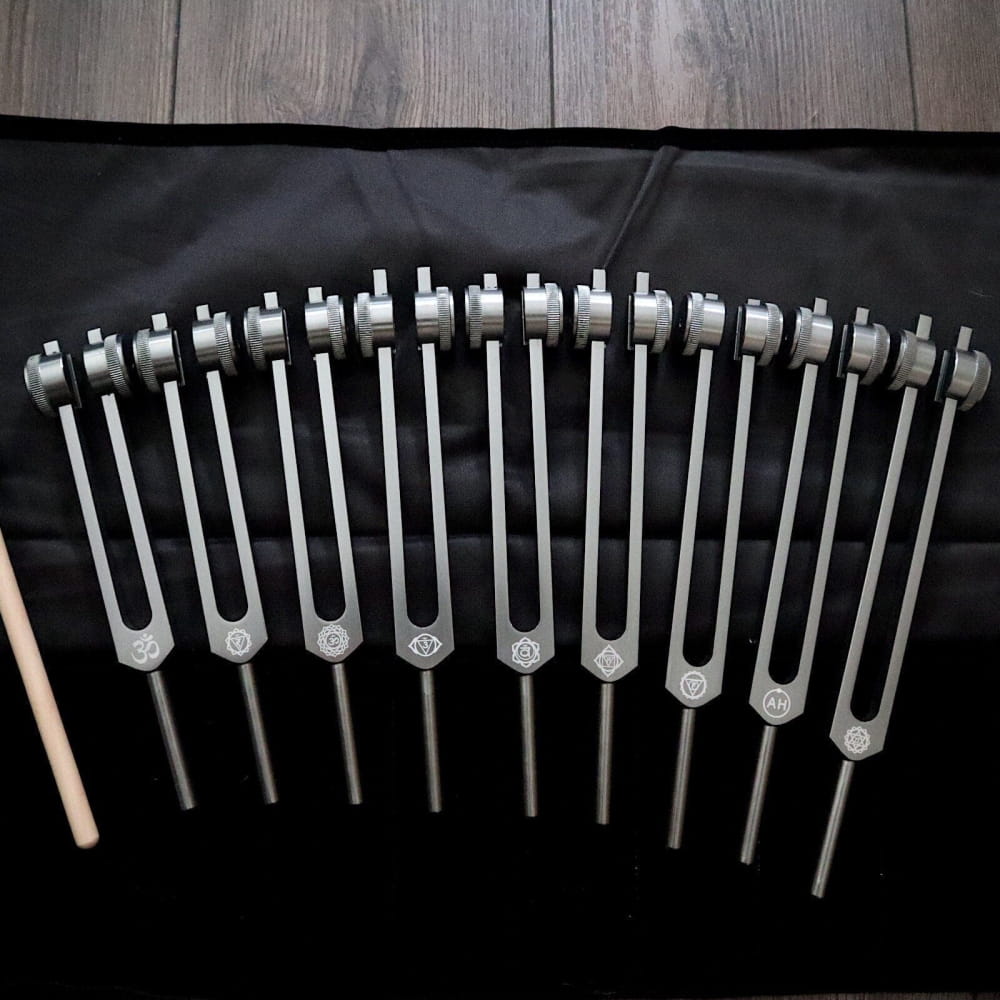
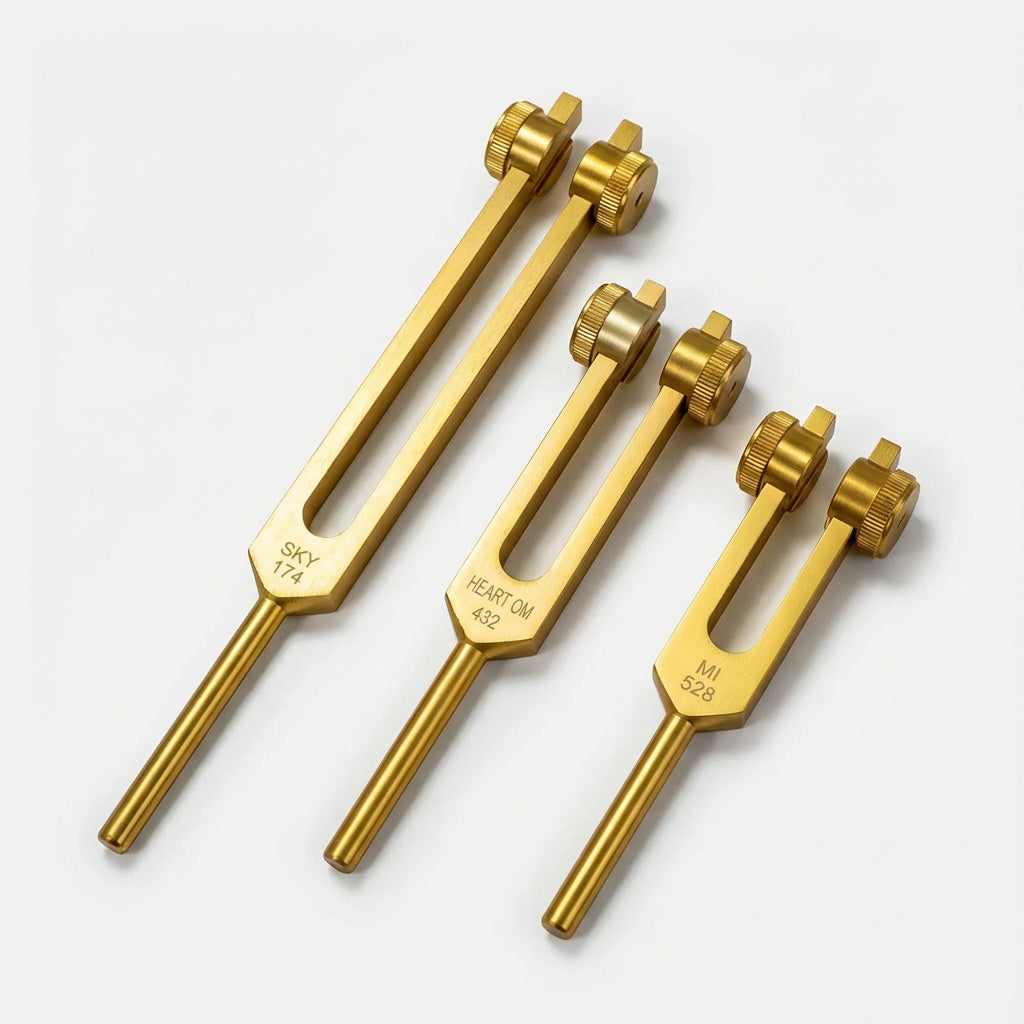
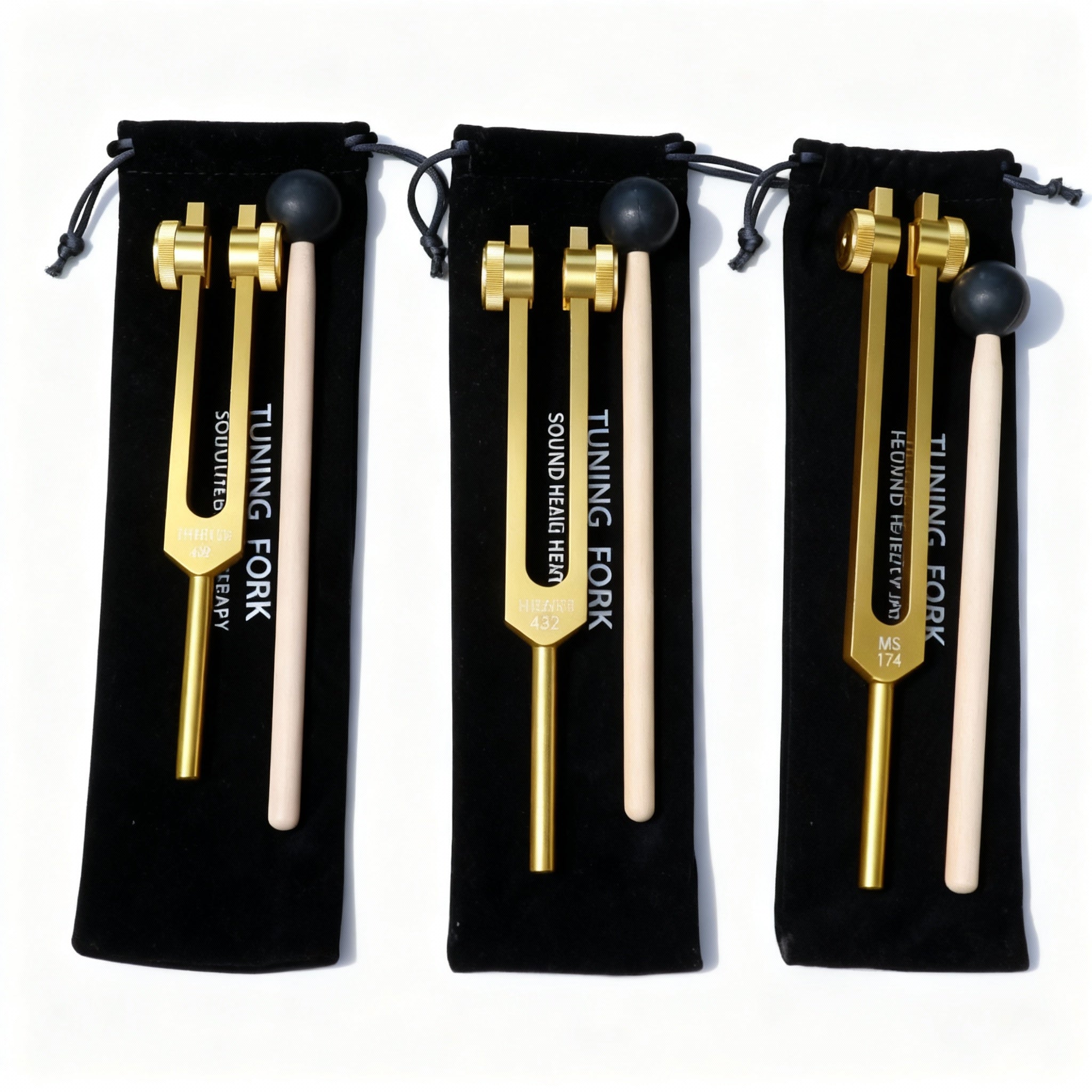
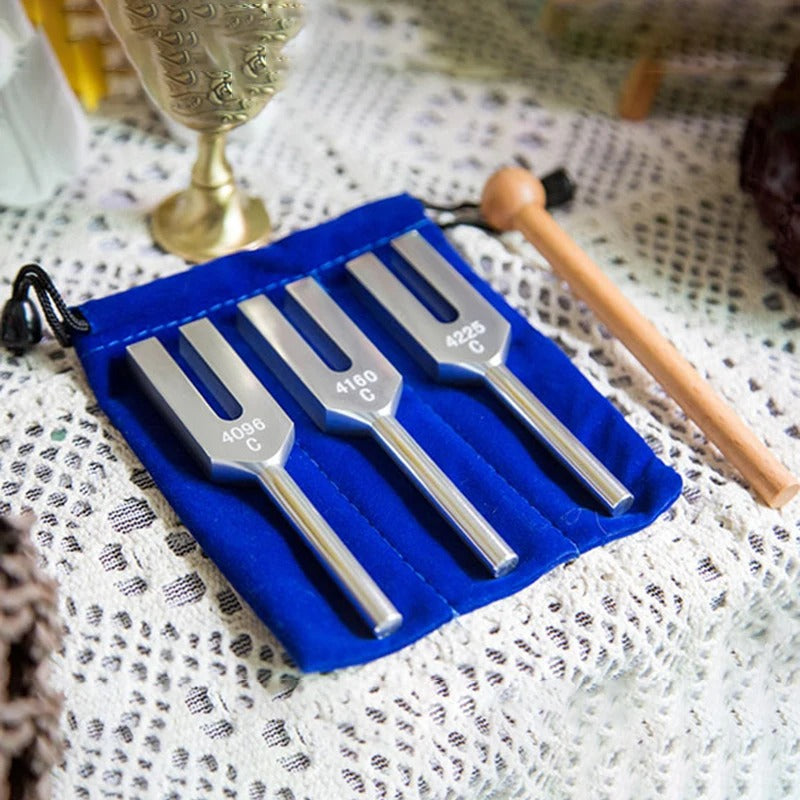
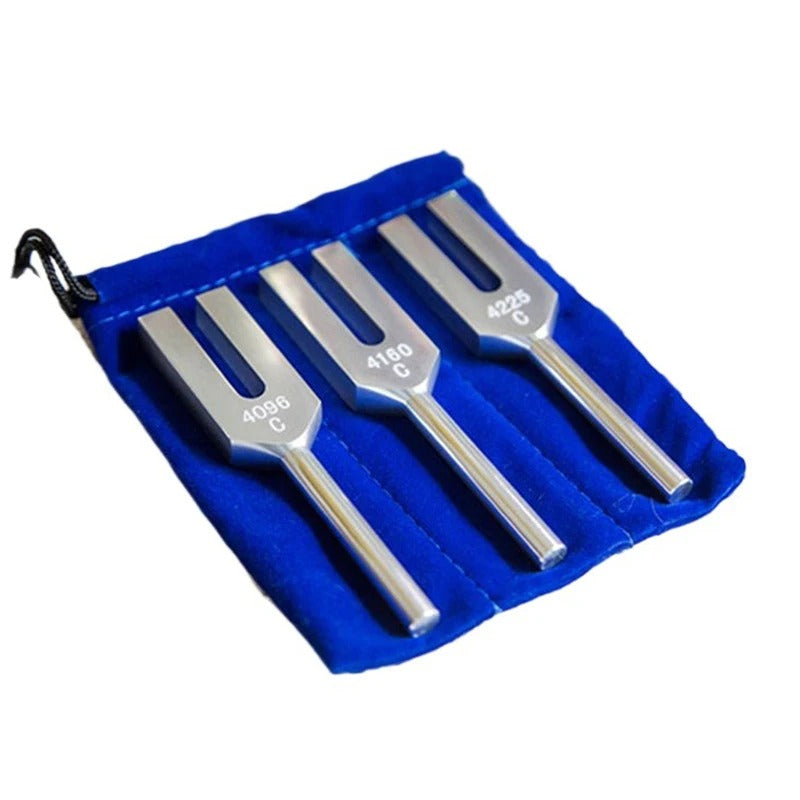
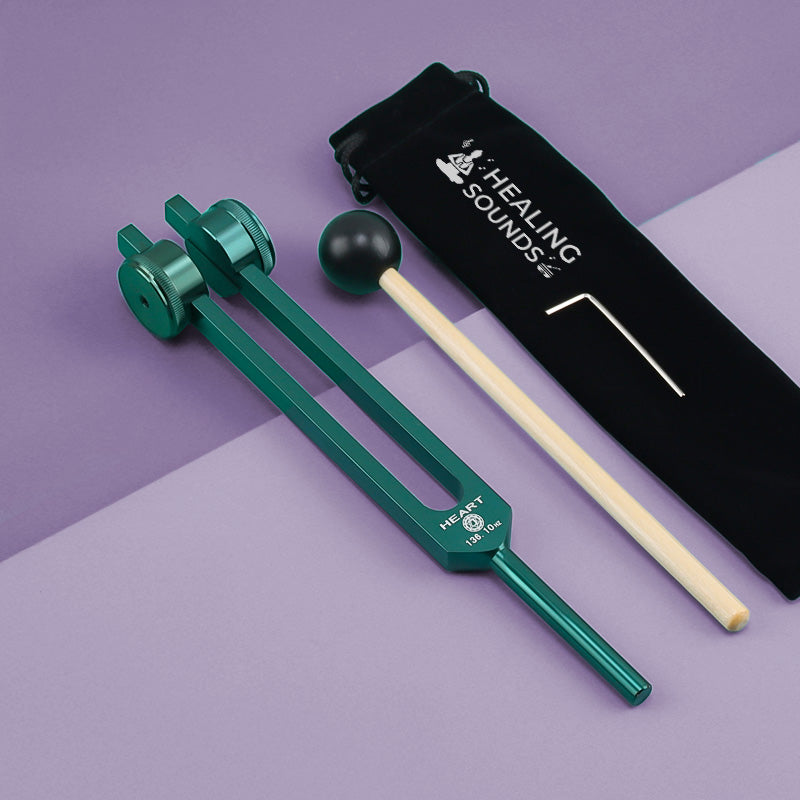
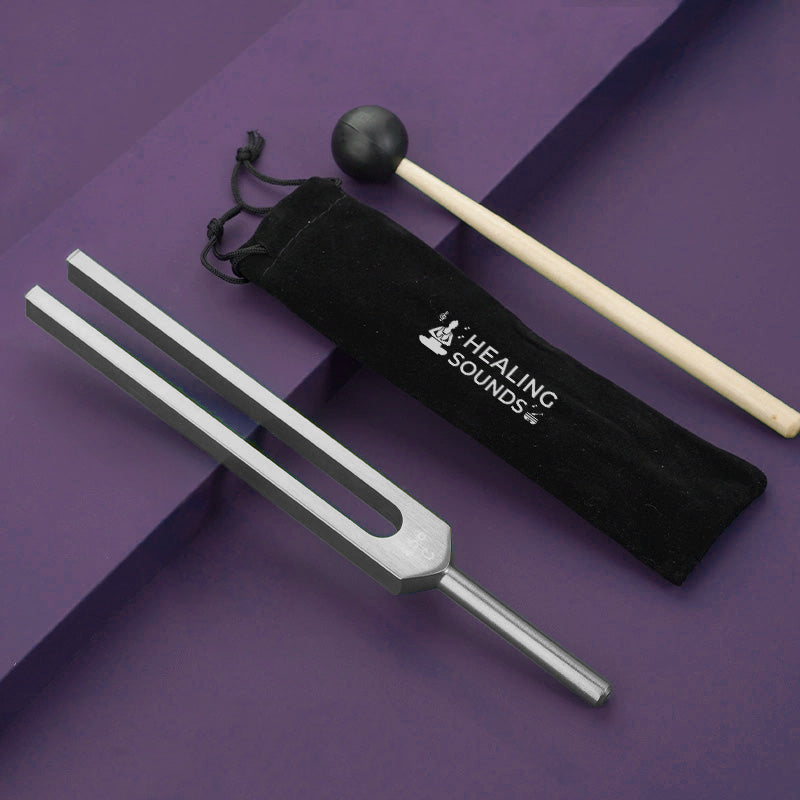
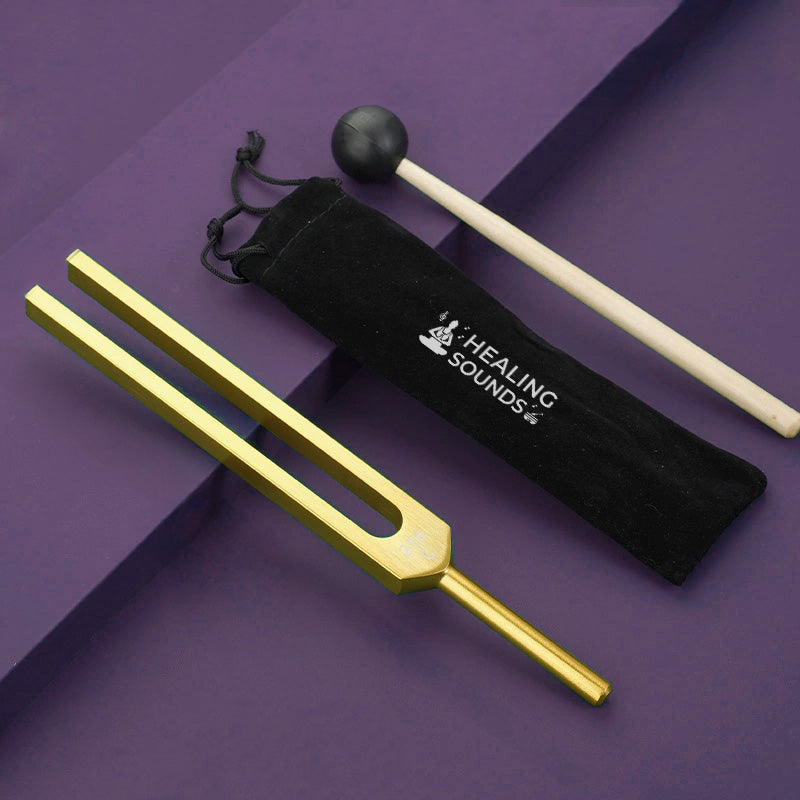
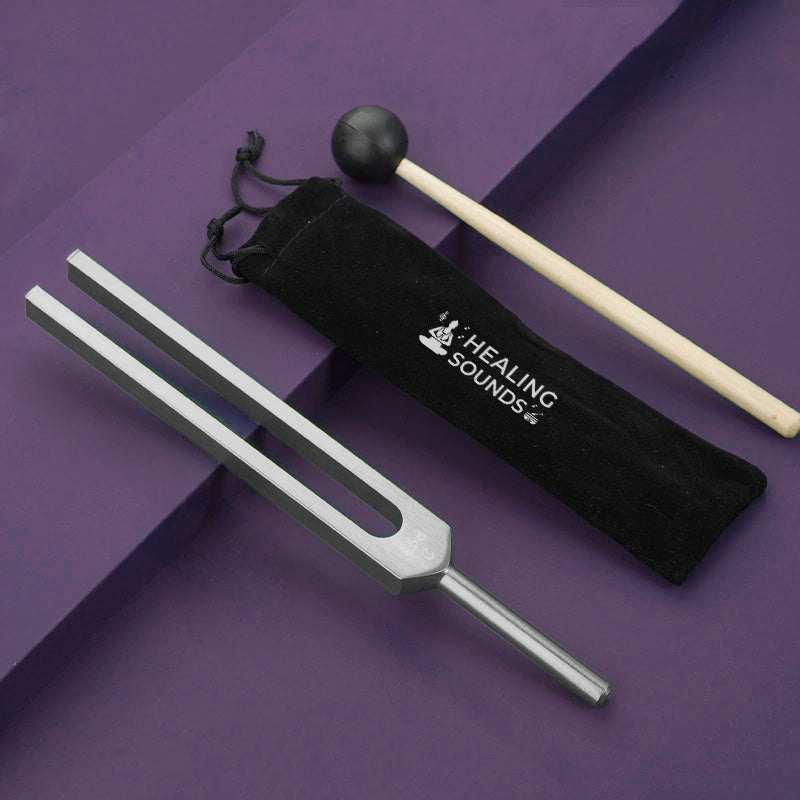
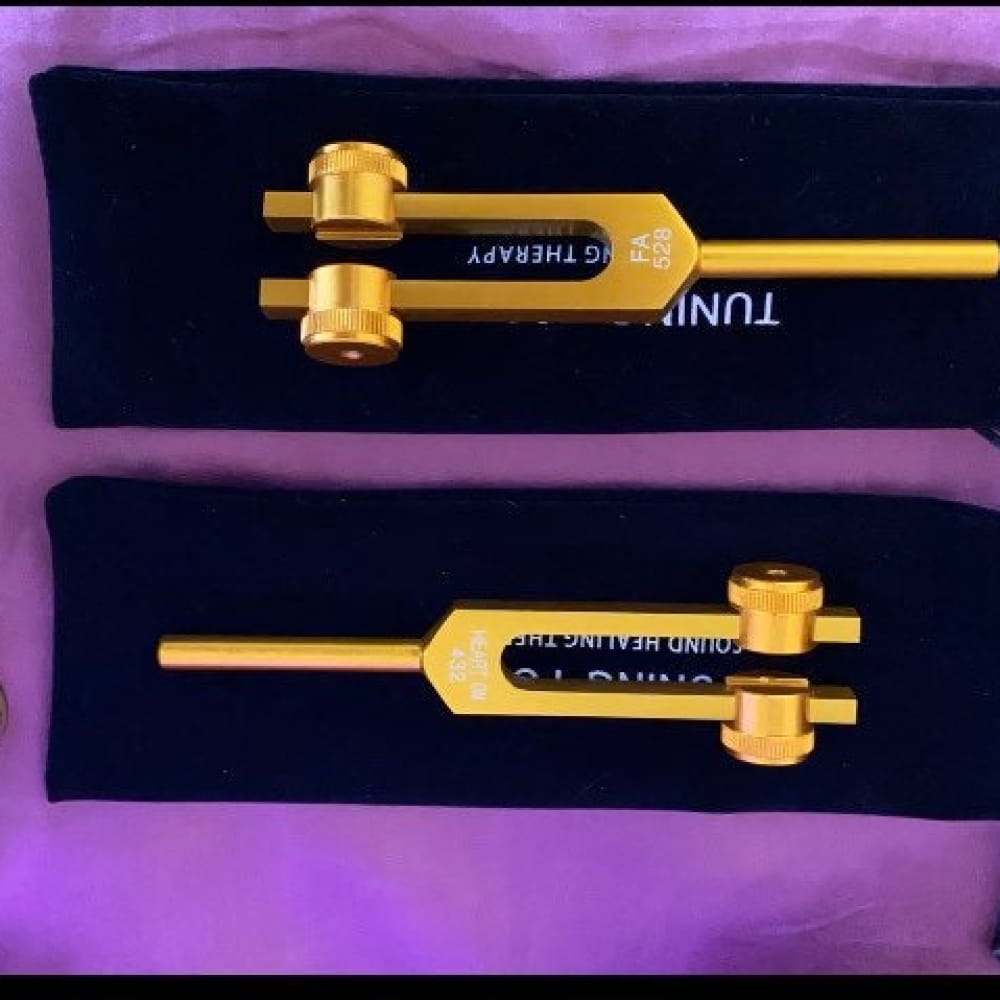
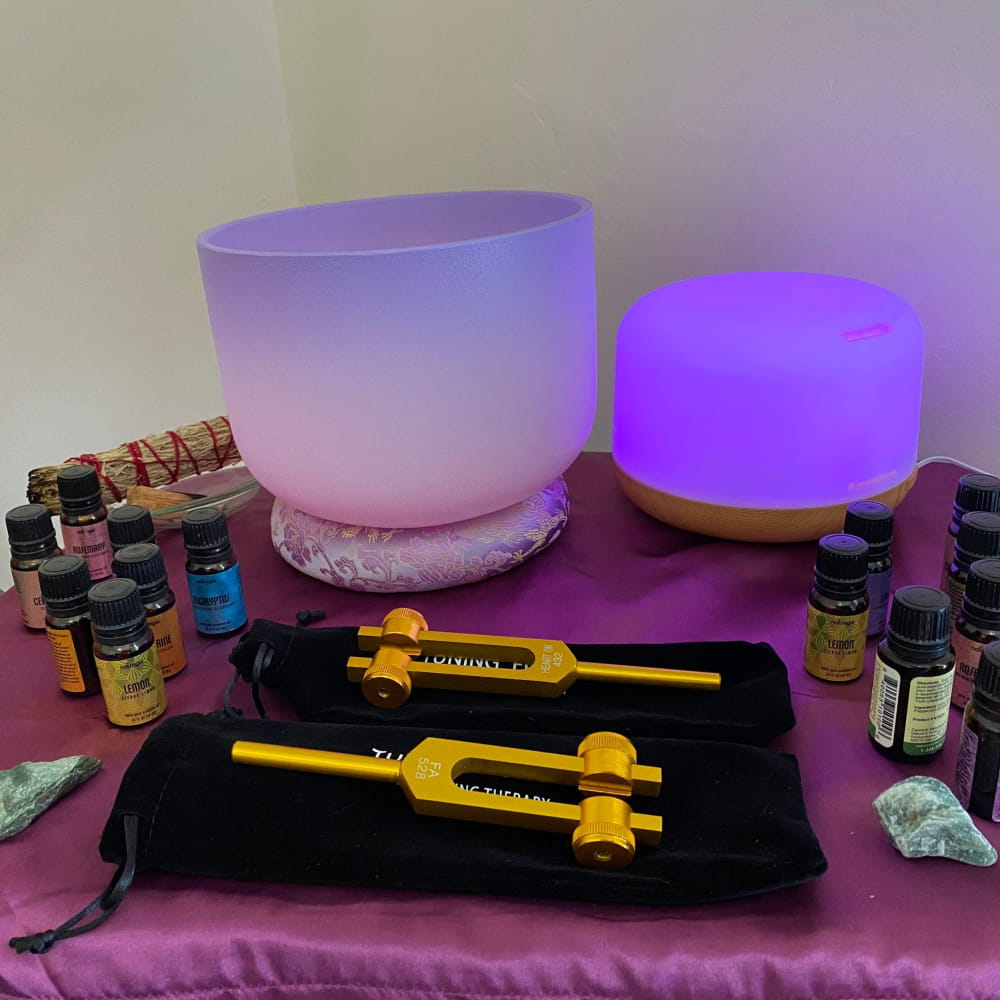
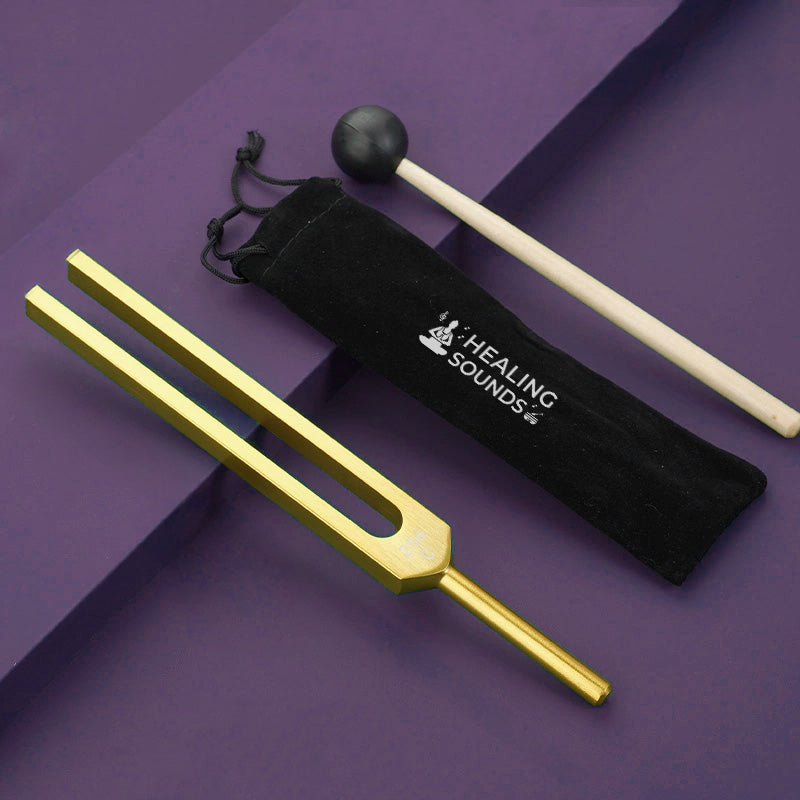
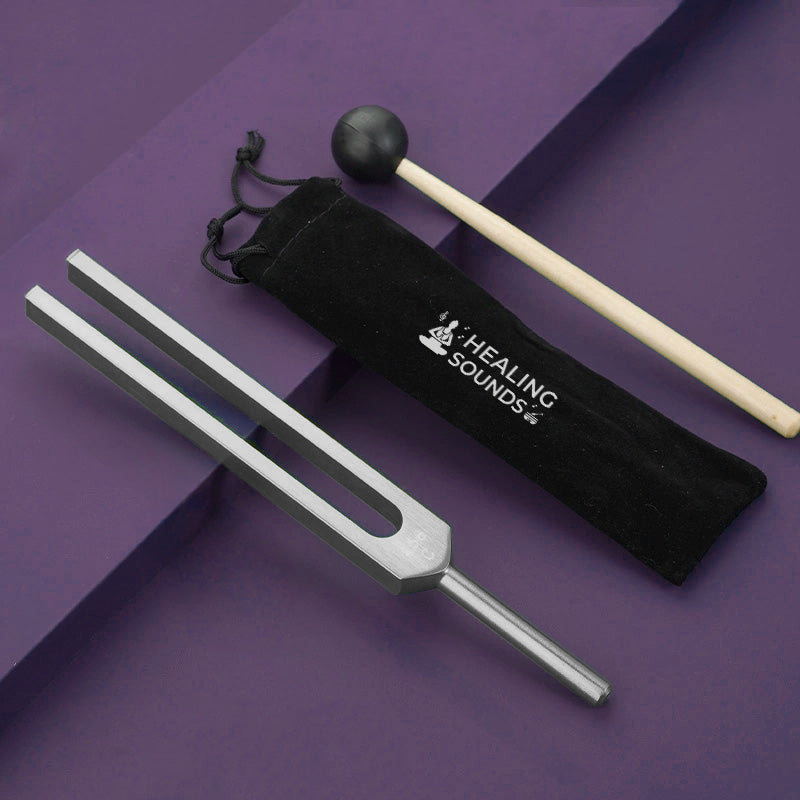
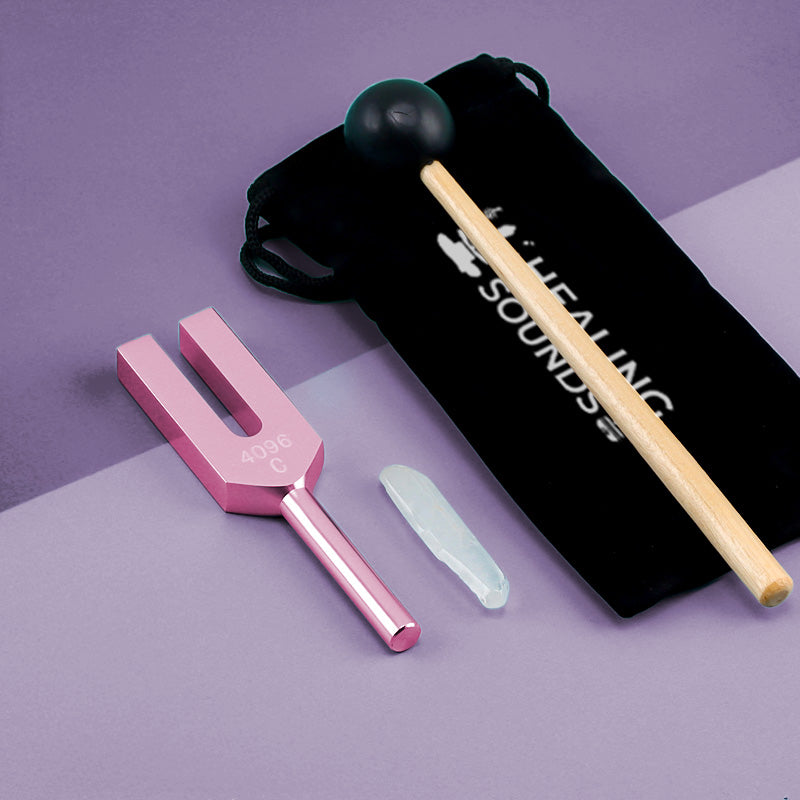
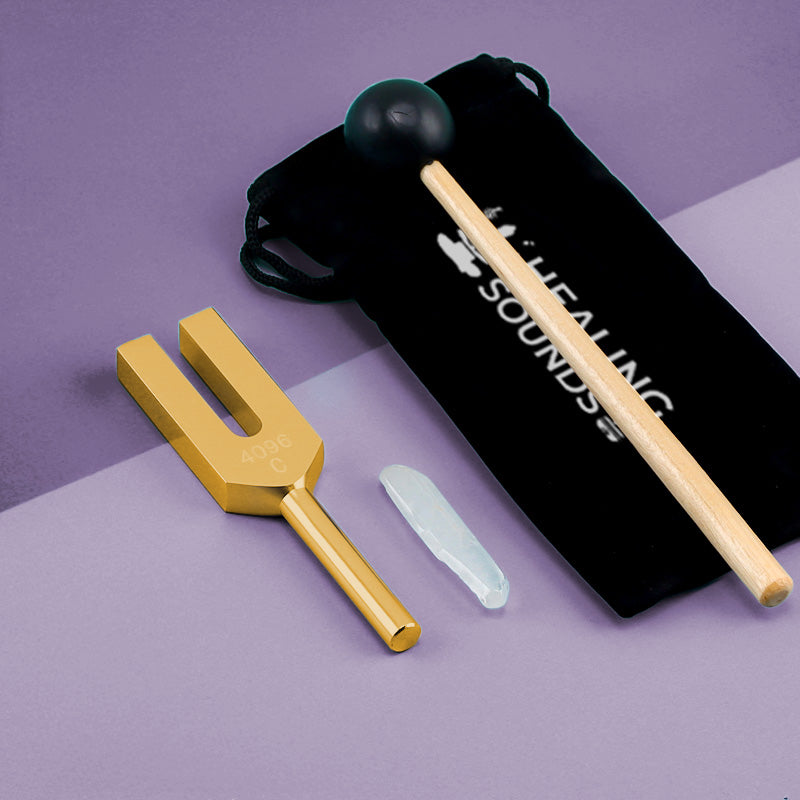
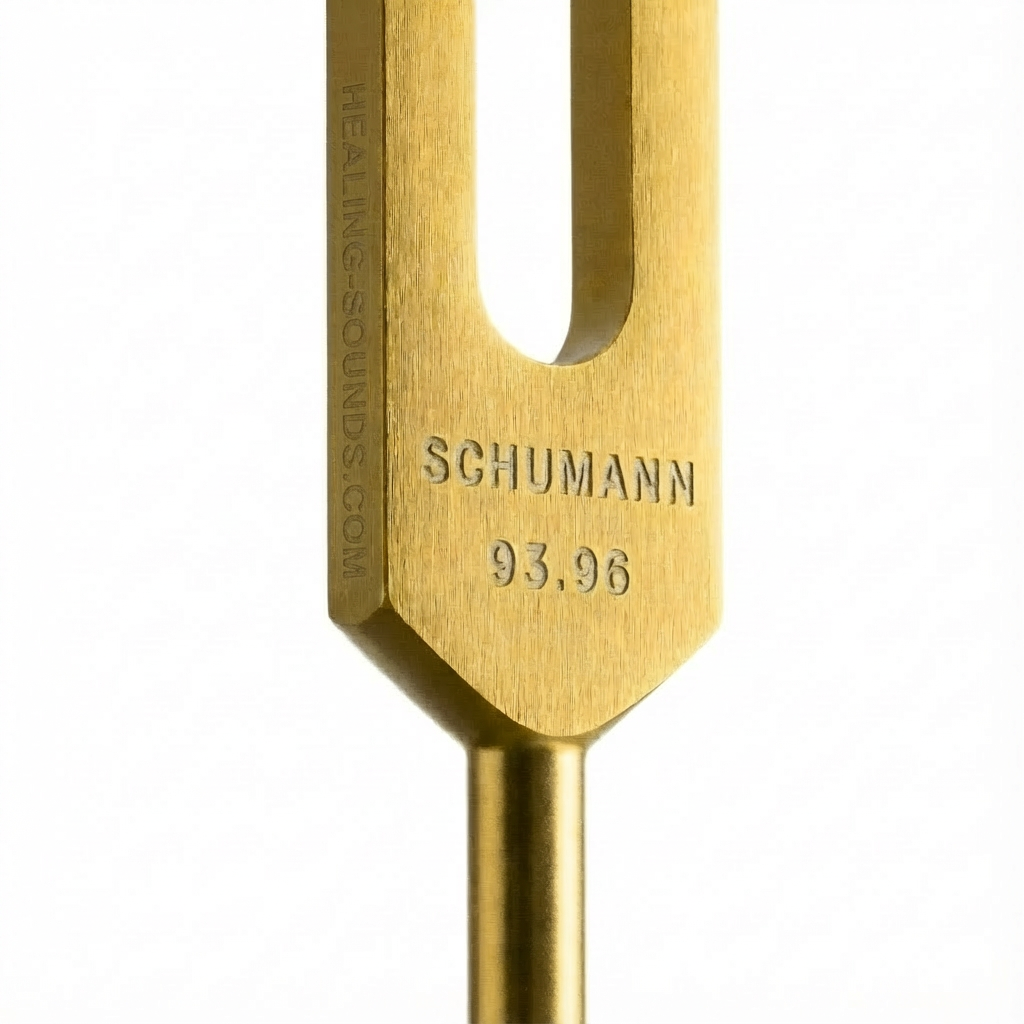
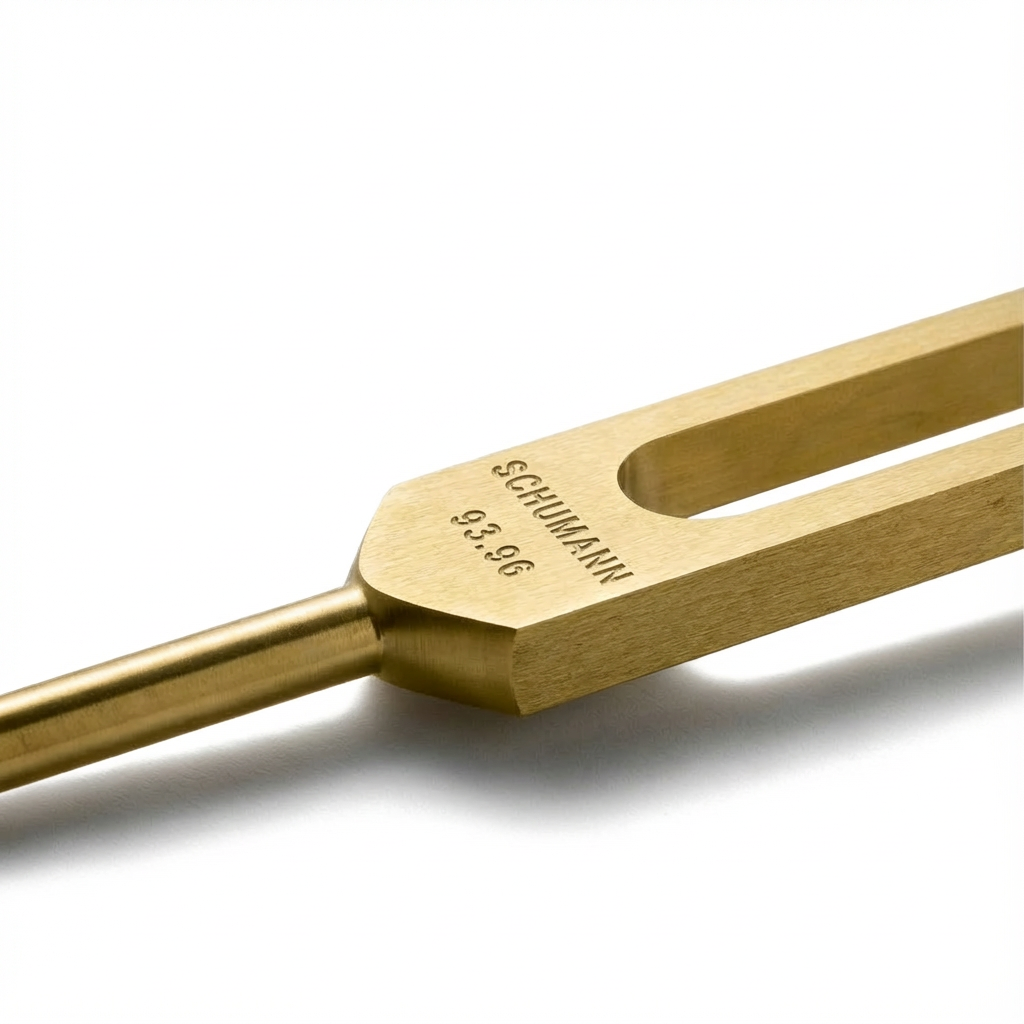
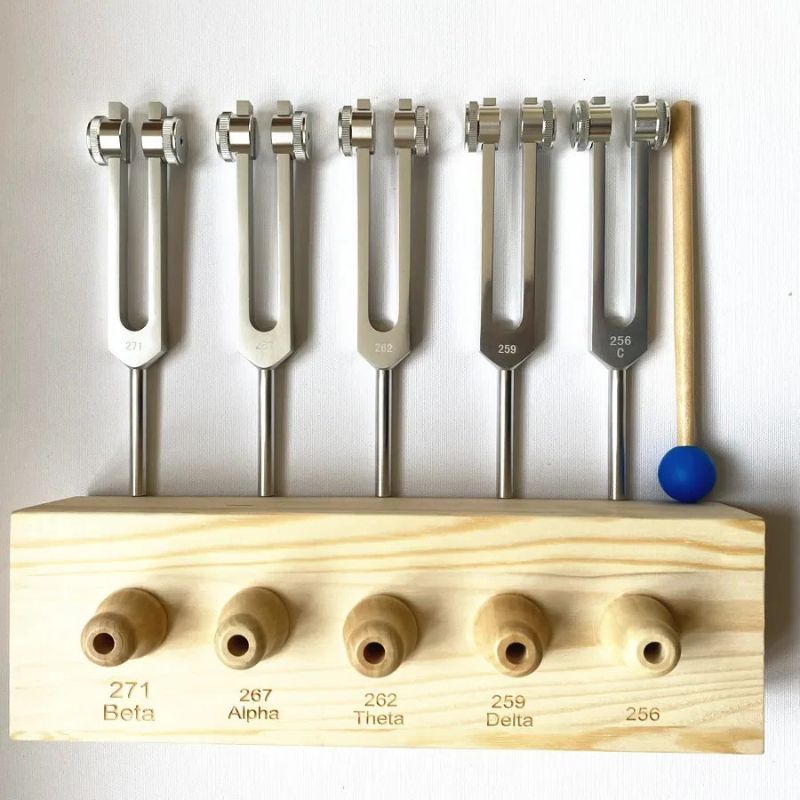
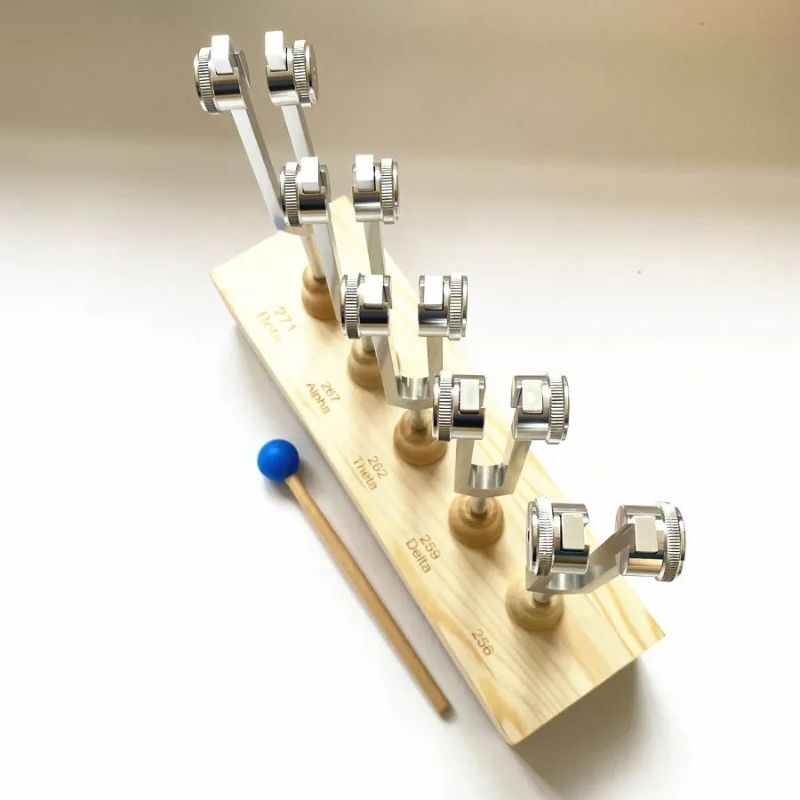
Tuning forks for relaxation offer a simple, drug-free way to reduce stress, calm the nervous system and promote deeper sleep. Specific frequencies have been used for decades in sound therapy to trigger the body's natural relaxation response -- slowing heart rate, lowering blood pressure and shifting brainwave patterns toward the alpha and theta states associated with rest and meditation. Whether you are a practitioner looking for effective stress relief tools or someone seeking a personal calming practice, these tuning forks are designed to help you unwind. Every fork in this collection is CNC-machined from premium aluminum alloy, computer-verified to +/-0.25 Hz accuracy and laser-engraved with its frequency.
Our relaxation-focused collection includes both weighted and unweighted tuning forks in frequencies known for their calming properties -- from the deep, grounding 128 Hz Otto tuner to the soothing 528 Hz solfeggio frequency. Many customers use these forks as part of an evening routine for better sleep, a midday pause for anxiety relief, or as the foundation of a professional sound healing session focused on client relaxation.
Not all tuning fork frequencies produce the same relaxation effect. Research into sound and the autonomic nervous system suggests that lower frequencies tend to be more grounding and physically calming, while certain mid-range frequencies are associated with emotional calm and mental clarity. Here are the frequencies most commonly chosen for relaxation work.
Frequency
Type
Relaxation Properties
Best Application
128 Hz
Weighted Otto
Deep physical grounding, muscle release
Stem-on-body at tension points
136.10 Hz
OM / Heart chakra
Emotional calm, centering
Heart center, around the ears
174 Hz
Solfeggio
Natural anesthetic quality, tension relief
Near the body, auricular
256 Hz
Unweighted
Mental clarity, gentle calm
Around the head, near temples
396 Hz
Solfeggio
Releasing fear and worry
Root chakra area, feet
528 Hz
Solfeggio
Emotional harmony, restoration
Heart center, auricular
The 128 Hz Weighted Fork: A Practitioner Favorite for Physical Relaxation
The 128 Hz weighted tuning fork is the single most popular fork for physical relaxation. When activated and placed stem-down on the body -- particularly on the sternum, sacrum or along the spine -- its vibration travels deep into the tissue, releasing muscular tension and promoting a parasympathetic (rest-and-digest) response. Many massage therapists and bodyworkers incorporate the 128 Hz fork into their sessions as a finishing tool, leaving clients in a deeply relaxed state before they leave the table.
Building an Evening Relaxation Routine with Tuning Forks
One of the most popular uses for tuning forks for relaxation is creating a nightly wind-down ritual. Unlike electronic devices or apps, tuning forks produce pure acoustic tones with no screens, blue light or electromagnetic output -- making them an ideal tool for the hour before sleep.
A Simple 10-Minute Pre-Sleep Protocol
Begin by sitting comfortably or lying down in a quiet space. Activate a 528 Hz tuning fork and hold it near each ear for 15-20 seconds, allowing the tone to fill your awareness. Next, switch to a 128 Hz weighted fork and place the stem on the center of your chest (sternum), feeling the vibration spread through your ribcage. Repeat this 2-3 times. Finally, use a 136.10 Hz OM fork around the crown of the head, letting the tone fade naturally. This three-fork sequence moves from mental clearing (528 Hz) to physical grounding (128 Hz) to energetic centering (136.10 Hz), preparing the body and mind for deep sleep.
Using Tuning Forks for Midday Stress Reset
A quick 3-5 minute session with a single tuning fork for stress relief can reset your nervous system during a busy day. The simplest approach: activate a 256 Hz unweighted fork and hold it at arm's length, then slowly bring it toward each ear. Focus on the tone as it approaches and recedes. This auditory focus interrupts the stress response and redirects attention to the present moment -- a form of sound-based mindfulness that requires no meditation experience.
How Sound Therapists Use Tuning Forks for Client Relaxation
Professional sound therapists and wellness practitioners use specific techniques to maximize the relaxation benefits of tuning forks during client sessions.
Bilateral Sound Balancing
Activate two identical tuning forks and hold one near each ear simultaneously. The brain processes the matched tones from both sides, producing a centering effect that many clients describe as deeply calming. This bilateral technique is particularly effective for clients experiencing anxiety, racing thoughts or difficulty switching off. The matched input gives the auditory system a single, consistent focus point, reducing the mental chatter that fuels stress.
Progressive Body Scan with Weighted Forks
Starting at the feet and moving upward, the practitioner places a weighted tuning fork on key points along the body -- ankles, knees, hip bones, sacrum, sternum, shoulders, base of skull. At each point, the fork is activated and left in contact until the vibration fades. This progressive approach mirrors the body scan technique used in mindfulness meditation, but adds a physical vibrational element that helps clients who struggle with purely mental relaxation methods.
Tuning Forks vs Other Relaxation Tools
How do tuning forks for relaxation compare to other popular calming tools? Each has strengths, and many practitioners combine multiple modalities.
Tool
Strengths
Limitations
Tuning forks
Precise frequency, portable, no power needed, body-contact option
Short sustain (8-30 sec per activation)
Singing bowls
Long sustain, rich harmonic overtones
Bulky, single frequency less precise
White noise machines
Continuous sound, blocks external noise
No specific therapeutic frequency, electronic
Guided meditation apps
Structured sessions, voice guidance
Screen required, blue light, subscription costs
Essential oils
Multiple scent options, ambient
No vibrational component, potential sensitivities
Tuning forks stand out for their precision -- you know exactly which frequency you are delivering -- and their dual capability as both an auditory and tactile relaxation tool. A weighted fork on the body provides physical vibration that no purely auditory tool can replicate.
More Collections for Calm and Well-Being
Browse related collections to expand your relaxation and sound healing practice.
Tuning Forks -- Our full range of tuning forks for healing and sound therapy.
Many people find that tuning forks help reduce anxiety and stress by providing a focused auditory stimulus that interrupts anxious thought patterns and activates the body's relaxation response. When a vibrating tuning fork is held near the ears or placed on the body, the pure tone creates a point of sensory focus similar to a mindfulness anchor. Weighted forks applied to the chest or spine deliver physical vibration that can promote a shift from the sympathetic (fight-or-flight) nervous state toward the parasympathetic (rest-and-digest) state. While tuning forks are not a replacement for clinical treatment of anxiety disorders, they are a widely used complementary tool in sound therapy and holistic wellness practices.
To use tuning forks for meditation, activate a fork by tapping it on a rubber puck or your palm, then hold it near one ear at a comfortable distance. Close your eyes and follow the tone as it sustains and gradually fades. When the sound disappears, notice the silence before activating the fork again. This cycle of tone and silence creates a natural rhythm for meditative focus. The 136.10 Hz OM fork and 528 Hz solfeggio fork are the most popular choices for meditation. You can also place a weighted fork on your body -- sternum or palms -- to add a tactile element that deepens the meditative experience.
The 128 Hz weighted tuning fork is the most widely recommended frequency for physical relaxation, as its deep vibration promotes muscle release and nervous system calming when applied to the body. For emotional calm and mental relaxation, the 136.10 Hz OM fork and 528 Hz solfeggio fork are popular choices. Many practitioners use a combination: 128 Hz on the body for physical tension, followed by 528 Hz near the ears for mental and emotional calm. There is no single best frequency -- the right choice depends on whether you want primarily physical, emotional or mental relaxation.
A tuning fork relaxation session can be as short as 3-5 minutes for a quick stress reset or as long as 30-45 minutes for a full professional sound therapy session. For personal use, most people find that 10-15 minutes is the sweet spot -- long enough to produce a noticeable shift in tension and mental state, but short enough to fit into a daily routine. If you are using tuning forks before bed, a 5-10 minute session is usually sufficient. Professional sessions tend to run 20-45 minutes and may combine multiple frequencies and techniques for a comprehensive relaxation experience.
Many users report improved sleep quality after incorporating tuning forks into their evening routine. The mechanism is indirect: by reducing physical tension and calming the nervous system before bed, tuning forks create conditions that are more conducive to falling and staying asleep. A short pre-sleep session with a 128 Hz weighted fork on the sternum followed by a 528 Hz fork near the ears can help transition the body from an alert state to a restful one. Tuning forks are screen-free and produce no blue light or electromagnetic fields, making them particularly suitable as a bedtime tool compared to electronic relaxation aids.
Filters (0)
High-Quality Tuning Forks Collection
Discover premium tuning forks for perfect sound calibration.
Enhance Your Sound Experience
Achieve precise tonal quality with our tuning forks.
Recently viewed
Treat yourself to a relaxing moment
With our best instruments. Handcrafted from the finest materials.
Created by healing enthousiasts
We know your needs because we use our products too. We are the first users.
Money-back guarantee
You have 60 days to return your order if it doesn't fit (you'll love it anyway).
100% secured payments
So you can remain in deep peace until you receive your order.