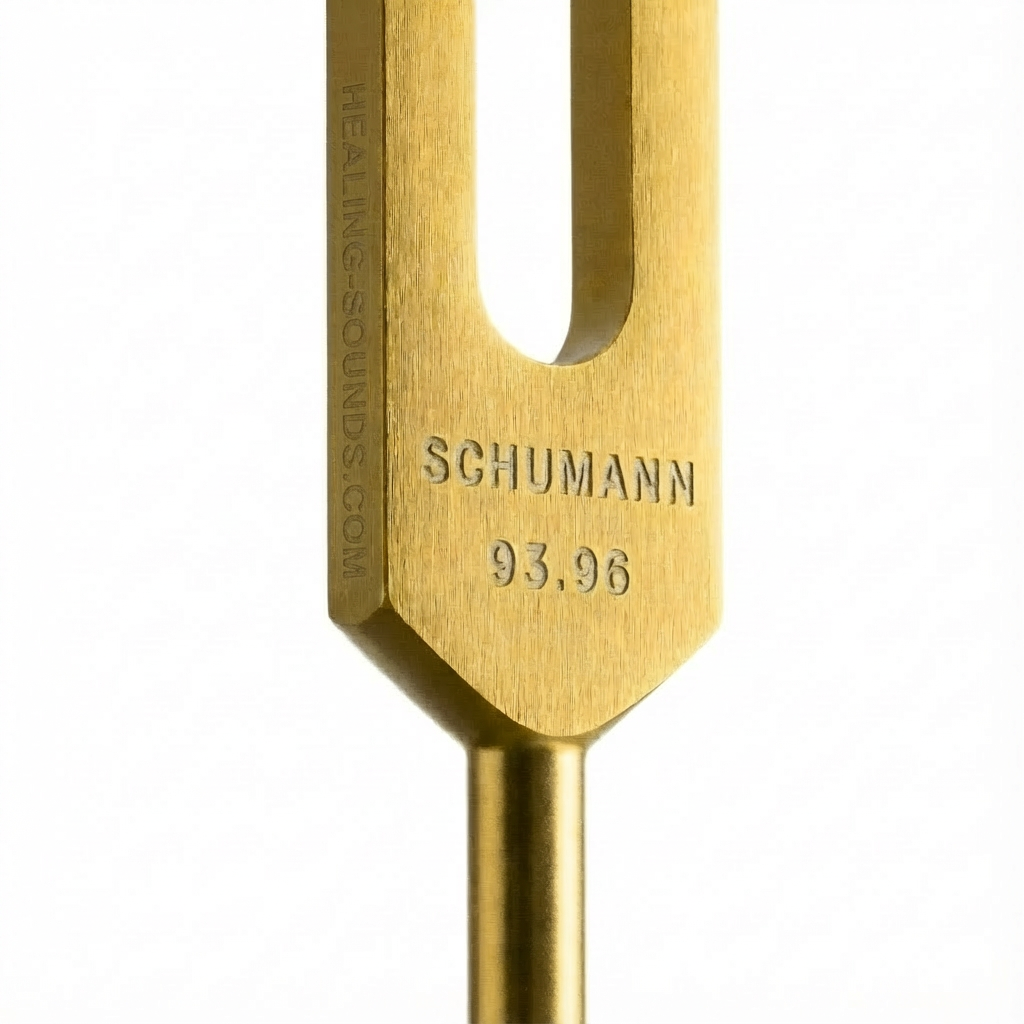
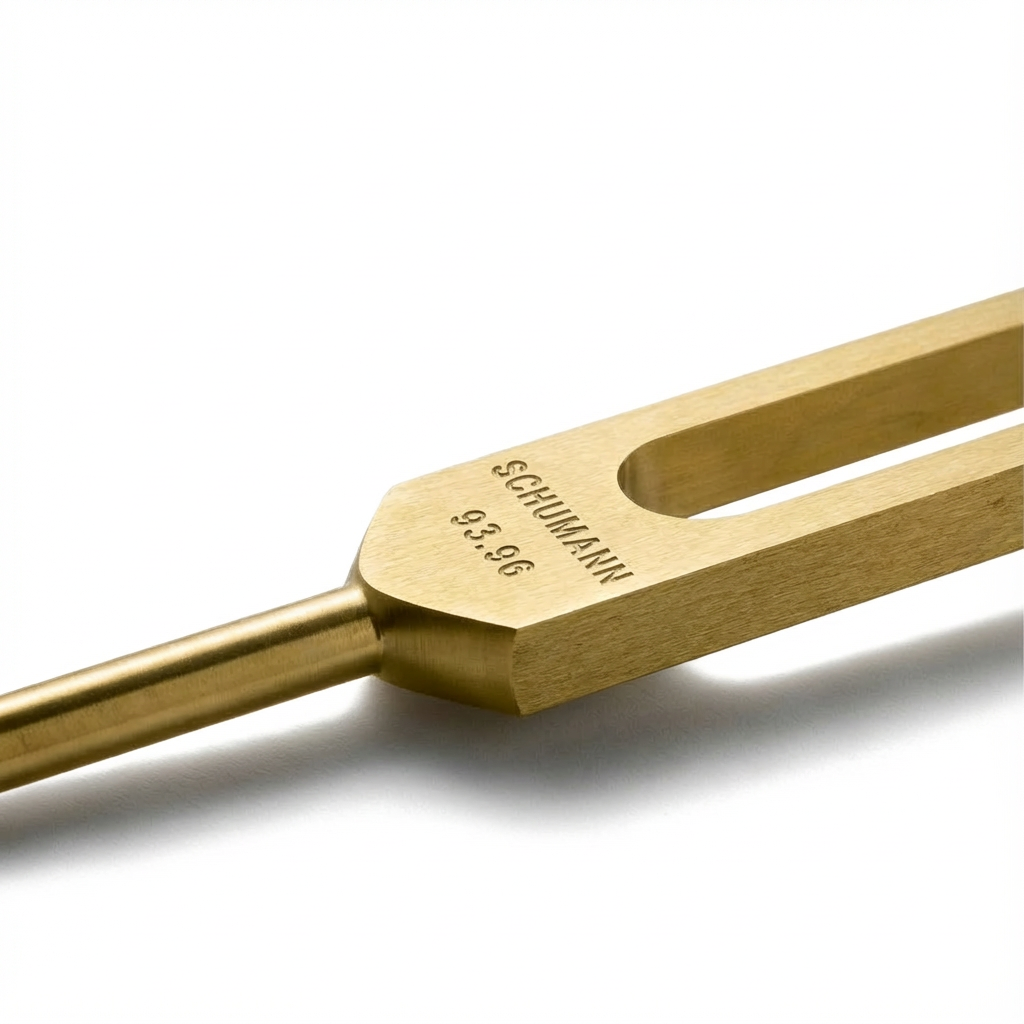
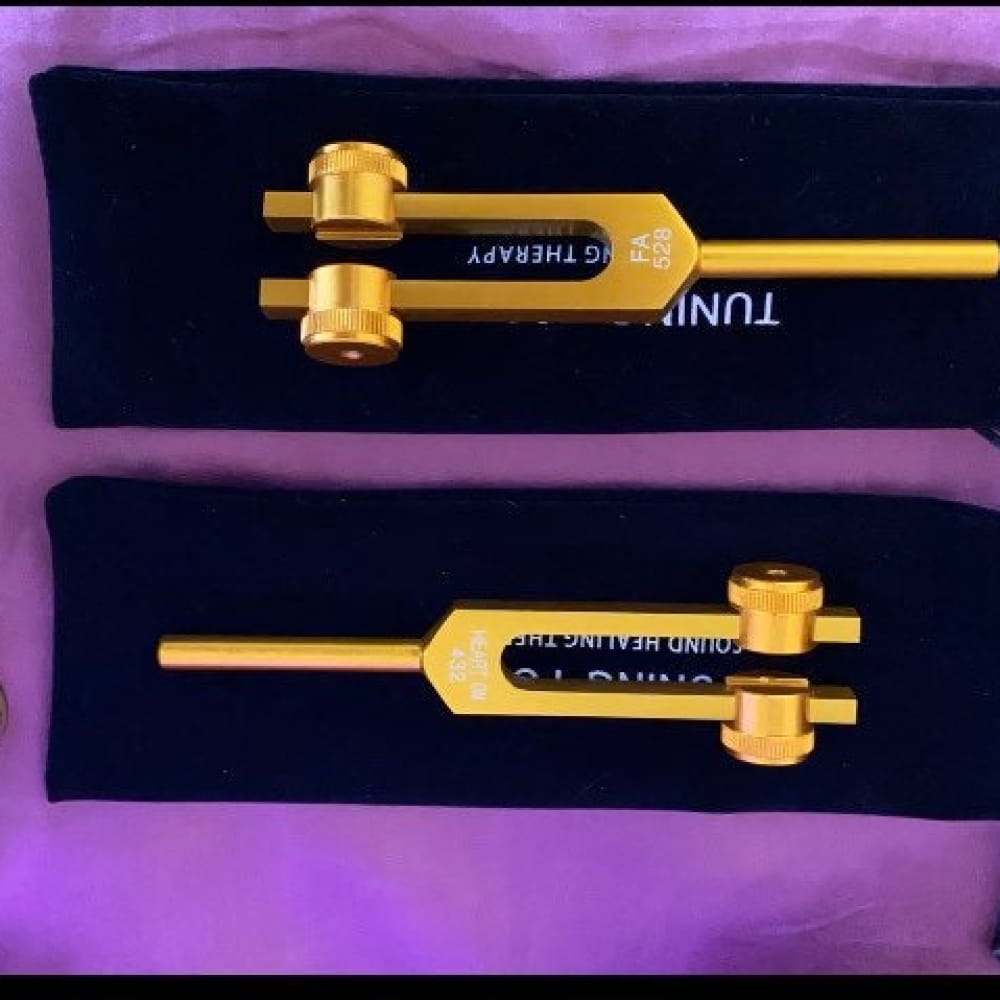
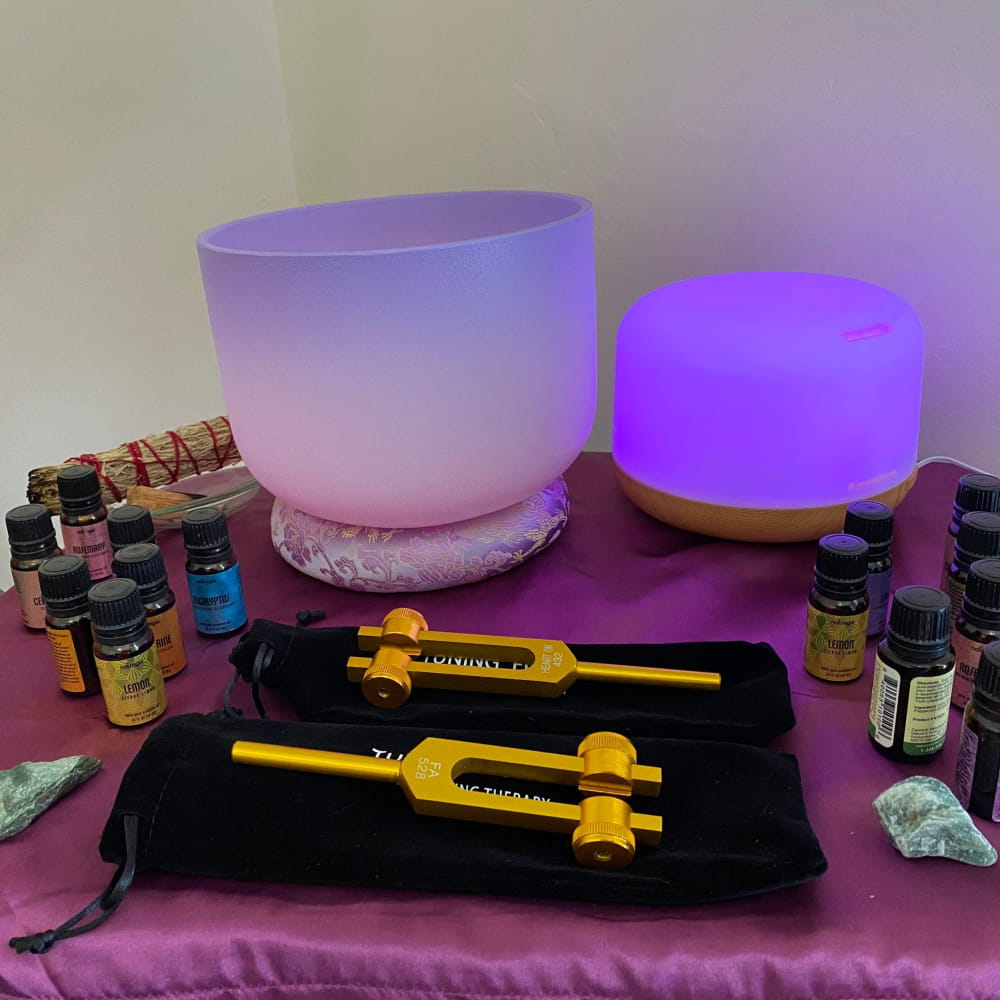
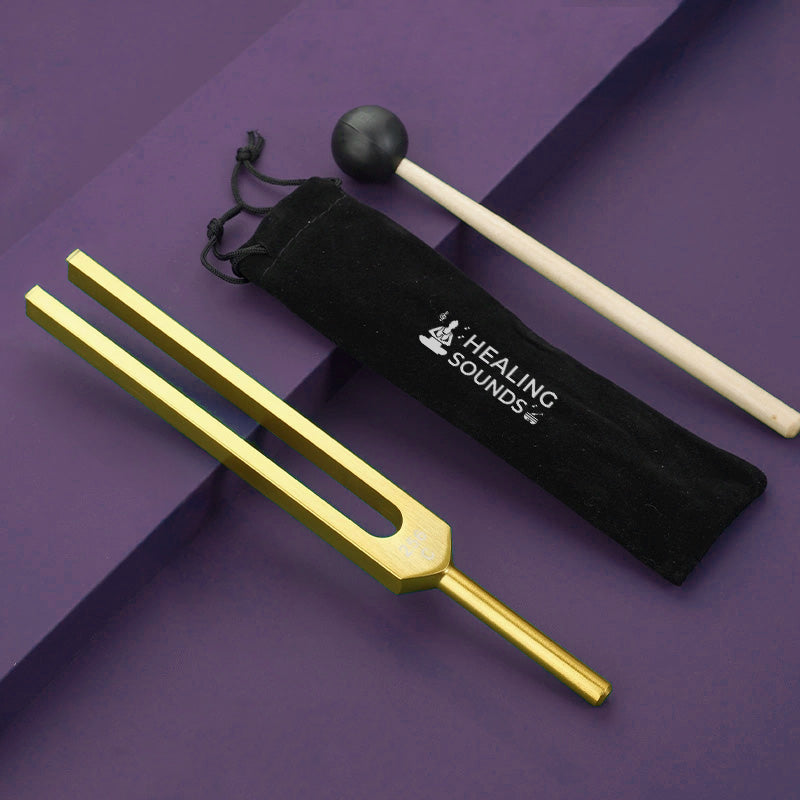
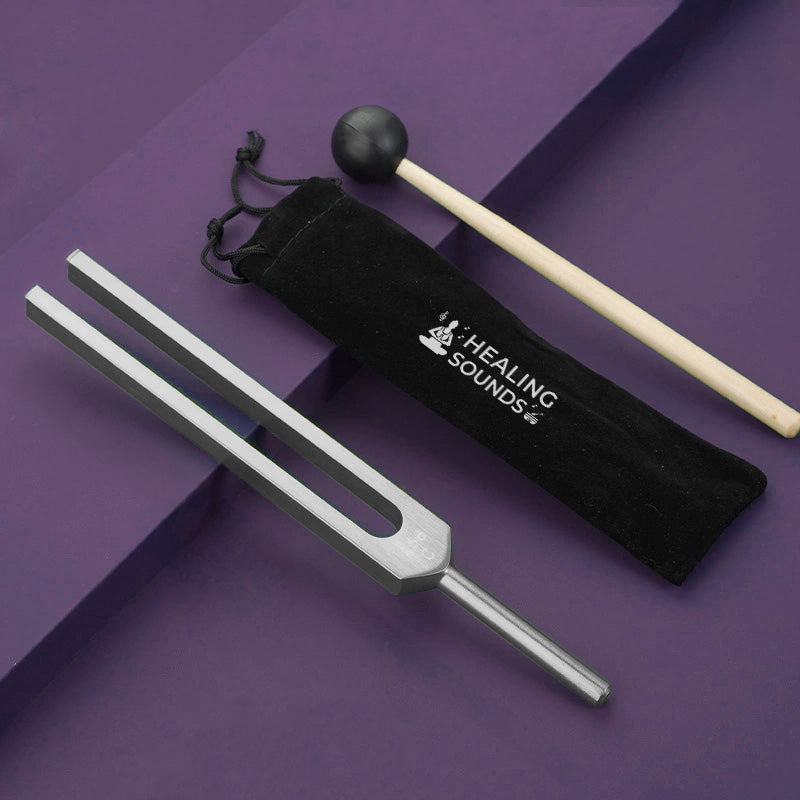
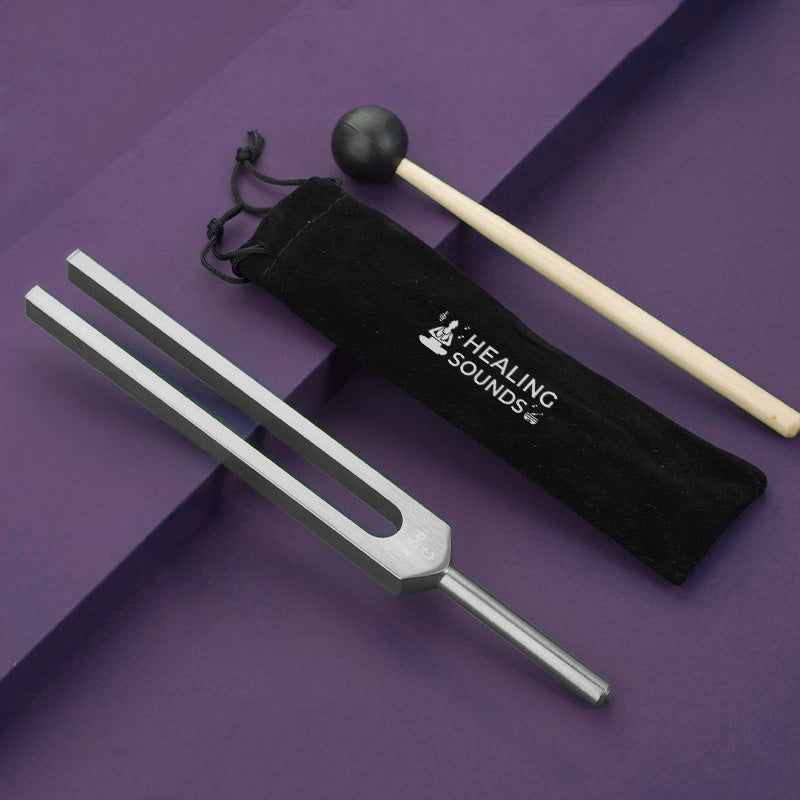
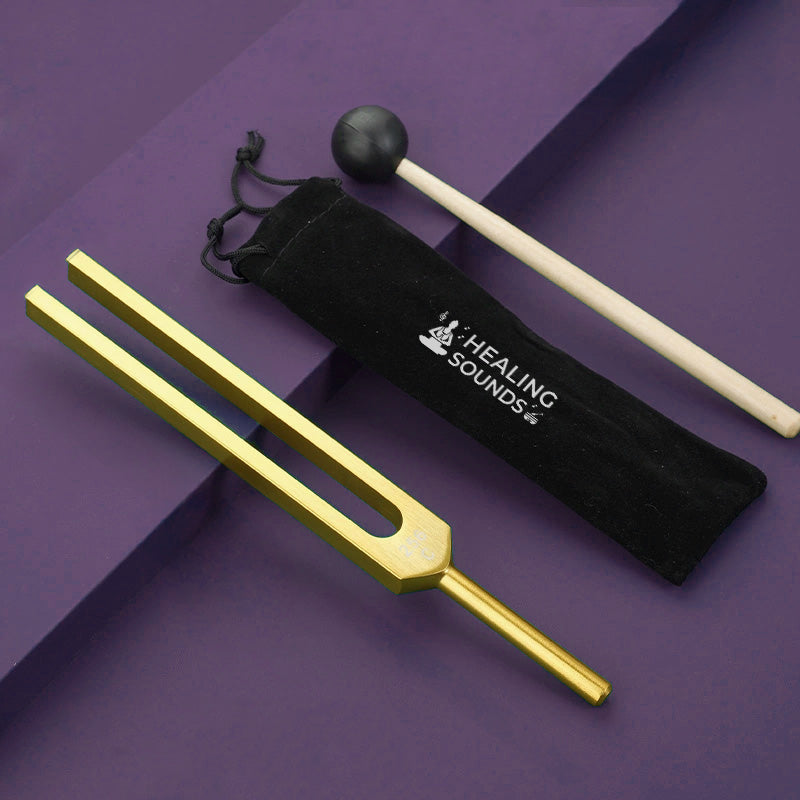
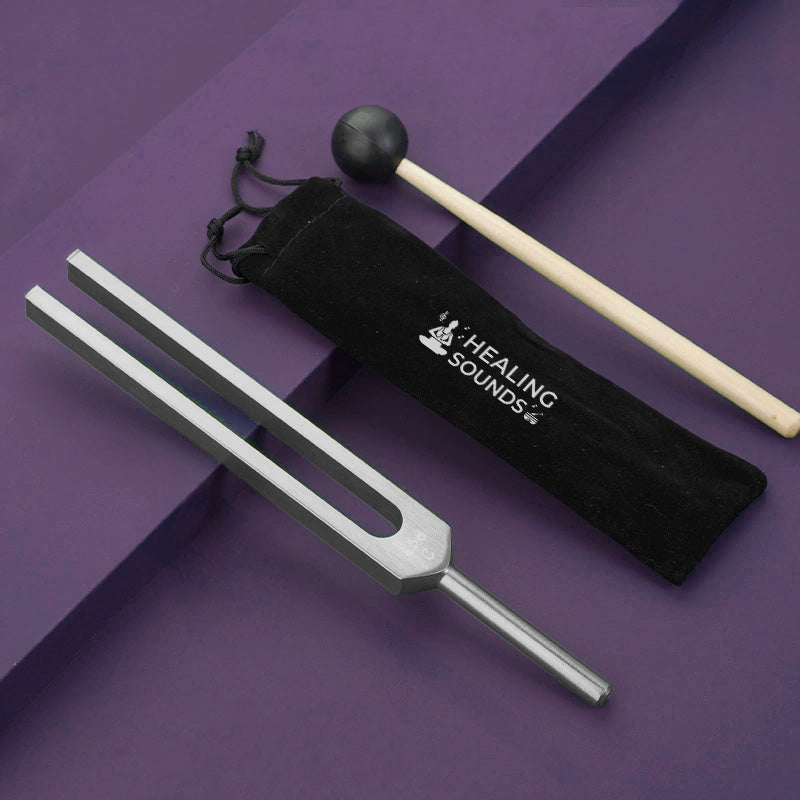
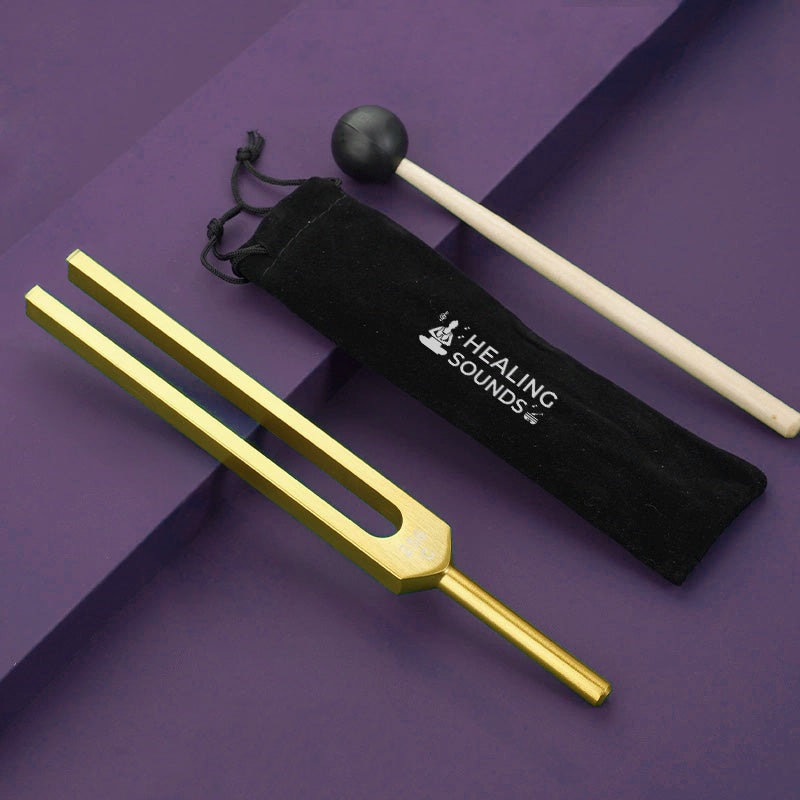
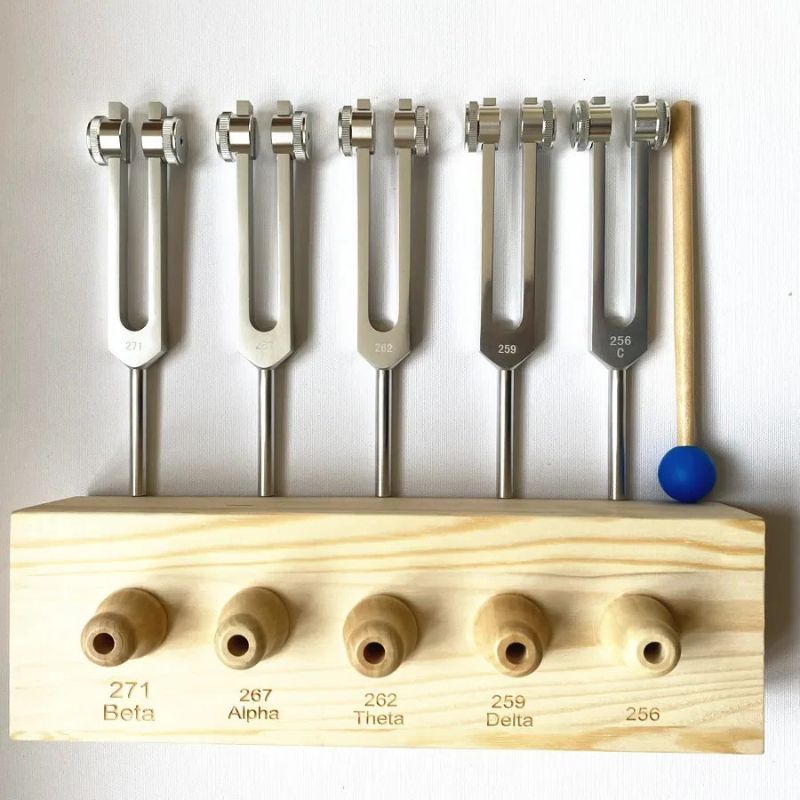
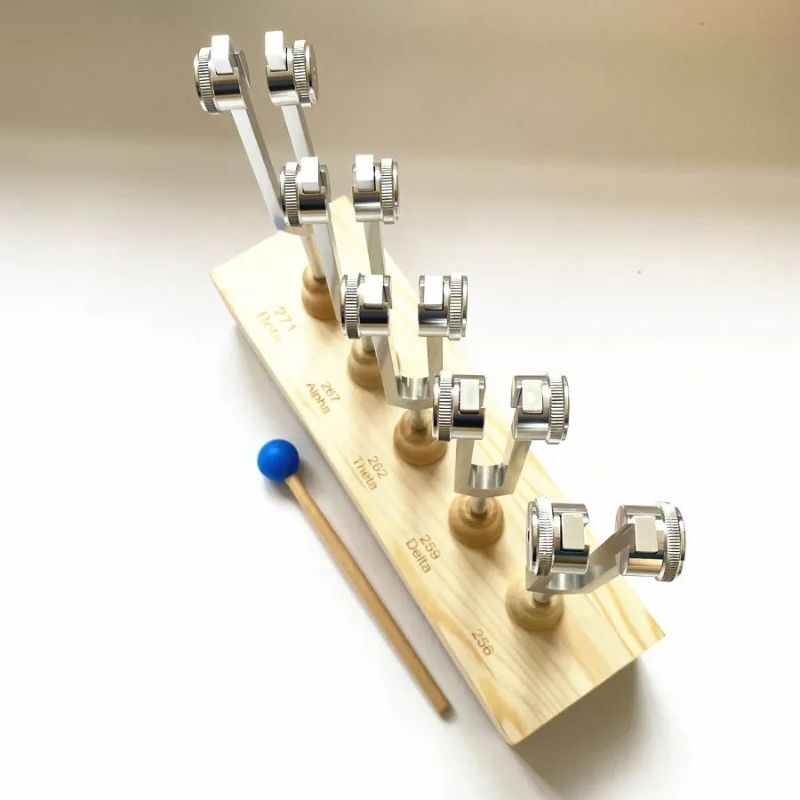
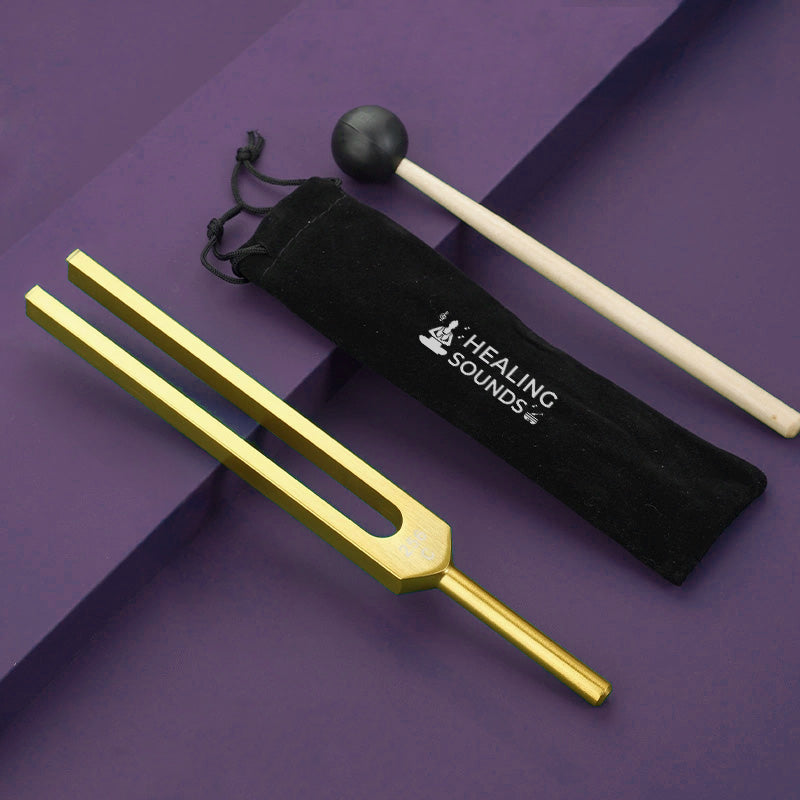
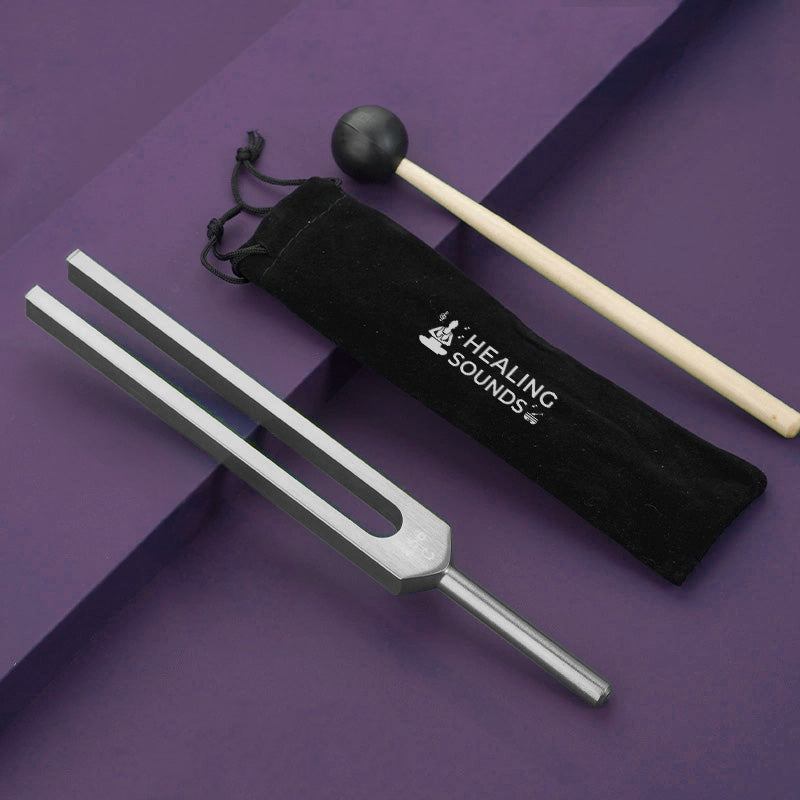
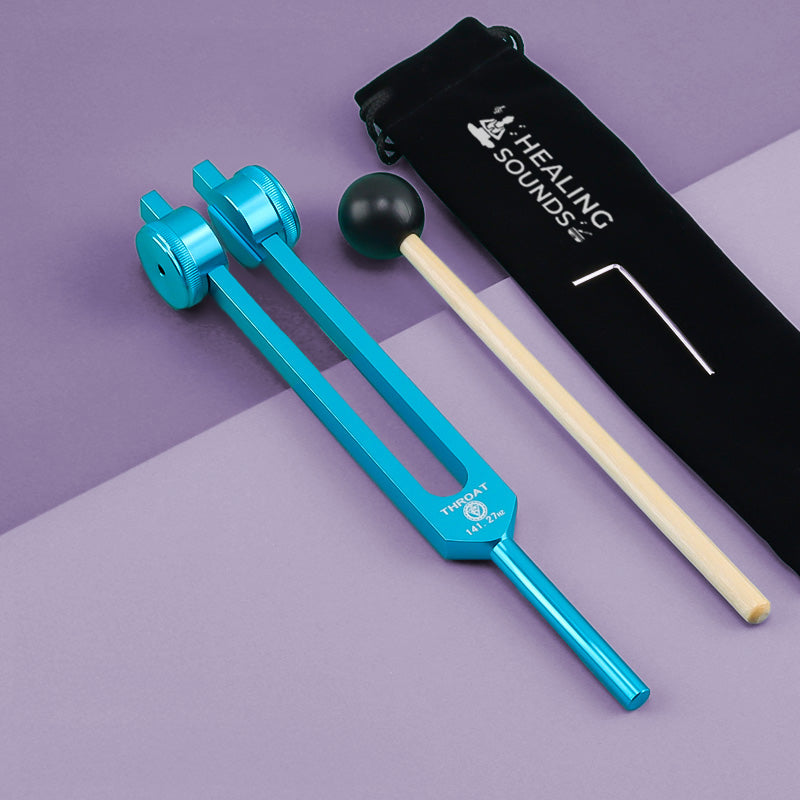
Tuning forks for emotional balance offer a gentle, non-invasive approach to managing stress, anxiety and emotional turbulence through targeted sound frequencies. Whether you struggle with racing thoughts, emotional overwhelm or simply want to cultivate greater mental clarity in your daily life, specific frequencies -- particularly from the solfeggio and chakra systems -- can support emotional regulation and cognitive focus. This collection brings together the tuning forks most recommended by sound healing practitioners for mood support, emotional release and mental wellness. Every fork is CNC-machined from premium aluminum alloy, computer-verified to +/-0.25 Hz accuracy and laser-engraved with its frequency.
Emotional and mental wellness work with tuning forks draws on the well-established relationship between sound, the nervous system and emotional processing. Low-frequency vibration activates the parasympathetic nervous system (your body's "rest and digest" mode), while mid-range tones held near the ears can shift brainwave patterns toward calmer, more focused states. These forks are used by therapists, counselors, yoga instructors and individuals seeking natural tools for anxiety relief, emotional processing and stress reduction.
Why Sound Frequencies Influence Emotional and Mental States
The connection between sound and emotion is not abstract -- it is neurological. Sound waves entering the ear are processed by the auditory cortex, which has direct neural pathways to the limbic system -- the brain's emotional processing center. This is why certain music can instantly change your mood, why a soothing voice calms an anxious child, and why sudden loud sounds trigger a stress response. Tuning forks leverage this same neural pathway, but with pure, single-frequency tones that are free from the complexity of music or speech.
When a tuning fork producing a steady, predictable frequency is held near the ears, the auditory system receives an extremely simple signal. Unlike music, which contains melody, harmony, rhythm and lyrics that engage cognitive processing, a single pure tone allows the brain to settle into a receptive, meditative state without analytical engagement. This is why many meditation practitioners find tuning forks more effective than recorded music for achieving deep focus -- the simplicity of the tone reduces cognitive load rather than adding to it.
For body-contact applications, weighted tuning forks placed on the sternum, abdomen or feet activate mechanoreceptors that send calming signals through the vagus nerve -- the primary nerve of the parasympathetic nervous system. This vagal stimulation promotes measurable physiological shifts: heart rate slows, breathing deepens, muscle tension releases and cortisol levels decrease. These physical changes create the foundation for emotional processing and mental clarity, because it is difficult to access calm emotional states while the body remains in a stress response.
Frequencies Practitioners Choose for Emotional Work
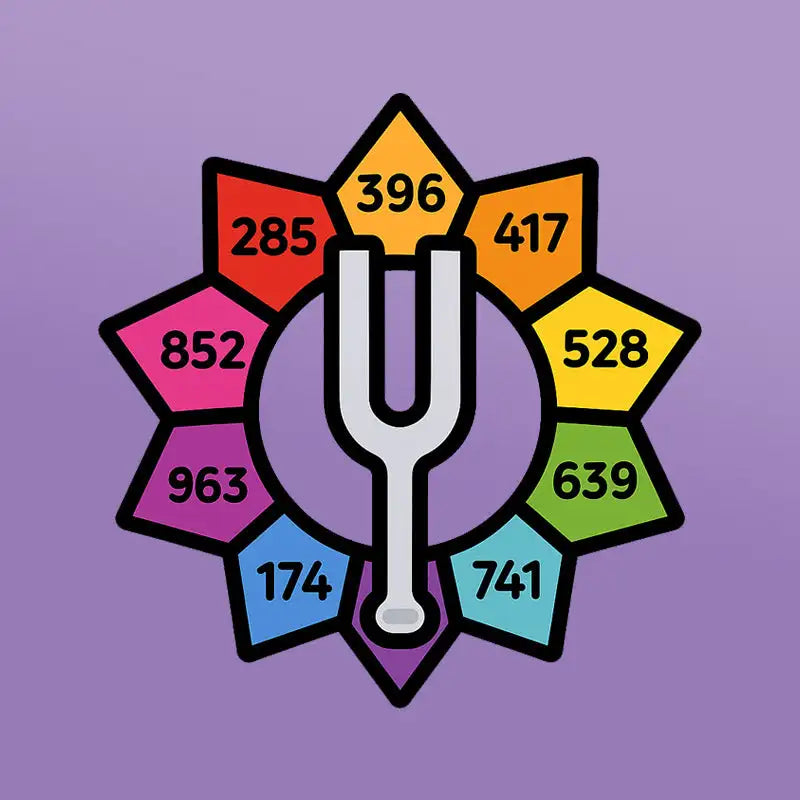
Not every frequency serves the same emotional purpose. Practitioners working with mental and emotional health tend to draw from both the solfeggio frequency system and specific chakra-associated tones, selecting forks based on the emotional quality they want to support. Here are the frequencies most commonly chosen for emotional and mental wellness applications.
396 Hz: Releasing Fear, Grief and Emotional Weight
The 396 Hz solfeggio fork is the frequency practitioners reach for when working with clients who carry unresolved fear, grief or guilt. In the solfeggio system, 396 Hz is associated with liberating the listener from negative emotional patterns. Practitioners hold the activated fork near alternate ears, allowing the tone to fill the client's awareness for several breath cycles. Many practitioners report that clients experience emotional release -- sometimes tears, sometimes deep sighs, sometimes a simple sense of lightness -- during or after extended work with this frequency. The 396 Hz fork is typically unweighted and used auriculary (near the ears) rather than on the body.
528 Hz: Heart-Centered Restoration and Emotional Harmony
The 528 Hz tuning fork is the most popular solfeggio frequency for emotional work worldwide. Known in sound healing traditions as the "love frequency," 528 Hz is associated with emotional restoration, compassion and heart-centered awareness. Practitioners use it for clients dealing with relationship stress, self-criticism, emotional numbness or difficulty connecting with others. The fork is held near the ears or slowly moved through the space around the heart center. For practitioners who work with chakra tuning forks, 528 Hz complements the heart chakra fork (136.1 Hz OM) beautifully -- the OM fork grounds and centers, while 528 Hz opens and softens.
741 Hz: Mental Clarity, Focus and Cognitive Reset
Where 396 and 528 Hz address emotional states, the 741 Hz solfeggio fork targets mental clarity and intellectual function. This frequency is associated with problem-solving, clear thinking and the ability to see situations from a fresh perspective. Practitioners working with overwhelmed professionals, students facing exam anxiety or anyone experiencing "brain fog" often incorporate 741 Hz into their sessions. The fork is typically held near the temples or the sides of the head, where its vibration feels closest to the cognitive centers. Some practitioners combine it with 852 Hz (intuition) for a two-fork protocol that addresses both analytical and intuitive thinking.
136.1 Hz OM: Emotional Grounding and Nervous System Reset
The OM 136.1 Hz fork appears in emotional wellness work as a grounding anchor. When emotions run high -- whether from anxiety, anger or grief -- the nervous system benefits from a stabilizing reference point. The OM frequency, derived from Earth's orbital period, provides exactly that: a deep, centering tone that many people instinctively find calming. As a weighted fork placed on the sternum, it delivers both auditory and physical vibration simultaneously, creating a multi-sensory grounding experience that can interrupt anxiety spirals and help clients return to emotional equilibrium.
Session Protocols for Emotional Release and Mental Focus
Knowing which frequencies to use is only half the equation. How you structure a session determines whether the work feels scattered or coherent. Below are two practitioner-tested protocols -- one for emotional release and one for mental focus -- that provide a reliable framework you can adapt to individual needs.
Auricular Listening Protocol for Mood Regulation
This protocol uses unweighted tuning forks held near the ears. It is designed for emotional processing and mood regulation.
Opening (2 minutes): Begin with the OM 136.1 Hz fork held 3-4 inches from each ear, alternating sides every 15-20 seconds. This establishes a grounding baseline and signals to the nervous system that the session is beginning. Have the client close their eyes and breathe naturally.
Emotional focus (5-8 minutes): Move to the frequency that matches the client's primary emotional need -- 396 Hz for fear or grief, 528 Hz for emotional disconnection or self-criticism, 639 Hz for relationship stress, 741 Hz for mental fog or confusion. Activate the fork and hold it near the right ear for one full breath cycle, then move to the left ear for the next breath cycle. Continue alternating. Between reactivations, allow 5-10 seconds of silence so the client can process the contrast between tone and quiet.
Integration (2-3 minutes): Return to the OM 136.1 Hz fork for closing. This brings the client back to a centered, grounded state and provides a sense of completion. End with 30 seconds of complete silence before inviting the client to open their eyes.
Weighted Fork Technique for Emotional Grounding
This protocol uses weighted tuning forks placed directly on the body. It is designed for clients who are highly anxious, emotionally activated or struggling to settle into a relaxed state.
Feet first (2 minutes): Place an activated 128 Hz weighted fork on the sole of each foot, alternating. The feet are rich in nerve endings and far from the head, making them an ideal starting point for grounding work. The physical vibration draws awareness downward and away from racing thoughts.
Core stabilization (3-5 minutes): Move to the sternum with the OM 136.1 Hz weighted fork. Place the stem gently on the breastbone and hold until the vibration fades. Reactivate and repeat 3-4 times. The sternum placement delivers vibration directly to the chest cavity, where many people physically hold emotional tension. Clients often report a spontaneous deepening of breath during this step.
Tension release (3-5 minutes): Using the 128 Hz weighted fork, address specific areas where the client holds stress -- typically the shoulders (upper trapezius), the jaw (masseter muscle) and the lower back. Place the fork stem on each point for one full vibration cycle, then reactivate and repeat.
Daily Self-Care Practices for Emotional Resilience
Professional sessions are valuable, but the real power of tuning forks for emotional balance emerges through consistent daily practice. A single fork -- most practitioners recommend the 528 Hz unweighted or the 128 Hz weighted -- is sufficient for an effective home practice.
Morning intention setting: Activate your fork and hold it near your ears for 3-5 breath cycles before starting your day. Use this brief listening practice to set an emotional intention -- not a task list, but a quality of being you want to cultivate. The pure tone provides a focal point that prevents the mind from immediately jumping to the day's obligations.
Midday reset: When you notice stress building -- tightened shoulders, shallow breathing, irritability -- a 60-second tuning fork break can interrupt the stress cycle before it escalates. Activate the fork, close your eyes, and follow the tone from its initial strike to silence. This single breath-length practice is the sound therapy equivalent of a mindful pause.
Evening wind-down: Before sleep, use a weighted 128 Hz fork on the sternum and soles of the feet. The physical vibration activates the parasympathetic nervous system, signaling the body to shift from daytime alertness to nighttime recovery. Many users find this more effective than recorded sleep sounds because the practice is active (you are doing something with intention) rather than passive (background noise).
Consistency matters more than duration. Five minutes daily produces better results than a 30-minute session once a week, because the nervous system learns to associate the fork's tone with a calm, focused state -- and that association strengthens with repetition.
Collections That Support Emotional and Mental Wellness
All Tuning Forks -- Browse our complete range of sound healing tuning forks
Emotional Balance and Mental Clarity Tuning Fork Questions
Yes -- tuning forks can support anxiety and stress management through two primary mechanisms. First, pure tones held near the ears provide a simple auditory focal point that reduces cognitive overload and interrupts anxious thought patterns. Second, weighted tuning forks placed on the body (particularly the sternum and feet) stimulate the vagus nerve, activating the parasympathetic nervous system and promoting measurable physiological relaxation: slower heart rate, deeper breathing and reduced muscle tension. Frequencies commonly used for anxiety include 128 Hz (weighted, for physical calming), 136.1 Hz OM (grounding) and 396 Hz (releasing fear). Tuning forks work best as a complementary tool alongside professional mental health support, not as a replacement for therapy or medication.
The 528 Hz tuning fork is the most popular solfeggio frequency for emotional work. Known in sound healing traditions as the "love frequency," it is used for emotional restoration, heart-centered healing and cultivating compassion. Practitioners hold the unweighted fork near the ears or move it slowly around the heart center during sessions focused on relationship stress, self-criticism, emotional numbness or difficulty connecting with others. The 528 Hz fork pairs well with the OM 136.1 Hz fork -- OM for grounding and centering, 528 Hz for emotional opening and softening. It is typically the first solfeggio fork recommended for anyone focused on emotional wellness.
For emotional release, use unweighted solfeggio forks (particularly 396 Hz or 528 Hz) held 3-4 inches from each ear, alternating sides with each breath cycle. Begin with 2 minutes of the OM 136.1 Hz fork to establish a grounded baseline, then move to your chosen emotional frequency for 5-8 minutes, and close with OM again for integration. Allow periods of silence between reactivations so the client can process the contrast between sound and quiet. Emotional release may manifest as tears, deep sighs, spontaneous laughter or simply a feeling of lightness. Always create a safe, unhurried environment and avoid rushing the process. For body-based emotional release, a weighted 128 Hz fork on the sternum can help unlock tension held in the chest.
The 741 Hz solfeggio fork is the frequency most commonly associated with mental clarity, problem-solving and cognitive reset. Practitioners hold it near the temples or sides of the head for focused listening sessions. For a more comprehensive approach, combine 741 Hz with 852 Hz (intuition) to address both analytical and intuitive thinking. If brain fog is accompanied by physical tension or stress, start with a weighted 128 Hz fork on the body to calm the nervous system before moving to the higher-frequency listening work -- mental clarity is difficult to achieve when the body is in a stress response.
Tuning fork therapy is generally well-tolerated, and most side effects are mild and temporary. The most commonly reported responses include light-headedness or dizziness (especially after head-focused sessions), temporary emotional sensitivity or heightened feelings, mild fatigue as the body shifts into deep relaxation, and occasionally a brief intensification of symptoms before improvement. These responses are similar to what some people experience after massage, acupuncture or meditation. In emotional work specifically, clients may experience unexpected emotional release -- tears, memories or strong feelings -- which is generally considered a healthy processing response rather than a negative side effect. If you experience persistent discomfort, reduce session frequency and duration. Tuning forks are complementary tools and should not replace professional mental health care.
Filters (0)
High-Quality Tuning Forks Collection
Discover premium tuning forks for perfect sound calibration.
Enhance Your Sound Experience
Achieve precise tonal quality with our tuning forks.
Recently viewed
Treat yourself to a relaxing moment
With our best instruments. Handcrafted from the finest materials.
Created by healing enthousiasts
We know your needs because we use our products too. We are the first users.
Money-back guarantee
You have 60 days to return your order if it doesn't fit (you'll love it anyway).
100% secured payments
So you can remain in deep peace until you receive your order.