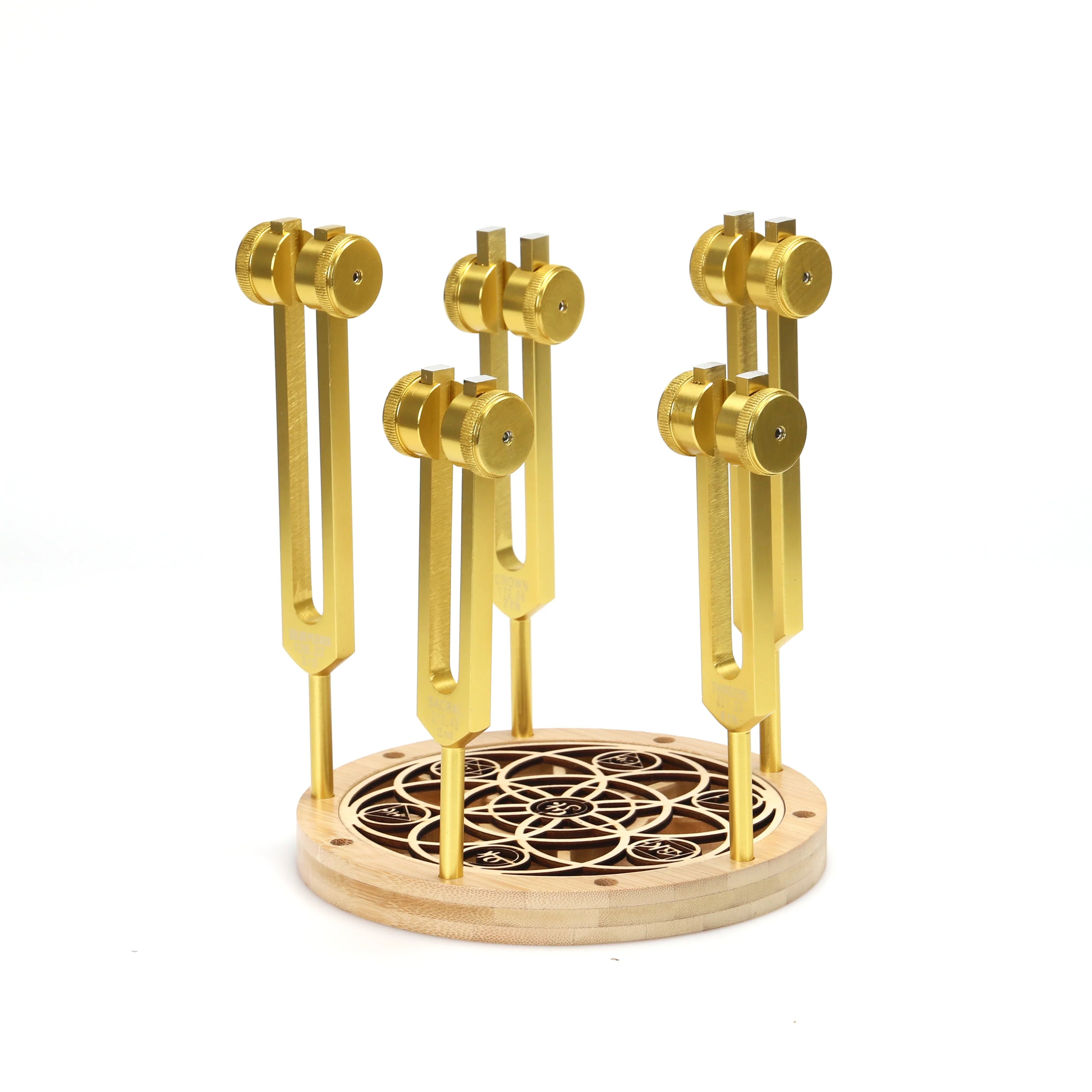
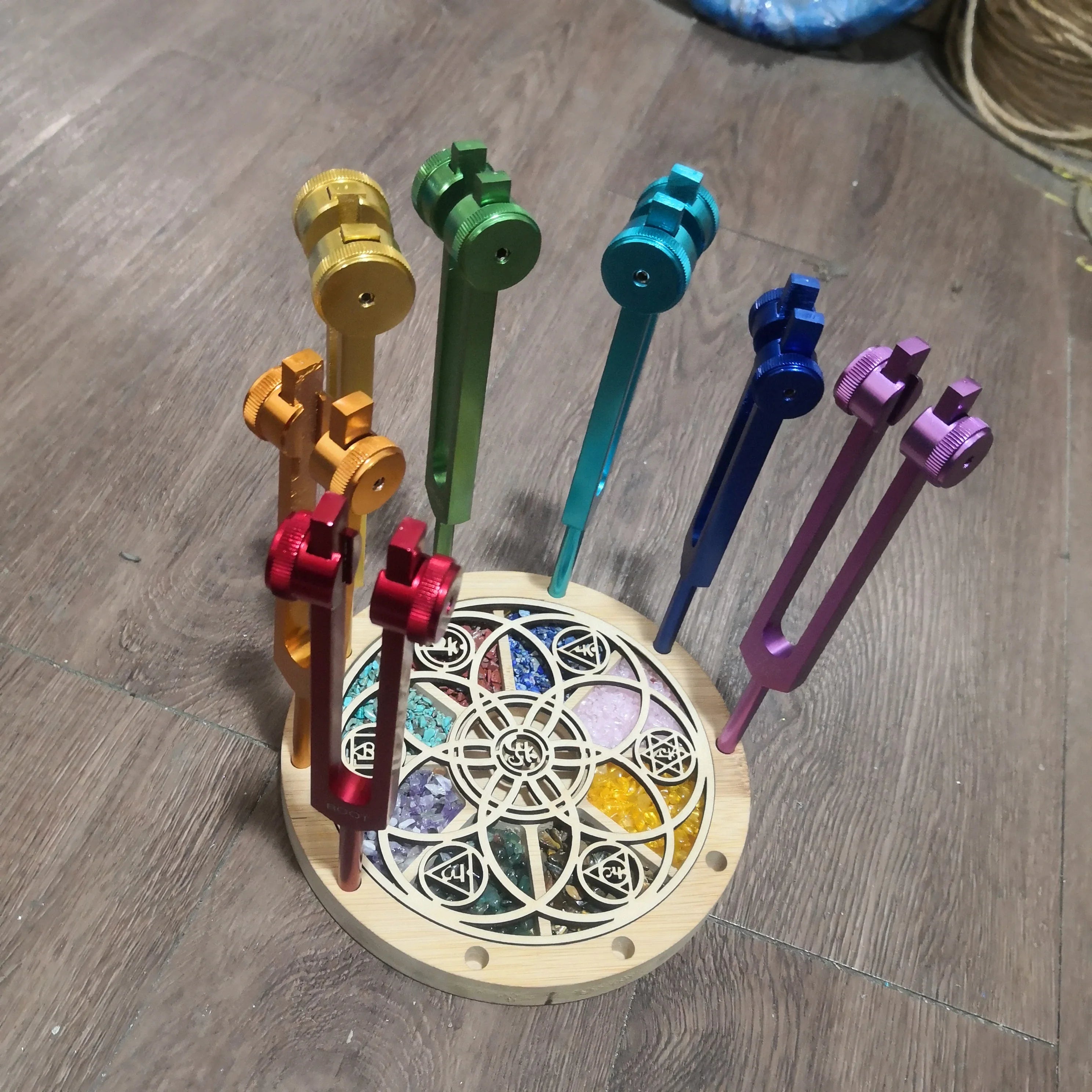
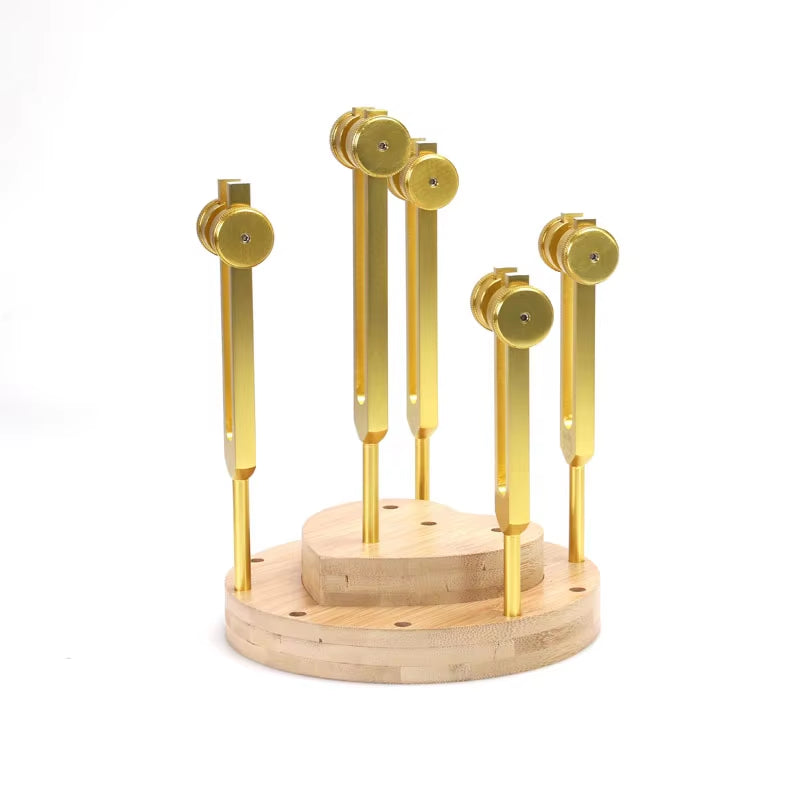
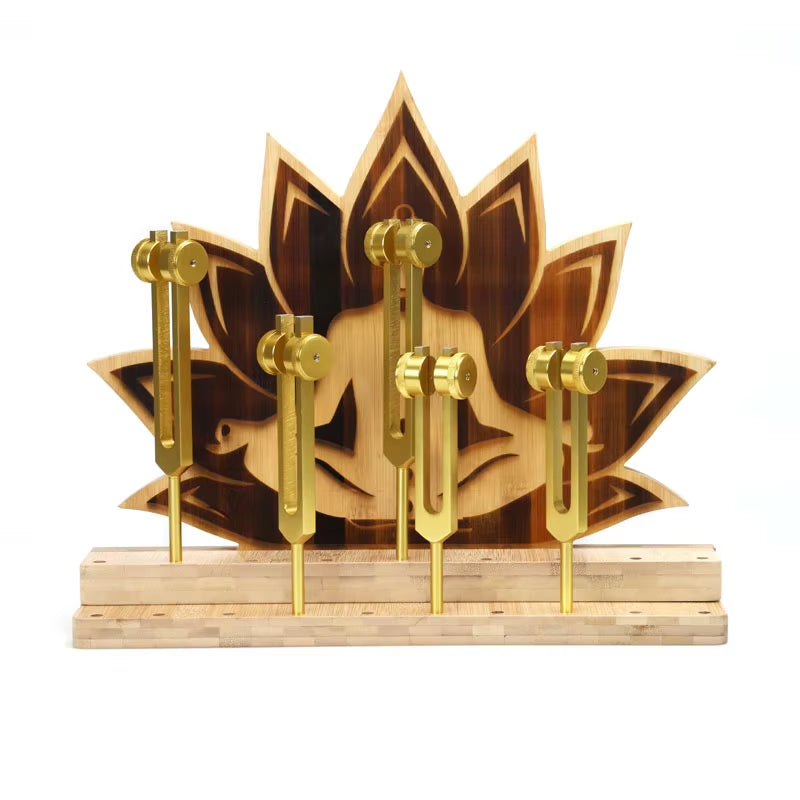
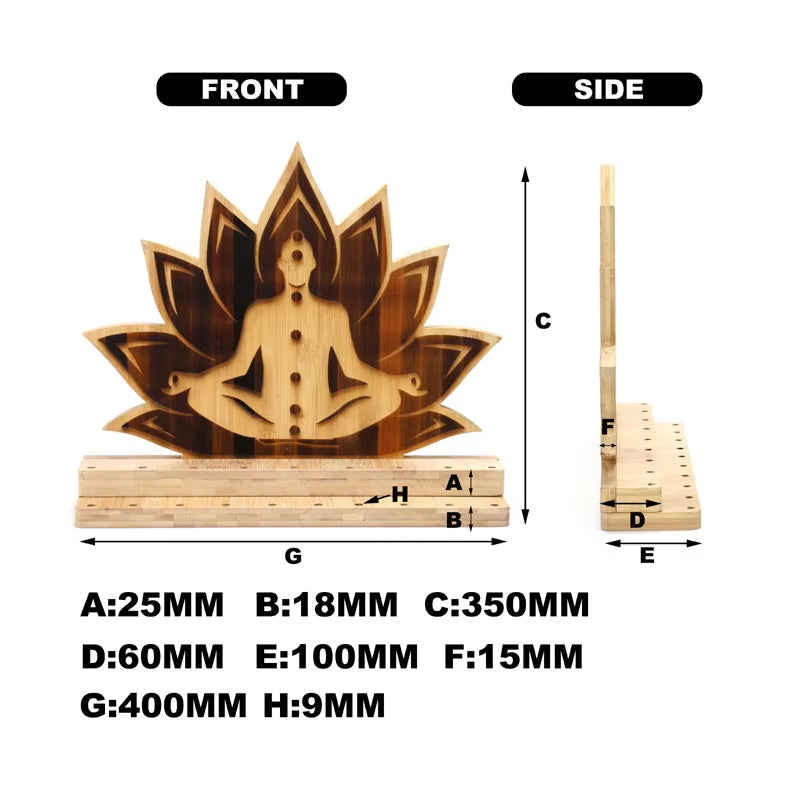
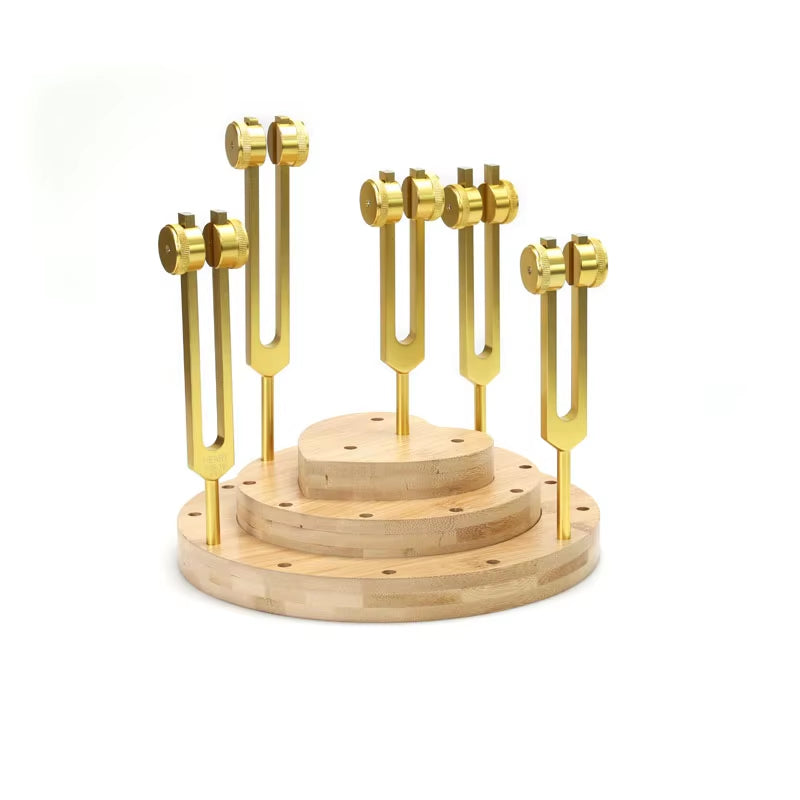
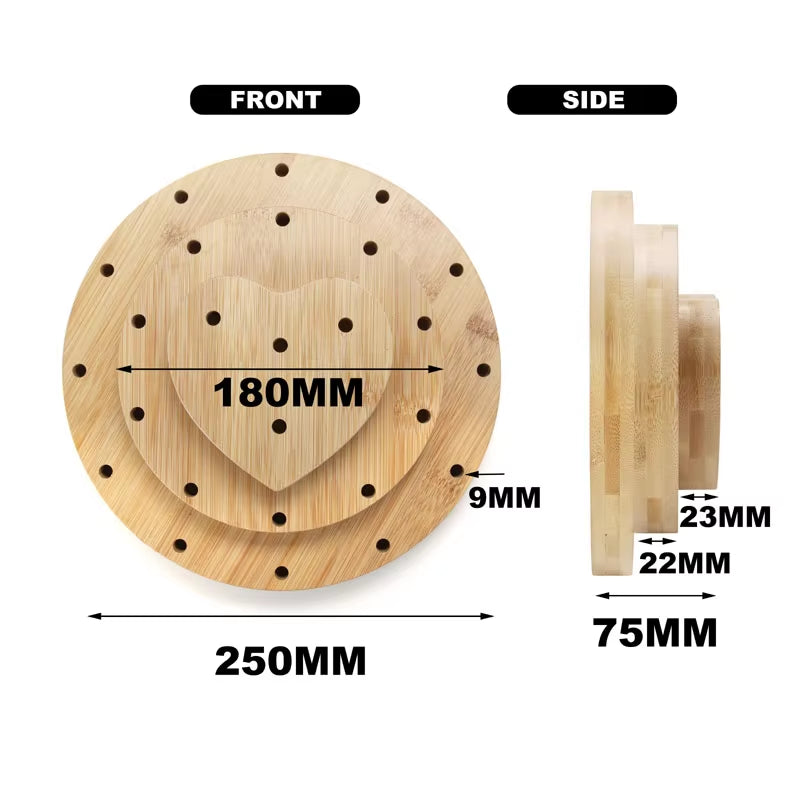
Tuning fork holders keep your instruments organized, protected and instantly accessible during therapy sessions, teaching demonstrations or personal practice. A proper display stand prevents tuning forks from rolling off surfaces, bumping into each other or getting lost in a drawer where their tines can bend. Our tuning fork holders are designed specifically for sound healing practitioners and music educators who need their forks visible, sorted by frequency and ready to grab at a moment's notice.
Whether you own a single pair of forks or a collection of 20 or more, there is a tuning fork holder sized for your needs. Options range from compact desktop stands that hold 3-5 forks to full-size storage solutions for professional practitioners with multiple complete sets. Each holder accommodates both weighted and unweighted forks in standard stem diameters, and several designs include dedicated slots for larger giant tuning forks as well.
Why Proper Storage Matters for Tuning Fork Longevity
A CNC-machined tuning fork is a precision instrument. The tines are calibrated to vibrate at an exact frequency, and even minor physical damage -- a dent, a bend, a chip -- can alter that calibration permanently. Tossing forks into a bag or stacking them in a drawer exposes them to exactly these risks. The tines clank against each other, scratch on hard surfaces and can bend if something heavy lands on top of them.
A dedicated tuning fork holder eliminates these hazards by giving each fork its own secure slot. The forks are held upright or at an angle with the tines suspended freely, preventing any contact that could compromise the calibration. For practitioners who have invested in quality tuning forks for healing, a holder is not a luxury -- it is a practical necessity that protects your investment.
Common Storage Mistakes That Damage Tuning Forks
Loose in a bag -- Forks knock together during transport, risking dents and frequency drift.
Stacked in a drawer -- Weight pressure on lower forks can bend tines over time.
Standing upright without support -- Forks fall and hit hard surfaces, causing chips.
Mixed with other metal tools -- Screwdrivers, keys and coins scratch and dent tines.
Choosing the Right Holder Size for Your Collection
The number of tuning forks you own determines which holder size will serve you best. Here is a quick guide based on common collection sizes.
Collection Size
Recommended Holder
Ideal For
1-5 forks
Compact desktop stand
Beginners, single-set owners, personal practice
6-9 forks
Medium stand or ball holder
Solfeggio set, chakra set, or combination
10-15 forks
Large multi-row stand
Practitioners with two or more sets
16+ forks
Professional display rack or wall mount
Full-time sound healers, teaching studios
The Tuning Fork Ball Holder: A Popular Compact Option
The tuning fork ball holder is a sphere-shaped stand with multiple holes drilled to accept tuning fork stems. It sits on a desk or treatment table and keeps forks fanned outward for easy identification and quick access. Ball holders typically accommodate 5-8 forks depending on size, making them ideal for a single solfeggio or chakra set. Their compact footprint means they do not take up much space on a crowded treatment table.
Using Holders During Active Therapy Sessions
A tuning fork holder is not just for storage between sessions -- it is a working tool during active therapy. Practitioners who use multiple frequencies in a single session need fast, organized access to their forks without fumbling through a bag or case.
Tableside Organization for Practitioners
Place your tuning fork holder on a small side table next to the treatment bed or massage table. Arrange the forks in the order you plan to use them -- typically low frequency to high, or following the chakra sequence from Root to Crown. As you finish with each fork, return it to its slot immediately. This workflow keeps the session smooth and professional, and prevents forks from rolling off the table or landing on the floor.
Classroom and Workshop Display
For sound healing educators and music teachers, a display-style holder makes frequencies visible and accessible to the entire class. Students can see the physical difference between a short high-frequency fork and a long low-frequency fork, reinforcing the relationship between tine length and pitch. Wall-mounted holders work particularly well in permanent teaching spaces where the tuning fork collection stays in place between classes.
Materials and Construction of Quality Tuning Fork Holders
Our tuning fork holders are made from natural hardwoods and engineered composites, selected for durability, stability and aesthetic appeal. Wood is the preferred material for tuning fork storage because it absorbs minor impacts without scratching the aluminum tines, provides a warm visual complement to metal instruments and does not generate static that could attract dust to the fork surfaces.
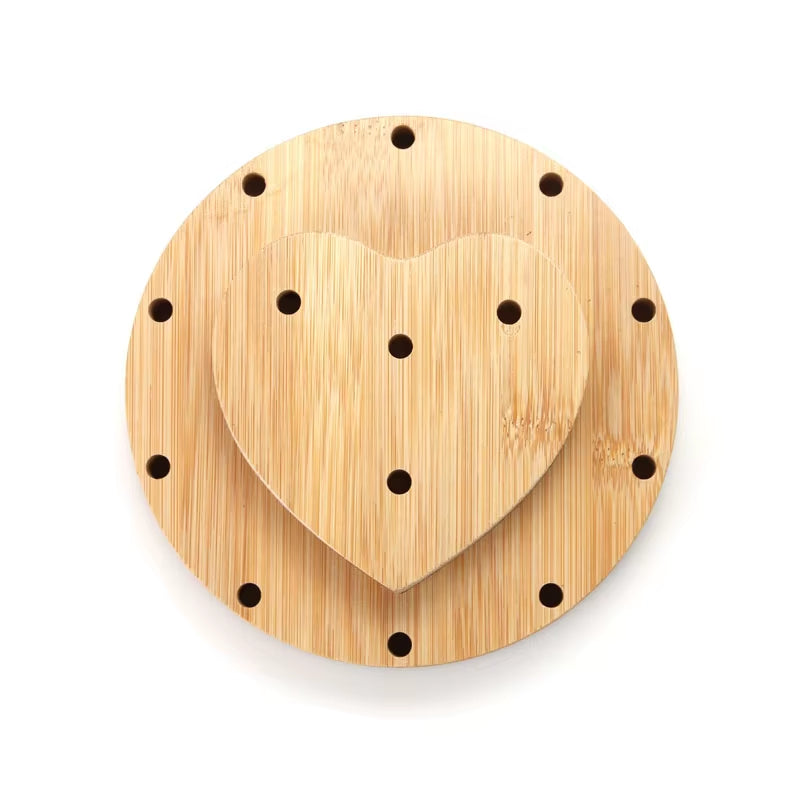
Each hole or slot is sized to hold standard tuning fork stems securely without being so tight that insertion and removal require force. The base is weighted or wide enough to prevent tipping, even when fully loaded with heavy weighted forks. For transport, we also offer padded carrying cases -- see our accessories collection for options.
Complete Your Tuning Fork Setup
Pair your tuning fork holder with these related collections.
Tuning Forks -- Our full range of tuning forks for healing and sound therapy.
A tuning fork holder protects your precision instruments from physical damage that can permanently alter their calibrated frequency. Forks stored loosely in bags or drawers knock against each other, risking dents and bends to the tines. A holder keeps each fork in its own secure slot with the tines suspended freely, preventing contact damage. During therapy sessions, a holder also provides organized, instant access to multiple forks so you can switch frequencies quickly without interrupting the session flow. For practitioners with multiple sets, a holder is essential for keeping forks sorted by frequency and type.
Holder size depends on how many forks you own. For 1-5 forks (a single set or a few individual forks), a compact desktop stand is sufficient. For 6-9 forks (a full solfeggio or chakra set), a medium stand or ball holder works well. For 10-15 forks (two or more sets), choose a large multi-row stand. If you own 16 or more forks, a professional display rack or wall-mounted solution is the most practical. All of our holders accommodate both weighted and unweighted forks with standard stem diameters.
Capacity varies by design. Our compact desktop stands hold 3-5 forks, medium ball holders accommodate 5-8 forks, and large multi-row stands can hold 10-15 forks. Professional display racks and wall-mounted holders store 16 or more. Check each product listing for the exact capacity. If you are unsure, count the forks in your collection and add 2-3 extra slots for future purchases -- most practitioners gradually expand their collection over time.
Yes, and most practitioners do. Place the holder on a small side table next to your treatment bed or massage table, and arrange the forks in the order you plan to use them. As you finish with each fork, return it to its slot immediately. This keeps the session smooth and professional, prevents forks from rolling off surfaces, and lets you switch frequencies quickly without breaking the flow of the session. Ball holders and compact stands are especially popular for tableside use because of their small footprint.
Our tuning fork holders are made primarily from natural hardwoods and engineered wood composites. Wood is the ideal material for tuning fork storage because it absorbs minor impacts without scratching the aluminum tines, provides a stable non-slip base, and offers a warm aesthetic that complements the instruments. The holes and slots are precision-drilled to hold standard tuning fork stems securely without requiring force to insert or remove. Each base is weighted or wide enough to prevent tipping even when fully loaded with heavy weighted forks.
Filters (0)
High-Quality Tuning Forks Collection
Discover premium tuning forks for perfect sound calibration.
Enhance Your Sound Experience
Achieve precise tonal quality with our tuning forks.
Recently viewed
Treat yourself to a relaxing moment
With our best instruments. Handcrafted from the finest materials.
Created by healing enthousiasts
We know your needs because we use our products too. We are the first users.
Money-back guarantee
You have 60 days to return your order if it doesn't fit (you'll love it anyway).
100% secured payments
So you can remain in deep peace until you receive your order.