
handpan Celtic
1 product
Showing 1 - 1 of 1 product
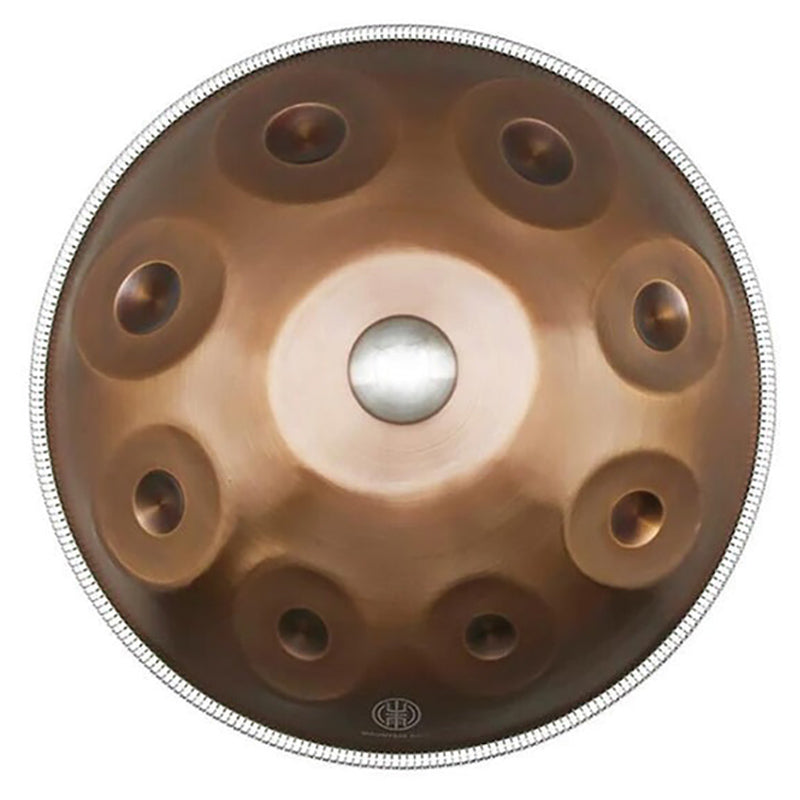
The Celtic handpan channels centuries of Irish, Scottish, and Breton musical tradition through the resonant steel of a modern percussion instrument. Tuned to a Celtic Minor scale — a Dorian mode variant closely related to the melodies found in traditional folk music of the British Isles and Northern Europe — this handpan produces an unmistakably mystical, spiritual sound that transports listeners to ancient stone circles, mist-covered highlands, and candlelit ceremony spaces. At Healing Sounds, our Celtic Minor handpan collection features instruments in premium steel with multiple note configurations and both 432 Hz and 440 Hz tuning options.
Unlike standard minor scales such as the D Minor or G Minor, the Celtic Minor handpan incorporates a raised sixth degree that creates a distinctive intervallic color — a momentary brightness within an otherwise minor tonality. This raised sixth is the defining ingredient of the Dorian mode and is responsible for the scale's characteristic "Celtic" quality: neither fully sad nor fully happy, but suspended in an evocative, story-telling emotional space that feels ancient and timeless. It is this quality that has made the Celtic Minor a beloved choice for spiritual practitioners, world music enthusiasts, ceremony facilitators, and anyone drawn to the intersection of sound and sacred tradition.
Whether you are seeking an instrument for ritual and ceremony, building a world music repertoire, or simply captivated by the haunting beauty of Celtic melody, this guide will help you understand the Celtic Minor handpan and select the right model from our full handpan collection.
The Celtic Minor Scale: Ancient Roots in a Modern Instrument
The Celtic Minor handpan is typically built on a Dorian mode foundation. In its most common configuration with a D3 Ding, the tone fields are tuned to D3, E3, F3, G3, A3, B3 (the raised sixth), C4, D4, and E4 in a standard 9-note layout. The crucial distinction from a standard D natural minor is that the B is natural rather than flat — this single note change transforms the entire emotional character of the scale from purely melancholic to something more complex, more narrative, more alive.
In Western music theory, the Dorian mode has been associated with folk music traditions for centuries. Irish fiddle tunes, Scottish pipe melodies, Breton dance music, and many Scandinavian folk songs are built on Dorian patterns. When this mode is expressed through the handpan's resonant steel shell, the result is an instrument that feels simultaneously ancient and modern — the timbre is unmistakably 21st-century steel percussion, but the melodic DNA carries echoes of oral musical traditions stretching back hundreds of years.
Celtic Minor vs D Minor vs Kurd: Understanding the Differences
Because all three scales often share a D fundamental, buyers sometimes confuse the Celtic Minor, D Minor, and Kurd scales. The table below clarifies their distinctions:
| Scale | Mode | Key Difference | Emotional Character | Best For |
|---|---|---|---|---|
| Celtic Minor | Dorian mode | Natural 6th (B natural) | Mystical, folk-inspired, story-telling | Ceremony, world music, spiritual practice |
| D Minor | Natural minor / Aeolian | Flat 6th (Bb) | Melancholic, introspective, universal | Meditation, beginners, all-around play |
| Kurd | Natural minor / Aeolian | Same as D Minor (different name) | Rich, versatile, contemplative | Learning, tutorials, performance |
The practical takeaway: if you want the most universally applicable minor handpan with the most tutorials, choose the D Minor / Kurd. If you want a minor handpan with a specific folk-inspired mystical quality that stands apart from the standard minor sound, the Celtic Minor is the clear choice. The two scales complement each other beautifully in a multi-instrument collection.
The Celtic Handpan in Spiritual Practice, Ceremony, and World Music
The Celtic handpan has found a devoted following among practitioners who work at the intersection of sound and spirituality. Its mystical tonality creates an instant atmosphere of sacred space — the kind of sonic environment that invites participants to slow down, turn inward, and connect with something larger than everyday experience.
Ceremony and Ritual Use
Facilitators of modern spiritual ceremonies — from new moon circles and solstice celebrations to rites of passage and memorial gatherings — increasingly turn to the Celtic Minor handpan as a ceremonial voice. The scale's folk-inspired quality evokes ancestral connection without being tied to any single religious tradition, making it culturally versatile for diverse groups. Its story-telling character also makes it well suited to narrative ceremonies where music accompanies spoken word, guided visualization, or symbolic action.
Key ceremonial techniques with the Celtic handpan include:
- Threshold music — Playing during transitions (entering sacred space, shifting between ceremony phases) to mark boundaries between ordinary and ritual time
- Call and response patterns — Using the handpan's melodic phrases as a musical call that participants echo vocally, building collective participation
- Sustained drone accompaniment — Alternating between the Ding and a single tone field to create a continuous, trance-inducing pulse beneath spoken ceremony
- Elemental invocation — Playing ascending or descending scale patterns to accompany invocations of natural elements, directions, or seasonal energies
World Music Fusion and Cross-Cultural Collaboration
The Celtic Minor handpan integrates naturally into world music ensembles. Its Dorian mode foundation resonates with folk traditions far beyond the British Isles — similar modal structures appear in North African, Middle Eastern, and Scandinavian music, giving the Celtic handpan unexpected compatibility with instruments from diverse cultural origins. World music producers value the Celtic Minor for recording projects that blend traditions, as its mystical quality provides a connective thread between otherwise disparate musical elements.
The Celtic handpan pairs particularly well with frame drums, bouzoukis, wooden flutes, didgeridoos, and vocal chanting. In acoustic ensemble settings, its sustaining steel tones complement the sharper, more transient sounds of stringed and wind instruments. Discover how leading artists integrate the handpan into cross-cultural performances in our top handpan artists feature, and learn about the instrument's global journey in our handpan origins and evolution article.
Sound Healing with the Celtic Minor
Sound therapists who specialize in shamanic or earth-based healing modalities often choose the Celtic Minor over standard minor scales. The Dorian mode's raised sixth adds a quality of hopefulness within the minor framework — a subtle lift that prevents the sound from becoming heavy or stuck. This makes the Celtic Minor effective for therapeutic sessions focused on emotional release, ancestral healing, and reconnection with nature. Practitioners frequently pair it with singing bowls, rattles, and tuning forks to create multi-textured healing soundscapes.
Selecting Your Celtic Handpan: Material, Configuration, and Playing Tips
When choosing a Celtic Minor handpan, consider how each variable — steel type, note count, and tuning frequency — will serve your intended practice.
Steel Material and the Celtic Sound
Nitrided steel is the preferred material for many Celtic handpan players because its warm, organic tone amplifies the scale's folk-inspired character. The warmer timbre evokes the wooden and hide instruments of traditional Celtic music, creating a more acoustically integrated sound in world music ensemble contexts. Stainless steel adds brightness and clarity that enhances the mystical shimmer of the Dorian mode — excellent for solo meditation and outdoor ceremony where projection matters. Ember steel offers a versatile middle ground for players who use their Celtic handpan across varied settings.
Note Count for the Celtic Minor
A 9-note Celtic handpan captures the complete Dorian mode within one octave, which is sufficient for most ceremonial, therapeutic, and personal practice applications. Players seeking greater compositional range can explore 10 to 12-note models that extend into the upper octave, unlocking richer harmonic possibilities and enabling more complex melodic development. Browse options by note count: 9-note, 10-note, 12-note, 13-note.
Learning the Celtic Minor
While fewer dedicated tutorials exist for the Celtic Minor compared to the Kurd scale, the fundamental playing techniques are identical across all handpan scales. Begin with our beginner's playing guide to develop proper finger technique and striking fundamentals. Then explore the Celtic Minor's unique melodic character through personal improvisation — the Dorian mode rewards exploratory playing with unexpected harmonic moments that feel both familiar and surprising. Our advanced playing tips cover polyrhythmic patterns and dynamic techniques that bring the Celtic scale to life.
Maintain your Celtic handpan with regular cleaning and oiling as detailed in our complete care guide, and consider a dedicated handpan stand for practice and display.
Explore more handpan scales and related instruments:
- By Scale: D Minor · G Minor · C Major · F Major · Kurd
- By Skill Level: Beginner Handpans · Intermediate · Professional
- By Material: Stainless Steel · Nitrided Steel · Ember Steel
- Healing Instruments: Singing Bowls · Tuning Forks · Tongue Drums
Deepen your handpan knowledge:
- Handpan Drums: A Complete Guide
- Ultimate Guide to Buying Handpans Online
- Handpan Music: Benefits and Insights
- Choosing the Right Handpan for Beginners
Frequently Asked Questions About Celtic Handpans
The Celtic Minor handpan is built on the Dorian mode, which features a raised sixth degree compared to the standard natural minor scale. This single note difference transforms the emotional character from purely melancholic (as in the D Minor or G Minor) to something more complex and story-telling — a mystical quality that evokes Celtic and Northern European folk traditions. The raised sixth creates a momentary brightness within the minor framework, giving the Celtic handpan its distinctive atmosphere of ancient mystery and spiritual depth.
The Celtic handpan is one of the most popular instruments for modern spiritual ceremonies and rituals. Its mystical Dorian tonality creates an instant atmosphere of sacred space without being tied to any specific religious tradition, making it suitable for diverse spiritual contexts. Ceremony facilitators use it for moon circles, solstice celebrations, rites of passage, memorial gatherings, and meditative retreats. The scale's folk-inspired quality evokes ancestral connection, and its story-telling character pairs naturally with spoken word, guided visualization, and symbolic ritual action.
Yes, the Celtic Minor is beginner-friendly. Like other well-designed handpan scales, its Dorian mode arrangement produces harmonious note combinations regardless of playing order. The raised sixth degree adds an element of surprise and beauty that makes exploratory playing especially rewarding for new players. While there are fewer dedicated Celtic Minor tutorials compared to the D Kurd scale, the fundamental playing techniques are identical across all handpan scales, so beginner guides and technique videos for any scale apply directly to the Celtic Minor.
The Celtic handpan integrates naturally into world music and folk ensembles. It pairs beautifully with frame drums, wooden flutes, bouzoukis, and didgeridoos in acoustic settings. For sound healing applications, combining a Celtic handpan with singing bowls and tuning forks creates a multi-textured therapeutic soundscape. In handpan duet contexts, the Celtic Minor and D Minor complement each other well — their shared tonal territory creates cohesion while the Dorian-versus-Aeolian modal difference adds harmonic interest and emotional contrast. The raised sixth interval in the Celtic scale also opens up call-and-response phrasing patterns that work particularly well in group playing and ceremonial contexts.
Choose the D Minor if you want the most versatile first instrument with the widest range of available tutorials, community support, and learning resources. Choose the Celtic Minor if you are specifically drawn to folk-inspired mystical sounds, plan to use your handpan primarily for spiritual practice or ceremony, or want a scale that sounds distinctly different from the majority of handpans you hear online. Both scales are equally playable for beginners — the difference is in emotional character and available learning material rather than difficulty level.