
handpan F major
3 products
Showing 1 - 3 of 3 products
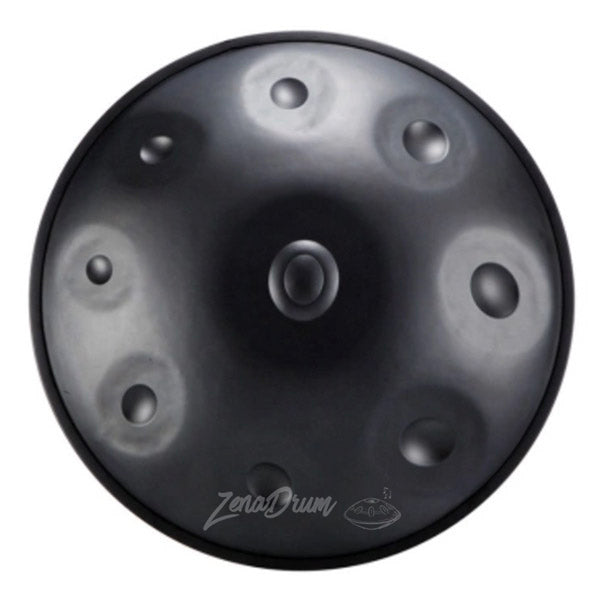
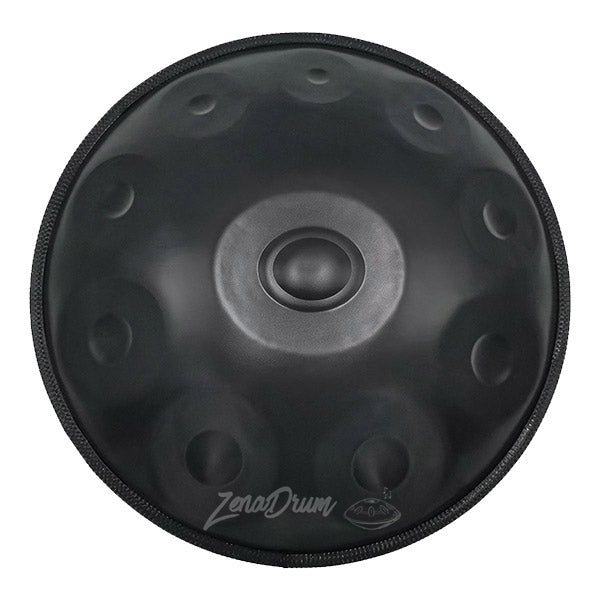
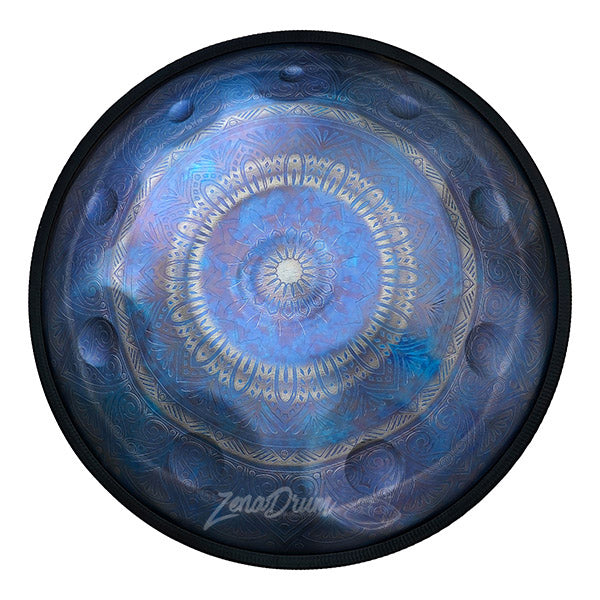
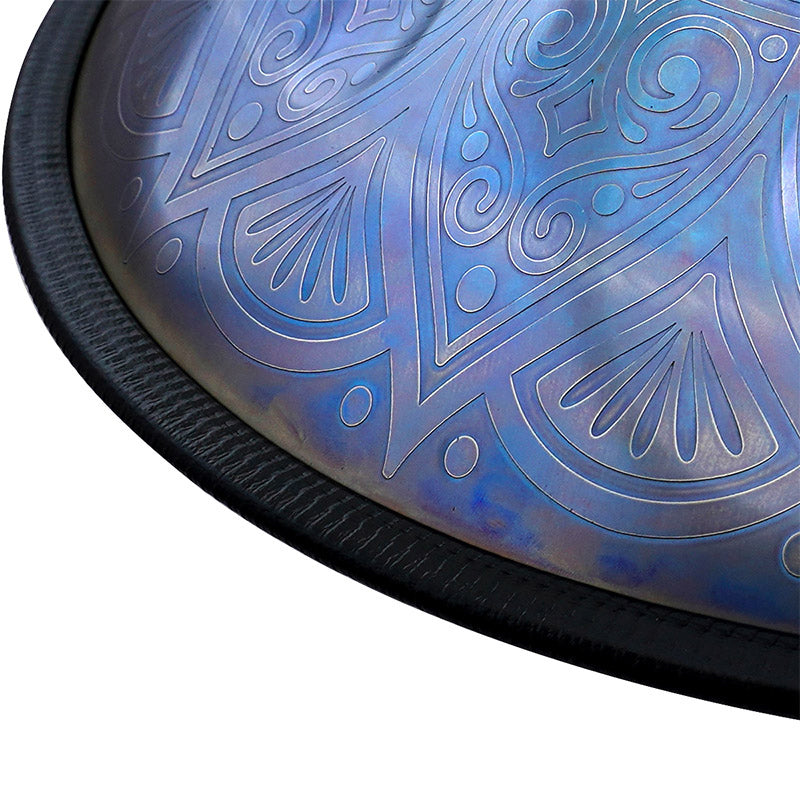
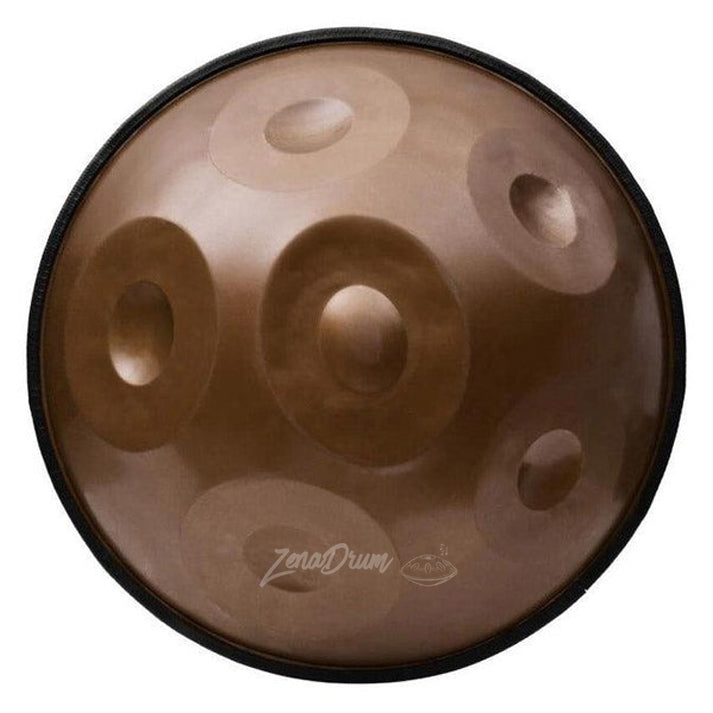
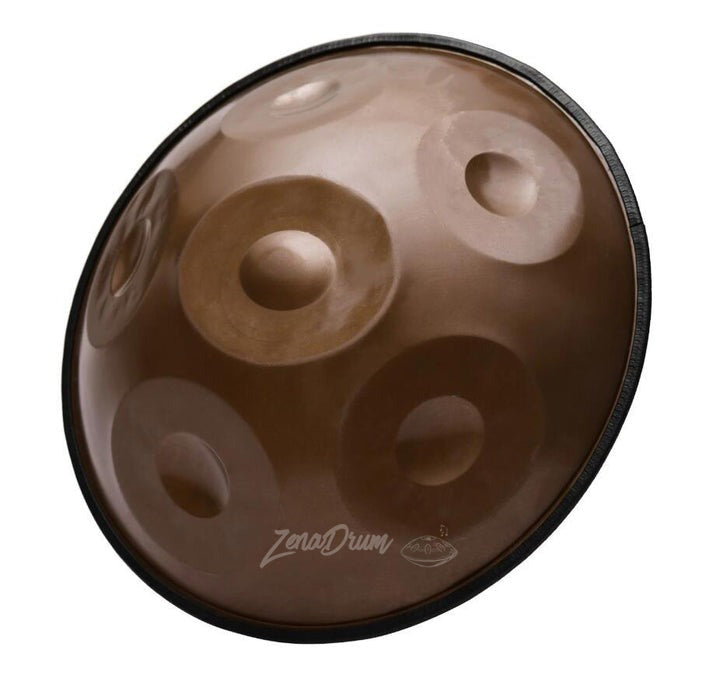
The F Major handpan is the radiant optimist of the handpan world. Tuned to a warm, luminous major key that sits slightly lower than C Major, the handpan F Major scale produces melodies that feel sunlit, welcoming, and effortlessly joyful — as though every note carries an invitation to smile. Its bright, uplifting energy makes it one of the most emotionally accessible scales available, resonating with players and listeners alike through pure, optimistic vibrations that feel universally positive. At Healing Sounds, our F Major handpan for sale collection includes models in stainless steel, nitrided steel, and ember steel, with note counts ranging from 9 to 14 and both 432 Hz and 440 Hz tuning options to match your playing context.
Among the major-key handpans, the F Major occupies a sweet spot between the crystalline brightness of C Major and the deeper warmth of lower-pitched scales. Its fundamental frequency gives it a slightly warmer, richer quality than C Major while retaining the unmistakable optimism of a major tonality. This balanced warmth is why the F Major has become a favorite for outdoor performances, garden gatherings, wellness retreats, and any setting where the music's purpose is to elevate mood and foster connection among listeners.
Whether you are a performer seeking a scale that captivates audiences instantly, a music therapist looking for an uplifting complement to your minor-key instruments, or a creative musician drawn to radiant major tonalities, this guide will help you understand the F Major handpan's unique qualities and choose the ideal model from our complete handpan collection.
The F Major Handpan Scale: Warmth, Brightness, and Natural Optimism
A standard F Major handpan features a central Ding tuned to F3, with surrounding tone fields arranged in the natural major pattern: F, G, A, Bb, C, D, E. The inclusion of Bb (B-flat) as the fourth degree distinguishes the F Major from the C Major and gives it a slightly warmer, rounder quality. In a 9-note configuration, the layout spans a full octave of the F major scale, providing enough range for complete melodies and satisfying musical phrases.
The emotional character of the F Major is often described as radiant and pastoral. Classical composers historically chose F Major for pieces evoking nature, pastoral scenes, and gentle happiness — and the handpan translates that same character into a percussion context with remarkable fidelity. Each strike on an F Major tone field releases a warm fundamental with bright overtones that shimmer and decay gracefully, creating an acoustic experience that feels both grounding and elevating simultaneously.
F Major vs C Major: Two Major Scales, Two Distinct Personalities
Players considering a major-key handpan often debate between the F Major and the C Major. While both deliver uplifting, joyful tonalities, their personalities differ in important ways:
| Characteristic | F Major Handpan | C Major Handpan |
|---|---|---|
| Pitch Range | Slightly lower — F3 fundamental | Higher — C3/C4 fundamental |
| Tonal Warmth | Warmer, richer, more rounded | Brighter, more crystalline |
| Emotional Feel | Pastoral, radiant, gently joyful | Open, pure, exuberantly cheerful |
| Outdoor Projection | Excellent — warm tones carry well | Excellent — bright tones cut through |
| Music Theory | One flat (Bb) | No sharps or flats |
| Best For | Outdoor events, garden sessions, retreats | Ensemble play, studio, jam sessions |
Owning both an F Major and a C Major handpan gives you two complementary voices within the major-key palette. Playing them together creates a rich harmonic landscape where the F Major provides warm, grounded phrases and the C Major adds sparkling upper-register melodies. This pairing is particularly effective at festivals, wellness retreats, and concerts where sustained positive energy is the musical goal.
F Major vs G Major: Brightness with Different Weight
Another common comparison involves the F Major and the G Major. The G Major handpan sits higher in pitch, producing a lighter, more buoyant quality that feels celebratory and effervescent. The F Major, by contrast, delivers its brightness with slightly more body and warmth — its lower fundamental gives each note a fuller resonance that lingers in the air. Players who want a bright handpan with substantial tonal weight tend to gravitate toward the F Major, while those seeking a sparkling, dance-like energy often prefer the G Major. For weddings and outdoor ceremonies, the F Major's warm radiance provides an elegant, emotionally rich soundtrack without overwhelming spoken vows or quiet moments, whereas the G Major excels during upbeat reception celebrations.
The F Major Handpan in Outdoor Performance and Social Settings
No handpan scale suits outdoor playing quite like the F Major. Its warm, projecting tone carries beautifully through open air without the harshness that some brighter instruments develop outdoors. The F Major's natural optimism creates an inviting sonic atmosphere that draws people together — making it the ideal instrument for park performances, beach sessions, rooftop gatherings, garden parties, and festival stages.
Street Performance and Busking
Buskers who play F Major handpans consistently report strong audience engagement. The scale's warmth and positivity create an approachable sound that invites people to stop, listen, and linger. Unlike more contemplative scales that reward silent, focused attention, the F Major communicates its emotional message at a distance — passersby feel its positivity before they consciously identify the instrument. For practical advice on performing with handpans, review our advanced playing techniques guide.
Wellness Retreats and Group Gatherings
Retreat facilitators and event organizers increasingly request F Major handpans for opening ceremonies, transition moments, and closing circles. The scale's uplifting character helps set a positive, open-hearted tone for group experiences without the emotional intensity of minor keys. In yoga retreat settings, an uplifting handpan like the F Major played during morning sessions creates an energizing backdrop that prepares participants for active, joyful engagement with the day ahead — a different function than the deeply calming role a G Minor handpan plays in evening wind-down sessions. Wedding musicians also favor the F Major for ceremony prelude music and cocktail-hour ambiance, as its warm optimism conveys celebration without competing with conversation. Practitioners of positive affirmation and gratitude journaling find that playing an F Major handpan during their practice reinforces the emotional intention behind each affirmation, anchoring uplifting thoughts in a tangible, resonant sound experience.
Combining the F Major with Healing Instruments
While the F Major is not primarily a healing instrument in the traditional sense, it serves a specific therapeutic role: cultivating positive emotional states. Sound therapists working with clients who need energetic uplift — combating low mood, emotional stagnation, or seasonal affective patterns — sometimes choose the F Major precisely because its radiant tonality encourages movement, openness, and emotional lightness.
The F Major pairs effectively with bright crystal singing bowls, particularly those tuned to the F or C frequency, creating a harmonically unified yet texturally varied soundscape. Tongue drums in complementary major keys add gentle rhythmic support, while tuning forks provide precise harmonic accents. Explore how other musicians blend instruments in our top handpan artists feature.
Choosing Your F Major Handpan: Material, Configuration, and Care
Selecting the right F Major handpan means matching the instrument's natural warmth with a steel material and note count that serve your playing context.
Steel Material Choices
Stainless steel is the practical choice for F Major players who perform outdoors frequently. Its corrosion resistance eliminates the need for constant oiling, and its bright tonal contribution balances the F Major's natural warmth, creating a clear, projecting voice. Nitrided steel deepens the F Major's warmth even further, producing an intimate, organic tone that excels in close-range indoor settings and studio recordings. Ember steel offers a balanced tonal profile suited to players who split their time between indoor and outdoor venues.
Note Count and Playing Level
A 9-note F Major handpan delivers the complete scale across one octave — sufficient for beautiful melodies, satisfying jam sessions, and enjoyable practice. Players seeking wider melodic range benefit from 10 to 12-note models that extend into a second octave and unlock harmonically richer compositions. For performers and recording artists, 14-note configurations provide near-complete coverage of the F Major tonality across two full octaves. Review our full note count options: 6-note, 9-note, 10-note, 12-note.
For beginners, the 9-note F Major is the recommended starting point. Intermediate players will appreciate the additional melodic freedom of a 10 or 12-note model, while professionals may choose higher configurations for performance and recording versatility.
Maintenance and Tuning
F Major handpans follow the same care regimen as all quality handpans. Clean with a microfiber cloth after every session, oil nitrided and ember steel models biweekly, and store in a padded case at moderate humidity. For complete maintenance instructions, read our handpan care guide. Both 432 Hz and 440 Hz options are available — choose 440 Hz for ensemble compatibility or 432 Hz for standalone therapeutic and meditative contexts.
Discover more handpan scales and collections:
- By Scale: D Minor · G Minor · C Major · Celtic Minor · Kurd
- By Skill Level: Beginner Handpans · Intermediate · Professional
- By Material: Stainless Steel · Nitrided Steel · Ember Steel
- Related Instruments: Tongue Drums · Singing Bowls · Tuning Forks
Explore handpan resources from our blog:
- Choosing the Right Handpan for Beginners
- Ultimate Guide to Buying Handpans Online
- Exploring the Handpan: Origins and Evolution
- Handpan Music: Benefits and Insights
Frequently Asked Questions About F Major Handpans
An F Major handpan produces warm, radiant, and gently joyful tones. It sits slightly lower in pitch than the C Major, giving it a richer, more rounded quality while maintaining the unmistakable optimism of a major key. Players and listeners often describe the F Major sound as pastoral and sunlit — it evokes images of open fields, warm afternoons, and natural beauty. The scale resolves naturally, so melodies feel complete and emotionally affirming. This bright handpan tonality makes the F Major especially appealing for outdoor settings where its uplifting resonance fills open spaces with positive energy.
The F Major is one of the best handpan scales for outdoor performance. Its warm, projecting tone carries well through open air without becoming harsh or tinny at a distance. The scale's inherently positive emotional character connects with audiences quickly, making it particularly effective for busking, festival stages, park performances, and garden gatherings. Weddings and outdoor ceremonies also benefit from the F Major's radiant warmth, as it provides elegant musical ambiance that complements rather than overwhelms spoken moments. Pairing an F Major handpan with a stainless steel construction adds corrosion resistance for worry-free outdoor playing in any weather conditions.
The F Major and D Minor occupy opposite emotional territories. The D Minor produces melancholic, introspective, contemplative tones that invite inward reflection and quiet meditation. The F Major radiates optimism, warmth, and joyful energy that encourages outward expression and positive connection. Neither is objectively better — they serve different musical and emotional purposes. Many experienced players own both, using the D Minor for solo meditation and the F Major for social performance and energizing group sessions. Together, the two scales give a player complete emotional range, from deeply reflective pieces to bright, celebratory compositions.
Absolutely. The F Major scale is beginner-friendly because its major intervals produce naturally harmonious combinations — every note works well with every other note, so exploratory playing always sounds pleasing. The main consideration is that fewer online tutorials are written specifically for the F Major compared to the D Kurd scale. However, fundamental handpan techniques (finger positioning, striking, ghost notes, harmonics) are identical across all scales. If you are drawn to bright, uplifting music and plan to learn primarily through personal exploration rather than structured tutorials, the F Major is an excellent first instrument.
The F Major handpan pairs naturally with other major-key instruments. A C Major handpan creates a rich duet where both instruments share harmonic territory while offering distinct voices. Crystal singing bowls tuned to F or C frequencies blend seamlessly with the F Major handpan's resonance. Tongue drums in compatible major keys add rhythmic warmth, and acoustic guitars in standard tuning can accompany F Major handpan melodies without transposition. For vocal accompaniment, singers find the F Major a comfortable key that sits well in most vocal ranges.