
handpan G minor
4 products
Showing 1 - 4 of 4 products
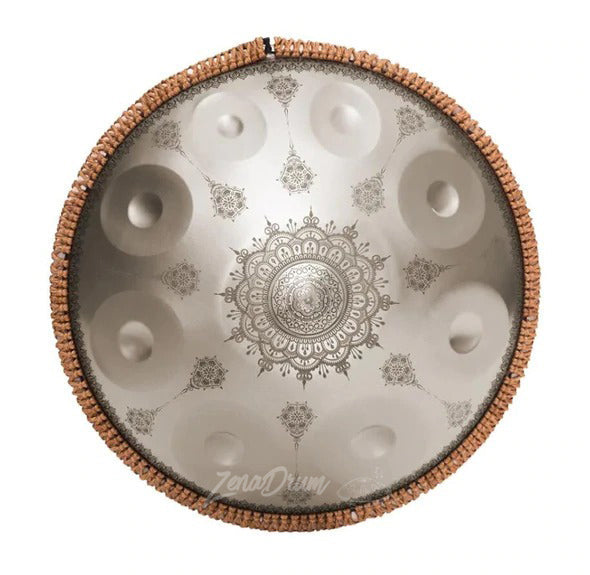
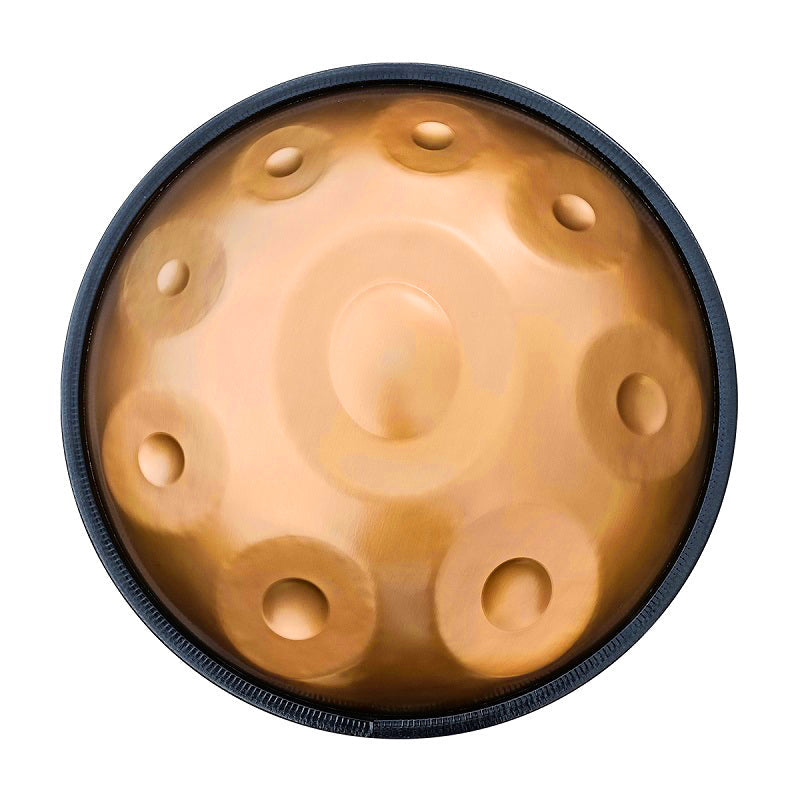
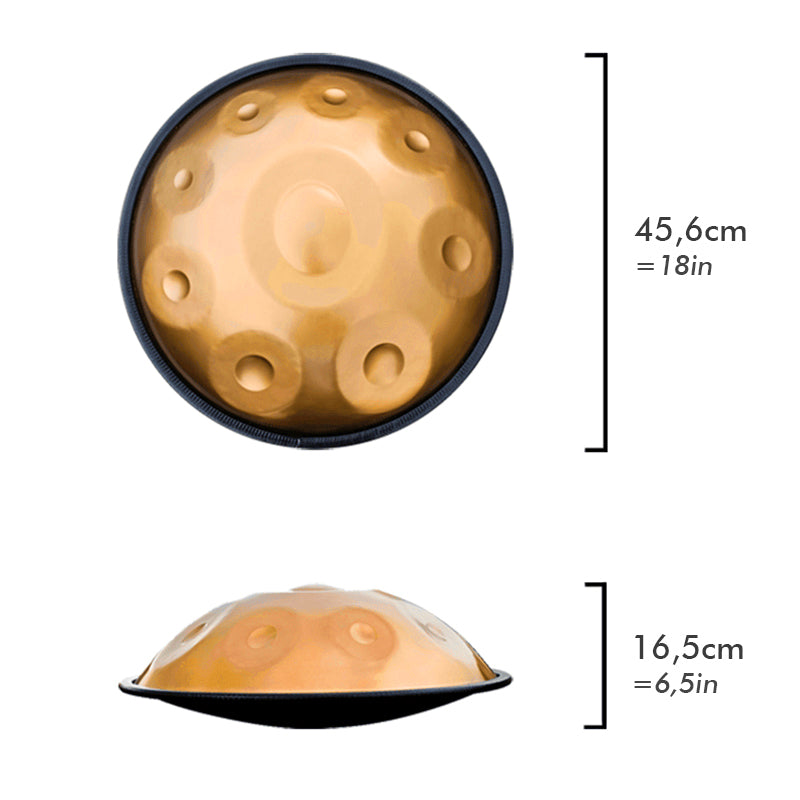
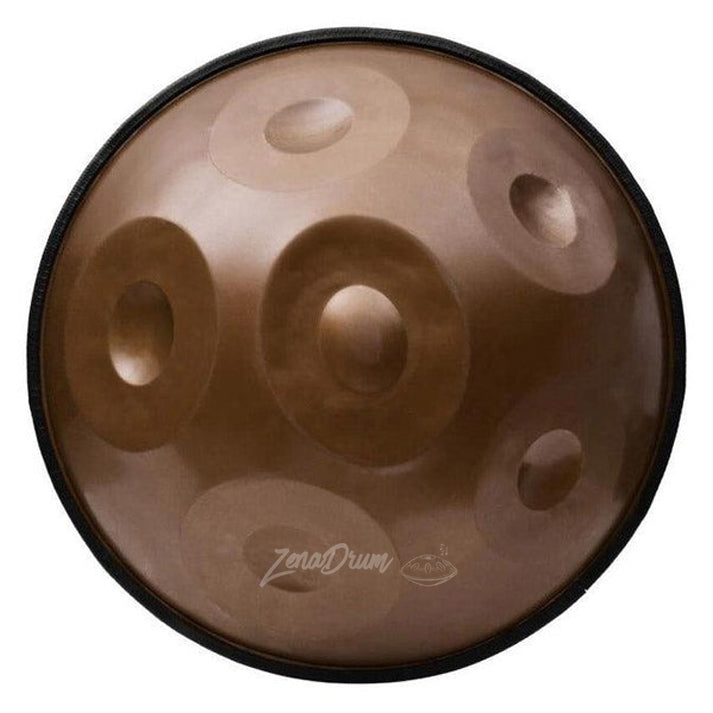
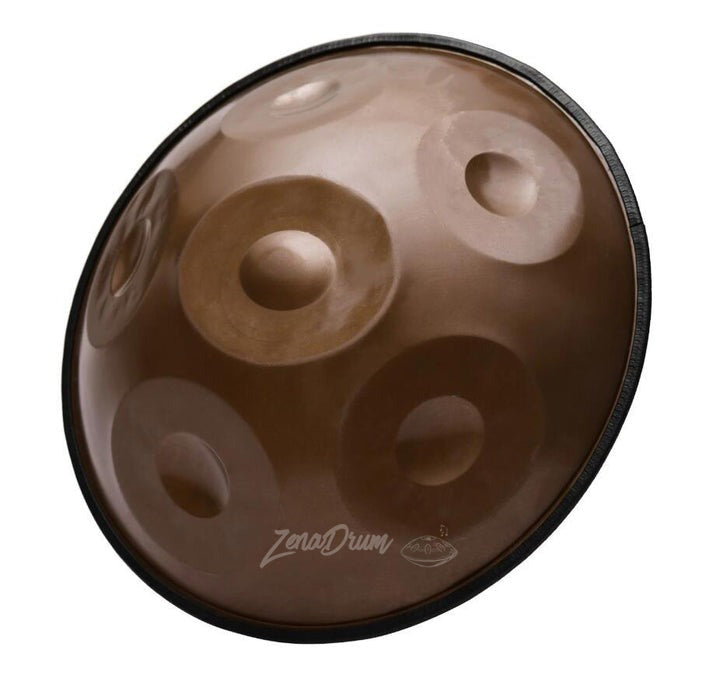
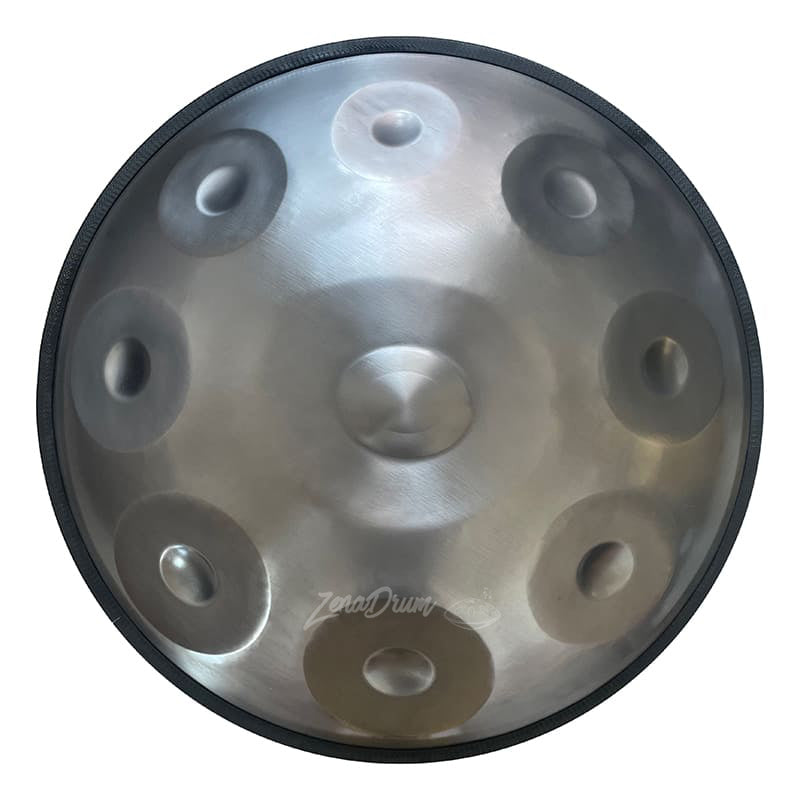
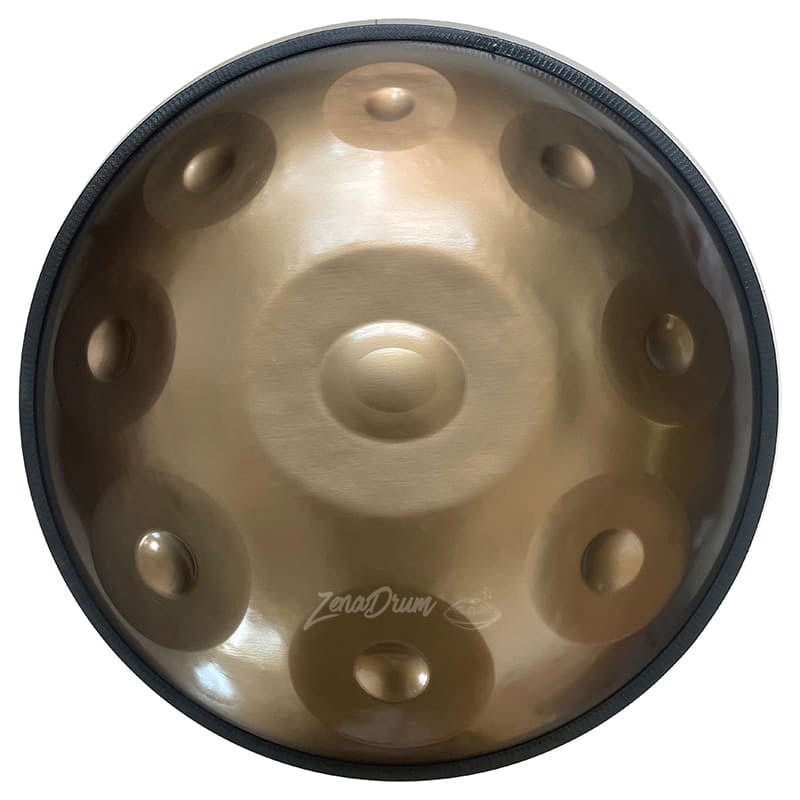
The G Minor handpan produces one of the deepest, warmest voices in the handpan family. Tuned lower than the popular D Minor, the G Minor scale delivers rich, resonant bass tones that seem to vibrate through your entire body — making it the preferred scale for sound healing practitioners, meditation guides, and anyone drawn to grounding, immersive sonic experiences. At Healing Sounds, our G Minor handpan collection features instruments crafted from premium steel in multiple note configurations, with both 432 Hz and 440 Hz tuning options available.
Where brighter scales like C Major and F Major project cheerful optimism, the G Minor handpan inhabits a different emotional territory entirely. Its deep fundamental pitch creates an enveloping, almost gravitational pull that draws listeners inward. The minor tonality adds layers of emotional complexity — contemplative without being somber, serious without being heavy. This unique character has made the G Minor a favorite among therapists who run sound baths, breathwork facilitators seeking grounding frequencies, and ambient musicians building atmospheric compositions.
Whether you are expanding your handpan collection with a lower-voiced complement to a D Minor instrument, or choosing your first handpan specifically for therapeutic work, this guide covers everything you need to know about the G Minor scale — its note structure, its applications in sound healing, and how it compares to other popular tunings in our complete handpan collection.
The G Minor Handpan Scale: Deep Tones, Rich Overtones, and Emotional Depth
The standard G Minor handpan features a central Ding tuned to G3, with surrounding tone fields arranged in a natural minor pattern that typically includes Bb3, C4, D4, F4, G4, A4, Bb4, and C5 in a 9-note configuration. This note selection creates a scale that is both melodically complete and harmonically rich — every interval within the layout produces consonant combinations that flow naturally from one to the next.
What distinguishes the G Minor from higher-pitched scales is the way its lower fundamental frequency interacts with the steel shell. The deeper pitch generates longer sustain and broader overtone patterns, meaning each strike sends waves of harmonic content through the air that linger and blend with subsequent notes. This sustained, overlapping resonance is precisely what makes the G Minor so effective for therapeutic and meditative applications — the sound fills a room in a way that higher-pitched instruments cannot replicate.
G Minor vs D Minor: Understanding the Key Differences
Players often ask how the G Minor compares to the D Minor (D Kurd), the world's most popular handpan scale. The following table highlights the key differences:
| Characteristic | G Minor Handpan | D Minor Handpan |
|---|---|---|
| Pitch Range | Lower — G3 fundamental | Higher — D3 fundamental |
| Emotional Character | Deep, warm, grounding, meditative | Melancholic, introspective, versatile |
| Sustain | Longer — deeper notes ring out more | Medium-long — balanced sustain |
| Best Application | Sound healing, relaxation, ambient | All-around play, tutorials, performance |
| Online Resources | Growing — fewer tutorials available | Extensive — largest tutorial library |
| Beginner Suitability | Good — forgiving scale layout | Excellent — most recommended for starters |
The G Minor is not a replacement for the D Minor — it is a complement. Many experienced players own both scales, using the D Minor for melodic exploration and performance, and the G Minor for therapeutic sessions and deep meditation. If you are choosing your first handpan and your primary interest is sound healing, the G Minor may actually serve you better than the D Minor despite the latter's greater overall popularity. If you want the most versatile first instrument with the most learning resources, the D Minor remains the standard recommendation.
G Minor Handpan for Sound Healing: Therapeutic Applications and Instrument Pairings
The G Minor handpan has become a cornerstone instrument in modern sound therapy practices. Its deep, grounding frequencies align with the lower energy centers recognized in various healing traditions, making it particularly effective for sessions focused on relaxation, stress release, and emotional processing. Sound therapists report that the G Minor's low fundamental pitch helps clients transition from active mental states into the deeply relaxed brainwave patterns associated with restorative healing.
How Sound Therapists Use the G Minor Handpan
In a typical sound bath session, the therapist begins with slow, deliberate strikes on the Ding — the G3 root note — allowing its deep resonance to establish a sonic foundation. Subsequent notes are introduced gradually, building a slow-moving harmonic progression that guides participants from surface-level awareness into deeper states of relaxation. The G Minor scale's natural tendency to produce overlapping overtones means that even simple playing patterns create complex, immersive sonic textures.
Key therapeutic techniques specific to the G Minor handpan include:
- Root anchoring — Repeated Ding strikes establish a steady, grounding pulse that helps clients feel centered and secure
- Slow ascending patterns — Gradually moving from lower to higher tone fields mirrors the sensation of rising from deep rest to gentle awareness
- Sustained drone play — Striking two adjacent tone fields in alternation creates a pulsing, drone-like effect that deepens meditative states
- Breath synchronization — Timing strikes to match a slow breathing rhythm (4 to 6 breaths per minute) supports parasympathetic nervous system activation
Pairing the G Minor Handpan with Singing Bowls and Other Healing Instruments
The G Minor handpan pairs beautifully with singing bowls tuned to complementary frequencies. A Tibetan singing bowl in the G or D range creates a harmonic dialogue with the handpan, where the sustained drone of the bowl blends with the melodic movement of the handpan. Crystal singing bowls tuned to specific chakra frequencies add another therapeutic dimension, allowing practitioners to target specific energy centers while the handpan provides melodic structure.
Tuning forks in the G frequency range offer precise harmonic accents that cut through the handpan's rich overtones, adding clarity and focus to therapeutic sessions. For rhythmic grounding, a tongue drum in a compatible minor key creates a warm percussive layer beneath the handpan melody. This combination of instruments is increasingly popular in wellness centers, yoga studios, and private healing practices. For guidance on building your sound healing toolkit, explore our handpan music benefits and insights article.
Selecting and Caring for Your G Minor Handpan
When choosing a G Minor handpan, consider how the steel material will interact with the scale's naturally deep voice. Stainless steel adds brightness and extended sustain to the G Minor's warm foundation, creating a balanced tone that projects well in larger spaces — ideal for group sound baths and outdoor sessions. Nitrided steel amplifies the warmth and organic quality of the G Minor, producing an intimately rich sound that excels in small-group or one-on-one therapeutic settings. Ember steel offers a versatile middle ground with moderate brightness and warm undertones.
For note count, a 9 or 10-note G Minor provides a complete melodic palette for sound healing and meditation. The focused layout keeps your playing intuitive and prevents the decision fatigue that can come with higher note counts during therapeutic sessions where simplicity supports the healing process. Advanced players and performers may benefit from 12-note or higher configurations that expand compositional possibilities. Browse our full range by note count: 9-note, 10-note, 12-note, and 14-note handpans.
Maintenance for a G Minor handpan follows the same principles as any quality steel instrument. Wipe down after every session, oil nitrided and ember steel models every two to four weeks, and store in a padded case away from temperature extremes. Our complete care guide covers all maintenance details. For display and playing comfort, consider a dedicated handpan stand that supports the instrument at the optimal height for seated or standing play.
Learning Resources for G Minor Handpan Players
While the G Minor has fewer dedicated tutorials than the Kurd scale, the growing community of G Minor players is producing an increasing volume of instructional content. Many fundamental techniques taught in D Minor tutorials translate directly to the G Minor — the finger positions, striking methods, and rhythmic patterns are identical; only the pitch changes. Begin with our beginner's playing guide and our intermediate playing tips, then apply those techniques to your G Minor instrument.
Explore more handpan scales and related instruments:
- By Scale: D Minor · C Major · F Major · Celtic Minor · Kurd
- By Skill Level: Beginner Handpans · Intermediate · Professional
- By Material: Stainless Steel · Nitrided Steel · Ember Steel
Continue learning about handpans:
- Handpan Drums: A Complete Guide
- Ultimate Guide to Buying Handpans Online
- Exploring the Handpan: Origins and Evolution
- Top Handpan Artists to Discover
Frequently Asked Questions About G Minor Handpans
The G Minor handpan is tuned lower than most popular handpan scales, with a G3 fundamental that produces deep, warm, resonant tones with extended sustain. This lower pitch range gives the G Minor a distinctly grounding quality that sets it apart from brighter scales like C Major or F Major. The natural minor tonality adds emotional depth and contemplative character, making the G Minor particularly well suited to sound healing, meditation, and ambient music. Its rich overtone structure means that even simple playing patterns create complex, immersive sonic textures.
Both scales use the natural minor interval pattern, but the G Minor sits in a lower pitch register with a G3 Ding compared to the D Minor's D3 Ding. This makes the G Minor deeper, warmer, and more physically resonant. D Minor is the most versatile handpan scale with the largest library of tutorials and community resources, while G Minor excels specifically in sound healing and meditation contexts where deep, grounding frequencies are valued. Many serious players own both and use each for different purposes.
A 9 or 10-note G Minor handpan is ideal for sound healing, meditation, and beginning players who want a focused, intuitive instrument. The limited note count keeps the playing surface uncluttered and supports the kind of slow, deliberate phrasing that therapeutic work demands. Intermediate and advanced players looking for wider melodic range should consider 12-note or 14-note configurations, which add notes in the upper register or on the bottom shell. For professional performance and complex composition, 17-note G Minor models provide the maximum creative freedom.
The G Minor is one of the most recommended handpan scales for sound healing applications. Its deep fundamental pitch and extended sustain create an enveloping sonic environment that promotes deep relaxation and parasympathetic nervous system activation. Sound therapists value the G Minor for its ability to ground listeners, help release tension, and guide participants into restorative brainwave states. The scale pairs exceptionally well with singing bowls and tuning forks, allowing practitioners to build layered therapeutic soundscapes for individual or group sessions.
The answer depends on your primary intended use. 440 Hz is the international concert pitch standard, making it the best choice if you plan to play alongside other musicians or standard-tuned instruments. 432 Hz is popular in the sound healing community because many practitioners find it produces a slightly warmer, more organic sound that feels naturally calming. On a G Minor handpan specifically, the 432 Hz tuning enhances the scale's already meditative quality, making it the preferred choice for therapists and solo practitioners. For maximum versatility, go with 440 Hz.