
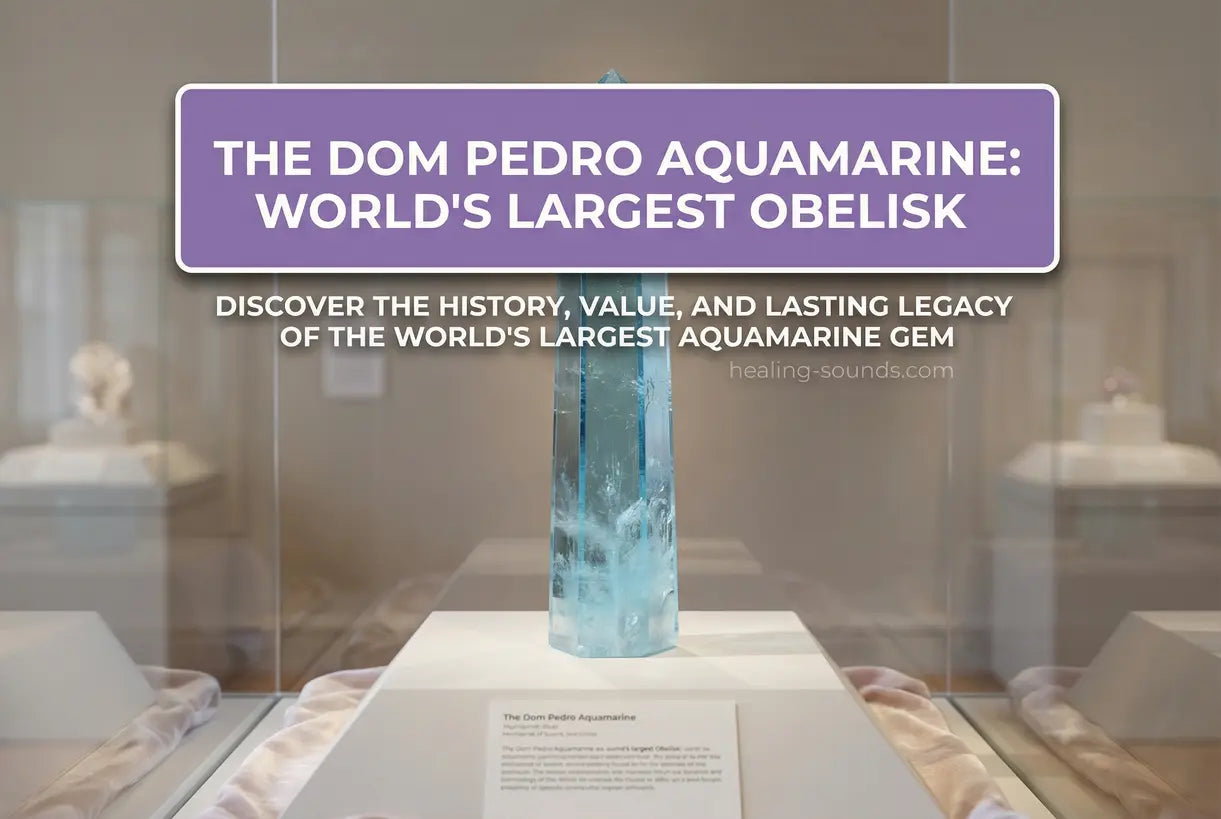
Imagine standing before a tower of crystallized ocean water, glowing with an intense blue-green light that seems to emanate from within. This is the Dom Pedro Aquamarine, a gemstone so legendary that it has redefined what is possible in the world of lapidary art. For crystal enthusiasts and gem collectors alike, this masterpiece represents the pinnacle of natural beauty meeting human ingenuity.
Mined from the rich earth of Brazil and sculpted into a breathtaking obelisk, the Dom Pedro is officially recognized as the world's largest aquamarine that has been cut and polished. Standing nearly 14 inches tall and weighing a staggering 10,363 carats, it is not merely a jewel but a historic monument to the mineral kingdom.
In this article, we will journey through the fascinating history of this Brazilian aquamarine, from its dramatic discovery to its transformation into an artistic wonder. You will learn about its immense value, the artist behind its unique shape, and why it now resides as a crown jewel in the Smithsonian's collection.
The Discovery of a Brazilian Giant
The story of the Dom Pedro Aquamarine begins in the late 1980s in the state of Minas Gerais, Brazil. This region is world-renowned for producing some of the planet's finest gemstones. Miners at the Pedra Azul mine unearthed a colossal aquamarine crystal originally weighing near 100 pounds. It was a discovery that sent shockwaves through the gemological world.
Unfortunately, the initial handling of the rough crystal was fraught with peril. As the story goes, the massive crystal was dropped and broke into three pieces. While two pieces were sold for jewelry production, the largest and finest piece was saved. This remaining segment, with its exceptional clarity and color, was destined for greatness, eventually becoming the aquamarine obelisk we admire today.
Named after Brazil's first two emperors, Dom Pedro I and Dom Pedro II, the stone carries the regal history of its homeland. Its survival and subsequent transformation highlight the rarity of such large, gem-quality mineral specimens.

Sculpting Light: The Munsteiner Cut
A stone of this magnitude required a cutter with equal vision. The rough crystal was transported to Idar-Oberstein, Germany, a historic center for gemstone cutting. There, it was placed in the hands of the renowned fantasy-cut artist, Bernd Munsteiner. Unlike traditional cutters who focus on retaining weight, Munsteiner was an artist who wanted to "paint with light."
Munsteiner spent months studying the crystal before making a single cut. His goal was to release the inner brilliance of the stone without sacrificing its majestic stature. The result was a fantasy cut he named Ondas Maritimas, or "Waves of the Sea." This unique faceting pattern on the reverse side of the aquamarine obelisk reflects light in a way that mimics the sun dancing on ocean water.
This artistic approach is what separates the Dom Pedro from other large gems. It is not just a rock; it is a sculpture composed of light and beryllium, showcasing the deep, saturated blue-green hues characteristic of fine Brazilian aquamarine.

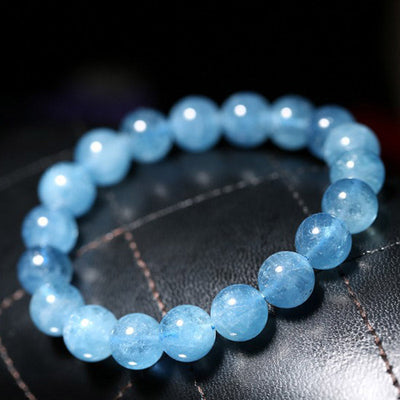
Aquamarine Bracelet Natural 14-16cm Wrist Peace Jewelry
$24.90 $35.90
Bring home the beauty of aquamarine with this natural bracelet, inspired by the serenity of the Dom Pedro obelisk.
Explore ProductWhy is the Dom Pedro Aquamarine Priceless?
One of the most common questions asked by enthusiasts is regarding the Dom Pedro aquamarine value. While it is difficult to place a precise monetary figure on a one-of-a-kind artifact, experts agree that it is effectively priceless. Its value stems not just from its carat weight, but from its provenance, artistic significance, and unrepeatable nature.
In the open market, high-quality aquamarine can command high prices per carat, especially for stones with deep saturation like the Dom Pedro. However, because this piece is a unique work of art housed in a national museum, it transcends standard market valuation. It is considered a national treasure, comparable to the Hope Diamond in terms of its importance to the world of gems.




A Smithsonian Treasure
For years, the location of this magnificent gem was a quiet secret, but today, everyone asks: Where is the Dom Pedro Aquamarine? In 2011, largely due to the generosity of donors Jane Mitchell and Jeffery Bland, the obelisk was gifted to the Smithsonian Institution’s National Museum of Natural History in Washington, D.C.
It now stands as a centerpiece in the Janet Annenberg Hooker Hall of Geology, Gems, and Minerals. Displayed just 30 feet from the Hope Diamond, the Dom Pedro holds its own, drawing millions of visitors who come to gaze into its aquatic depths. The museum setting allows the public to appreciate the scale and clarity of the world's largest aquamarine firsthand.
To see the scale of this magnificent gem and learn more about its journey to the museum, watch the video below.
The Smithsonian ensures that this masterpiece remains accessible to the world, serving as an educational tool about mineralogy and a source of inspiration for future gem cutters and jewelers.

Gemological Specifications and Features
From a scientific perspective, the Dom Pedro is a marvel of the hexagonal crystal system. Aquamarine is the blue variety of the mineral beryl, which also includes emerald and morganite. The specific blue-green color of the Dom Pedro is due to traces of iron within the crystal structure.
| Feature | Detail |
|---|---|
| Total Weight | 10,363 carats (approx. 4.6 lbs or 2 kg) |
| Height | Approximately 14 inches (35 cm) |
| Cut Style | Fantasy Cut (Obelisk) by Bernd Munsteiner |
| Origin | Pedra Azul Mine, Minas Gerais, Brazil |
The internal channels and "tubes" often found in beryl were carefully navigated during the cutting process. Munsteiner used these natural inclusions to his advantage, ensuring they did not detract from the stone's transparency. The result is a gem that appears to hold a liquid light, mesmerizing anyone who looks closely at its facets.
For more detailed scientific data on beryl varieties, you can visit the Smithsonian's Gem Collection overview or read research from the Gemological Institute of America (GIA).

Embrace the Energy of Aquamarine

Experience the calming energy of aquamarine and celebrate its legendary status with this symbolic butterfly bracelet. Learn more ➔

Amethyst 8.8cm Nine-Tailed Fox Animal Figurine
$45.90
$65.90
Display the allure of iconic aquamarine with this stunning hand-carved aquamarine fox figurine—a true collector’s item. Learn more ➔
Conclusion
The Dom Pedro Aquamarine is more than just a statistic in the record books; it is a testament to the beauty hidden within the Earth and the skill required to reveal it. From the mines of Brazil to the halls of the Smithsonian, its journey captures the imagination of anyone who values rare beauty.
Whether you are a seasoned collector or simply an admirer of natural history, the legend of this aquamarine obelisk serves as a reminder of nature's grandeur. While we may not all own a 10,000-carat gem, we can still appreciate the serene energy and captivating color that aquamarine brings into our lives through smaller, yet equally beautiful, pieces.
Frequently Asked Questions about the Dom Pedro Aquamarine
The Dom Pedro Aquamarine is currently on permanent display at the Smithsonian National Museum of Natural History in Washington, D.C. It resides in the Janet Annenberg Hooker Hall of Geology, Gems, and Minerals.
The Dom Pedro Aquamarine is considered priceless due to its rarity, historical significance, and unique artistic cut. While its raw material value would be immense, its status as a museum artifact makes it invaluable.
The value of a 1-carat aquamarine varies widely based on color and clarity. Lighter stones may sell for $10 to $100 per carat, while fine, deeply saturated blue stones (like the Santa Maria variety) can command prices over $1,000 per carat.
Generally, aquamarine is safe for everyone. However, in astrological traditions, some believe that if the planet Saturn or Venus is malefic in a person's chart, they should consult an astrologer before wearing it. Physically, it is a durable stone suitable for most jewelry.
It is unique because it is the largest cut aquamarine in the world, weighing 10,363 carats. Its distinct obelisk shape and the "Ondas Maritimas" fantasy cut by Bernd Munsteiner set it apart from traditional gemstone cuts.


