
For crystal enthusiasts and jewelry lovers alike, there is a profound allure in holding a stone forged by the earth over millions of years. When it comes to the serene blue hues of the sea-water stone, knowing the difference between natural aquamarine and its lab-grown counterparts is essential for ensuring you possess a genuine piece of nature's history. Whether you are seeking a stone for its spiritual resonance or its timeless beauty, understanding the origins of your gem empowers you to make choices that align with your values.
While synthetic options mimic the chemical structure of the real gem, a real aquamarine stone carries unique "fingerprints" from its formation process that science struggles to replicate perfectly. This identification guide will walk you through the subtle nuances, visual cues, and practical tests to help you distinguish between a natural treasure and a lab-created alternative, ensuring your jewelry collection remains authentic and meaningful.
What is Natural Aquamarine?
Natural aquamarine is a variety of the mineral beryl, treasured for its delicate blue to blue-green color reminiscent of ocean waters. Formed deep within the Earth's crust in granite pegmatites, these stones obtain their color from trace amounts of iron. Because they are created by geological processes, no two natural stones are exactly alike. They often contain microscopic inclusions—tiny internal characteristics—that serve as a badge of authenticity.
In contrast, lab grown aquamarine (often labeled as synthetic or hydrothermally grown) is created in controlled environments. While these stones share the same chemical and physical properties as natural ones, they are often "too perfect," lacking the unique internal flaws and character that define a genuine earth-mined gem.

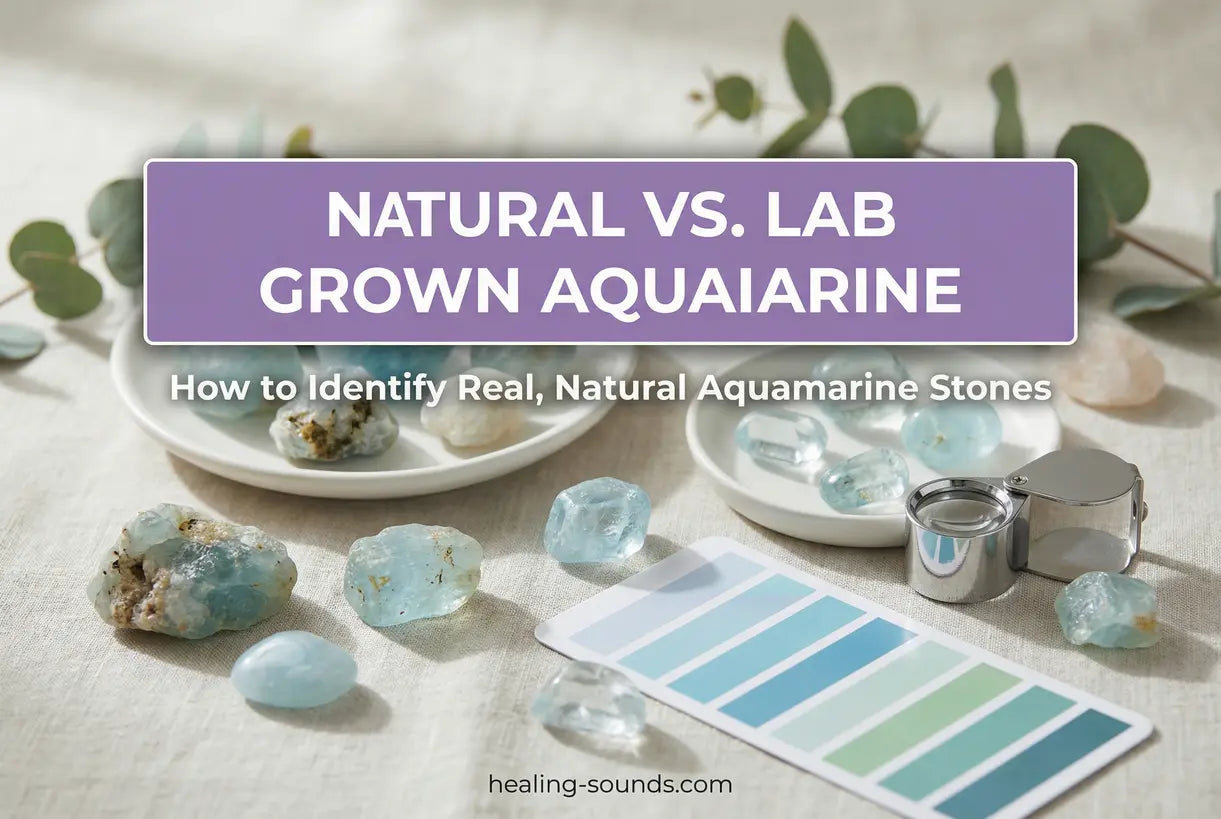
Visual guide comparing the key characteristics of natural versus lab-created aquamarine stones.
Key Differences: Natural vs. Synthetic Aquamarine
To the untrained eye, a high-quality synthetic stone can look identical to a natural one. However, specific characteristics distinguish the two. Understanding these differences is the first step in your identification guide journey.
1. Clarity and Inclusions
The most telling sign of a natural aquamarine stone is its internal landscape. While aquamarine is known for being relatively clean compared to emeralds, natural stones often have faint internal inclusions. These might look like tiny feathers, liquid-filled tubes, or "rain" effects. Lab-grown stones, conversely, are typically flawless or may contain gas bubbles—a feature never found in natural crystal formation.
2. Color Saturation
Nature rarely produces neon-bright colors in aquamarine without a high price tag. Natural stones usually exhibit softer, pastel blue or greenish-blue hues. If a stone is an intensely vivid blue but is sold at a moderate price, it is likely synthetic or distinctively treated (often Spinel or topographic glass masquerading as aquamarine).

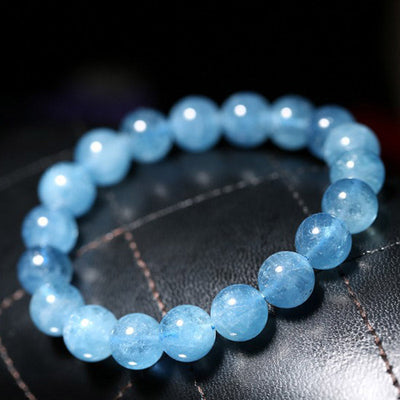
Aquamarine Bracelet Natural 14-16cm Wrist Peace Jewelry
$24.90 $35.90
Highlight your crystal knowledge with this natural aquamarine bracelet, a beautiful example of authentic gemstone jewelry.
Explore ProductHow to Tell if My Aquamarine is Real?
If you have a piece of jewelry and are wondering, "How do I tell if my aquamarine is real?", there are several visual and physical tests you can perform at home before consulting a professional.
The Magnification Test
Using a jeweler's loupe or a magnifying glass (10x zoom is standard), observe the stone under good lighting. Look for bubbles. Round or oval gas bubbles are a hallmark of glass or synthetic manufacturing. Natural aquamarine will never have round bubbles; instead, you might see long, hollow tubes or rectangular inclusions running parallel to the crystal's axis.

A close visual inspection reveals the subtle internal differences between natural inclusions and synthetic clarity.
The Touch Test
Gemstones have a different thermal conductivity than glass or plastic. A real aquamarine stone should feel cool to the touch when you first pick it up, even in a warm room. If the stone warms up immediately or feels room temperature upon contact, it may be glass or plastic.
Hardness and Scratches
Aquamarine ranks 7.5 to 8 on the Mohs scale of mineral hardness. This means it is quite durable and should not be easily scratched by common items like a steel knife or glass. If your stone has multiple surface scratches or rounded facet edges, it is likely a softer imitation like glass.
Is Natural Aquamarine Valuable?
The question "Is natural aquamarine valuable?" depends largely on the "4 Cs"—Color, Clarity, Cut, and Carat weight—but origin plays a massive role. Generally, natural aquamarine commands a higher price than lab-grown varieties due to its rarity and the cost of mining. Deep blue stones, often called "Santa Maria" aquamarine, are the most prized and valuable.
Beyond monetary worth, many collectors value the energetic properties of natural stones. In crystal healing communities, it is believed that natural crystals, having formed within the earth, carry a grounded, authentic vibrational frequency that synthetic stones may lack. For a deeper dive into the properties of gemstones, resources like the Gemological Institute of America (GIA) provide extensive scientific data.


Advanced Identification: When to Consult a Pro
While home tests are helpful, they are not foolproof. Manufacturers of lab grown aquamarine are becoming increasingly sophisticated. Hydrothermal aquamarines can mimic the physical properties of natural beryl so closely that standard hardness or thermal tests yield the same results.

Professional gemological tools are sometimes required for definitive identification of high-quality synthetics.
Discover Authentic Aquamarine Jewelry

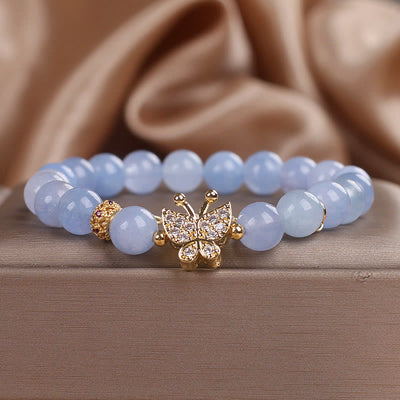
Spot a real aquamarine with this carefully crafted bracelet, designed to showcase natural blue clarity and calming beauty. Learn more ➔

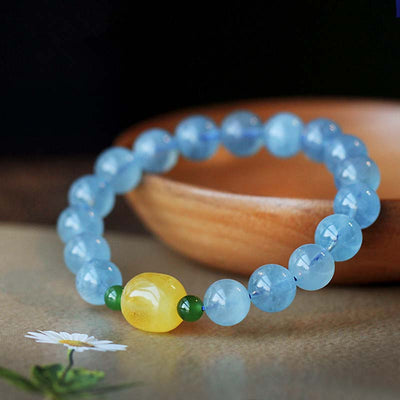
Wear genuine aquamarine: this bracelet’s unique blue beads help you sense and compare true natural stones at a glance. Learn more ➔
Conclusion
Distinguishing between natural vs. lab grown aquamarine allows you to appreciate the unique story behind every gem. While lab-grown stones offer an affordable and flawless alternative, the imperfect beauty, coolness, and energetic history of a natural aquamarine are irreplaceable for many collectors. By paying attention to inclusions, color, and thermal properties, you can shop with confidence, ensuring that your jewelry not only looks stunning but also resonates with the authentic power of the earth.
Frequently Asked Questions about Natural Aquamarine Identification
Yes, natural aquamarine is valuable, particularly stones with a deep, saturated blue color and good clarity. Its value is driven by its scarcity, origin, and the complexity of mining, unlike lab-grown versions which are mass-produced.
Natural aquamarine is a blue-to-green variety of the mineral beryl, formed geologically within the earth's crust over millions of years. It obtains its color from trace amounts of iron present during its formation.
You can check for natural inclusions (flaws) using a magnifying glass, as bubbles indicate glass or synthetic material. Also, a real stone should feel cool to the touch and should not be easily scratched by a steel knife.
The price of real aquamarine varies widely based on quality. Lighter, paler stones can be relatively affordable, ranging from $50 to $100 per carat, while rare, deep blue "fine" quality gems can cost over $600 to $1,000 per carat.
The primary difference is origin: one is mined from the earth, and the other is created in a factory. Visually, lab-grown stones are often "too perfect" or have gas bubbles, while natural stones have unique inclusions and typically softer, less neon colors.


