
Handpans
0 products
No products
Your criteria did not match any products.
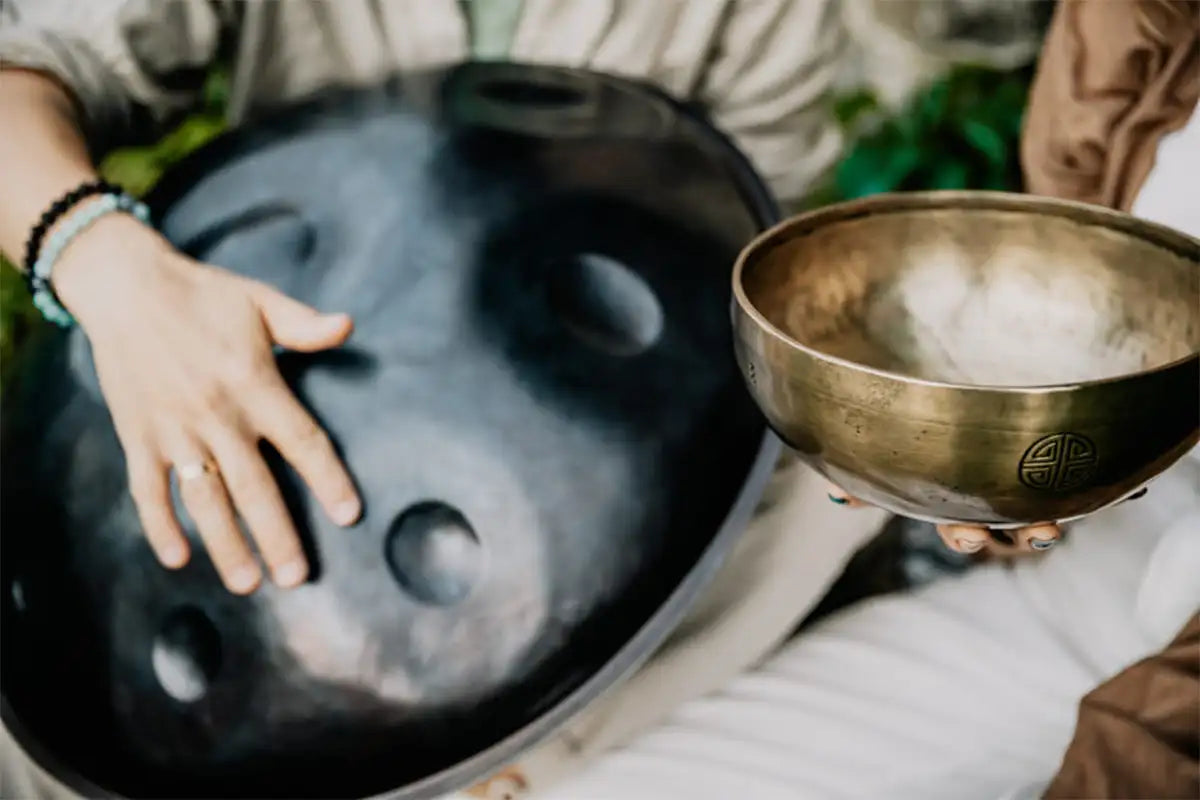
The handpan is a melodic steel percussion instrument that produces hauntingly beautiful overtones through hand-played tone fields arranged around a central dome called the Ding. At Healing Sounds, our curated collection features handpan instruments in over a dozen scales — from the meditative D Minor and uplifting F Major to the mystical Celtic Minor and exotic Kurd — with configurations ranging from 6 notes for beginners to 17 notes for professional performers. Every handpan we carry is precision-tuned to either 432 Hz or 440 Hz, hand-hammered from premium steel, and inspected for harmonic accuracy before shipping.
Whether you are searching for your first handpan drum or adding a new scale to an existing collection, this page will help you navigate our full range. We stock stainless steel handpans, nitrided steel handpans, and ember steel handpans — each material offering distinct tonal character, sustain, and durability. Prices start at under $1,000 for our 6-note beginner models and extend to professional-grade instruments with 13 to 17 notes, ensuring there is a handpan for sale at every level of commitment.
The handpan has seen explosive growth in popularity worldwide, embraced equally by sound healing practitioners, street musicians, yoga instructors, and studio producers. Its intuitive layout means you can produce pleasing melodies within minutes of your first session — no musical theory required. Below you will find a comprehensive guide covering scales, materials, note configurations, playing techniques, and care advice to help you choose the perfect handpan instrument for your musical journey.
How to Choose the Right Handpan: Scales, Materials, and Note Count
Three factors define your handpan experience: the scale (which determines the emotional character), the material (which shapes tone and durability), and the number of notes (which sets your melodic range). Understanding these choices before purchasing ensures you invest in an instrument that matches both your skill level and musical goals.
Popular Handpan Scales and Their Musical Character
Each handpan scale creates a distinct mood. The table below summarizes the most requested scales in our collection and the emotional quality they produce:
| Scale | Character | Best For | Collection |
|---|---|---|---|
| D Minor (D Kurd) | Melancholic, introspective | Meditation, beginners | D Minor Handpans |
| D Celtic Minor | Mystical, folk-inspired | Spiritual practice, world music | Celtic Handpans |
| G Minor | Deep, warm, resonant | Sound baths, relaxation | G Minor Handpans |
| F Major | Bright, uplifting, joyful | Performance, positive energy | F Major Handpans |
| C Major | Open, pure, versatile | Composition, ensemble play | C Major Handpans |
| Kurd | Rich, versatile minor | All-around play, learning | Kurd Handpans |
The D Kurd scale remains the most popular choice for first-time buyers because its note arrangement allows nearly any combination to sound harmonious — making it forgiving for beginners while offering enough depth for advanced improvisers. If you prefer brighter, more optimistic tones, the F Major or C Major delivers an uplifting feel suited to outdoor performances and joyful gatherings.
Stainless Steel vs Nitrided Steel vs Ember Steel
The steel type fundamentally shapes your handpan's voice. Here is how the three main materials compare:
| Property | Stainless Steel | Nitrided Steel | Ember Steel |
|---|---|---|---|
| Tone | Bright, ceramic-like clarity | Warm, rich sustain | Balanced warmth with bright overtones |
| Sustain | Longest sustain | Medium sustain | Medium-long sustain |
| Rust Resistance | Excellent — virtually rust-proof | Good — requires oiling | Good — treated surface |
| Best For | Outdoor play, humid climates | Studio, indoor sessions | Versatile all-around use |
| Browse | Stainless Steel | Nitrided Steel | Ember Steel |
Stainless steel handpans have surged in popularity because they resist corrosion without constant oiling — ideal if you play outdoors, live in a humid climate, or simply want lower maintenance. Nitrided steel remains the classic choice favored by purists for its warmer, more organic tone and responsive feel under the fingers. Ember steel offers a middle ground that blends warmth with brightness.
Choosing Your Note Count: 6 to 17 Notes
Note count determines the melodic possibilities of your instrument. A 6-note handpan is compact and perfect for beginners who want a focused, easy-to-learn layout. Models with 9 to 10 notes (the most common configuration) offer a full octave-plus range that suits both solo play and accompaniment. Professional players often gravitate toward 12 to 17-note handpans that unlock chromatic passages, complex harmonies, and two-octave exploration — at a higher price point reflecting the additional tuning precision required.
- 6-Note Handpans — Compact, affordable, beginner-friendly
- 9-Note Handpans — Standard range, versatile melodies
- 10-Note Handpans — Extended range, popular mid-tier choice
- 12-Note Handpans — Wide range for advanced players
- 13-Note Handpans — Near-chromatic freedom
- 14-Note Handpans — Professional-grade melodic range
- 17-Note Handpans — Maximum expression for virtuosos
Playing the Handpan: From First Touch to Sound Healing Sessions
One of the handpan's greatest appeals is its accessibility. Unlike most melodic instruments, the handpan requires no prior musical training to produce beautiful sounds. The tone fields are arranged so that adjacent notes create natural harmonies — strike any combination and the result is musically pleasing.
Fundamental Handpan Playing Techniques
Begin by placing the handpan on your lap or on a quality handpan stand. Use the pads of your fingers (not your nails or palms) to strike the center of each tone field. These core techniques will build your foundation:
- Ding strikes — Gentle taps on the central dome produce the root note, anchoring your melody
- Tone field hits — Firm but relaxed finger strikes on the outer note areas create clear, sustained tones
- Ghost notes — Light taps between tone fields add percussive rhythm without pitch
- Harmonics — Touching the edge of a tone field while striking produces a higher overtone
- Slaps — Flat-finger percussive hits add rhythmic drive to your playing
For structured lessons on these techniques and more advanced patterns, explore our beginner's guide to playing the handpan and our essential playing tips for intermediate players.
Handpans for Sound Healing and Meditation
Sound therapists and yoga instructors increasingly incorporate handpans for meditation and group sound baths. The instrument's naturally long sustain and rich harmonic overtones create an immersive sonic environment that encourages deep relaxation and mindful awareness. Unlike singing bowls — which produce a sustained drone — the handpan offers melodic movement that can guide listeners through a meditative journey.
For sound healing applications, lower-pitched scales like D Minor and G Minor are preferred for their grounding, calming qualities. Many practitioners pair their handpan with other tuning forks or singing bowls to create layered therapeutic soundscapes. If you are building a sound healing practice, our professional handpan collection features instruments specifically selected for their projection and tonal purity in group settings.
Handpan Care and Maintenance: Protecting Your Investment
A well-maintained handpan can hold its tuning for 5 to 7 years or longer. Proper care protects both the instrument's finish and its acoustic precision. Follow these essential maintenance practices:
- Clean after every session — Wipe down with a soft microfiber cloth to remove oils and moisture from your hands. Sweat is the primary cause of surface corrosion on nitrided and ember steel.
- Oil regularly — Apply a thin layer of Phoenix oil or food-grade coconut oil every 2 to 4 weeks for nitrided and ember steel models. Stainless steel handpans require minimal oiling.
- Control humidity — Store in an environment between 40 and 60 percent relative humidity. Extreme dryness or moisture can affect tuning stability.
- Avoid temperature extremes — Never leave your handpan in direct sunlight, inside a hot car, or exposed to freezing temperatures. Rapid temperature changes can cause tuning shifts.
- Use a padded case — Transport and store your handpan in a hard-shell or soft padded case to prevent dents and scratches that affect tone quality.
For a complete maintenance walkthrough, read our detailed handpan care and maintenance guide.
432 Hz vs 440 Hz Tuning: Which Standard Should You Choose?
We offer handpans tuned to both 432 Hz and 440 Hz concert pitch standards. The 440 Hz tuning is the universal standard used in most Western music — ideal if you plan to play alongside other instruments. The 432 Hz tuning is preferred by many sound healing practitioners and meditators who find its slightly lower pitch more calming and resonant with natural vibration. Both tuning standards are available across most scales in our collection.
Explore Our Complete Handpan Range and Resources
Browse our specialized handpan collections to find exactly the instrument, material, or skill level you need:
- By Skill Level: Handpans for Beginners · Intermediate Handpans · Professional Handpans
- By Scale: D Minor · G Minor · C Major · F Major · Celtic · Kurd
- By Material: Stainless Steel · Nitrided Steel · Ember Steel
- By Note Count: 6 Notes · 9 Notes · 10 Notes · 12 Notes · 13 Notes · 14 Notes · 17 Notes
Deepen your handpan knowledge with these articles from our blog:
- Choosing the Right Handpan for Beginners
- Handpan Drums: A Complete Guide
- Ultimate Guide to Buying Handpans Online
- Exploring the Handpan: Origins and Evolution
- Handpan Music: Benefits and Insights
Looking for other healing musical instruments? Explore our full catalog including singing bowls, tuning forks, tongue drums, and pan flutes.
Frequently Asked Questions About Handpans
A handpan is a convex steel percussion instrument played with the hands. It consists of two half-shells glued together, with a central dome (the Ding) and multiple tone fields hammered and tuned around it. When you strike a tone field with your fingertips, the steel vibrates to produce a sustained, harmonically rich note. Each tone field is tuned to a specific pitch within a musical scale, and the arrangement ensures that adjacent notes sound pleasing together — making the handpan one of the most intuitive melodic instruments available today.
The D Kurd (D Minor) scale is widely recommended as the best handpan scale for beginners. Its note layout makes it nearly impossible to play a dissonant combination, so everything you play sounds musical from day one. The D Kurd also has the largest library of online tutorials, sheet music, and instructional videos, making it easy to find learning resources. Other beginner-friendly options include the Celtic Minor for its mystical, folk-like quality and the C Major for its bright, cheerful character.
Quality handpans typically range from under $1,000 for entry-level 6-note models to over $2,000 for professional-grade instruments with 13 to 17 notes. The price reflects the intensive labor involved: each instrument is hand-hammered from a flat sheet of steel, with every tone field individually shaped, tuned, and verified for harmonic accuracy. A single handpan can require 20 to 40 hours of skilled craftsmanship. Materials also play a role — stainless steel costs more than nitrided steel due to the added difficulty of shaping corrosion-resistant alloys.
Stainless steel handpans offer a bright, ceramic-like tone with the longest sustain and excellent rust resistance — they require almost no oiling and are ideal for outdoor play or humid environments. Nitrided steel handpans produce a warmer, more organic sound with slightly shorter sustain and a more responsive, dynamic feel under the fingers. Nitrided steel requires regular oiling (every 2 to 4 weeks) to prevent oxidation. The choice comes down to your tonal preference and playing environment: stainless for low-maintenance brightness, nitrided for expressive warmth.
Most beginners do well with a 9 or 10-note handpan, which provides enough melodic range to play complete songs while remaining manageable to learn. A 6-note handpan is even simpler but may feel limiting as your skills develop. Instruments with 12 or more notes offer greater range but require more coordination and musical awareness to navigate effectively. If budget allows, a 9 or 10-note model in D Kurd or Celtic Minor gives you the best balance of playability and room to grow.
Proper handpan care keeps your instrument sounding its best for years. After each playing session, wipe the surface with a soft microfiber cloth to remove finger oils and moisture. For nitrided and ember steel models, apply a thin coat of Phoenix oil or food-grade coconut oil every 2 to 4 weeks. Store your handpan in a padded case at 40 to 60 percent humidity, away from direct sunlight and temperature extremes. Avoid striking the rim or dropping the instrument, as dents can permanently alter the tuning of affected tone fields.
Yes — the handpan is one of the most popular instruments for sound healing and guided meditation. Its long sustain, rich overtones, and naturally harmonious note arrangement create an immersive sonic environment that promotes relaxation and mindful awareness. Sound therapists often choose lower-pitched scales like D Minor or G Minor for their calming, grounding qualities. The handpan can be played solo or combined with singing bowls, tuning forks, and other healing instruments to create layered therapeutic soundscapes in both individual and group settings.
Unique Handpan Collection
Discover exceptional handpans for soulful music journeys.

Enhance Your Musical Expression
Craft rich, resonant tones with our premium handpans.